Shared Care Records in the NHS: What Aspergillosis Patients Need to Know
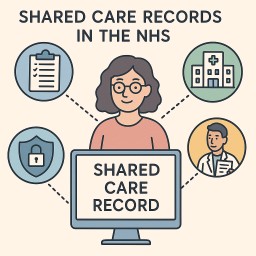
The NHS is changing how patient records are managed. By 2026, every area of England will have a Shared Care Record. This is not one big ānational record,ā but a way of securely linking together the different records held by your GP, hospital, and other services.
For patients with aspergillosis, this could make a real difference to care, safety, and research.
š What Is a Shared Care Record?
-
Not one single file: Your GP, hospital, and community services keep their own systems.
-
Linked together: Clinicians can securely view a joined-up picture of your health.
-
Safer and faster care: Your allergies, test results, and medications can be seen wherever you are treated.
-
You tell your story once: No more repeating details every time you see a new doctor.
š” How Safe Is My Data?
-
Strict access control: Only staff directly involved in your care can open your record.
-
Audit trail: Every time itās viewed, the system records who, when, and why.
-
Encryption & firewalls: Records are locked against outside access.
-
No mass downloads: Systems only allow one patientās record at a time.
In many ways, this is safer than old paper notes, which could be lost, copied, or seen by accident.
š©āāļø Confidentiality Rules Stay the Same
-
NHS staff are bound by confidentiality laws and the Caldicott Principles.
-
Looking at a record without a valid care reason is a disciplinary offence.
-
Your record is not shared with insurers, employers, or relatives without your consent.
š Research and Aspergillosis
Shared Care Records could also help improve research into aspergillosis, which is often under-recognised:
-
Better case finding: Linking GP, hospital, and lab data makes it easier to identify true cases.
-
Tracking outcomes: Researchers can follow IgE/IgG results, CT changes, and treatment responses over time.
-
Environmental links: Data could be combined with housing, air quality, and weather information.
-
Support for trials: Easier to find eligible patients for new antifungal or biologic studies.
All research use is usually de-identified (your name and personal details removed). You can choose to opt out via the National Data Opt-Out if you donāt want your data used in this way.
š¦ Will Insurance Companies See My Record?
No. Insurance companies and employers cannot access your NHS record.
If you apply for insurance, your GP may be asked for a report ā but this is only done with your consent.
š What If I Donāt Use the Internet?
You donāt need to be online to benefit. Shared Care Records are mainly for clinicians, not for patients logging in.
If you want to see your record, you can still ask for a paper copy from your GP or hospital.
š Who Runs Shared Care Records?
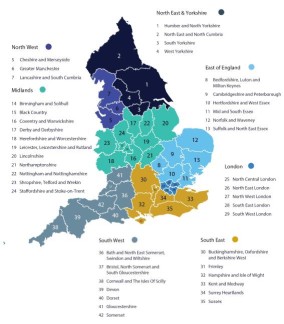
They are organised locally by Integrated Care Systems (ICSs).
-
England is divided into 42 ICSs, each bringing together NHS services, local councils, and community care.
-
Examples include Greater Manchester ICS, Cheshire & Merseyside ICS, and North East London ICS.
-
Scotland, Wales, and Northern Ireland use different systems.
ā Key Reassurances for Patients with Aspergillosis
-
Your data remains confidential and secure.
-
Shared Care Records mean joined-up, safer care across GP, hospital, and community services.
-
Insurers and employers cannot access your NHS record.
-
You stay in control ā you can opt out of data use for research if you wish.
-
The new system could help advance aspergillosis research, leading to better diagnosis and treatments.
𩺠NHS Data Sharing: How It Will Improve Your Care
š The Problem Today
At the moment, your health information is stored in many different places:
-
Your GP (General Practitioner) has one record.
-
Hospitals keep their own records.
-
Community services (like district nurses or physiotherapists) have separate notes.
-
Social care also keeps its own information.
This can cause problems:
-
You may be asked to repeat your story again and again.
-
Doctors donāt always see the full picture (medications, allergies, past test results).
-
Sometimes tests are repeated unnecessarily.
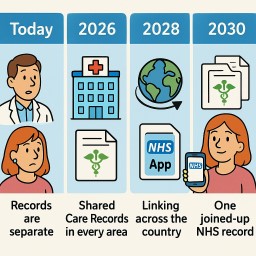
š The Timeline for Change
Today (2025)
-
Records are mostly separate.
-
Some areas already share basic information like your medicines and allergies through a āSummary Care Record.ā
š What it means for you: You still have to repeat information at most appointments.
2026 ā Shared Care Records in Every Area
-
Every region (called an Integrated Care System, or ICS) will have a Shared Care Record.
-
This links together information from GPs, hospitals, community teams, and social care.
-
Hospitals using modern systems like Epic (a type of electronic patient record - MFT has installed this already) can also start sharing directly with other Epic hospitals.
š What it means for you: Doctors can see more of your health record without asking you to repeat everything.
2028 ā Linking Across the Country
-
Regional Shared Care Records will start to connect with each other.
-
Epic hospitals across the UK will share records more easily using Care Everywhere (Epicās sharing tool).
-
Community services and āvirtual wardsā (hospital care at home) will be fully connected.
š What it means for you: If you are treated in another part of the country, staff there will be able to see important parts of your health record straight away.
2030 ā One Joined-Up NHS Record
-
The NHS plans to give every patient a longitudinal record ā one joined-up health and care record that follows you everywhere.
-
This will combine information from GPs, hospitals, community services, mental health teams, and social care.
-
Patients will also be able to see much more of their own record through the NHS App.
š What it means for you: Wherever you go in the NHS, staff can see your medical history safely. Youāll feel your care is joined-up, and you can also check your record yourself.
ā Your Patient Journey: Step by Step
-
Today: āI have to explain my medication list every time. Iām not sure my hospital knows what my GP prescribed.ā
-
2026: āWhen I go into hospital, the doctor can already see my GP record and community nurse notes.ā
-
2028: āI was treated far from home, and the hospital could see my recent test results straight away.ā
-
2030: āWherever I go, the NHS staff have the full picture. I can see my record too on the NHS App.ā
š§ Self-Health Management: Then, Now, and Whatās Coming Next
Over the past 20 years, the way people manage their health in the UK has changed dramatically ā and more changes are on the horizon. For people living with long-term or complex conditions like aspergillosis, asthma, or chronic lung disease, this shift has brought both new opportunities and new burdens.
This article explains whatās changed, what the government is planning, what benefits are hoped for ā and what happens if you canāt or donāt want to use online tools.
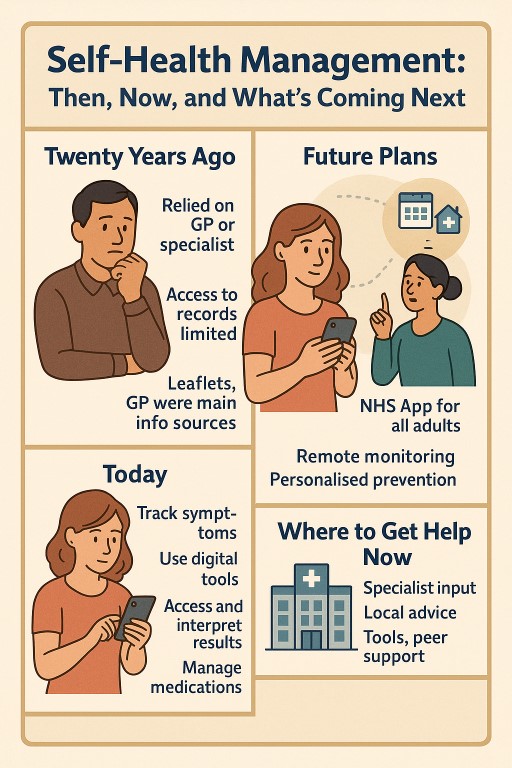
š°ļø What Was Self-Health Management Like 20 Years Ago?
In the early 2000s:
-
Patients relied heavily on their GP or hospital specialist for every decision.
-
Access to records was limited or non-existent.
-
Health information came from leaflets, GPs, or occasional TV programmes.
-
Appointments were mostly face-to-face and arranged by phone.
-
There was less expectation for people to self-manage complex conditions.
š² Whatās Different Today?
Patients today are expected to:
-
Track symptoms themselves and know when to seek help.
-
Use digital tools like the NHS App, online consultations, and health monitoring apps.
-
Interpret test results, medication side effects, and care plans with less direct support.
-
Coordinate care between services ā sometimes across different hospitals or systems.
-
Understand and act on complex health advice, often with less contact from clinicians.
For people with chronic respiratory conditions like CPA or ABPA, this can sometimes improve control ā but it can also feel overwhelming, especially when care is fragmented or specialists are hard to reach.
š§āāļø How Are Healthcare Staff Adapting?
Many GPs, nurses, and hospital teams are trying to:
-
Embrace shared decision-making and educate patients more directly.
-
Offer video, phone, or online consultations when appropriate.
-
Provide tools like self-monitoring diaries, peak flow meters, or oxygen saturation monitors.
-
Rely on electronic triage systems and limit in-person appointments to the most complex cases.
But many are also under pressure. Staff shortages, long waiting lists, and increased demand mean clinicians have less time per patient, making it harder to offer the detailed guidance many people still need.
šļø What Is the UK Government Planning for the Future?
The governmentās current plans aim to make the NHS more digital, preventative, and self-directed. This is laid out in the NHS Long Term Plan, the Digital Health and Care Strategy, and the Data Saves Lives policy.
| Goal | Target |
|---|---|
| Make the NHS App the main access point for care | 2025ā2026 |
| Move more routine care to remote monitoring and self-management | By 2026ā2029 |
| Personalise prevention and reduce avoidable illness | By 2029 |
| Reduce reliance on face-to-face appointments | Ongoing since 2021 |
| Digitise health records across all services | By 2025ā2027 |
Patients with long-term conditions are expected to:
-
Manage their own prescriptions
-
Monitor symptoms at home
-
Use digital tools to stay informed and in control
-
Access care only when needed, rather than by default
šÆ What Are the Hoped-For Benefits?
The government promotes these changes as delivering:
ā Better Outcomes
-
Early intervention, better symptom tracking, and fewer complications.
-
Personalised care plans based on your data and condition.
ā More Convenient Care
-
Fewer unnecessary visits
-
More control over your own information and appointments
ā NHS Cost Savings
-
Reducing face-to-face appointments and hospital stays frees up staff time.
-
Less duplication, fewer unnecessary tests, better resource use.
ā ļø But Is It Better for Everyone?
Not necessarily. These benefits are not equally felt by all patients.
š§ Digital Exclusion Is a Real Problem
-
Around 1 in 5 UK adults struggle with using digital health services.
-
Older adults, people on low incomes, and those with disabilities or learning needs are most affected.
-
Some patients simply donāt feel confident, or donāt trust digital systems.
š§ What Happens If Youāre Left Behind?
Government guidance insists that non-digital options must remain ā but this isnāt always consistent. Some patients report:
-
Difficulty reaching practices by phone
-
Online-only booking or consultations
-
Fewer letters and face-to-face reviews
Patients with complex, fluctuating, or rare conditions like aspergillosis may find it harder to get appropriate support without a strong digital presence ā especially if care crosses multiple departments or regions.
š§ So What Needs to Happen?
To make this shift work for everyone, the system must:
-
Protect non-digital access routes (e.g. phone, letter, face-to-face)
-
Offer digital training and support to those who want it
-
Make sure apps and online tools are inclusive and easy to use
-
Involve patients in designing these services ā especially those with long-term conditions
-
Keep monitoring for harm or exclusion, and respond quickly
š Where Can Patients Get Help Today?
| Support Type | Where to Find It |
|---|---|
| š¬ Specialist advice | National Aspergillosis Centre, hospital respiratory clinics |
| šØāāļø Local support | GP, pharmacist, practice nurse |
| š± Digital tools | NHS App, condition-specific apps, NHS websites |
| š¤ Peer support | Online groups, charities, forums (e.g. Asthma + Lung UK, aspergillosis.org) |
| š¬ Advice lines | NHS 111, condition-specific helplines |
ā In Summary
The NHS is changing ā and patients are expected to change with it. Over 20 years, self-management has gone from optional to expected, and digital care is being rapidly expanded.
For some, this means more control and quicker help. For others, it can feel isolating, confusing, or unsafe. The challenge is to design systems that support everyone ā not just the tech-savvy or well-connected.
If youāre living with a long-term condition like aspergillosis, you should never be left managing alone.
š§¾ Getting a Second Opinion for Aspergillosis: What If Your Hospital Refuses?
Many patients living with aspergillosis or allergic bronchopulmonary aspergillosis (ABPA) ask for a second opinion ā often from a national centre like the National Aspergillosis Centre (NAC) in Manchester or from another specialist elsewhere in the UK. But sometimes, hospitals resist sending your case outside their own department.
Hereās whatās happening, why it might occur, and what you can do.
š¤ Why Would a Hospital Refuse an Outside Opinion?
Itās understandably frustrating when youāve asked for expert help and your local hospital insists on keeping things āin-house.ā Here are some reasons this might happen:
1. Internal Referral Rules
Hospitals sometimes have a policy to refer to another consultant within their own department first. They may consider this a āsecond opinion,ā even if itās not truly independent.
2. Cost and Complexity
Referrals to another NHS trust ā especially across health boards or into England (e.g. to NAC) ā can involve extra steps and costs. Some hospitals prefer to avoid that unless they feel thereās no choice.
3. Professional Sensitivities
Some doctors may feel a national second opinion implies criticism of their care, even if your request is made respectfully.
4. Lack of Awareness
Some clinicians arenāt fully aware of what the National Aspergillosis Centre offers ā or may underestimate how complex aspergillosis, ABPA, or recurrent fungal infections can be.
š§āāļø But Isnāt a Specialist Opinion My Right as an NHS Patient?
Yes. If your GP or hospital team believes itās clinically appropriate, you have the right to be referred to another NHS consultant ā including one outside your local area.
The NAC is nationally commissioned by NHS England to provide care for people with chronic aspergillosis. They accept referrals from across the UK.
š· Why Private Care Might Not Be an Option
Some patients consider going private when local NHS referrals are blocked ā but private care often means:
-
Paying for new scans, blood tests, and sputum cultures
-
No direct access to previous NHS records
-
Higher costs than expected, especially for complex tests
If you canāt afford this, you are not alone, and there are still NHS options available.
š§ What You Can Do Next
Here are practical steps if you're being blocked from getting a second opinion:
ā 1. Restate Your Request Clearly
Ask your GP (or write yourself) to reply to the hospital and explain:
-
You are specifically asking for an opinion from a national expert service (e.g. NAC or Dr Iain Page in Edinburgh).
-
This is not a rejection of their care, but a request for specialist reassurance, diagnosis support, or treatment planning.
ā 2. Ask for a Tertiary Centre Referral
Use the term ātertiary referralā ā this means a referral to a national or highly specialised NHS service.
ā 3. Raise It with PALS
If you're still being blocked, contact your local Patient Advice and Liaison Service (PALS) or NHS complaints team. Explain:
-
You have a rare/complex condition,
-
Youāve asked for a national review,
-
And youāve been offered only an internal opinion.
ā 4. Get support on NAC Support Facebook Group
- https://www.facebook.com/groups/aspergillussupport/
š¬ In Summary
-
Youāre not being difficult ā youāre advocating for your health.
-
It is reasonable and often necessary to seek input from specialists like those at the NAC.
-
If youāve been told āno,ā it may be due to policies or misunderstandings ā not a reflection on your need for better care.
-
Keep asking, and if needed, involve your GP, or PALS.
Key Shifts to Reinvent the NHS - The 10 Year plan
The plan introduces three radical shifts to modernize the NHS and secure its future:
-
š„ Hospital ā Community
-
Build a Neighbourhood Health Service: community health centres open 6 days/week for 12 hours/day
-
Provide integrated care closer to homeāGPs, diagnostics, mental health, rehab, dentists, pharmacists, and even social support
-
Aim to reduce reliance on hospitals and cut waiting lists
-
-
š± Analogue ā Digital
-
Transform the NHS App into a ādoctor in your pocketāāfor appointments, advice, care plans, and self-referral
-
Embed AI to reduce admin, transcribe consultations, and support clinical decision-making
-
-
š”ļø Sickness ā Prevention
-
Emphasize early intervention through more health checks, screenings, vaccines, and public health services
-
Shift funding towards community and preventative care, away from reactive hospital-based services
-
š Underpinning Measures
To support these shifts, the plan introduces:
-
A new operating model & statutory framework to streamline the NHS structure
-
Transparency and accountability through metrics and patient feedback
-
Workforce transformation, including new training and wellbeing support
-
Innovation strategy harnessing genomics, AI, and tech
-
Financial reform via value-based fundingāwhere providers are rewarded for outcomes
š What This Means for You
-
Access to GP advice and care should be faster and more local ā with reduced ā8āÆam scrambleā
-
More services like scans, mental healthcare, rehab, smoking cessation, and job support delivered at local centres
-
Greater convenienceāuse the App to manage care, book appointments, or message clinicians
-
Stronger focus on staying healthyāthrough screening, prevention, and early treatment support
š§© Challenges & Expert Views
-
Funding & staffing: A Ā£29āÆbillion investment is pledged, but staffing shortages and infrastructure needs remain concerns
-
Implementation: Organisations like the Kingās Fund highlight the absence of operational details and worry pilot projects may lead to regional variation
-
Behavioural shift: Success depends on NHS culture evolvingāfrom reactive treatment to proactive, tech-enabled care
āļø Final Take
The 10āYear Health Plan represents a transformative vision: bring care closer to home, empower patients digitally, and focus on prevention. With strong backing from Starmer and Health Secretary Streeting, it aims to reshape NHS services by 2035. While optimism is growing, the effectiveness of implementation and securing resources will determine whether it truly delivers for patients and staff.
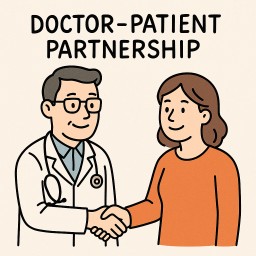
From Cradle to Shared Care: Understanding the NHS Transition to Patient Partnership

The NHS is evolving. From its early days as a post-war health service built around face-to-face care by a GP who "did it all," to todayās complex model focused on prevention, digital access, and patient partnership ā the change has been profound. This document provides a clear overview of why, how, and where the NHS is transitioning toward shared care and self-management.
š Then and Now: The 1960s NHS vs Today
The NHS in the 1960s:
- Care was largely reactive ā you went to the doctor when you were ill.
- GPs were central and often lifelong figures in a familyās care.
- Most treatments were limited, and few people lived long with chronic illness.
The NHS Today:
- Patients live longer, often with multiple long-term conditions.
- Care must be proactive and coordinated.
- The NHS encourages patients to understand and manage their health.
- The model is increasingly digital, multidisciplinary, and patient-centred.
āļø Why the Shift Happened
- Rising Chronic Illness: Diabetes, heart disease, asthma, and mental health issues have all increased.
- Ageing Population: More people need long-term support.
- Advances in Medicine: Enable people to live longer but require more daily self-care.
- Resource Constraints: GP and hospital services are under increasing pressure.
- Better Outcomes with Patient Involvement: Evidence shows shared care leads to better results.
š Timeline of Change
| Year | Event |
|---|---|
| 2008ā2010 | Expert Patient Programmes piloted |
| 2014 | Five Year Forward View introduces prevention and self-care |
| 2019 | š NHS Long Term Plan launches personalised care model |
| 2020 | Universal Personalised Care policy published |
| 2021ā2022 | COVID accelerates digital triage and remote monitoring |
| 2023ā2025 | Integrated Care Systems tasked with delivering shared care |
| 2025 | š£ Anticipated release of the next major NHS reform report by the current government, expected to include a 10-year plan focusing on community-based care, digital access, and integration with social care |
š§ What Is Shared Care?
Shared care is a model where:
- Patients are active partners, not passive recipients.
- GPs, nurses, pharmacists, and support workers form a care team.
- People with long-term conditions have personalised care plans.
- Patients are supported to self-monitor and make informed decisions.
š Evidence of Impact
- Diabetes & Hypertension: Better control when patients co-manage.
- Asthma & COPD: Action plans reduce flare-ups and hospital visits.
- Mental Health: Shared decision-making improves engagement and outcomes.
- BMJ & Cochrane Reviews: Shared care reduces hospital use and improves satisfaction.
š„ What About Those Without Digital Access?
Digital exclusion affects:
- Older adults
- People with learning difficulties or low literacy
- People without smartphones or broadband
Solutions:
- Maintain paper and telephone options
- Offer face-to-face access when needed
- Train staff to identify and support non-digital patients
- Invest in community digital skills projects
ā³ How Far Along Are We?
Weāre mid-transition:
- Policy is in place across England.
- ICSs are developing care coordination teams.
- Self-monitoring and digital records are expanding.
- But delivery is uneven, and many staff need more support and training.
Estimated full embedding of shared care: 2028ā2032, depending on region and resources.
𩺠Does the NHS Still Care for Us from Cradle to Grave?
Yes ā but with an evolved model:
- Still free at the point of care
- Still lifelong
- But now expects patients to:
- Learn about their condition
- Monitor their health
- Use digital or alternative access routes
- Take shared responsibility for staying well
The shift is from "Weāll do it for you" ā to "Weāll support you to do it together."
š„ The Role of Private Healthcare in the Shared Care Era
Private care plays a growing role alongside the NHS, especially where speed, access, or choice is limited:
Where it helps:
- Faster diagnosis or specialist review
- Choice of clinician and continuity
- Access to treatments not available on the NHS
- Supplementary services like physio or counselling
Limitations:
- Not all can afford it ā risk of health inequality
- Poor integration with NHS records
- Standards vary between providers
In context: Private care can complement the NHS, especially for people managing long-term conditions, but it should never replace inclusive, high-quality NHS care. Patients benefit most when systems are coordinated, and no one is left behind.
š· Will Shared Care Make the NHS and Social Care Cheaper?
In theory, yes ā but in practice, itās more complicated. Shared care and self-management are designed not just to improve health outcomes, but also to reduce long-term demand on overstretched NHS and social care services.
š Potential Savings
| Area | How Shared Care Could Save Costs |
| Hospital admissions | Fewer A&E visits and unplanned admissions (e.g. asthma, heart failure) |
| GP appointments | More issues resolved by nurses, pharmacists, or self-care tools |
| Social care needs | Better-managed health can delay or reduce dependency on care packages |
| Medication | Improved adherence and fewer avoidable prescriptions or interactions |
| Workforce efficiency | Tasks redistributed to broader care teams (e.g. care coordinators, link workers) |
ā ļø Upfront Costs to Consider
- Training staff in personalised care and shared decision-making
- Investing in digital systems and patient tools
- Supporting digitally excluded or vulnerable groups
- Funding community-based roles (link workers, social prescribers)
š§® What the Evidence Says
- The Health Foundation (2021) found that shared care is often cost-effective but savings take years to appear.
- Diabetes Prevention Programmes and home blood pressure monitoring schemes have demonstrated long-term cost reductions when patients are well supported.
- ICSs are beginning to measure value not just in pounds saved, but in avoidable harm and hospital use prevented.
Shared care isnāt a quick fix for NHS finances ā itās an investment in long-term sustainability.
š Do We Need a More Fully Integrated NHS and Social Care?
Yes ā integration is essential if shared care is to work effectively.
Currently, NHS healthcare and local authority social care operate through separate budgets, systems, and eligibility rules, which can lead to gaps, delays, or duplication. For patients with complex needs ā such as older adults, people with disabilities, or those with long-term conditions ā this separation often causes frustration and poorer outcomes.
Why Integration Matters:
- š§ Smooth transitions from hospital to home
- š Unified care plans that cover medical, practical, and emotional support
- š¤ Fewer assessments and handoffs between services
- š” Faster responses when needs change
Whatās Already Happening:
- Integrated Care Systems (ICSs) aim to bring NHS and social care leaders together
- Some areas are piloting pooled budgets or joint appointments
- Shared care records are being rolled out in regions to link GP, hospital, and social services
Barriers to Integration:
- Separate funding structures (NHS = national, Social Care = local authority)
- Different eligibility rules and charging systems
- Workforce shortages and incompatible IT systems
True shared care requires shared systems, shared responsibility ā and shared investment.
š§ What Support Exists to Help Patients Transition to Shared Care?
As the NHS shifts toward shared care and patient partnership, new support services and resources have been introduced to help patients take on a more active role in their health.
š§āāļø Where Patients Can Get Help:
- GP Practices: Many now have a wider team including:
- Care coordinators
- Health and wellbeing coaches
- Social prescribers
- Practice nurses trained in personalised care
- Pharmacies: Community pharmacists can support minor illnesses, medication reviews, and some chronic condition monitoring.
- The NHS App: Allows patients to:
- View medical records
- Order prescriptions
- Access care plans and vaccination status
- Link to symptom checkers and self-care tools
- Patient Support Groups and Charities: Many long-term condition charities (e.g. Asthma + Lung UK, Diabetes UK, Versus Arthritis) offer:
- Peer support
- Online education
- Print resources
- Helplines
- Community Services (varies by area):
- Self-management education courses (e.g. Expert Patients Programme)
- Voluntary sector health coaches or befriending schemes
- Local authority or ICS-run wellbeing hubs
š If in Doubt, Ask:
- Contact your GP reception and ask: āCan I speak to someone about managing my condition better?ā
- Many areas have health navigators who can connect you to appropriate services.
The transition is not just about expectations ā it comes with real support. No one should be left to do it alone.
šÆ Final Thought
The NHS of today ā and tomorrow ā is built around partnership. While some miss the simplicity of the old model, the future offers tools and support that can help people live longer, healthier lives ā if everyone is included. Shared care works best when:
- Patients feel supported
- Clinicians feel equipped
- Services stay flexible and inclusive
š« Why Is CPA Called a Long-Term Condition ā Not a Lifelong One?

Chronic Pulmonary Aspergillosis (CPA) is often described as a long-term condition, but people sometimes wonder why it isnāt called a ālifelongā disease ā especially since many people need antifungal treatment and regular monitoring for years.
Hereās what we know:
𩺠CPA Affects Everyone Differently
CPA is a complex condition that includes several forms ā some people have a single fungal ball (aspergilloma), while others have more widespread or progressive disease. For many, CPA needs long-term treatment, such as antifungal tablets, oxygen, physiotherapy, or hospital care.
But not everyone has the same experience:
-
Some people are stable for years
-
Some respond well to treatment and no longer need antifungals
-
Others may live with occasional flare-ups or long-term health problems
š Why Itās Not Always Called Lifelong
CPA is called a ālong-term conditionā because:
-
It typically lasts at least a year, often longer
-
It may come and go in phases
-
It needs regular follow-up and may affect daily life
But not everyone will have it for the rest of their life ā and thatās why we donāt use the word ālifelongā for everyone.
š¬ We Donāt Yet Know Who is Truly āCuredā
To say whether CPA is curable, we would need to:
-
Follow a large group of patients
-
For many decades
-
To see who stays well and never relapses
That kind of long-term research is still ongoing ā so at the moment, doctors canāt say for sure when or if someone is permanently cured.
Some people stay well for years after stopping treatment ā but itās too early to know if the infection is truly gone, or just sleeping.
š¬ What This Means for You
-
CPA is a condition that can be managed ā sometimes very successfully
-
You might not need treatment forever ā but regular check-ups help catch any changes early
-
Your team will work with you to find the right balance of treatment and independence
-
If you feel well, that's a good sign ā but it's still important to keep an eye on things
šIn short: CPA is a serious, long-term condition, but itās not always lifelong. We still have more to learn, and long-term studies are helping us understand it better every year.
š How Medicines Are Approved ā and What āOff-Labelā Means
š¹ 1. What Is āLicensedā or āApprovedā Medication Use?
Before a medicine can be prescribed in the UK (or any country), it goes through a formal approval process:
| Step | What Happens |
|---|---|
| Clinical trials | The medicine is tested for safety, effectiveness, and quality. |
| Regulatory review | In the UK, the Medicines and Healthcare products Regulatory Agency (MHRA) or the European Medicines Agency (EMA) reviews trial data. |
| Marketing authorisation | If approved, the medicine is ālicensedā for specific conditions, doses, age groups, and methods of use. |
š¢ A licensed use means the drug has been judged safe and effective for that specific use, based on strong clinical evidence.
š¹ 2. What Is āOff-Labelā Use?
Off-label use means a doctor prescribes a medicine in a way that is not covered by its official license.
This could include:
-
Using a medicine for a different condition
-
Giving it at a different dose or frequency
-
Using a different route (e.g. inhaled instead of injected)
-
Giving it to a different age group (e.g. in children)
This is legal, but it means the prescriber is using their clinical judgement outside the official licensing terms.
š¹ 3. Why Might a Doctor Use a Medicine Off-Label?
| Reason | Example |
|---|---|
| There is no licensed treatment for a rare condition | e.g. inhaled amphotericin B for CPA or ABPA |
| The licensed treatment doesnāt work or causes side effects | e.g. switching antifungal drugs |
| New evidence supports another use, but the company hasnāt applied for a new licence | e.g. old drugs used in new ways based on research |
| Medicines used in children or elderly often lack specific licensing data |
š¹ 4. Is Off-Label Use Safe?
It can be, but it requires:
-
Good clinical judgement
-
Use of the best available evidence
-
Often, discussion with a multidisciplinary team
-
Informed consent from the patient (especially important in high-risk cases)
The prescriber takes more responsibility, because the use hasnāt been formally approved by regulators.
š¹ 5. Who Oversees This in the UK?
-
The MHRA licenses medicines.
-
The General Medical Council (GMC) and NHS allow doctors to prescribe off-label when itās in the patientās best interest.
-
NICE guidelines sometimes include off-label use if evidence supports it.
š¹ 6. Real-World Example: Inhaled Amphotericin
-
Licensed: Amphotericin B is approved for injection to treat fungal infections.
-
Off-label: Nebulised (inhaled) use is not officially licensed, but it is used in some centres to treat or prevent fungal lung disease (e.g. CPA, ABPA) where evidence and specialist experience supports it.
š¹ Summary: Key Points
| Term | Meaning |
|---|---|
| Licensed use | The use of a medicine that has been approved for a specific purpose by a regulator. |
| Off-label use | Prescribing a medicine in a different way than officially licensed ā legal, but used with clinical caution. |
| Who decides? | Ultimately, the prescribing clinician, supported by evidence, guidance, and the needs of the individual patient. |
š§ Why Some Medications Can't Be Prescribed by GPs

In the UK, the NHS uses a tiered prescribing system that sometimes prevents GPs from prescribing certain medications, even if those medicines are available elsewhere in the NHS.
Hereās a clear explanation of how and why this happens:
š 1. Shared Care or Specialist-Only Medications
Some medicines are designated as āspecialist-onlyā or āshared careā treatments. This means:
-
GPs are not authorised to initiate them.
-
In some cases, they can continue a prescription once a specialist starts it ā but only if a formal shared care agreement is in place.
Examples include:
-
Biologics for asthma, ABPA, or autoimmune disease
-
High-risk antifungals like voriconazole or posaconazole
-
Certain cancer, transplant, or hormone drugs
This system ensures that:
-
The medication is closely monitored by someone with specialist knowledge
-
Risks like interactions, side effects, and required blood tests are safely managed
š 2. Local Prescribing Formularies
Each NHS Integrated Care Board (ICB) or local NHS Trust maintains a formulary ā a list of medicines approved for use in that area.
-
If a medicine isn't on the local formulary, the GP may be unable to prescribe it, even if NICE (the National Institute for Health and Care Excellence) says it's effective.
-
These decisions are based on local budget priorities, agreements with hospitals, and clinical capacity.
š· 3. Cost Controls and Prior Approvals
Some medications are expensive or highly specialised, and require:
-
Prior approval by a funding panel
-
A hospital-based consultant to apply for and justify the treatment
GPs usually cannot access these approval pathways directly.
ā ļø 4. Liability and Risk
Even if a GP understands the condition, they may not have:
-
Access to monitoring protocols
-
Up-to-date knowledge of rare drug interactions or side effects
-
The ability to interpret complex blood results needed for safe prescribing
For legal and safety reasons, GPs must follow guidance from their local ICB or NHS England on what they can and canāt prescribe.
ā What Patients Can Do
-
Ask the hospital team if the medication can be prescribed under shared care, and whether your GP has agreed to it.
-
Ask your GP to request guidance from the local medicines management team.
-
Request a hospital prescription if urgent ā but note this often requires collection from hospital pharmacies.
NHS:10 year plan
The NHS Long Term Plan, published in January 2019, outlines a comprehensive strategy to transform the NHS in England over the next decade. It aims to improve patient care, enhance efficiency, and ensure the sustainability of the health service. The plan focuses on several key areas:Ā
š„ 1. A New Service Model for the 21st Century
-
Integrated Care Systems (ICSs): Establishing ICSs across England to coordinate services and improve population health.Ā
-
Community-Based Care: Shifting focus from hospital-centric care to community and primary care, providing services closer to patients' homes.
-
Digital Access: Expanding digital services, including online consultations and access to health records, to enhance patient convenience.
𩺠2. Preventing Illness and Tackling Health Inequalities
-
Preventive Measures: Implementing programs to reduce smoking, obesity, and alcohol-related harm.Ā
-
Early Detection: Enhancing screening and early diagnosis for conditions like cancer and cardiovascular diseases.
-
Addressing Disparities: Focusing on reducing health inequalities across different communities.
š§ 3. Improving Mental Health Services
-
Increased Funding: Allocating additional resources to mental health services.
-
Access Expansion: Improving access to mental health support for children, adolescents, and adults.
-
Crisis Care: Developing comprehensive crisis care services available 24/7.
š¶ 4. Supporting Children and Maternity Services
-
Maternity Care: Enhancing continuity of care during pregnancy and childbirth.
-
Child Health: Improving services for children with complex needs and expanding immunisation programs.
𧬠5. Advancing Genomic and Personalised Medicine
-
Genomic Testing: Integrating genomic testing into routine care to personalise treatment plans.
-
Research and Innovation: Investing in research to develop new treatments and technologies.
š» 6. Embracing Digital Technology
-
Electronic Health Records: Ensuring all patient records are digitized and accessible across care settings.
-
Telehealth Services: Expanding virtual consultations and remote monitoring to increase access and efficiency.
š©āāļø 7. Workforce Development
-
Staff Recruitment and Retention: Implementing strategies to attract and retain healthcare professionals.
-
Training and Education: Providing continuous professional development opportunities for NHS staff.
š· 8. Financial Sustainability
-
Efficient Resource Use: Reducing administrative costs and reinvesting savings into patient care.
-
Funding Allocation: Ensuring funds are directed towards areas with the greatest impact on health outcomes.
The NHS Long Term Plan represents a significant commitment to transforming healthcare delivery in England, focusing on prevention, personalisation, and integration to meet the evolving needs of the population.
For more detailed information, you can access the full plan here: NHS Long Term Plan.