🌸 Spring & Summer Advice for ABPA and CPA Patients

🟡 1. Watch for Rising Mold and Pollen Levels

  • Spring = exploding pollen (trees first, then grasses).

  • Early summer = mold spore counts rise sharply (especially after rain or damp evenings).

  • Pollen and mold are inflammatory triggers for ABPA.

  • CPA patients also risk extra mucus, chest tightness, and infections after pollen/mold exposure.

Action: ✅ Check daily mold and pollen forecasts (AccuWeather, Met Office, University of Worcester).
✅ On high pollen/high spore days → limit time outdoors, mask if needed, and keep windows closed.


🔵 2. Avoid Gardening Without Protection

  • Soil and compost are full of Aspergillus and other molds — especially after spring rains.

  • Even "dry" gardens can have dangerous spore clouds when digging, mowing, or raking leaves.

Action: ✅ Wear an FFP2/N95 mask for light gardening.
✅ For heavy work (mowing, compost turning), use an FFP3/N99 mask (preferably valved).
✅ Shower and change clothes immediately after heavy garden work.


🟠 3. Stay Cool but Stay Safe Indoors

  • Summer heat = open windows — but warm damp air boosts indoor mold growth.

  • CPA patients are especially vulnerable to indoor mold spores triggering flares.

Action: ✅ Use fans, shades, or air conditioning to cool the house without leaving windows wide open all day.
✅ If you open windows, close them at night when humidity rises.
✅ Use a dehumidifier if your home gets humid (>50% humidity inside = higher mold risk).


🔴 4. Hydrate and Protect Airways

  • Warm weather dries out airways, making mucus thicker and harder to clear — dangerous for CPA.

  • ABPA patients also get thicker mucus in drier air, risking plugging and flares.

Action: ✅ Drink plenty of water (keep mucus thin).
✅ Consider using a saline nasal spray or humidifier if indoors with air conditioning.
✅ Continue any airway clearance techniques your doctor or physio recommended.


🧹 5. Be Extra Cautious After Rain

  • After a spring/summer rainstorm, mold spore counts spike massively outdoors.

  • Within hours of rain stopping, air can be thick with spores — even if it smells fresh.

Action: ✅ If you're outside right after rain, mask up.
✅ Prefer next-day outings once things dry fully.


🚨 Bonus Caution for CPA:

  • CPA patients are prone to bacterial infections after pollen/mold exposure + mucus retention.

  • Any sudden worsening of cough, fever, or chest pain → seek help fast (don't wait days).

Spring/summer CPA flares often start as "just pollen" or "just tiredness" but can tip into infections without quick action.


🎯 Simple Spring & Summer Rule for ABPA/CPA

If it’s damp, dusty, or smells “earthy” outside → mask up.
If pollen count is high → limit time outdoors.
Stay hydrated, stay cool, and protect your lungs.


✅ Quick Mini Checklist:

Risky Activity What to Do
Gardening FFP2/FFP3 mask + change clothes
After rain Mask up or delay outing
High pollen/mold forecast Indoor day or short trip with mask
Open windows at night Avoid or control humidity indoors
Feeling tight or coughing Rest + rescue inhaler if prescribed

🧡 You absolutely can enjoy spring and summer —

you just need to plan ahead, protect yourself smartly, and listen carefully to your body.


Could You Help Transform the Future of CPA Treatment?

Join the INCAS Trial at the National Aspergillosis Centre

If you’ve recently been diagnosed with chronic pulmonary aspergillosis (CPA) and are starting antifungal treatment, you may be eligible to take part in a pioneering clinical trial that could shape the future of care. If that is the case we will approach you to ask if you would like to join.

CPA is a long-term lung infection caused by the fungus Aspergillus, often in people with conditions like COPD or previous tuberculosis. It leads to progressive lung damage, frequent infections, and significant impact on quality of life. Current antifungal treatments help only about 60% of patients, and many face relapses, side effects, and long-term medication use.

The INCAS trial is testing whether adding a naturally occurring immune protein called interferon-gamma to standard antifungal therapy can lead to better outcomes — fewer infections, less lung damage, and improved day-to-day wellbeing. Interferon-gamma is already used safely in the NHS for other conditions, and early research at the National Aspergillosis Centre (NAC) has shown promising results for CPA.


What Is Involved?

If you choose to take part:

  • You’ll continue with standard antifungal treatment

  • You may be randomly assigned to receive interferon-gamma injections for 12 weeks (3 injections per week)

  • You’ll receive regular follow-up with chest scans, symptom tracking, and support from our expert team

All patients are closely monitored to ensure safety and comfort throughout the trial.


What Have Previous Participants Said?

Patients who took part in earlier studies shared their experiences with honesty and encouragement:

“They are missing a great opportunity… I certainly didn’t want to inject, but I need to be well, and this was a good chance at fewer infections and damping down the Aspergillus.”

“I only had one bad day — I phoned the NAC nurses, who reassured me it was expected and to carry on. Now, side effects are mild and usually gone by lunchtime. They don’t stop me like the chest problems used to.”

“I would really encourage patients to seize this chance of having gamma interferon.”

Others mentioned they were concerned at first about injections or travel, but found ways to manage:

“It doesn’t always hurt — yellow paediatric needles are the key, and a bit of tummy fat helps. Legs rarely hurt.”
“Travel’s harder now that my husband has trouble with his sight… but I understand the issue and can empathise.”


Is It Safe? What About Side Effects?

In our previous study, interferon-gamma was generally well tolerated. Some patients had mild flu-like symptoms after the injection, but these usually faded with time and were far less disruptive than a flare of CPA itself. Your care team will work closely with you and adjust support as needed.

This trial is all about learning more — not only about effectiveness, but also how easy and acceptable the treatment is for patients. The insights we gain will help shape a larger trial and may eventually transform the standard of care for CPA.


Why Take Part?

CPA affects around 3,600 people in the UK, with mortality as high as 40% within five years. If interferon-gamma proves successful, it could:

  • Shorten treatment durations

  • Reduce relapses

  • Improve quality of life for you and others

  • Open the door for better treatments in other chronic lung diseases too

You won’t just receive expert support from the UK’s leading CPA centre — you’ll help build the future of care.

“I wouldn’t be influenced by being paid. I’d be more concerned about safety and careful monitoring – which I got.”

🔗 Learn more at clinicaltrials.gov/NCT05653193 or speak to your team at the National Aspergillosis Centre.

You could be part of something that changes CPA care for good.


Help Us Explore a New Treatment for Chronic Pulmonary Aspergillosis (CPA)

We’re Recruiting for a Clinical Trial of Interferon-Gamma (IFNγ)

We’re looking for people with chronic pulmonary aspergillosis (CPA) to take part in an exciting clinical trial testing a new treatment approach using interferon-gamma (IFNγ) — a substance that could help the immune system fight the Aspergillus infection more effectively.


What is CPA?

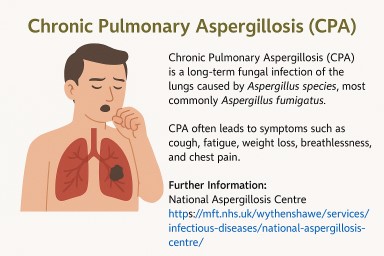
CPA is a long-term lung infection caused by the fungus Aspergillus. It usually affects people with chronic lung diseases like COPD or those who’ve had tuberculosis (TB) in the past. Over time, CPA can cause:

  • Enlarging cavities in the lungs

  • Recurrent chest infections

  • Persistent coughing and fatigue

  • Worsening breathlessness and reduced quality of life

It’s a progressive condition and can be hard to diagnose early. Around 3,600 people are living with CPA in the UK. Without effective treatment, CPA can be life-limiting — up to 4 in 10 people may die within five years of diagnosis.


Current Treatment Challenges

Treatment typically involves long-term antifungal medication, but:

  • Only about 60% of patients improve

  • Treatment can be lifelong, with relapses common

  • There is only one class of oral antifungals available

  • Side effects and high costs are frequent problems

This is why we urgently need better treatment options.


Why Interferon-Gamma?

Our research suggests that many CPA patients may have a weakened immune response, particularly a lower production of interferon-gamma (IFNγ) — a natural substance that helps the body fight fungal infections like Aspergillus.

In small studies, giving IFNγ to patients who didn’t respond to antifungals showed fewer lung flares, fewer hospital stays, and better quality of life. It’s already used safely in other NHS treatments — now we want to explore its role in CPA.


What This Trial Involves

We’re running a randomised clinical trial to test IFNγ in CPA. Here’s what to expect:

  • You must be starting antifungal treatment for CPA

  • You’ll be randomly placed in one of two groups:

    • One group receives IFNγ + antifungals for 12 weeks

    • The other group receives antifungals only

  • We’ll monitor:

    • Changes in lung CT scans

    • Quality-of-life scores

    • Any side effects or problems with tolerability

The trial will include 50 participants in total (25 in each group) and is expected to run until August 2026.


Why Your Participation Matters

By joining this study, you’ll help us find out whether IFNγ could:

  • Improve treatment outcomes

  • Shorten the duration of therapy

  • Prevent relapses

  • Potentially benefit others with chronic lung diseases

If successful, this could lead to a larger trial and possibly a new standard treatment for CPA.


Interested in Taking Part?

You may be eligible if you:

  • Have been diagnosed with CPA

  • Are about to start antifungal treatment

  • Are willing to attend follow-up appointments for 12 weeks

👉 Click here for full details and how to take part


ABPA & CPA: Patient priorities

We have launched a new section that lists the commonest symptoms reported by our patient groups and offers tips on how to manage them.

WAD QoL 2025

In Their Words: CPA & ABPA


CPA patients have impaired neutrophil response to infection

A new paper from a research group in India has compared people who have tuberculosis (Tb) with those who have Tb and then developed chronic pulmonary aspergillosis (CPA). CPA develops in patients with Tb quite commonly and for many years it has been speculated that the mould grows on the lung scar tissue left behind by a Tb infection.


The researchers looked at many components of the patient’s immune system to try to see if any differed between the two as this would potentially tell them why one patient might develop CPA while another doesn’t.


Significantly the research team found that those patients who went on to develop CPA had reduced intensity of ‘neutrophil burst’, which is the release of reactive oxygen chemicals that are important in the fight against infection. They also had impaired Th1 cell response which is important as Th1 cells are part of the patient’s normal response to infection and they produce cytokines like interferon-gamma (IFN-γ), interleukin-2 (IL-2), and tumor necrosis factor-alpha (TNF-α). In turn, these trigger cytokines activate macrophages, enhance the phagocytic (pathogen-eating!) ability of immune cells, and stimulate the production of antibodies that mark pathogens for attack.


In short, we now have a clearer understanding of at least one part of the immune system of a CPA patient that isn’t working as well as it should, and which would directly lead to them being more vulnerable to infection.


The next question is ‘why are these patients unable to produce the normal levels of neutrophil burst and Th1 cell response?’ There are several possibilities including:


    • Genetic disorder
    • Immunosuppressive medication
    • Chronic diseases eg diabetes, renal failure, liver disease
    • Malnutrition/eg Vitamin D deficiency
    • Alcohol abuse
    • Severe infection
    • HIV
    • Exposure to some toxins (eg mercury, lead
    • Autoimmune disorder


Some of these may apply to the patients in this study but it is not yet clear which are the most likely. There is more work to do!


What does this mean for treatment of CPA?


The INCAS study, sets out to assess if CPA patients benefit when they are given supplementary doses of interferon-gamma. This is one of the cytokines found to be inhibited in CPA patients in the study discussed above, so if these patients improve it is good evidence that we have found one of the important causes of susceptibility to CPA, and we will already have a medication to partly treat it.

Living with CPA and ABPA

[et_pb_section fb_built="1" _builder_version="4.18.0" _module_preset="default" global_colors_info="{}" theme_builder_area="post_content" custom_padding="8px||2px|||"][et_pb_row _builder_version="4.18.0" _module_preset="_initial" custom_margin="-21px|auto||auto||" global_colors_info="{}" theme_builder_area="post_content" custom_padding="40px|0px|40px|0px|true|true"][et_pb_column type="4_4" _builder_version="4.18.0" _module_preset="default" global_colors_info="{}" theme_builder_area="post_content"][et_pb_text _builder_version="4.18.0" _module_preset="default" global_colors_info="{}" theme_builder_area="post_content"]

Gwynedd was formally diagnosed with CPA and ABPA at the National Aspergillosis Centre in 2012. Below she lists some of the symptoms she experiences and what she has found helpful in managing the conditions. 

These symptoms fluctuate and can be very insignificant until a flare-up occurs. Then they can be severe enough to alter what I can do in a day. 

  • Tightening of the chest and or upper airway.
  • Inflammation can be felt as heat and a 'zingyness' in my chest.
  • Pain and discomfort over my back in my lungs.

Self-help

  • A healthy diet, as recommended by the dietetic society or as guided by a consultant or specialist nurse. 
  • Extra protein where one is underweight. 
  • Exercise is essential for my mental well-being and helps me with chest clearing.

My local respiratory consultant firmly believes in the benefits of Yoga and slower breathing to help with chest clearance and relaxation, which reduces inflammation and anxiety and aids the immune system. 

Anxiety is a side effect of ABPA & CPA as both conditions are debilitating, and fluctuations occur seemingly with no warning. It is not unreasonable to feel anxious about this diagnosis. Treatments help, as do lifestyle changes. 
[/et_pb_text][/et_pb_column][/et_pb_row][/et_pb_section]


Differences between ABPA and CPA

[et_pb_section fb_built="1" admin_label="section" _builder_version="4.16" custom_padding="3px||3px||true|false" global_colors_info="{}" theme_builder_area="post_content"][et_pb_row admin_label="row" _builder_version="4.16" background_size="initial" background_position="top_left" background_repeat="repeat" global_colors_info="{}" theme_builder_area="post_content"][et_pb_column type="4_4" _builder_version="4.16" custom_padding="|||" global_colors_info="{}" custom_padding__hover="|||" theme_builder_area="post_content"][et_pb_text admin_label="Text" _builder_version="4.16" background_size="initial" background_position="top_left" background_repeat="repeat" global_colors_info="{}" theme_builder_area="post_content"]
Allergic broncho pulmonary aspergillosis (ABPA) and chronic pulmonary aspergillosis (CPA) are two different types of aspergillosis. They are both chronic diseases but they differ in mechanisms and often presentation. Do you know the differences between the two?

This article will compare the biology, the symptoms and the diagnosis/treatment of the two diseases.

The Biology

An overview:

The ultimate cause of both ABPA and CPA is failed clearance of Aspergillus spores (conidia) from the lungs which leads to disease. However, the exact mechanism of how disease is caused in the two is quite different. The main difference is that ABPA is an allergic reaction to Aspergillus spores whereas CPA is an infection.


Let’s first look at ABPA. As previously said, ABPA is caused by an allergic reaction to Aspergillus spores. The reaction is exaggerated by co-morbid diseases like cystic fibrosis (CF) and asthma. As is described on the ABPA page, Aspergillus spores in and of themselves do not cause allergic reactions - hence they are unknowingly breathed in by everyone every day. In healthy people, the spores are quickly removed out of the lungs and body. A reaction occurs when the spores are not cleared out of the lungs, giving them time to grow and produce hyphae (long thread-like structures) that release harmful toxins. The body then produces an allergic immune response to the germinating spores and the hyphae. This allergic response involves inflammation. Inflammation is the result of lots of different immune cells rushing to the area at once to try and fight off the invaders. Whilst it is needed in an effective immune response, it also causes swelling and irritation of the airways, producing some of the main symptoms associated with ABPA such as coughing and shortness of breath.

Now let’s look at CPA. CPA, as mentioned above, is not characterised by an allergic reaction to Aspergillus spores. This disease is less clear cut than ABPA and is much less common. It is, however, caused by spores not being cleared effectively from the lungs. In this case, they set up residence in damaged lungs or cavities present within the lungs and begin to germinate there. Areas of damaged lung are much easier for infections to invade as there are fewer immune cells to fight them off (note that patients with CPA usually have a functioning immune system – ie. they are not immunocompromised). These cavities are usually the result of previous lung infections such as chronic obstructive pulmonary disorder (COPD) or tuberculosis (TB).

Some CPA patients have multiple underlying conditions. In a 2011 study, details of underlying conditions of 126 CPA patients in the UK were identified; it was found that tuberculosis, non-tuberculous mycobacterial infection and ABPA (yes, ABPA can be a risk factor for CPA) were the predominant risk factors for development of CPA (read the full study here - https://bit.ly/3lGjnyK). The Aspergillus infection can grow in damaged areas deep within the lungs and occasionally begin to invade the surrounding tissue. When this happens, immune cells in the surroundings areas usually fight off the infection and so it is prohibited from completely invading the lung tissue. This periodic spreading of the Aspergillus infection can, however, damage nearby blood vessels causing one of the main symptoms associated with CPA which is coughing up blood (haemoptysis).

Which immune cells are detected?

ABPA:

  • As ABPA is predominantly an allergic infection, IgE antibody levels rise dramatically (>1000) as part of the body’s allergic immune response. IgE plays an important role in allergy as it stimulates other immune cells to release chemical mediators. These chemicals help to get the allergen out of your body and/or recruit other immune cells to help out as well. One of these well-known chemicals is histamine. Total IgE levels and Aspergillus-specific IgE levels are both raised in patients with ABPA.
  • IgG antibodies to Aspergillus are also often elevated; IgG is the most common type of antibody and works by binding to the Aspergillus antigens which leads to their destruction.
  • Eosinophils can be raised which work by releasing toxic chemicals that destroy the invading pathogen.

CPA:

  • Raised levels of Aspergillus IgG antibodies are present
  • IgE levels may be slightly elevated in CPA patients, but not as high as ABPA patients

Symptoms

Whilst there are overlaps in symptoms between the two diseases, some symptoms are more common with one type of aspergillosis.

ABPA is associated with allergic symptoms such as coughing and production of mucus. If you have asthma, ABPA will most likely result in worsening of your asthmatic symptoms (such as wheezing and shortness of breath). Fatigue, a fever and general feeling of weakness/illness (malaise) can also be present.

CPA is less associated with production of mucus and more with coughing and coughing up blood (haemoptysis). Symptoms such as fatigue, breathlessness and weight loss are also seen.

In a Facebook poll put out by the National Aspergillosis Centre, this question was posed separately to people with ABPA and CPA:

‘What aspect(s) of your current quality of life are you most concerned about and would like to improve the most?’

The top 5 answers for ABPA were:

  • Fatigue
  • Breathlessness
  • Coughing
  • Poor fitness
  • Wheeze

The top 5 answers for CPA were:

  • Fatigue
  • Breathlessness
  • Poor fitness
  • Anxiety
  • Weight loss/coughing/coughing up blood/side effects of anti-fungals (note these answers all got the same number of votes)

This is helpful in directly comparing symptoms reported from patients themselves.

Diagnosis/treatment

The ABPA page on this website describes the updated diagnostic criteria – see this link https://aspergillosis.org/abpa-allergic-broncho-pulmonary-aspergillosis/

Diagnosis for CPA depends on radiological and microscopic findings, patient history and laboratory tests. CPA can develop into different forms such as chronic cavitary pulmonary aspergillosis (CCPA) or chronic fibrosing pulmonary aspergillosis (CFPA) – diagnosis is slightly different for each depending on radiological findings. The most common feature found on a CT scan of a CPA patient is an aspergilloma (morphological appearance of a fungal ball). Whilst this is very characteristic of CPA it cannot alone be used to determine a diagnosis and requires a positive aspergillus IgG or precipitins test for confirmation. Lung cavities present for at least 3 months may be seen with or without an aspergilloma, that, along with serological or microbiological evidence, can indicate CPA. Other tests such as Aspergillus antigen or DNA, biopsy showing fungal hyphae on microscopy, Aspergillus PCR, and respiratory samples that grow Aspergillus in culture are also indicative. Together with symptoms described by the patient, a combination of these findings is required to make a sure diagnosis.

Treatment for both diseases usually involves triazole therapy. For ABPA, corticosteroids are often used to control the body’s response to the spores and itraconazole is the current first-line antifungal treatment. Biologics may be an option for those with severe asthma. See more about biologics here - https://aspergillosis.org/biologics-and-eosinophilic-asthma/.

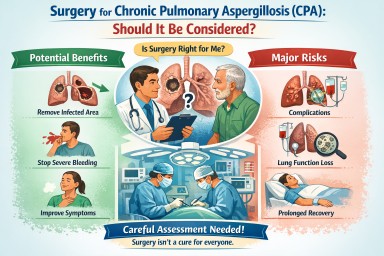
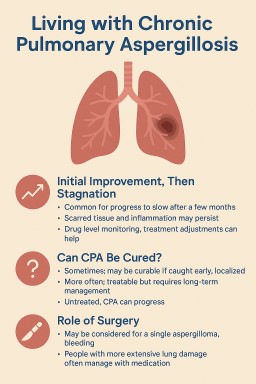
For CPA, the first-line treatment is itraconazole or voriconazole and surgery may be suitable to remove an aspergilloma. Diagnosis and a treatment plan is made by a respiratory consultant.

Hopefully this has given you a clearer picture on the two diseases. The main takeaway is that ABPA is characterised by an allergic reaction to aspergillus spores whereas CPA is not.
[/et_pb_text][/et_pb_column][/et_pb_row][/et_pb_section]