⭐ Aspergillus Bronchitis: The Overlooked Condition Hiding in Plain Sight
Estimated prevalence 1–2% in bronchiectasis and chronic airway disease clinics.
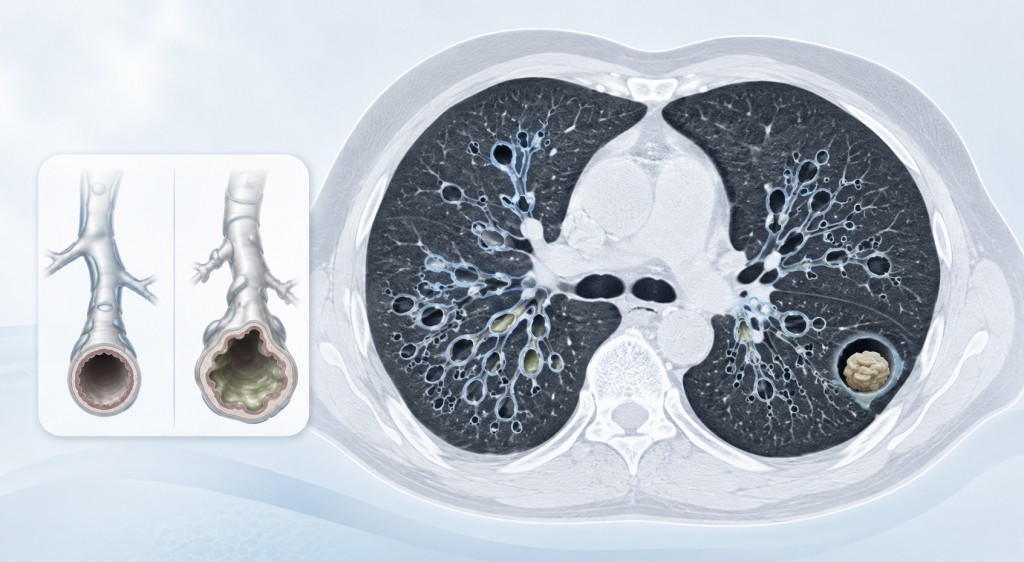
Aspergillus Bronchitis (AB) is a chronic, symptomatic infection of the airways caused by Aspergillus species in people with underlying lung disease. It sits between simple colonisation and chronic pulmonary aspergillosis (CPA), and is frequently overlooked or mislabelled as “recurrent infection,” “post-viral symptoms,” or uncontrolled bronchiectasis.
Unlike CPA, Aspergillus Bronchitis does not require cavities or major structural destruction — which makes it both easier to miss and surprisingly common among people with chronic airway disease.
When recognised and treated (usually with antifungal therapy for several months), symptoms often improve significantly. But because awareness remains low, most patients cycle through unnecessary antibiotics, repeated exacerbations, and worsening airway disease before the real cause is identified.
⭐ What Exactly Is Aspergillus Bronchitis?
Aspergillus Bronchitis is defined by:
-
chronic productive cough
-
sputum growing Aspergillus species repeatedly
-
airway inflammation
-
symptoms lasting over 3 months
-
underlying airway disease (bronchiectasis, CF, COPD, prior TB, ABPA)
-
response to antifungal therapy
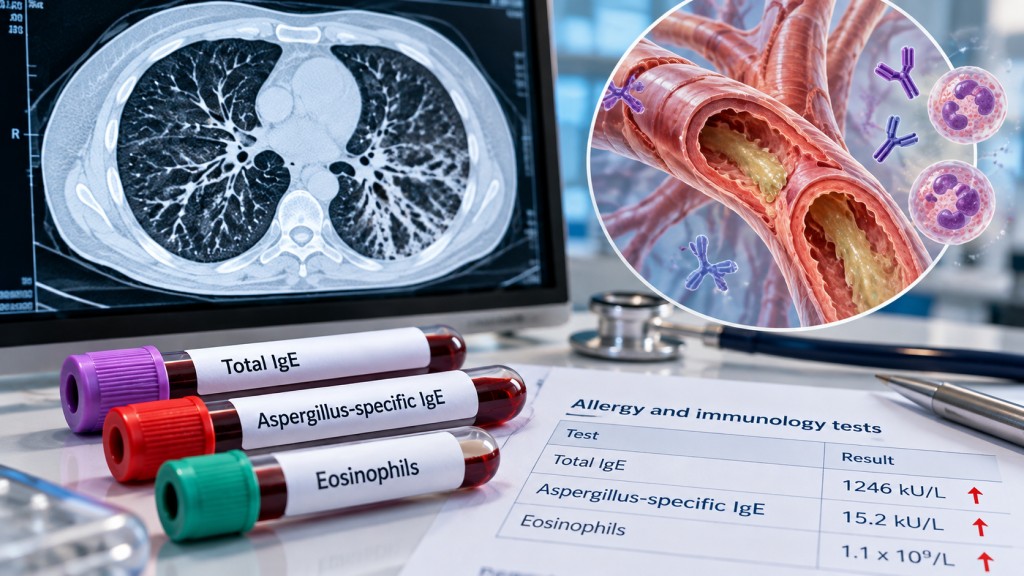
Unlike ABPA:
-
there is no allergic response,
-
IgE is usually normal,
-
eosinophils are normal or mildly elevated.
Unlike CPA:
-
there are no cavities on imaging,
-
IgG may be normal or only slightly elevated,
-
disease is confined to the airways, not lung tissue.
This places AB in a “grey zone” — often invisible unless specifically looked for.
⭐ Why Aspergillus Bronchitis Is Missed
1. Symptoms mimic common chronic airway disease
Typical AB symptoms include:
-
daily productive cough
-
worsening sputum thickness
-
breathlessness
-
fatigue
-
repeated “chest infections”
-
slow-to-clear mucus
-
crackles or wheeze
These resemble:
-
bronchiectasis exacerbations
-
COPD flare-ups
-
chronic infection with Pseudomonas or NTM
-
post-viral cough
-
uncontrolled asthma
Without fungal awareness, clinicians default to bacterial explanations.
2. Sputum grows multiple organisms — Aspergillus is dismissed
In bronchiectasis, sputum frequently grows:
-
Haemophilus
-
Pseudomonas
-
Staphylococcus
-
Streptococcus
-
NTM
When Aspergillus appears, it’s often labelled:
-
“colonisation”
-
“contaminant”
-
“not clinically relevant”
But repeated isolation with persistent symptoms is highly suggestive of AB.
3. IgE/IgG results may be normal
Many clinicians expect high IgE or IgG to “confirm Aspergillus disease.”
But in Aspergillus Bronchitis:
-
IgE is usually normal
-
IgG can be normal or borderline
This leads to false reassurance.
4. Radiology rarely shows overt features
CT scans in AB may show:
-
mucus plugging
-
mild bronchial wall thickening
-
small nodules
-
progression of bronchiectasis
But they do not show the cavities of CPA or classic features of ABPA.
Therefore radiologists often report scans as “no significant change” or “stable bronchiectasis.”
5. Antibiotics appear to help — temporarily
Patients often improve slightly with:
-
amoxicillin
-
doxycycline
-
macrolides
-
ciprofloxacin
This gives clinicians the impression of bacterial disease, but symptoms soon return.
6. Lack of awareness
Many specialists (even in respiratory clinics) are unaware that Aspergillus Bronchitis:
-
exists as a distinct clinical entity
-
can be disabling
-
responds to antifungals
-
predicts progression to CPA if untreated
This leads to significant diagnostic delay.
⭐ Who Is at Highest Risk?
1. Bronchiectasis
The largest risk group.
Aspergillus Bronchitis may account for 1–2% of all bronchiectasis patients, and up to 5–10% in severe or frequent exacerbator groups.
2. Cystic Fibrosis (CF)
These patients frequently grow Aspergillus but not all have ABPA — some have Aspergillus Bronchitis.
3. COPD and chronic productive cough
Especially those with:
-
frequent mucus plugging
-
repeated “infective exacerbations”
-
progressive sputum production
4. Post-TB airway damage
Chronic airway deformity, scarring, and bronchiectasis from old TB predispose to fungal infection.
5. Post-COVID structural disease
A new and growing risk group, especially after prolonged ICU ventilation.
6. ABPA patients
Some patients develop Aspergillus Bronchitis during steroid-dominated treatment or after stopping antifungals.
⭐ Which Specialities Need Greater Awareness?
-
Respiratory medicine
(especially bronchiectasis clinicians and severe asthma teams) -
Infectious Diseases
(frequent respiratory presentations with chronic airway infection) -
Radiology
(to recognise subtle but progressive airway changes) -
Primary care
(“recurrent chest infection” or “persistent cough” patients) -
Physiotherapy & airway clearance teams
(excessive sputum with fungal elements) -
Cystic Fibrosis services
The National Aspergillosis Centre is the ideal referral destination when diagnosis is uncertain or symptoms persist despite typical management.
⭐ Red Flags Suggesting Aspergillus Bronchitis
1. Chronic (>3 months) productive cough + repeated Aspergillus in sputum
Even 2 positive sputums in the right clinical context should raise suspicion.
2. Bronchiectasis patient not improving on repeated antibiotics
3. Thick, tenacious mucus with black, grey, or brown plugs
4. Worsening CT bronchiectasis or mucus plugging
5. Absence of features typical for ABPA (normal IgE, no fleeting infiltrates)
6. Asthma or COPD patient with new persistent sputum
7. Partial response to antibiotics but rapid relapse
8. Unexplained fatigue and breathlessness in someone with airway disease
⭐ The Cost of Missed Aspergillus Bronchitis
If AB is not recognised early, consequences include:
-
repeated exacerbations
-
accelerating bronchiectasis
-
long-term airway damage
-
chronic inflammation
-
steroid overuse
-
unnecessary antibiotics
-
repeated hospitalisations
-
progression to CPA in some patients
For health systems, missed diagnosis leads to:
-
higher admission rates
-
inappropriate long-term antibiotic use
-
avoidable CT scans and investigations
-
greater long-term burden of CPA
But antifungal therapy — when appropriately used — can offer marked symptom improvement and reduce exacerbation frequency.
⭐ Conclusion
Aspergillus Bronchitis is a distinct, treatable form of chronic airway disease seen in people with bronchiectasis, asthma, COPD, CF, and post-TB lung damage. Yet lack of awareness means many patients are repeatedly misdiagnosed with bacterial infections or unexplained chronic cough.
Recognising red flags, reviewing sputum results carefully, and considering antifungal therapy can dramatically improve outcomes. Early referral to specialist centres such as the National Aspergillosis Centre is recommended for complex cases or uncertain diagnosis.
Early identification prevents airway deterioration — and reduces the likelihood of progression to CPA.
🟣 Aspergillus Bronchitis: A Patient Guide
If you've been diagnosed with bronchiectasis, COPD, or other chronic lung problems, and keep getting infections or mucus that tests positive for Aspergillus, you might be told you have Aspergillus bronchitis. But what does that mean? And how is it different from ABPA (Allergic Bronchopulmonary Aspergillosis)?
This guide explains what Aspergillus bronchitis is, how it’s diagnosed, how common it is, and how it differs from ABPA.
🌬️ What Is Aspergillus Bronchitis?
Aspergillus bronchitis is a chronic fungal infection of the airways caused by Aspergillus fumigatus. It happens in people with damaged or scarred airways, such as:
-
Bronchiectasis
-
COPD
-
Cystic fibrosis
-
Occasionally asthma (if structural damage exists)
It’s a low-grade infection, not an allergy and not an invasive disease. The fungus lives in the mucus lining the airways, causing persistent inflammation, infection, and symptoms.
🔍 What Are the Symptoms?
| Common symptoms | What to know |
|---|---|
| Persistent cough | Often brings up sticky or brown mucus |
| Worsening breathlessness | Not always explained by asthma or infection alone |
| Fatigue or low energy | Common in chronic fungal infections |
| Frequent infections | May keep returning despite antibiotics |
| Wheeze | Sometimes, especially in asthma or ABPA overlap |
| Weight loss or low-grade fever | Possible in long-standing infection |
📊 How Common Is It?
Aspergillus bronchitis is underdiagnosed but increasingly recognised — especially in patients referred to specialist centres.
Estimated frequency in different conditions:
| Underlying condition | Estimated rate of Aspergillus bronchitis |
|---|---|
| Bronchiectasis | ~5–15%, higher in referral centres |
| COPD | ~1–5%, especially with steroid use |
| Cystic fibrosis | 5–10% (non-allergic cases) |
| Asthma (alone) | Rare unless bronchiectasis is also present |
It may be mistaken for a flare-up or chronic bacterial infection. Many people are told it’s “just colonisation” — but if symptoms persist and Aspergillus keeps growing in sputum, Aspergillus bronchitis should be considered.
🧪 How Is It Diagnosed?
There’s no single test. Diagnosis is based on clinical features plus evidence of fungal growth and a non-allergic immune pattern.
| Test | What it shows |
|---|---|
| Sputum culture / PCR | Repeated detection of Aspergillus |
| Aspergillus IgG (blood) | Often raised, shows chronic exposure |
| Aspergillus IgE & eosinophils | Usually normal — helps exclude ABPA |
| CT scan | Shows bronchiectasis, mucus plugging, but no cavitation |
| Response to antifungals | Clinical improvement supports diagnosis |
🔄 How Is It Different from ABPA?
ABPA is an allergic reaction to Aspergillus that mainly affects people with asthma or cystic fibrosis.
Aspergillus bronchitis, on the other hand, is a fungal infection in damaged airways, not an allergy.
| Feature | Aspergillus Bronchitis | ABPA |
|---|---|---|
| Type of disease | Chronic fungal infection | Allergic lung disease |
| Immune markers | High IgG, normal IgE | High IgE and eosinophils |
| Sputum | Repeated growth of Aspergillus | May or may not grow |
| CT findings | Bronchiectasis, mucus | Central bronchiectasis, mucus plugs |
| Treatment | Antifungals only | Steroids ± antifungals |
| Typical patient | Bronchiectasis, COPD | Asthma (often severe), sometimes CF |
Some patients can have both conditions at once, especially those with asthma and bronchiectasis — so testing is important.
💊 Treatment Options
| Treatment | Purpose |
|---|---|
| Oral antifungals (itraconazole, voriconazole) | Main treatment — often for several months |
| Inhaled antifungals (e.g. nebulised amphotericin) | Alternative if oral drugs not tolerated |
| Airway clearance physiotherapy | Helps remove mucus and fungal load |
| Regular sputum testing | To monitor treatment response |
| Steroids | Not used unless there’s overlapping ABPA or asthma |
🧠 Summary
| Question | Answer |
|---|---|
| Is it an infection? | ✅ Yes — fungal infection in the airways |
| Is it an allergy? | ❌ No — that’s ABPA |
| Can it coexist with ABPA? | ✅ Yes, in some cases |
| How is it diagnosed? | Repeated Aspergillus in sputum + high IgG + symptoms |
| How is it treated? | Antifungal medication (oral or nebulised) |
| Will it go away? | Often improves with treatment, but monitoring is essential |
💬 What to Ask Your Doctor
-
Could my symptoms be from Aspergillus bronchitis?
-
Have I had sputum cultures and Aspergillus blood tests (IgG, IgE)?
-
Would antifungal treatment help me?
-
Should I be referred to a specialist centre (e.g. for CPA, ABPA, bronchiectasis)?
-
Am I on the best airway clearance and physiotherapy plan?
Aspergillus Tracheobronchitis (ATB) for Expert patients and non-Specialist Clinicians
Expert Information for Patients, GPs, and Specialist Nurses
🔎 What Is Aspergillus Tracheobronchitis?
Aspergillus tracheobronchitis (ATB) is a rare but serious form of airway-invasive aspergillosis that primarily affects the trachea and large bronchi, rather than the lung parenchyma. It occurs predominantly in immunocompromised patients and may present with obstructive airway symptoms or respiratory failure.
ATB can exist on a spectrum from superficial colonisation to ulcerative or pseudomembranous invasion of the bronchial wall.
🧬 Pathophysiology
-
Inhaled Aspergillus spores adhere to and invade damaged airway mucosa.
-
Occurs more commonly when local airway immunity is impaired (e.g. in transplant recipients or critical illness).
-
May co-exist with invasive pulmonary aspergillosis (IPA) or appear in isolation.
👥 Who Is at Risk?
High-risk groups include:
-
Lung transplant recipients
-
Hematopoietic stem cell transplant patients
-
Severe COPD or structural airway disease
-
Patients with prolonged corticosteroid use
-
Critically ill or mechanically ventilated patients
-
COVID-19 or influenza patients (sometimes overlapping with CAPA/IAPA)
⚠️ Clinical Presentation
Symptoms depend on the degree of airway obstruction and depth of invasion:
-
Cough (dry or productive)
-
Worsening breathlessness
-
Stridor or wheeze
-
Hoarseness or vocal changes
-
Fever unresponsive to antibiotics
-
Haemoptysis (may be life-threatening)
-
Airway obstruction or collapse in advanced cases
ATB may be mistaken for tracheobronchial malignancy, infection, or stenosis.
🧪 Diagnosis
Bronchoscopy is essential for diagnosis:
-
Direct visualisation of:
-
Ulceration
-
Pseudomembranes
-
Plaques
-
Necrotic debris
-
-
Biopsies may reveal fungal hyphae invading mucosa.
Microbiological Investigations:
-
Culture and PCR for Aspergillus from BAL or brushings
-
BAL galactomannan
-
Serum galactomannan or β-D-glucan may be supportive
-
CT chest may be normal or show airway thickening, bronchial wall invasion, or tree-in-bud opacities
💊 Treatment
Systemic Antifungals:
-
Voriconazole is first-line
-
Isavuconazole or liposomal amphotericin B if azole intolerant or resistant
Airway Management:
-
Debridement or bronchoscopic removal of pseudomembranes in severe obstruction
-
Airway stenting in refractory strictures
-
Nebulised antifungals (e.g. amphotericin B) may be used as adjunct in selected cases
Prompt initiation of antifungal therapy is vital. Delays can lead to respiratory failure or death.
🧾 Monitoring
-
Clinical response: breathlessness, cough, fever
-
Repeat bronchoscopy in some cases
-
CT imaging of airways
-
Antifungal drug levels
-
Liver and renal function
📚 More Information
-
ATB is under-recognised, especially in non-neutropenic or critically ill patients.
-
Should be considered in transplant recipients or ICU patients with persistent respiratory symptoms and negative bacterial cultures.
-
Referral to respiratory, infectious diseases, and ICU teams is essential.
-
Resources: aspergillosis.org ; BTS Statement on aspergillosis
Aspergillus Bronchitis for Expert Patients and non-Specialist Clinicians
Expert Information for Patients, GPs, and Specialist Nurses
🔎 What Is Aspergillus Bronchitis?
Aspergillus bronchitis is a chronic fungal infection of the airways by Aspergillus fumigatus (or rarely other Aspergillus species), seen in individuals with structural lung disease or impaired mucociliary clearance. Unlike ABPA, it is not allergic in origin and does not involve systemic invasion, but is characterised by persistent fungal colonisation with active infection.
🧬 Pathophysiology
-
Chronic colonisation of the conducting airways by Aspergillus
-
Local immune dysfunction (but not systemic immunosuppression)
-
Low-grade inflammation and increased mucus production
-
Often coexists with bronchiectasis, COPD, or CF
👥 Who Is at Risk?
Most commonly seen in patients with:
-
Bronchiectasis (non-ABPA)
-
Cystic fibrosis
-
COPD or asthma with sputum production
-
Post-viral or structural airway damage
-
Chronic antibiotic or corticosteroid use
Not typically seen in severely immunocompromised hosts (in whom invasive aspergillosis is more likely).
⚠️ Common Symptoms
-
Persistent productive cough
-
Thick sputum often yellow or green
-
Worsening breathlessness or wheeze
-
Chronic sputum positivity for Aspergillus
-
Mild fever or malaise (but often afebrile)
-
Poor response to antibiotics alone
Symptoms may resemble chronic bacterial bronchitis or overlap with infective exacerbations of bronchiectasis.
🧪 Diagnosis
Diagnosis requires a combination of clinical and microbiological evidence, with exclusion of ABPA and CPA.
Diagnostic Features:
-
Chronic productive cough (>4 weeks)
-
Repeated isolation of Aspergillus from sputum or BAL
-
Elevated Aspergillus IgG (typically present)
-
Normal or mildly elevated total IgE (typically <1000 IU/mL)
-
Absence of cavitary lesions or ABPA features on CT
-
Response to antifungal treatment supports diagnosis
🛑 Exclude:
-
ABPA (IgE >1000, eosinophilia, central bronchiectasis)
-
CPA (cavities, weight loss, radiological progression)
💊 Treatment
First-Line:
-
Oral antifungals (usually for 3–6 months)
-
Itraconazole (first choice)
-
Voriconazole or posaconazole (if resistant/intolerant)
-
-
Monitor drug levels and LFTs
Adjuncts:
-
Physiotherapy and airway clearance techniques
-
Nebulised saline or mucolytics
-
Treat co-infections (e.g. Pseudomonas) where relevant
In patients with CF, consider co-management with a specialist CF team.
🧾 Monitoring
-
Sputum cultures to monitor persistence or clearance
-
Aspergillus IgG levels
-
Symptoms (sputum, breathlessness)
-
Liver function and drug monitoring
-
Periodic CT imaging if symptoms worsen or haemoptysis occurs
📚 More Information
-
Aspergillus bronchitis is often underdiagnosed in patients with recurrent "non-resolving chest infections".
-
Patients benefit from coordinated care between respiratory, microbiology, and infectious disease specialists.
-
Referral to the National Aspergillosis Centre is appropriate for refractory or complex cases.
-
Resources: aspergillosis.org, Review: Pulmonary Aspergillosis: Spectrum of Disease;
- BTS Statement on aspergillosis