Expert Information for Patients, GPs, and Specialist Nurses
🔎 What Is Aspergillus Tracheobronchitis?
Aspergillus tracheobronchitis (ATB) is a rare but serious form of airway-invasive aspergillosis that primarily affects the trachea and large bronchi, rather than the lung parenchyma. It occurs predominantly in immunocompromised patients and may present with obstructive airway symptoms or respiratory failure.
ATB can exist on a spectrum from superficial colonisation to ulcerative or pseudomembranous invasion of the bronchial wall.
🧬 Pathophysiology
-
Inhaled Aspergillus spores adhere to and invade damaged airway mucosa.
-
Occurs more commonly when local airway immunity is impaired (e.g. in transplant recipients or critical illness).
-
May co-exist with invasive pulmonary aspergillosis (IPA) or appear in isolation.
👥 Who Is at Risk?
High-risk groups include:
-
Lung transplant recipients
-
Hematopoietic stem cell transplant patients
-
Severe COPD or structural airway disease
-
Patients with prolonged corticosteroid use
-
Critically ill or mechanically ventilated patients
-
COVID-19 or influenza patients (sometimes overlapping with CAPA/IAPA)
⚠️ Clinical Presentation
Symptoms depend on the degree of airway obstruction and depth of invasion:
-
Cough (dry or productive)
-
Worsening breathlessness
-
Stridor or wheeze
-
Hoarseness or vocal changes
-
Fever unresponsive to antibiotics
-
Haemoptysis (may be life-threatening)
-
Airway obstruction or collapse in advanced cases
ATB may be mistaken for tracheobronchial malignancy, infection, or stenosis.
🧪 Diagnosis
Bronchoscopy is essential for diagnosis:
-
Direct visualisation of:
-
Ulceration
-
Pseudomembranes
-
Plaques
-
Necrotic debris
-
-
Biopsies may reveal fungal hyphae invading mucosa.
Microbiological Investigations:
-
Culture and PCR for Aspergillus from BAL or brushings
-
BAL galactomannan
-
Serum galactomannan or β-D-glucan may be supportive
-
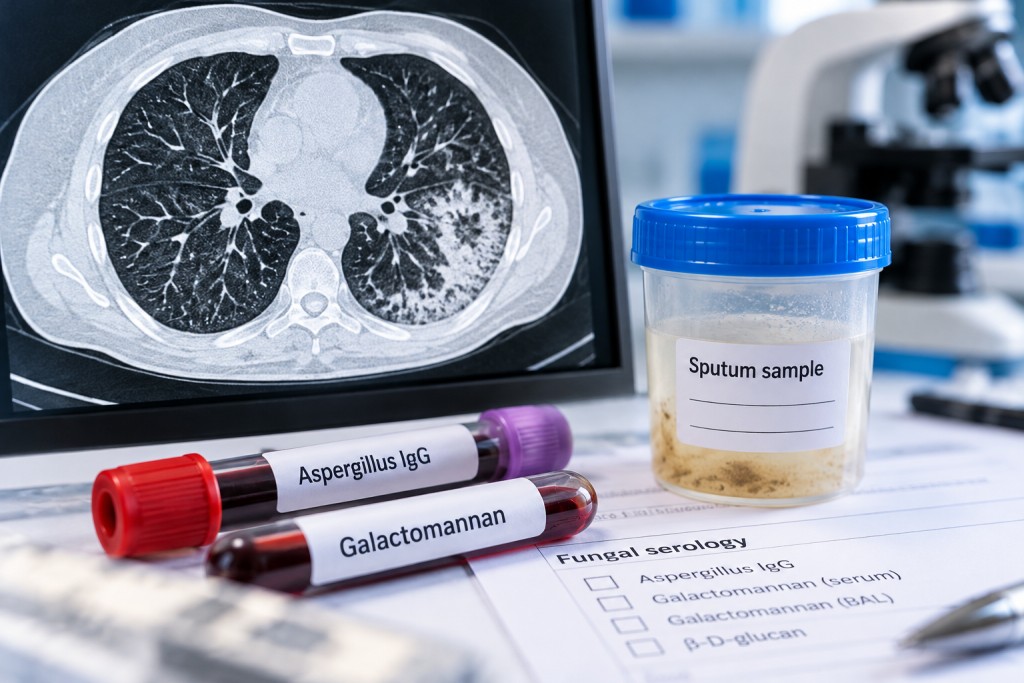
CT chest may be normal or show airway thickening, bronchial wall invasion, or tree-in-bud opacities
💊 Treatment
Systemic Antifungals:
-
Voriconazole is first-line
-
Isavuconazole or liposomal amphotericin B if azole intolerant or resistant
Airway Management:
-
Debridement or bronchoscopic removal of pseudomembranes in severe obstruction
-
Airway stenting in refractory strictures
-
Nebulised antifungals (e.g. amphotericin B) may be used as adjunct in selected cases
Prompt initiation of antifungal therapy is vital. Delays can lead to respiratory failure or death.
🧾 Monitoring
-
Clinical response: breathlessness, cough, fever
-
Repeat bronchoscopy in some cases
-
CT imaging of airways
-
Antifungal drug levels
-
Liver and renal function
📚 More Information
-
ATB is under-recognised, especially in non-neutropenic or critically ill patients.
-
Should be considered in transplant recipients or ICU patients with persistent respiratory symptoms and negative bacterial cultures.
-
Referral to respiratory, infectious diseases, and ICU teams is essential.
-
Resources: aspergillosis.org ; BTS Statement on aspergillosis

Did this page help you?
Tell us in one minute