


What is Aspergillosis?
Aspergillosis is a group of illnesses caused by a common mould called Aspergillus. We breathe in its microscopic spores every day, usually without harm. Most people never become ill because healthy lungs and the immune system clear the spores from the airways.
In some people, particularly those with asthma, existing lung disease or a weakened immune system, Aspergillus can cause an allergic reaction, persistent airway problems or infection. The type of aspergillosis, its symptoms and its treatment can therefore be very different from one person to another.
This page explains what aspergillosis is and helps you find information about diagnosis, treatment and living with the condition.
Patient-centred information from the National Aspergillosis Centre. This guide combines specialist clinical knowledge with the questions, experiences and practical concerns raised by people living with aspergillosis and their carers.
Key points
- Aspergillosis is caused by the mould Aspergillus.
- Aspergillus spores are common in the air, and most people breathe them in every day without becoming ill.
- Aspergillosis is not one single disease: it is a group of different conditions.
- Some forms are mainly allergic conditions; others are infections.
- The type of illness depends on your lungs, immune system and how your body reacts to the fungus.
New to aspergillosis?
If you have recently been diagnosed, or your doctor suspects aspergillosis, these links may help you get started:
- Which type of aspergillosis do I have?
- How doctors diagnose aspergillosis
- Treatment and management
- Living with aspergillosis
- Patient support meetings
Where does Aspergillus come from?
Aspergillus is a mould that grows naturally in the environment. It may be found in soil, compost, decaying leaves, dust and damp indoor areas. Because it is so common, its spores are often present in the air around us.
Most of the time this is not a problem. Healthy lungs and a healthy immune system usually remove the spores without difficulty. Problems can arise when the lungs are already damaged, the airways are sensitive, or the immune system is weakened or altered.
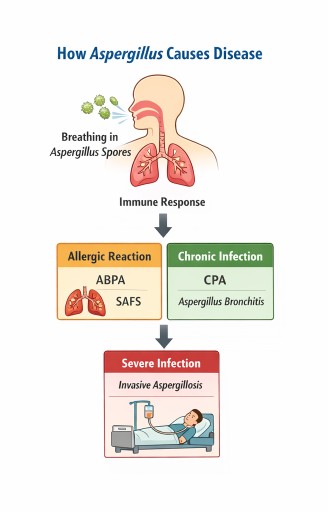
Aspergillosis is a group of conditions
The word aspergillosis is an umbrella term for several related conditions caused by Aspergillus. The important difference is the way the body reacts to the fungus. Different forms need different tests, treatments and follow-up.
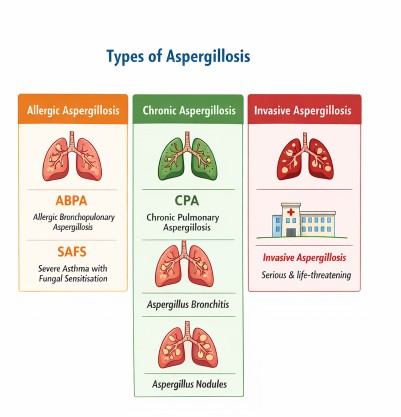
Allergic Aspergillus conditions
In some people, especially those with asthma or related airway disease, the immune system overreacts to Aspergillus. The fungus may not be invading tissue, but it can still trigger substantial inflammation and symptoms.
Chronic Aspergillus infections
In other people, particularly those with pre-existing lung damage, Aspergillus can persist in the lungs and cause long-term infection or inflammation.
- Chronic pulmonary aspergillosis (CPA)
- Aspergillus bronchitis
- Aspergillus nodules
- Aspergilloma (fungal ball)
Invasive and Acute Aspergillus Infections
Rarely, Aspergillus can cause a more acute or invasive infection. This mainly affects people who are severely unwell or whose immune systems are substantially weakened by illness or medical treatment.
Invasive infection is very different from chronic forms such as CPA, ABPA, Aspergillus bronchitis or an aspergilloma. Having one of these long-term conditions does not mean that infection will spread through the body.
Aspergillus can also occasionally cause local infections of the ear, eye or nails. These are usually separate, local problems rather than a sign that lung aspergillosis is spreading.
Who is most at risk?
Most people breathe in Aspergillus spores without becoming ill. Risk increases when the lungs are already vulnerable or the immune system cannot respond in the usual way.
People who may be at higher risk include:
- people with asthma, bronchiectasis or chronic obstructive pulmonary disease (COPD)
- people who have had tuberculosis or other lung damage
- people with cystic fibrosis
- people taking medicines that suppress the immune system
- people whose immune systems are weakened by illness or medical treatment
What symptoms can aspergillosis cause?
Symptoms vary depending on the type of aspergillosis, but may include:
- persistent cough, wheezing or breathlessness
- bringing up sputum or mucus plugs
- chest discomfort or pain
- fatigue or weight loss
- coughing up blood in some cases
These symptoms overlap with many other lung conditions, which is one reason aspergillosis can take time to diagnose.
Read more about symptoms of aspergillosis →
Why can aspergillosis be difficult to diagnose?
Aspergillosis can be difficult to recognise because it is a group of conditions rather than one disease, and its symptoms often overlap with asthma, bronchiectasis, chronic lung infection and other respiratory illnesses.
Doctors may use a combination of evidence, including symptoms, scans, blood tests, sputum results and medical history. One test alone is often not enough.
How is aspergillosis treated?
Treatment depends on the type of aspergillosis and the individual. Some people need antifungal medicines. Others may need steroids, biologic drugs, airway clearance, monitoring or a combination of treatments. Some conditions need long-term management rather than a short course of treatment.
Read more about treatment and management →
Living with aspergillosis
Living with aspergillosis often involves more than treating the fungus itself. Many people also need help with fatigue, breathlessness, exercise, nutrition, anxiety, practical adjustments and understanding how to reduce harmful exposures.
Support from other patients, carers and specialist teams can make a real difference.
Common questions
Is aspergillosis contagious?
No. Aspergillosis is not usually passed from one person to another.
Does everyone who breathes in Aspergillus get ill?
No. Most people breathe in spores regularly without becoming ill.
Is aspergillosis one disease?
No. It is a group of different conditions caused by Aspergillus.
Can aspergillosis be cured?
That depends on the type. Some forms can be treated effectively, while others need long-term monitoring and management.
Why have I never heard of it before?
Some forms of aspergillosis are uncommon, and many symptoms overlap with more familiar lung conditions. This can make diagnosis and awareness more difficult.
Where to go next
- Learn about the different types of aspergillosis
- Understand how doctors diagnose aspergillosis
- Explore treatment and management options
- Read about living with aspergillosis
- Search the Knowledge Hub for patient questions
Last reviewed: September 2026

Living with Aspergillosis

Living with aspergillosis often involves much more than managing a diagnosis or taking medication. It can affect energy, breathing, confidence, daily routines, work, relationships and emotional wellbeing. The experience varies greatly according to the type of aspergillosis, the health of the lungs, treatment and other medical conditions.
Some people have stable symptoms for long periods. Others experience flare-ups, infections, treatment changes, fatigue or uncertainty about what changing symptoms mean. This page brings together practical information and links to further support, with the aim of helping people maintain the best possible quality of life.
Patient-centred information from the National Aspergillosis Centre. This guide combines specialist clinical knowledge with the questions, experiences and practical concerns raised by people living with aspergillosis and their carers.
Key points
- Living with aspergillosis often means managing symptoms, treatment, monitoring and everyday practical challenges.
- Fatigue, breathlessness and cough can affect daily life as much as the diagnosis itself.
- Good management may include pacing, symptom monitoring, medicine safety, infection prevention and support from others.
- Mental and emotional wellbeing matter just as much as physical symptoms.
- Support from clinicians, carers, family and patient communities can all play an important part.
Contents
- Daily life with aspergillosis
- Managing symptoms, fatigue and activity
- Medicines, treatment and monitoring
- Work, travel and practical support
- Mental health, relationships and support
- Home environment and exposure
- When to seek medical advice
- Common questions
Daily life with aspergillosis
Even when symptoms are not dramatic, aspergillosis can affect daily life in ways that are easy for others to underestimate. Breathlessness may make ordinary tasks harder; fatigue can be out of proportion to what someone has done. Long-term cough, mucus production, disrupted sleep and the emotional strain of a rare disease can all add up.
Some people also have asthma, bronchiectasis, chronic obstructive pulmonary disease (COPD) or other conditions that make symptoms and treatment more complex. The aim of care is not only to control disease, but also to support independence, confidence and quality of life.
Managing symptoms, fatigue and activity
Long-term symptoms can continue even when aspergillosis is being treated or monitored. Common challenges include breathlessness, cough, sputum, fatigue, chest discomfort, reduced exercise tolerance, sleep disruption, repeated infections or flare-ups, and anxiety about the future.
Fatigue and energy
Fatigue is one of the most common and frustrating parts of living with aspergillosis. It can have many causes, including inflammation, poor sleep, breathlessness, infection, coughing, medication effects and the effort of living with a long-term condition.
Many people find it helpful to think in terms of conserving and pacing energy rather than trying to push through without limits.
- Plan the day around the most important tasks.
- Break activities into smaller steps.
- Rest before becoming completely exhausted.
- Avoid the cycle of overdoing things on a better day and then crashing afterwards.
- Track patterns to understand what worsens fatigue.
Breathlessness, cough and activity
Breathlessness can be caused by aspergillosis, underlying lung disease, deconditioning, or a combination of these. Persistent cough, thick mucus and repeated chest symptoms can also be a major burden. Management depends on the person: better control of inflammation, airway-clearance techniques, hydration or treatment of infection may each be important.
Where appropriate, gentle, steady activity can help maintain strength, confidence, fitness and independence. The right level varies from person to person and may change during a flare-up or infection.
- Pace activity and take breaks before symptoms become overwhelming.
- Use breathing techniques if these have been taught by a clinician or physiotherapist.
- Build activity gradually rather than aiming for sudden large increases.
- Ask about pulmonary rehabilitation or other supervised support if that may be helpful.
If cough, sputum or wheeze changes noticeably, consider whether this could reflect a flare-up, another infection, a treatment issue or progression of the underlying condition.
Medicines, treatment and monitoring
Sometimes the challenge is not only the disease itself, but the work involved in managing it. People may need repeat prescriptions, inhalers, antifungal medicines, biologic therapies, antibiotics, blood tests, scans and discussions with several different clinicians.
Understanding why each medicine is prescribed, how it should be taken, and what side effects or interactions to watch for can help people work more effectively with their healthcare team. Never stop or change prescribed medicines without discussing it with a healthcare professional, especially corticosteroids, antifungals or treatments for severe asthma or allergic bronchopulmonary aspergillosis.
Useful topics include:
Monitoring your condition
It is often helpful to notice patterns over time rather than focusing only on one bad day. A symptom diary can make appointments more useful and help identify whether symptoms are stable, gradually changing or fluctuating.
- Cough, breathlessness and sputum changes
- Fatigue, sleep and weight
- Episodes of wheeze, infection or flare-up symptoms
- Medication changes or possible side effects
- Any coughing up of blood
Depending on the condition, clinicians may use blood tests, CT scans, lung-function tests or, for selected patients, oxygen-saturation monitoring.
Work, travel and practical support
Aspergillosis can affect employment, finances, insurance, travel, family life and independence. Practical support may include workplace adjustments, benefits advice, travel planning, medical letters, vaccination planning and help from local support organisations.
Planning ahead can make a meaningful difference, especially for holidays, insurance, medication supplies, oxygen requirements or specialist appointments.
- Travel with aspergillosis
- Vaccines and infection prevention
- Fatigue and aspergillosis
- Pulmonary rehabilitation
Nutrition and general health
Long-term lung illness can affect appetite, weight, strength and recovery. Good nutrition supports strength and resilience, even though it does not replace medical treatment. Discuss unintended weight loss or poor appetite with a clinician.
Mental health, relationships and support
Living with a rare or poorly understood illness can be mentally exhausting. People may feel anxious, isolated, frustrated, low in mood or uncertain about the future. These reactions are understandable; they do not mean someone is coping badly.
Helpful approaches may include talking openly with trusted family, friends or other patients, keeping questions for appointments, breaking problems into manageable steps and seeking support if low mood or anxiety becomes persistent or overwhelming.
Carers, family and relationships
Aspergillosis affects more than the person with the diagnosis. Partners, family members and carers may be balancing practical support, worry and changing roles. Their needs for information, support and validation matter too.
Finding support
Support can come from specialist clinics, GPs, pharmacists, respiratory teams, specialist nurses, family, friends and patient communities. Peer support does not replace medical advice, but it can reduce isolation and help people share practical coping ideas.
Find out about support, community and online meetings →
Home environment and exposure
Because Aspergillus is common in the environment, complete avoidance is neither possible nor usually the aim. It is more realistic to reduce unnecessary heavy exposure.
- Avoid obvious mould growth in the home.
- Address damp and poor ventilation where possible.
- Be cautious around compost, decaying plant material and dusty environments.
- Use sensible precautions when exposure is hard to avoid.
For practical advice on damp, mould and housing concerns, visit our Damp, Mould and Housing hub.
Search the Knowledge Hub for detailed questions on mould, home environment and exposure.
When to seek medical advice
Seek medical advice if symptoms are changing in a concerning way, especially if you experience:
- New or worsening breathlessness
- Significant or repeated coughing up of blood
- Rapid worsening of cough or sputum
- Chest pain, high fever or severe illness
- Unexplained weight loss or marked deterioration
- Possible serious side effects from treatment
- Symptoms that feel significantly different from your usual pattern
It is better to ask than to sit with uncertainty. In an emergency, use local urgent or emergency medical services.
Common questions
Will I always feel this tired?
Not necessarily. Fatigue can improve, fluctuate or persist depending on the condition, treatment response and other factors. It is worth discussing because it matters greatly to quality of life.
Should I avoid exercise?
Not usually altogether. The right level depends on symptoms, oxygen levels, other health conditions and medical advice. Many people benefit from paced, sensible activity rather than complete avoidance or sudden overexertion.
Do I need to avoid all mould exposure?
Complete avoidance is not realistic. The usual aim is to reduce obvious or heavy exposure where practical.
Can support groups really help?
Many people find support groups helpful, both emotionally and practically. They can reduce isolation and improve confidence in managing a long-term condition.
Where to go next
- What is Aspergillosis?
- Diagnosis of Aspergillosis
- Treatment and Management
- Which type of aspergillosis do I have?
- Support and community
- Search the Knowledge Hub
Last reviewed: August 2026

Treatment and Management of Aspergillosis
Treatment for aspergillosis depends on the type of condition, how severe it is, and the health of the person affected. Aspergillosis is not one single disease, so there is no single treatment plan that suits everyone.
Some people need antifungal medicines. Others need treatment to control inflammation, improve asthma, clear mucus, or manage symptoms such as fatigue and breathlessness. Many people need a combination of treatments and regular monitoring over time.
This page gives an overview of the main approaches used to treat and manage aspergillosis.
Patient-centred information from the National Aspergillosis Centre. This guide combines specialist clinical knowledge with the questions, experiences and practical concerns raised by people living with aspergillosis and their carers.
Key Points
- Treatment depends on the type of aspergillosis.
- Some treatments target the fungus itself, while others target the body’s inflammatory or allergic response.
- Many patients need long-term monitoring even if they are not on continuous treatment.
- Symptom management is an important part of care.
- Drug interactions and side effects can be an important part of treatment planning.
The Main Goals of Treatment
The aims of treatment may include one or more of the following:
- reducing the amount of fungal growth
- controlling inflammation or allergic reactions
- improving breathing and quality of life
- preventing further lung damage
- monitoring the condition over time
- treating flare-ups or complications
The balance between these goals depends on whether the person has allergic disease, chronic infection, invasive infection, or a mixture of problems.
Treatment Depends on the Type of Aspergillosis
Allergic Aspergillus conditions
In conditions such as Allergic Bronchopulmonary Aspergillosis (ABPA) and Severe Asthma with Fungal Sensitisation (SAFS), treatment often aims to reduce inflammation, control asthma symptoms, and sometimes reduce fungal burden in the airways.
Chronic Aspergillus lung disease
In conditions such as Chronic Pulmonary Aspergillosis (CPA), Aspergillus bronchitis and aspergillus nodules, treatment may focus more on antifungal therapy, monitoring scans and blood results, and managing symptoms over time.
Invasive aspergillosis
Invasive aspergillosis is a serious infection that usually needs urgent antifungal treatment and specialist medical care.
Antifungal Medicines
Antifungal medicines are used to treat or suppress fungal disease. They may be used in chronic infection, invasive infection, and sometimes as part of treatment in allergic disease.
Common antifungal medicines include:
- itraconazole
- voriconazole
- posaconazole
- isavuconazole
- amphotericin B in some settings
Not every antifungal is suitable for every patient. The choice depends on the condition being treated, the likely benefits, side effects, other medications, liver function, kidney function, and whether there is concern about antifungal resistance.
Steroids and Other Anti-inflammatory Treatment
Some forms of aspergillosis, especially allergic disease, are driven not only by the fungus but by the body’s immune response to it. In these situations, treatment may include medicines that reduce inflammation.
These may include:
- inhaled steroids
- oral steroids in some situations
- other treatments aimed at reducing airway inflammation
The aim is often to reduce symptoms such as wheeze, cough, mucus production and flare-ups.
Biologic Medicines
Some patients with severe asthma or allergic Aspergillus disease may be treated with biologic medicines. These drugs target specific parts of the immune system involved in inflammation.
Biologics may be considered when symptoms remain difficult to control, when steroid side effects are a concern, or when the pattern of disease suggests a strong allergic or eosinophilic component.
The decision to use a biologic depends on the clinical picture, previous treatment response and specialist assessment.
Monitoring During Treatment
Monitoring is an important part of aspergillosis care. Even when treatment is helping, doctors often need to follow progress over time.
Monitoring may include:
- review of symptoms
- blood tests
- drug levels for some antifungal medicines
- liver function or other safety blood tests
- repeat CT scans or chest imaging
- sputum tests in some patients
This helps the clinical team judge whether treatment is working, whether side effects are developing, and whether the plan needs to change.
Side Effects and Drug Interactions
Treatment planning is not only about whether a medicine might help. It is also about whether it is safe and practical for the individual person.
Some antifungal medicines can interact with other common drugs. Some can affect the liver, heart rhythm, or levels of other medicines in the body. This is one reason treatment may need adjustment and careful monitoring.
Patients should tell their clinical team about all prescription medicines, over-the-counter medicines and supplements they take.
Surgery and Other Procedures
Most patients with aspergillosis are treated medically, but in some situations surgery or another procedure may be considered. This depends on the type of disease and the problem being treated.
Examples may include:
- surgery for selected aspergillus nodules
- procedures related to significant bleeding
- specialist management of complications in selected cases
These decisions are usually made by specialist teams.
Managing Symptoms and Daily Life
Treatment is not only about fighting the fungus. Many people also need help with the everyday impact of the condition.
Important parts of management may include:
- managing fatigue
- breathlessness and pacing
- nutrition
- airway clearance in some conditions
- support for anxiety, uncertainty or long-term illness
Read more about living with aspergillosis →
When Treatment May Change
Treatment plans may change over time. For example:
- if symptoms improve or worsen
- if scan findings change
- if side effects occur
- if blood tests show a different pattern
- if another health condition affects what treatment is safe
Aspergillosis management is often a process of review and adjustment rather than a single fixed plan.
Common Questions
Will I need treatment forever?
Not always. Some people need treatment for a limited time, while others need long-term therapy or monitoring. This depends on the type of aspergillosis and how it behaves over time.
Do antifungal medicines cure aspergillosis?
They can be very helpful, but the answer depends on the condition. In some cases they suppress disease, improve symptoms, or slow progression rather than providing a simple one-off cure.
Why are blood tests needed during treatment?
Blood tests may be used to monitor safety, check drug levels, and help assess how the disease is responding.
Why might treatment focus on inflammation rather than only the fungus?
Because in allergic disease the body’s immune response may be causing much of the problem. In those cases, reducing inflammation can be just as important as reducing fungal burden.
Where to Go Next
- What is Aspergillosis?
- Which Type of Aspergillosis Do I Have?
- Diagnosis of Aspergillosis
- Living with Aspergillosis
- Search the Knowledge Hub
Last reviewed: March 2026
Diagnosis of Aspergillosis
Diagnosing aspergillosis can be challenging. This is because aspergillosis is not one single disease, and because its symptoms often overlap with asthma, bronchiectasis, chronic obstructive pulmonary disease (COPD), bacterial infection and other lung conditions.
Doctors usually diagnose aspergillosis by combining several different types of information. These may include symptoms, scans, blood tests, sputum results and a person’s underlying lung or immune condition. One test alone is often not enough.
This page gives an overview of how aspergillosis is diagnosed and explains the main types of evidence doctors use.
Patient-centred information from the National Aspergillosis Centre. This guide combines specialist clinical knowledge with the questions, experiences and practical concerns raised by people living with aspergillosis and their carers.
Key Points
- Diagnosis usually depends on a combination of evidence rather than one single test.
- The tests used depend on the type of aspergillosis being considered.
- Some tests look for the fungus itself, while others look for the body’s immune response.
- Scans are often very important, especially in chronic lung disease.
- Diagnosis may take time because results need to be interpreted together.
Why Diagnosis Can Be Difficult
Aspergillosis can be difficult to diagnose for several reasons. Many symptoms are non-specific, including cough, fatigue, breathlessness and sputum production. Some people already have pre-existing lung disease, which can make it harder to know what is causing their symptoms.
In addition, different forms of aspergillosis need different types of evidence. For example, allergic conditions such as Allergic Bronchopulmonary Aspergillosis (ABPA) rely heavily on blood tests and clinical history, while chronic infections such as Chronic Pulmonary Aspergillosis (CPA) often depend strongly on CT findings and longer-term changes in the lungs.
The Main Streams of Evidence
Doctors often build the diagnosis from several streams of evidence:
- Symptoms and clinical history – what symptoms are present, how long they have been there, and whether there is asthma, bronchiectasis, previous tuberculosis, immune suppression or other risk factors
- Imaging – chest X-rays and especially CT scans can show cavities, nodules, mucus plugging, bronchiectasis or other patterns that support the diagnosis
- Blood tests – these may look for immune responses to Aspergillus, such as raised Immunoglobulin E (IgE), Aspergillus-specific antibodies, or markers of inflammation
- Sputum or airway samples – these may detect Aspergillus growing in the airways or identify fungal material using culture or molecular tests
- Underlying health factors – the state of the immune system and lungs often helps determine which type of aspergillosis is most likely
Symptoms and Medical History
The starting point is often the person’s symptoms and medical background. Doctors may ask about:
- persistent cough
- breathlessness
- wheezing
- fatigue
- weight loss
- coughing up mucus or blood
- history of asthma, bronchiectasis or previous lung infection
- medicines that weaken the immune system
These details help doctors decide which tests are most useful and which form of aspergillosis may be present.
Imaging: CT Scans and Chest X-rays
Imaging is often central to diagnosis, especially in chronic lung disease. CT scans can show much more detail than a standard chest X-ray.
Depending on the condition, imaging may show:
- mucus plugging in the airways
- bronchiectasis
- cavities in the lungs
- aspergillus nodules
- areas of inflammation or infection
These findings need to be interpreted alongside the rest of the clinical picture.
Blood Tests
Blood tests are often used to look for the body’s immune response to Aspergillus or for evidence that supports infection or allergy.
Tests may include:
- Total Immunoglobulin E (IgE) – often important in allergic disease
- Aspergillus-specific IgE – helps support allergic sensitisation
- Aspergillus Immunoglobulin G (IgG) – often useful in chronic infection
- Eosinophils – may be raised in allergic conditions
- Inflammatory markers – sometimes used as part of the wider assessment
Different blood tests matter more in different conditions. For example, allergic conditions rely more on Immunoglobulin E (IgE) and eosinophils, while chronic infection often relies more on Aspergillus Immunoglobulin G (IgG) and imaging.
Sputum and Airway Samples
Sputum can sometimes provide direct evidence of Aspergillus in the airways. Samples may be examined in different ways, including fungal culture and molecular tests.
However, interpretation can be difficult. Finding Aspergillus in sputum does not always prove that it is causing disease, because some people may breathe in spores or have the fungus present without it being the main cause of symptoms. This is why sputum results are interpreted alongside the rest of the evidence.
Tests for the Fungus vs Tests for the Immune Response
Some tests try to detect parts of the fungus itself. Others look at how the body is reacting to the fungus.
Tests looking for the fungus may include sputum culture, microscopy, molecular tests and some fungal biomarkers.
Tests looking at the immune response may include total Immunoglobulin E (IgE), Aspergillus-specific Immunoglobulin E (IgE), Aspergillus Immunoglobulin G (IgG), and eosinophil counts.
Both types of evidence matter, but the balance depends on whether the doctor is considering allergic disease, chronic infection or invasive infection.
Diagnosis in Different Types of Aspergillosis
Allergic disease
In conditions such as Allergic Bronchopulmonary Aspergillosis (ABPA) and Severe Asthma with Fungal Sensitisation (SAFS), diagnosis often depends on a combination of asthma or airway disease, blood test results and imaging.
Chronic infection
In conditions such as Chronic Pulmonary Aspergillosis (CPA), Aspergillus bronchitis and aspergillus nodules, diagnosis often depends on symptoms over time, imaging findings and supportive microbiology or antibody results.
Invasive infection
Invasive aspergillosis is usually considered in people who are very unwell or severely immunocompromised. In this setting, diagnosis may need to happen quickly using scans, laboratory tests and the overall clinical picture.
Why Diagnosis Sometimes Takes Time
Many people feel frustrated when diagnosis is not immediate. This is understandable. Aspergillosis often requires careful interpretation of several test results together, and doctors may need to monitor symptoms, repeat scans, or wait for laboratory results before reaching a firm conclusion.
In some cases, the diagnosis becomes clearer over time rather than at a single appointment.
Common Questions
Can one blood test diagnose aspergillosis?
Usually not. Blood tests are important, but they are normally interpreted together with symptoms, scans and other results.
Why do I need a CT scan?
CT scans can show details in the lungs that are not visible on a standard chest X-ray and are often very important in chronic aspergillus lung disease.
If Aspergillus is found in my sputum, does that prove I have disease?
Not always. It can be an important clue, but it needs to be interpreted in context.
Why do different doctors mention different tests?
Because the most useful tests vary depending on whether they are considering allergic disease, chronic infection or invasive infection.
Where to Go Next
- What is Aspergillosis?
- Which Type of Aspergillosis Do I Have?
- Symptoms of Aspergillus Disease
- Treatment and Management
- Search the Knowledge Hub
Last reviewed: March 2026
Which Type of Aspergillosis Do I Have?
Aspergillosis is not a single disease. It is a group of conditions caused by the fungus Aspergillus. The type of illness someone develops depends mainly on how their immune system reacts to the fungus and on the health of their lungs.
This page explains the main types of aspergillosis and helps you find the information most relevant to your diagnosis.
Patient-centred information from the National Aspergillosis Centre. This guide combines specialist clinical knowledge with the questions, experiences and practical concerns raised by people living with aspergillosis and their carers.
Key Points
- Aspergillosis includes several different conditions.
- Some forms are mainly allergic reactions to the fungus.
- Other forms are chronic infections in the lungs.
- Rarely, severe infections occur in people with weakened immune systems.
- Your doctor will determine the type using symptoms, scans, blood tests, and other investigations.
Main Types of Aspergillosis
The main forms of aspergillosis fall into three broad groups.
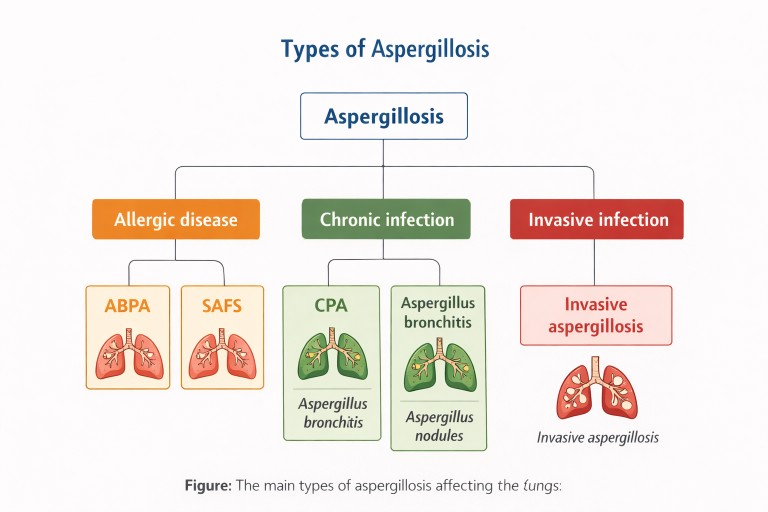
Allergic Aspergillus Conditions
In some people the immune system reacts strongly to Aspergillus spores. This causes inflammation in the airways rather than an invasive infection.
These conditions are most often seen in people with asthma or related airway diseases.
Common features may include:
- worsening asthma symptoms
- wheezing
- cough with mucus plugs
- high levels of IgE in blood tests
Chronic Aspergillus Lung Disease
In people whose lungs have already been damaged by previous illness, Aspergillus can sometimes persist and cause a long-term infection or inflammation.
This group includes:
Common features may include:
- persistent cough
- fatigue
- weight loss
- breathlessness
- abnormal lung scans
These conditions often require long-term monitoring and antifungal treatment.
Invasive Aspergillosis
Invasive aspergillosis is a more severe infection that occurs mainly in people whose immune systems are severely weakened.
This may include people who:
- have recently had chemotherapy
- have had organ or stem cell transplants
- are receiving strong immune-suppressing medicines
- are critically ill in hospital
This form of aspergillosis requires urgent medical treatment.
Read more about invasive aspergillosis →
Other Aspergillus Conditions
Some people may develop related conditions affecting other parts of the body.
- Aspergillus sinusitis
- Allergic fungal rhinosinusitis
- Aspergillus skin infections (rare)
Not Sure Which Type You Have?
If you are unsure which form of aspergillosis you have, you may find it helpful to:
- look at clinic letters from your specialist
- check the name of the diagnosis written in your records
- ask your doctor or nurse directly which form they are treating
Because several tests are often needed, the exact diagnosis may sometimes take time.
Where to Go Next
- What is Aspergillosis?
- How Aspergillosis is Diagnosed
- Treatment and Management
- Patient Support Meetings
- Search the Knowledge Hub
Last reviewed: March 2026
Aspergillosis topics
Find the information you need
Explore our information about aspergillosis, its treatment and the
practical realities of living with the condition.
These hubs bring together articles inspired by real questions from
patients and carers. Choose a subject area below to browse its latest
articles and resources.
Start here
If you are new to aspergillosis, these guides explain what it is, how it is diagnosed, the main treatments and how to manage day-to-day life.
- What is aspergillosis? — A clear introduction to the different forms of aspergillosis, who it affects and what happens next.
- Diagnosis and monitoring — How doctors use symptoms, scans, blood tests and sputum tests to understand aspergillosis.
- Treatment and management — An overview of antifungals, other treatments, monitoring and managing side effects.
- Living with aspergillosis — Practical information about symptoms, fatigue, wellbeing, daily life and support.
Browse all information hubs
Select the area that best matches what you want to understand. Each hub
contains related articles, explanations and practical guidance.
Types of aspergillosis
Learn about the different conditions caused by, or associated with,
Aspergillus.
Diagnosis, symptoms and associated conditions
Understand tests, scans and symptoms, and explore how asthma, bronchiectasis, COPD and other respiratory conditions can overlap with aspergillosis.
Treatment and monitoring
Explore medicines, physical treatments, safety monitoring and
complementary approaches.
Living with aspergillosis
Practical support for daily life, emotional wellbeing, travel, your
home and those around you.
Community, NAC and research
Keep up with our community, specialist-centre information and
developments in aspergillosis research.
Damp, Mould and Housing.
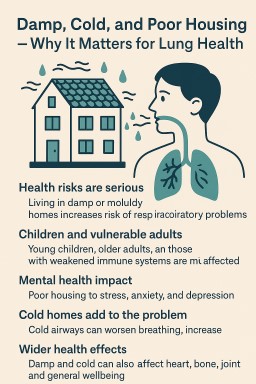
Damp, mould and poor ventilation can worsen respiratory symptoms and make life with a long-term lung condition harder. This hub brings together practical, evidence-based information for people with aspergillosis, their families and carers.
The aim is not to suggest that every damp home causes aspergillosis. Aspergillus is common in the environment, and most exposure does not cause infection. However, persistent damp and mould should be taken seriously, particularly when symptoms are worsening or someone has asthma, bronchiectasis, COPD, a weakened immune system or another lung condition.
Start here
- Damp, mould and health in 2026: what we know and what people can do
- Why damp-home exposure does not usually mean you have aspergillosis
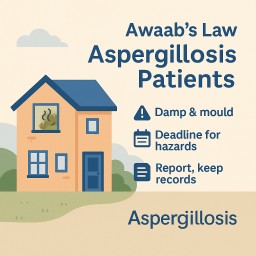
- Damp, mould and aspergillosis in rented homes
- Verified UK resources for damp, mould and health
What you will find here
- Recognising damp, condensation and mould problems
- Reducing exposure sensibly at home
- Advice for tenants, landlords and housing providers
- Indoor air quality, ventilation and practical prevention
- What the evidence says—and how to avoid misleading tests or “detox” claims
For wider advice on gardening, compost, air quality, masks, travel and other environmental exposures, see Prevention & Environment.
Topics in This Hub
Latest Housing Articles









Aspergillus nodules
Aspergillus nodules are a form of chronic pulmonary aspergillosis (CPA) where small rounded lesions develop in the lungs due to infection with Aspergillus fungi. These nodules are usually discovered during CT scans performed for investigation of symptoms or to rule out lung cancer.
Many Aspergillus nodules remain stable for long periods and may not require treatment, but they usually need long-term monitoring to ensure they do not grow or develop into other forms of aspergillosis.
Key points
- Aspergillus nodules are a form of chronic pulmonary aspergillosis.
- They appear as small rounded lesions in the lungs on CT scans.
- Symptoms may be mild or absent.
- Diagnosis can be difficult and sometimes requires lung biopsy.
- Many nodules remain stable and may not need treatment.
- Regular monitoring with scans is usually recommended.
Table of contents
Overview
Lung nodules are small dense spots seen on chest imaging such as an X-ray or CT scan. Many lung nodules are harmless, but some can be caused by infections, inflammation, autoimmune disease, or cancer.
Aspergillus nodules are nodules caused by infection with Aspergillus fungi. They represent a localised form of fungal infection in the lung and are considered part of the spectrum of chronic pulmonary aspergillosis (CPA).
Because nodules can resemble lung cancer on scans, they are often discovered during investigations for suspected cancer. Being told that a lung nodule may be cancerous can be extremely frightening, and many patients only discover later that the cause is a fungal infection.
Some Aspergillus nodules remain stable for years and cause no problems. Others may slowly enlarge, form cavities, or develop into other forms of chronic pulmonary aspergillosis.
Symptoms
Symptoms of Aspergillus nodules can be mild or absent. In fact, many nodules are discovered incidentally during scans performed for unrelated reasons.
When symptoms do occur, they can overlap with other lung conditions such as chronic pulmonary aspergillosis (CPA), chronic obstructive pulmonary disease (COPD), or bronchiectasis.
Possible symptoms include:
- Persistent cough
- Shortness of breath
- Fatigue
- Weight loss
- Fever
- Coughing up blood (haemoptysis)
However, many people with Aspergillus nodules have no symptoms at all.
Causes
Aspergillus nodules form when the body reacts to inhaled fungal spores. Instead of spreading widely, the infection becomes contained within a small area of lung tissue.
The body may surround the fungus with granulation tissue and inflammatory cells, forming a small localised lesion (nodule).
Nodules can develop in several situations:
- As part of chronic pulmonary aspergillosis (CPA)
- In people with mild immune dysfunction
- In patients with underlying lung disease
- Occasionally in otherwise healthy individuals
Unlike invasive aspergillosis, Aspergillus nodules usually occur in people whose immune systems are largely functioning.
Diagnosis
Aspergillus nodules are often first seen on a CT scan of the chest.
Because they can resemble lung cancer or tuberculosis, doctors often need to perform additional tests.
Blood tests
Blood tests may include:
- Aspergillus IgG antibodies
- Precipitins
However, these tests may sometimes be negative even when nodules are caused by Aspergillus.
Sputum testing
Sputum samples may be examined for fungal culture or PCR testing, but these are often negative in patients with isolated nodules.
Biopsy
In some cases a needle biopsy or surgical removal of the nodule is required to confirm the diagnosis. Tissue samples can be examined under the microscope for fungal structures typical of Aspergillus.
This approach is more invasive but may be necessary when cancer cannot be ruled out.
Treatment
Not all Aspergillus nodules require treatment.
In many cases doctors recommend a watch-and-wait approach with periodic CT scans. This helps avoid unnecessary exposure to antifungal medicines, which can have significant side effects.
Treatment may be recommended if:
- The nodule grows
- New nodules appear
- Symptoms worsen
- Other forms of aspergillosis develop
Antifungal treatment may include medications such as:
- Voriconazole
- Itraconazole
- Isavuconazole
In some patients with a single nodule, surgical removal may be recommended. Antifungal treatment is sometimes given afterwards to reduce the risk of recurrence.
Prognosis
The long-term behaviour of Aspergillus nodules can be difficult to predict.
Many nodules remain stable for years and never cause significant problems.
However, possible outcomes include:
- Remaining stable
- Shrinking over time
- Growing slowly
- Developing into a cavity containing fungal debris (an aspergilloma)
- Progression to other forms of chronic pulmonary aspergillosis
Because of this uncertainty, regular follow-up imaging is usually recommended.
Further information
Aspergillus nodules are relatively uncommon and remain an under-studied form of aspergillosis. Reliable patient information can therefore be difficult to find.
The National Aspergillosis Centre has published research on Aspergillus nodules seen in patients attending the clinic:
Muldoon EG, Sharman A, Page I, Bishop P, Denning DW. Aspergillus nodules; another presentation of Chronic Pulmonary Aspergillosis. BMC Pulm Med. 2016 Aug 18;16(1):123. doi: 10.1186/s12890-016-0276-3. PMID: 27538521; PMCID: PMC4991006.
This paper may be useful for patients who want to learn more or share information with their doctors.
Last reviewed: March 2026
Source: National Aspergillosis Centre patient information