Audience: People living with chronic pulmonary aspergillosis (CPA), ABPA, bronchiectasis, previous tuberculosis (TB) or another long-term lung condition.
Nontuberculous mycobacteria (NTM) are bacteria found naturally in soil and water. They can occasionally cause a chronic lung infection, particularly when the airways have already been damaged. NTM lung disease can occur alongside aspergillosis, but a positive sputum sample does not automatically mean that someone has active disease or needs treatment.
This article explains the overlap, the tests specialists use, and what treatment may involve. It is general information and does not replace advice from your respiratory, infection or NTM team.
What are NTM?
NTM are relatives of the bacterium that causes TB, but they are different. They are widespread in the environment, including soil, dust and water systems. Most people breathe them in from time to time without becoming ill.
The term non-tuberculous is important: NTM lung disease is not TB. It is generally not passed from person to person in everyday contact. You cannot usually catch it from hugging, sharing a room or being near someone who coughs.
| Species/group | What it means |
|---|---|
| Mycobacterium avium complex (MAC) | The most commonly recognised group causing NTM lung disease. |
| Mycobacterium abscessus | A rapidly growing NTM that can be particularly difficult to treat and needs specialist assessment. |
| Mycobacterium kansasii | Can cause lung disease that may look similar to TB on a scan. |
Why can NTM and aspergillosis occur together?
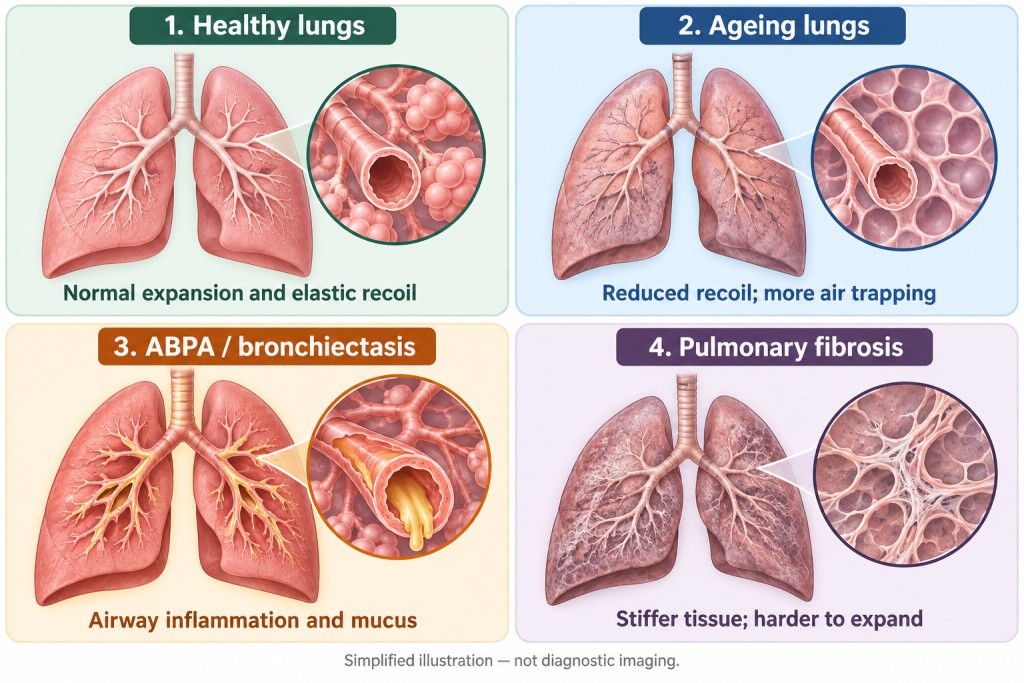
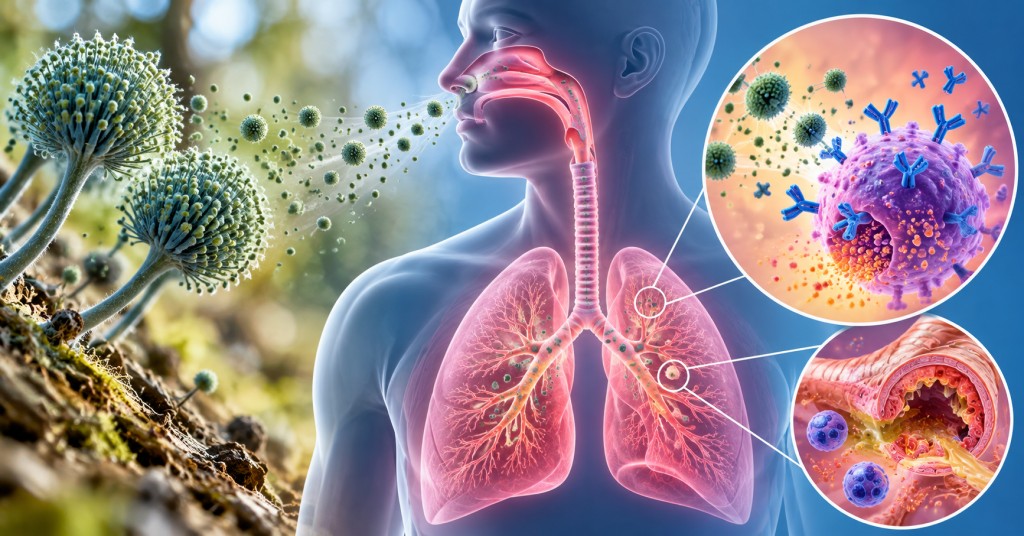
Both NTM and Aspergillus take advantage of lungs that are already vulnerable. Bronchiectasis, cavities left by TB or previous infection, COPD, cystic fibrosis and other structural lung damage can make it harder to clear mucus. Mucus then becomes a place where microbes can persist.
Some treatments can also influence risk. Long or repeated courses of oral corticosteroids can suppress parts of the immune response. This never means that steroids should be stopped suddenly or avoided when needed: it means that people with known or suspected NTM need a carefully balanced, specialist plan.
Symptoms can be very similar
NTM lung disease and aspergillosis can both cause:
- persistent or worsening cough
- more sputum, sometimes thicker or discoloured
- tiredness, reduced appetite or weight loss
- breathlessness or reduced exercise tolerance
- fever or night sweats
- chest discomfort or coughing up blood.
These symptoms can also be caused by asthma, ABPA, a bacterial chest infection, bronchiectasis or another condition. That is why it is unhelpful to assume that every increase in cough or mucus is due to one organism.
A culture result is not the whole diagnosis
NTM can appear in sputum without causing progressive lung disease. Before recommending treatment, a specialist normally considers three things together:
- Symptoms: is there a pattern that could be due to NTM?
- Imaging: does a CT scan show changes compatible with NTM, such as nodules, bronchiectasis or cavities?
- Microbiology: are NTM found repeatedly in good-quality sputum samples, or in a bronchoscopy sample where appropriate?
This careful approach prevents people being exposed to long, demanding antibiotic treatment when it is unlikely to help. It also means that monitoring without immediate treatment can sometimes be the right, active decision.
When ABPA and NTM occur together
ABPA is an allergic inflammatory reaction to Aspergillus, most often in people with asthma and sometimes bronchiectasis. It can cause wheeze, cough, fatigue and thick mucus or mucus plugs. Oral steroids are one standard treatment for an ABPA flare, but they can be a concern in someone with active or previous NTM.
The answer is not automatically to leave ABPA untreated, or to stop all steroid treatment. The priority is a joint plan between the teams looking after ABPA/asthma and NTM. This should set out the intended steroid dose and duration, what counts as a response, how sputum and symptoms will be monitored, and what alternatives might be appropriate.
For selected people with repeated ABPA flares or troublesome steroid side effects, the team may discuss an antifungal medicine or a biologic treatment for severe asthma/ABPA. These choices must be individualised. Antifungal azoles can interact with several medicines, including medicines that may form part of an NTM regimen, so a specialist pharmacist should check the complete list.
What does NTM treatment involve?
Not everyone with NTM needs antibiotics. When treatment is recommended, it is usually long-term and tailored to the species, antibiotic-susceptibility results, scan changes, symptoms and the person’s ability to tolerate treatment. MAC treatment often includes a macrolide antibiotic, ethambutol and rifampicin/rifabutin. M. abscessus treatment is different and often more complex, sometimes including intravenous antibiotics during part of the course.
Treatment commonly continues for many months after cultures become negative. Teams monitor carefully for side effects, which may include nausea, liver problems, hearing changes, visual changes, kidney effects and heart-rhythm changes, depending on the medicines used.
Do not stop antibiotics early or make medication changes without speaking to the NTM team. Stopping or changing a regimen can affect future treatment options.
Airway clearance is part of treatment
Whatever the cause of mucus, regular airway clearance can be important. A respiratory physiotherapist can tailor techniques such as the active cycle of breathing, huffing, postural drainage or a PEP/OPEP device. Some people are prescribed nebulised saline or a mucolytic medicine. The safest and most effective approach depends on the individual, particularly if they have asthma, very sensitive airways or a history of coughing blood.
Read more: Mucus clearance techniques and Bronchiectasis and aspergillosis.
Practical steps
- Give sputum samples when requested, including when symptoms change.
- Use sterile or appropriately prepared water for nebulisers exactly as instructed by your clinical team.
- Keep up your agreed airway-clearance routine and physical activity where possible.
- Tell every prescriber and pharmacist about all antibiotics, antifungals, inhalers, steroids, supplements and over-the-counter medicines.
- Ask your specialist team for personalised advice about reducing exposure to NTM. Avoiding hot tubs is commonly advised; there is no need to stop ordinary life or become fearful of all water and soil.
When to contact your team
Contact your respiratory, NTM or GP team promptly for a sustained worsening in cough, sputum, wheeze or breathlessness; fever, night sweats, unplanned weight loss, marked fatigue, chest pain or blood-stained sputum. Your team may want bacterial, fungal and mycobacterial sputum samples before antibiotics are changed.
Seek urgent help for severe breathlessness, difficulty speaking in full sentences, confusion, blue or grey lips/skin, chest pain, a reliever inhaler that is not helping, or more than small streaks of blood in sputum.
Questions for an appointment
- Do my symptoms and CT scan suggest active NTM disease, or could another condition explain them?
- Do I need repeat bacterial, fungal and mycobacterial sputum cultures?
- What is the plan for monitoring if we are not starting NTM treatment now?
- How will ABPA treatment and NTM monitoring be coordinated?
- Which medicines need interaction checks, ECGs, drug-level monitoring or blood tests?
- Would respiratory physiotherapy or a biologic/steroid-sparing approach be suitable for me?
The main message
NTM lung disease is important to recognise in people with aspergillosis and damaged airways, but it is not diagnosed from one symptom or one sputum result alone. With the right tests, coordinated specialist care and a plan that includes airway clearance, both conditions can be managed safely.
Further information
Last reviewed: September 2026

Did this page help you?
Tell us in one minute