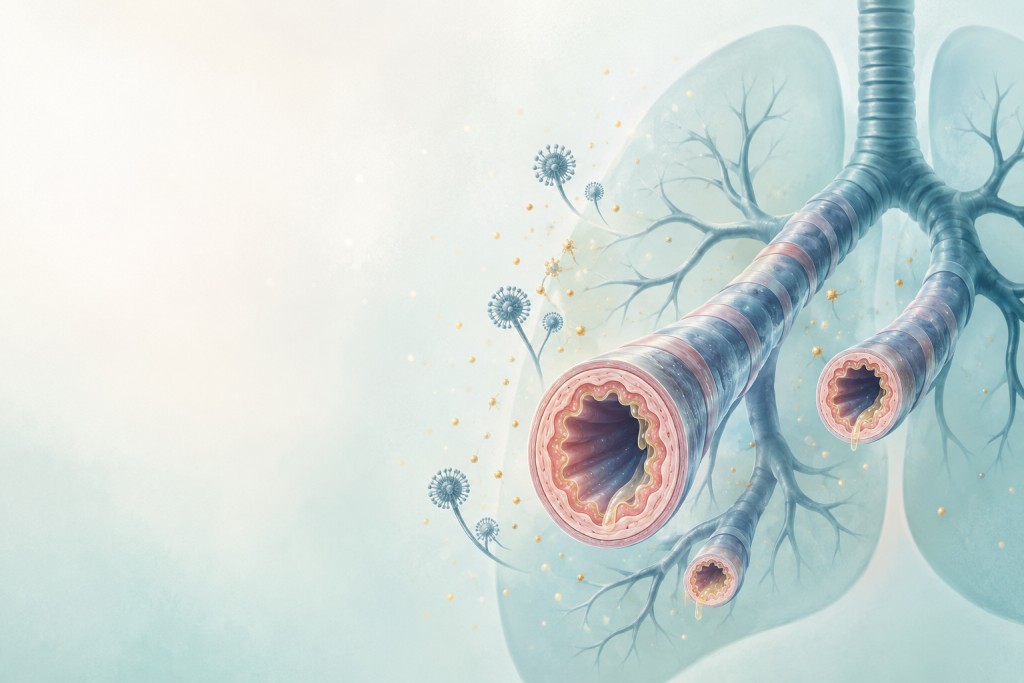
Asthma is a long-term condition in which the airways become inflamed, sensitive and temporarily narrowed. This makes it harder for air to move in and out of the lungs, causing wheeze, cough, chest tightness and breathlessness.
A key feature of asthma is that symptoms and airflow obstruction often vary over time. They may worsen after viral infections, exposure to allergens or irritants, exercise, cold air, smoke, pollution or stress, and often improve with reliever and preventer inhalers.
Asthma can overlap with other lung conditions. This article explains when allergic or severe asthma may overlap with fungal sensitisation, ABPA, bronchiectasis and aspergillosis.
Asthma is not the same as every other airway condition
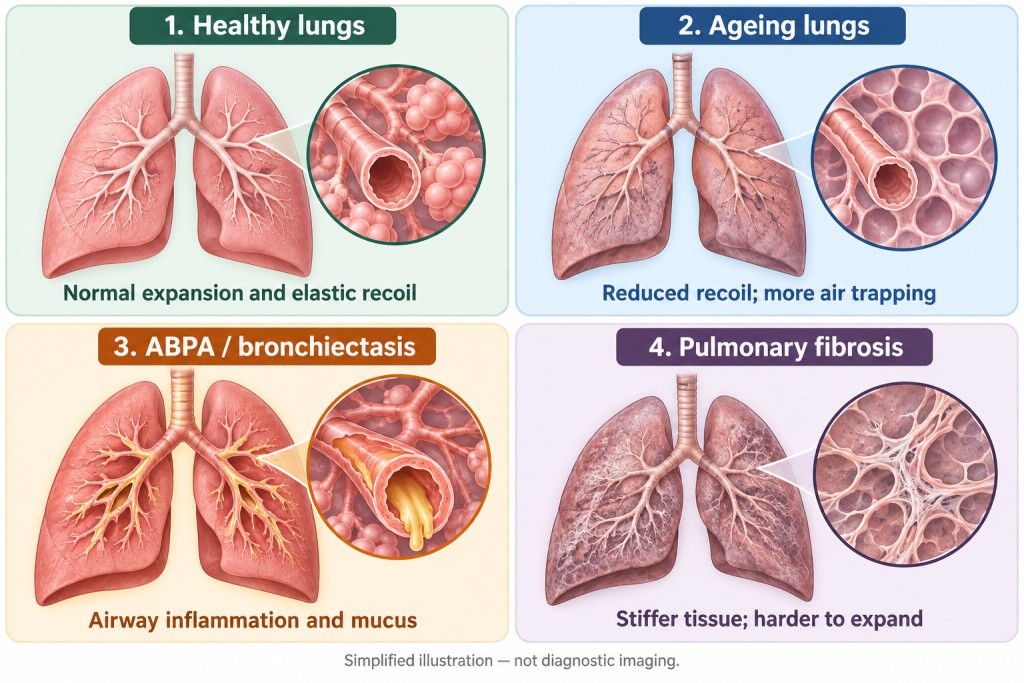
Asthma involves airways that become inflamed and narrow. In COPD, airway narrowing is usually more persistent. In bronchiectasis, the airways are permanently widened and can collect mucus. People can have more than one of these conditions, which is one reason symptoms and treatment can become complicated.
Most worsening asthma is not caused by Aspergillus. However, when asthma remains difficult to control despite appropriate treatment, or someone has repeated infections, bronchiectasis, mucus plugs or very high allergy markers, clinicians may look for an allergic or fungal contribution.
Why asthma is sometimes described in different ways
Asthma is not one single disease. People can have different patterns of airway inflammation, triggers and symptoms, and these patterns often overlap or change over time.
- Allergic asthma is linked to allergy and may be associated with hay fever, eczema, raised IgE or sensitivity to allergens such as house-dust mite, pollen, animals or fungi.
- Eosinophilic asthma involves raised eosinophils, a type of immune cell that can drive airway inflammation. It may be associated with nasal polyps or frequent flare-ups.
- Severe asthma remains uncontrolled despite high-level inhaled treatment, or needs high-dose treatment to stay controlled. It does not mean that someone has failed to manage their asthma.
- Asthma with bronchiectasis or troublesome mucus can involve repeated infections, mucus retention and difficulty clearing sputum.
Classifying asthma matters most when standard treatment is not enough: for example, if attacks are frequent, oral steroids are repeatedly needed, or clinicians are considering biologic treatment or another overlapping lung condition.
Type 2 (T2), allergic and eosinophilic inflammation
You may hear asthma described as type 2, T2, allergic or eosinophilic. These are related patterns of immune activity, not completely separate diseases.
Type 2 inflammation can lead to raised IgE, increased eosinophils, airway swelling, mucus production and sensitivity to triggers. It is common in allergic asthma and in many people with eosinophilic asthma.
ABPA also involves a strong type 2 allergic response to Aspergillus. This is why clinicians may assess for fungal sensitisation or ABPA when someone has severe allergic or eosinophilic asthma that remains difficult to control.
Fungal sensitisation, ABPA and bronchiectasis
Fungal sensitisation
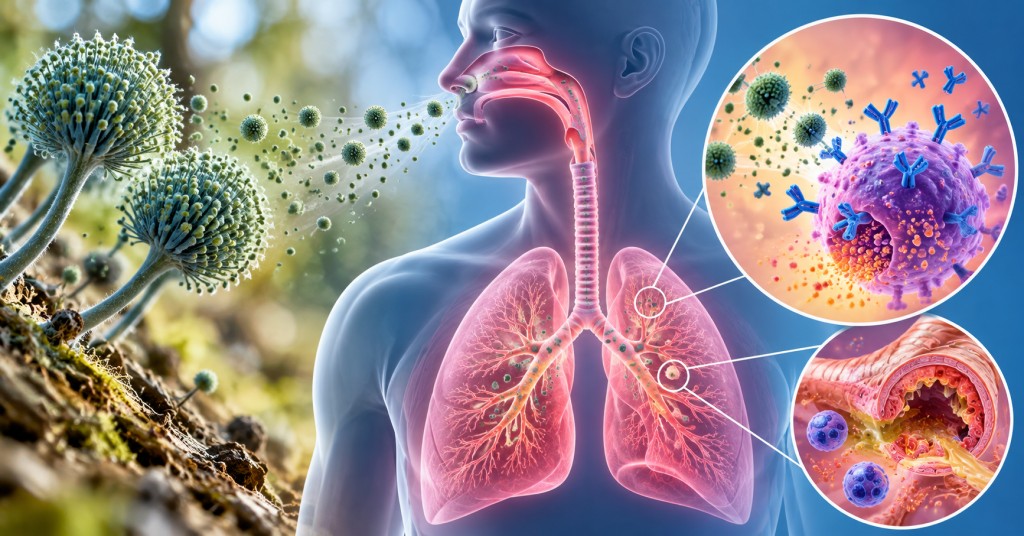
Some people with asthma have an allergic response to one or more fungi, including Aspergillus. This is called fungal sensitisation. It is common in difficult-to-treat asthma, particularly in specialist severe-asthma clinics.
Fungal sensitisation can be an important clue, but it is much more common than ABPA. A positive Aspergillus allergy test does not by itself mean that someone has ABPA or a fungal infection.
Allergic bronchopulmonary aspergillosis (ABPA)
ABPA is an allergic lung condition that usually occurs in people with asthma or cystic fibrosis. It involves an exaggerated immune response to Aspergillus in the airways and can cause worsening asthma, cough, thick mucus plugs and changes on CT scans.
Diagnosis is based on the whole picture: symptoms, allergy and blood tests, sputum results, scans and the presence of bronchiectasis or mucus plugging. Read more in our ABPA Knowledge Hub.
Bronchiectasis
Bronchiectasis means that some airways are permanently widened and can collect mucus. It can coexist with asthma and make infections, cough and sputum more likely. It does not automatically mean that Aspergillus is causing an infection, but it can be an important part of the wider picture.
How common is the overlap?
Asthma is common: up to 7 million people in the UK live with it. Around 4 in 100 adults with asthma have severe asthma, meaning that symptoms remain difficult to control despite high-level treatment or need high-dose treatment to stay controlled.
Fungal sensitisation is much more common than ABPA. In specialist severe-asthma settings, around one-third to one-half of people may react to one or more environmental fungi on allergy testing. A positive test is a useful clue, but it does not diagnose ABPA or fungal infection on its own.
ABPA is less common, but important because untreated allergic inflammation can contribute to mucus plugging and bronchiectasis. The exact UK number is uncertain because there is no national register and diagnosis can be delayed. Estimates suggest that around 15,000–25,000 people in the UK may be living with ABPA.
These figures help explain why fungal allergy and ABPA deserve consideration in difficult-to-control asthma — while also showing why most people with asthma, and most people with fungal sensitisation, do not have ABPA.
Why Aspergillus-related disease can be hard to recognise
Aspergillus-related disease is not usually missed because a clinician has ignored it. Its symptoms and test results overlap with common conditions such as asthma, bronchiectasis and chest infection.
- Cough, wheeze, breathlessness and mucus can look like an ordinary asthma flare-up.
- A positive Aspergillus allergy test may mean sensitisation rather than ABPA.
- IgE and eosinophils can be raised for several allergic reasons, while steroid treatment can alter eosinophil results.
- Bronchiectasis and CT changes can have more than one cause.
- ABPA can occur even when asthma does not appear obviously severe.
Diagnosis often depends on putting several clues together over time. It is not always possible to reach a clear answer from one blood test or one clinic appointment.
Different teams may be involved
Asthma is usually managed by respiratory teams, sometimes with input from specialist severe-asthma services. Aspergillosis may be managed by respiratory specialists, infectious-disease specialists, or a combined specialist service such as the National Aspergillosis Centre.
When asthma and Aspergillus-related problems overlap, more than one team may be involved. They may be addressing different but connected problems: asthma control, allergy and ABPA, infection, mucus clearance, scan findings and the effect of treatment on day-to-day life.
If you are unsure who is coordinating your care, it is reasonable to ask which team you should contact when symptoms change.
Treatment: treating the problems that are present
Asthma treatment should be reviewed regularly. This may include checking inhaler technique, confirming that medicines are reaching the lungs, identifying triggers and considering whether treatment needs to change.
People with severe type 2, allergic or eosinophilic asthma may be offered a biologic medicine. These targeted treatments can reduce flare-ups and the need for oral steroids in suitable patients. They are chosen according to the person’s asthma pattern, blood tests, allergy history and previous treatment response.
If ABPA or another Aspergillus-related condition is present, treatment may also need to address allergic inflammation or fungal burden. For bronchiectasis or troublesome mucus, physiotherapy and airway-clearance techniques can be just as important as inhalers.
When to ask for review
Ask for medical review if your asthma is becoming harder to control, you are needing your reliever inhaler more often, or you have repeated courses of oral steroids, troublesome mucus, repeated infections, new chest pain, fever, coughing up blood, or a clear decline in your usual ability to breathe or function.
A quieter chest is not always a better chest. In severe asthma, very little air may be moving through narrowed airways, so wheeze can become faint or disappear. A “silent chest”, increasing exhaustion, confusion, difficulty speaking, or a normalising or rising carbon-dioxide level during an acute attack are emergency warning signs.
Seek urgent medical help if you have severe breathlessness, cannot speak in full sentences, your reliever inhaler is not helping, your chest becomes quiet while you are still struggling to breathe, you have severe chest pain, you faint, or you cough up more than a small streak of blood.
Useful next steps
- ABPA Knowledge Hub
- Common associated conditions Knowledge Hub
- Bronchiectasis and aspergillosis
- Mucus clearance and airway-clearance techniques
- Treatment for aspergillosis
About this information
This patient information is edited and maintained by the NHS National Aspergillosis Centre CARES team. It is intended to support, not replace, advice from your own clinical team.
Last reviewed: August 2026
“`

Did this page help you?
Tell us in one minute