

Aspergillosis is not a single disease. It is a group of conditions caused by the fungus Aspergillus. The type of illness someone develops depends mainly on how their immune system reacts to the fungus and on the health of their lungs.
This page explains the main types of aspergillosis and helps you find the information most relevant to your diagnosis.
Patient-centred information from the National Aspergillosis Centre. This guide combines specialist clinical knowledge with the questions, experiences and practical concerns raised by people living with aspergillosis and their carers.
Key Points
- Aspergillosis includes several different conditions.
- Some forms are mainly allergic reactions to the fungus.
- Other forms are chronic infections in the lungs.
- Rarely, severe infections occur in people with weakened immune systems.
- Your doctor will determine the type using symptoms, scans, blood tests, and other investigations.
Main Types of Aspergillosis
The main forms of aspergillosis fall into three broad groups.
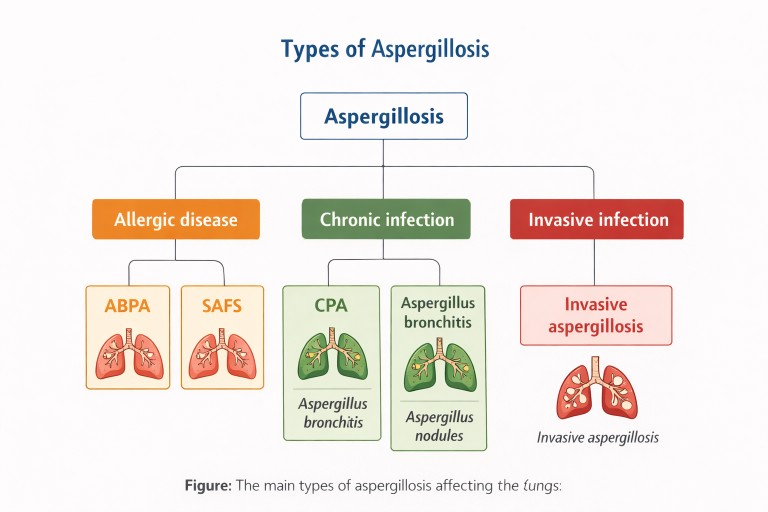
Allergic Aspergillus Conditions
In some people the immune system reacts strongly to Aspergillus spores. This causes inflammation in the airways rather than an invasive infection.
These conditions are most often seen in people with asthma or related airway diseases.
Common features may include:
- worsening asthma symptoms
- wheezing
- cough with mucus plugs
- high levels of IgE in blood tests
Chronic Aspergillus Lung Disease
In people whose lungs have already been damaged by previous illness, Aspergillus can sometimes persist and cause a long-term infection or inflammation.
This group includes:
Common features may include:
- persistent cough
- fatigue
- weight loss
- breathlessness
- abnormal lung scans
These conditions often require long-term monitoring and antifungal treatment.
Invasive Aspergillosis
Invasive aspergillosis is a more severe infection that occurs mainly in people whose immune systems are severely weakened.
This may include people who:
- have recently had chemotherapy
- have had organ or stem cell transplants
- are receiving strong immune-suppressing medicines
- are critically ill in hospital
This form of aspergillosis requires urgent medical treatment.
Read more about invasive aspergillosis →
Other Aspergillus Conditions
Some people may develop related conditions affecting other parts of the body.
- Aspergillus sinusitis
- Allergic fungal rhinosinusitis
- Aspergillus skin infections (rare)
Not Sure Which Type You Have?
If you are unsure which form of aspergillosis you have, you may find it helpful to:
- look at clinic letters from your specialist
- check the name of the diagnosis written in your records
- ask your doctor or nurse directly which form they are treating
Because several tests are often needed, the exact diagnosis may sometimes take time.
Where to Go Next
- What is Aspergillosis?
- How Aspergillosis is Diagnosed
- Treatment and Management
- Patient Support Meetings
- Search the Knowledge Hub
Last reviewed: March 2026
Did this page help you?
Tell us in one minute