Question: “I have Aspergillus fumigatus and I’d like to ask a few questions.
After starting antifungal treatment, how long did it take before you noticed improvement or a stop in the bleeding cough?
Has anyone reached a stable condition or full recovery?
Please share your experiences — it would really help to hear from you.” 💚
🌿 A Supportive Note
Many people ask this question when they first begin treatment — and it’s a very normal concern. Aspergillus fumigatus can cause a range of lung problems such as chronic pulmonary aspergillosis (CPA), aspergilloma, or Allergic Bronchopulmonary Aspergillosis (ABPA), and each responds differently to antifungal therapy.
Improvement can take time and patience.
Some notice changes within weeks, while for others, it can take several months before symptoms start to ease or stabilise.
💊 Understanding How Antifungal Treatment Works
Antifungal medicines — such as itraconazole, voriconazole, or posaconazole — don’t destroy Aspergillus overnight.
They work by slowing or stopping fungal growth, allowing the body’s immune system and lung healing processes to gradually take over.
Because these infections are often chronic, the goal is usually to:
-
Control symptoms
-
Prevent further damage
-
Reduce inflammation and flare-ups
-
Stabilise lung function
For most patients, this means aiming for long-term stability rather than complete eradication of the fungus.
⏳ How Long Before You Feel Better?
Every patient is different, but this is a general pattern doctors often see:
| Time after starting treatment | What you might notice |
|---|---|
| First few weeks | Some reduction in coughing or mucus; fewer night sweats; side effects settling as your body adjusts. |
| 1–3 months | Energy may start to improve; less coughing or blood in sputum; breathing slightly easier. |
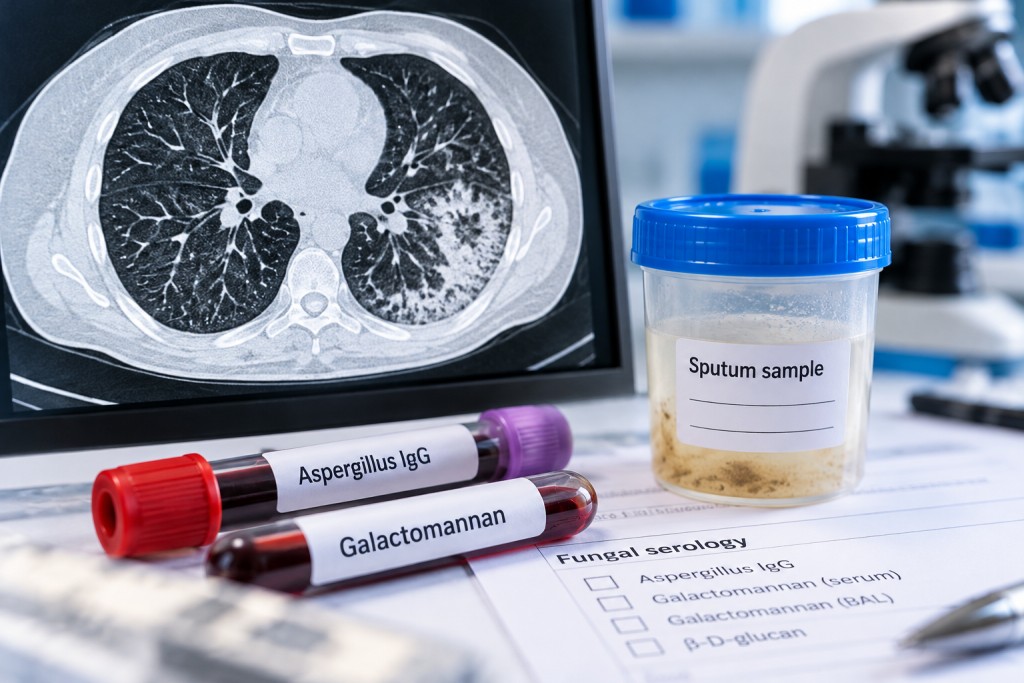
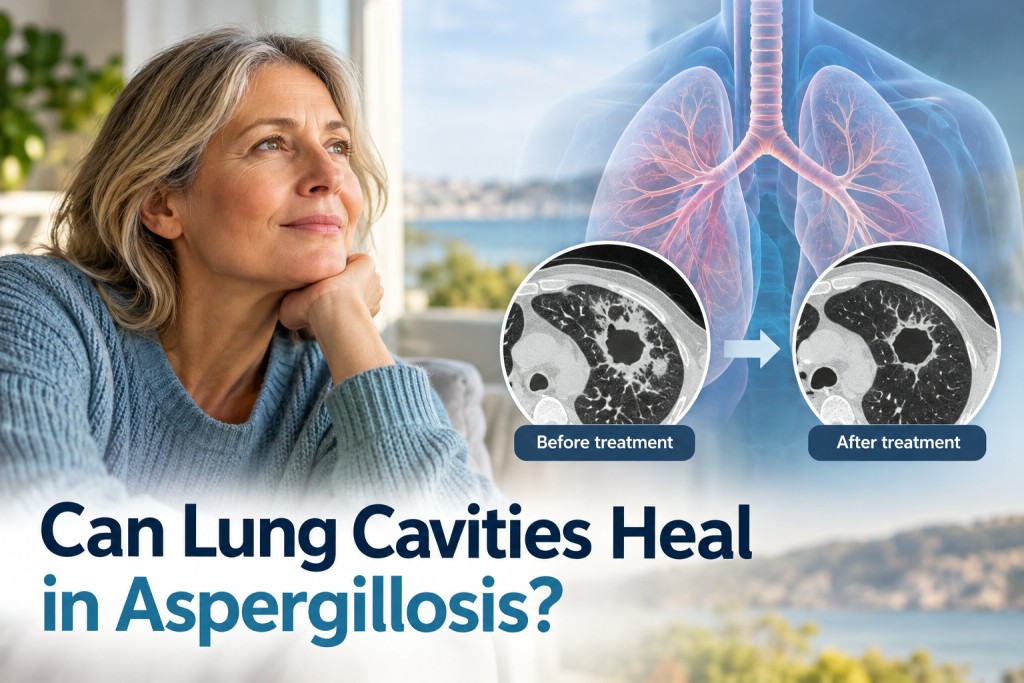
| 3–6 months | Signs of stability — symptoms no longer worsening, CT scans showing improvement, or blood markers (e.g. Aspergillus IgG) falling. |
| 6–12 months | Some people achieve remission or long-term stability. For others, antifungal therapy continues as maintenance. |
If you have a fungal ball (aspergilloma), improvements are often slower, and sometimes bleeding episodes take longer to settle.
🩸 About Bleeding (Haemoptysis)
Coughing up blood can be one of the most distressing symptoms.
It usually improves once antifungals reduce inflammation, but if bleeding continues:
-
Doctors may prescribe tranexamic acid to help the blood clot more easily.
-
In some cases, embolisation (a targeted procedure to seal a bleeding blood vessel) may be needed.
-
Ongoing bleeding should always be reported — even small amounts — so your team can reassess treatment or check for infection changes.
🫁 Why “Stable” Can Be a Positive Outcome
Although “cure” is possible in some early or mild cases, most people live with aspergillosis as a chronic condition.
With consistent antifungal therapy, airway clearance, and monitoring, many reach a stable stage — where symptoms are minimal, life feels more predictable, and flare-ups are rare.
This stability is a real success.
It means your body and treatment are keeping the infection under control, preventing further lung damage.
💚 Real Experiences
Patients often describe:
-
Energy and breathlessness improving slowly
-
Bleeding stopping after several months
-
A new sense of normality once medication side effects settle
Some take antifungals for a set course (e.g. 6–12 months), while others remain on long-term maintenance to stay stable.
It’s common for treatment to be adjusted based on blood levels, side effects, or new sputum results.
💬 Patient Voices
Many people in our community say they wish they’d known:
-
“Improvement isn’t quick — it’s gradual, but it does come.”
-
“Side effects can be managed — don’t stop without advice.”
-
“It’s okay to ask your team what ‘stable’ looks like for you.”
-
“You’re not alone — others have been through this too.”
🧭 Looking After Yourself Along the Way
-
Keep up airway clearance (physiotherapy, saline nebulisers, or airway devices).
-
Attend regular clinic appointments for blood levels and liver tests.
-
Report side effects early — dose adjustments or switching antifungals often helps.
-
Maintain good nutrition and hydration.
-
Reach out for emotional support. Living with a chronic infection can be mentally exhausting; anxiety and fatigue are common.
💬 We’d Love to Hear From You
If you’ve been through antifungal treatment, please share your story:
-
How long it took before you felt a difference
-
What helped you most
-
How you manage side effects or flare-ups
Your experience could make a real difference to someone who’s just starting this journey. 💚

Did this page help you?
Tell us in one minute