
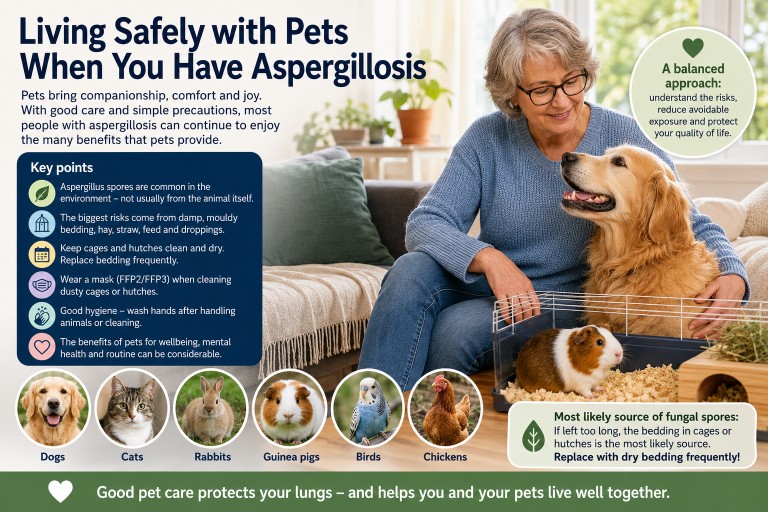
Pets can be an important part of life for many people with aspergillosis. They provide companionship, routine, comfort, and sometimes gentle exercise. For most people, having pets does not mean they need to give them up. The key is understanding where fungal spores are most likely to build up and taking sensible precautions.
Key points
- Most people with aspergillosis do not need to avoid pets altogether.
- The main concern is usually not the animal itself, but dusty or damp materials such as hay, straw, bedding, feed, droppings, compost, and mouldy organic matter.
- Risk increases when bedding is left unchanged, becomes damp, or is disturbed during cleaning.
- People with allergic forms of aspergillosis, such as Allergic Bronchopulmonary Aspergillosis (ABPA), may react to fungal spores as allergens.
- People with Chronic Pulmonary Aspergillosis (CPA) may need to avoid heavy spore exposure because their lungs are already damaged.
- Good pet care, dry bedding, regular cleaning, and sensible respiratory protection can reduce avoidable exposure.
- The emotional and wellbeing benefits of pets can be considerable and should be included in any balanced decision.
Contents
- Why patients worry about pets
- What is the actual risk?
- Situations that may increase exposure
- Different risks in different forms of aspergillosis
- Practical advice for different pets
- Children’s pets and shared responsibility
- The benefits of pets
- Simple risk-reduction checklist
- Common questions
- When to seek medical advice
- Author and review information
- References
Why patients worry about pets
After being diagnosed with aspergillosis, many people start to look carefully at their home, garden, hobbies, and pets. This is understandable. Aspergillus is a mould that is found widely in the environment, and people may worry that a pet, cage, litter tray, hutch, or bedding could be making their lung condition worse.
The first reassurance is important: aspergillosis is not usually caught from pets in the way that some infections can be passed from animals to humans. The main issue is breathing in fungal spores from the environment. These spores are more likely to come from dusty, damp, or decaying organic material than from the animal itself.
A clean dog or cat in the home is very different from cleaning out a damp rabbit hutch, shaking mouldy hay, or disturbing old bedding in a poorly ventilated shed.
What is the actual risk?
The risk is mainly from inhaling airborne fungal spores. Aspergillus spores are very common in the environment. Most people breathe them in without becoming ill. Problems are more likely in people with asthma, cystic fibrosis, chronic lung disease, damaged lungs, or weakened immune systems.
Pet-related exposure is most likely when fungal spores build up in:
- Hay
- Straw
- Wood shavings or paper bedding
- Stored animal feed
- Damp hutches or cages
- Bird droppings
- Chicken coops
- Compost, soil, and rotting vegetation
- Dusty sheds or poorly ventilated outbuildings
The animal itself is usually not the main source of concern. The bigger issue is the environment around the animal, especially if it is damp, dusty, mouldy, or not cleaned regularly.
Situations that may increase exposure
Risk is not the same in every situation. Some pet-related activities are likely to create more airborne dust and spores than others.
| Situation | Likely level of concern | Why it matters |
|---|---|---|
| Living with a clean dog or cat | Low | The animal itself is not usually a major Aspergillus source. |
| Feeding pets from clean, dry food | Low | Low dust exposure if food is stored properly. |
| Changing a clean litter tray regularly | Low to moderate | Dust and odour may irritate airways; dusty litter may be a problem for some. |
| Handling hay for guinea pigs or rabbits | Moderate | Hay can contain fungal spores, especially if damp or poorly stored. |
| Cleaning cages or hutches with damp bedding | Moderate to higher | Disturbing bedding can release dust and spores into the air. |
| Cleaning bird cages or chicken coops | Higher | Droppings, feathers, bedding, and feed dust may build up in enclosed spaces. |
| Using mouldy hay, straw, or feed | Higher | Visible mould suggests fungal growth and avoidable exposure. |
| Cleaning old bedding after it has been neglected | Higher | Accumulated organic waste, dampness, and dust increase exposure when disturbed. |
Different risks in different forms of aspergillosis
Not all aspergillosis conditions carry the same type of risk. The reason for reducing exposure differs depending on the diagnosis.
Allergic Bronchopulmonary Aspergillosis (ABPA)
In Allergic Bronchopulmonary Aspergillosis, the main issue is allergic inflammation. The immune system reacts strongly to Aspergillus. Extra exposure to fungal spores may contribute to asthma symptoms, coughing, wheezing, mucus production, or mucus plugging in some people.
For people with ABPA, pet-related precautions are mainly about reducing exposure to fungal allergens from hay, bedding, damp cages, and dusty animal environments.
Severe Asthma with Fungal Sensitisation (SAFS)
Severe Asthma with Fungal Sensitisation is also an allergic-type condition. The concern is not usually that the pet will cause an infection, but that mould spores and other allergens may worsen asthma symptoms.
Chronic Pulmonary Aspergillosis (CPA)
Chronic Pulmonary Aspergillosis usually occurs in lungs that already have damage, cavities, scarring, bronchiectasis, or previous lung disease. In CPA, the concern is less about allergy and more about protecting vulnerable lungs from unnecessary heavy exposure to fungal spores.
There is limited evidence that ordinary pet ownership worsens CPA. However, avoiding heavy exposure to mouldy hay, bedding, compost, bird droppings, and dusty animal housing is sensible.
Aspergillus bronchitis
In Aspergillus bronchitis, Aspergillus may be present in the airways and contribute to cough, sputum, and airway inflammation. Heavy exposure to fungal spores may aggravate symptoms in some people, although this relationship is less well understood than in ABPA.
People with significant immunosuppression
People with severely weakened immune systems may need stricter precautions. This can include people who have had organ or stem cell transplants, people receiving intensive chemotherapy, and people on high-dose immunosuppressive treatment.
For these patients, the concern may include invasive fungal infection. They should follow advice from their specialist team about pets, gardening, compost, bird cages, chicken coops, and mouldy environments.
| Condition | Main concern | Practical message |
|---|---|---|
| Allergic Bronchopulmonary Aspergillosis (ABPA) | Allergic reaction to Aspergillus spores | Reduce exposure to dusty, mouldy, or damp materials. |
| Severe Asthma with Fungal Sensitisation (SAFS) | Asthma worsening from fungal allergens | Avoid mouldy bedding, dusty hay, and damp animal housing. |
| Chronic Pulmonary Aspergillosis (CPA) | Protecting already damaged lungs | Avoid heavy or repeated spore exposure where possible. |
| Aspergillus bronchitis | Airway irritation and possible symptom aggravation | Keep exposure to dust and mould as low as practical. |
| Severe immunosuppression | Risk of serious fungal infection | Follow specialist medical advice; extra precautions may be needed. |
Practical advice for different pets
Dogs
Dogs are usually low risk from an Aspergillus exposure point of view. The main precautions are general hygiene and avoiding large amounts of mud, damp bedding, or mouldy outdoor kennels.
- Wash hands after handling pets, especially before eating.
- Keep dog bedding clean and dry.
- Avoid letting damp or mouldy bedding accumulate.
- If cleaning a dusty kennel or outdoor area, consider wearing an FFP2 or FFP3 mask.
Cats
Cats are also usually low risk. Litter trays can produce dust and odour, which may irritate the airways in some people.
- Use low-dust litter where possible.
- Change litter regularly.
- Avoid letting trays become damp or heavily soiled.
- Ask someone else to clean the tray if you are very sensitive to dust or smells.
- Wash hands after cleaning litter trays.
Guinea pigs, rabbits, hamsters, and other small mammals
For small mammals, the animal is usually not the main issue. The bigger concern is hay, bedding, and cage cleaning.
- Use clean, dry bedding.
- Replace bedding frequently.
- Remove damp bedding promptly.
- Store hay in a dry place.
- Do not use visibly mouldy hay, straw, or feed.
- Avoid shaking hay or bedding indoors.
- Clean cages in a well-ventilated area.
- If possible, ask another family member to do major cage cleaning.
- Consider wearing an FFP2 or FFP3 mask when cleaning dusty bedding.
Birds and chickens
Bird cages and chicken coops can create more dust exposure than many other pets. Droppings, bedding, feathers, seed husks, and feed dust can accumulate, especially in enclosed or poorly ventilated spaces.
- Clean cages and coops regularly.
- Avoid allowing droppings and bedding to build up.
- Improve ventilation where possible.
- Store feed dry.
- Avoid sweeping dry dust if damp cleaning is possible.
- Wear respiratory protection if cleaning a dusty coop or cage.
- People with severe lung disease or significant immunosuppression should discuss this with their clinical team.
Fish tanks and aquariums
Fish tanks are usually low risk for Aspergillus exposure. The main issue is preventing mould around lids, filters, walls, or damp cupboards.
- Clean tanks and filters regularly.
- Check for mould around the tank, lid, or nearby wall.
- Avoid damp build-up in enclosed cupboards.
Reptiles
Reptile enclosures are usually low risk if well maintained. Damp substrates, mouldy wood, or poorly cleaned vivariums may increase exposure to mould and other microbes.
- Replace damp or mouldy substrate promptly.
- Keep enclosures clean and well ventilated.
- Wash hands after handling reptiles or cleaning enclosures.
Children’s pets and shared responsibility
Many family pets are cared for by children or teenagers. This can be a positive way to teach responsibility and empathy. However, routine jobs can be forgotten during busy periods, holidays, exams, illness, or changes in family routine.
For someone in the household with aspergillosis, asthma, bronchiectasis, or another chronic lung condition, it is helpful for an adult or another family member to check regularly that pet care is being maintained.
Family pet-care check
- Is the bedding clean and dry?
- Has damp bedding been removed?
- Is the hay free from visible mould?
- Is feed stored somewhere dry?
- Is the cage, hutch, or coop well ventilated?
- Is there a regular cleaning routine?
- Does the person cleaning the cage need help or a mask?
The aim is not to discourage children from caring for pets. It is to avoid a situation where bedding, hay, or droppings are left long enough to become damp, dusty, mouldy, or heavily contaminated. Neglect increases avoidable exposure.
The benefits of pets
Any decision about pets should include benefits as well as risks. For many people with long-term lung disease, pets are not just animals in the house. They are companions, sources of comfort, and part of daily life.
Companionship
Chronic illness can be isolating. Pets can provide company, reassurance, and a sense of normality, especially for people who live alone or spend long periods at home.
Mental health and wellbeing
Pets may help reduce loneliness, stress, and anxiety. Many people find that caring for an animal gives emotional support during difficult periods of illness.
Routine and purpose
Feeding, grooming, walking, and caring for pets can provide structure to the day. This can be particularly valuable when illness, retirement, or reduced mobility has changed a person’s usual routine.
Gentle activity
Dogs may encourage regular walking and time outdoors. Even small amounts of gentle activity can support physical and mental wellbeing when paced appropriately.
Family connection
Pets can bring families together. Children caring for pets may learn responsibility, while shared pet care can create positive family routines.
Simple risk-reduction checklist
- Keep cages, hutches, beds, and coops clean.
- Replace bedding regularly.
- Remove damp bedding promptly.
- Store hay, straw, and feed in a dry place.
- Do not use visibly mouldy hay, bedding, or feed.
- Avoid shaking dusty bedding indoors.
- Clean animal housing in a well-ventilated area.
- Ask another household member to do dusty cleaning tasks if possible.
- Consider an FFP2 or FFP3 mask for dusty cage, hutch, or coop cleaning.
- Wash hands after handling animals or cleaning cages.
- Keep pet equipment away from food preparation areas.
- Discuss individual risks with your clinical team if you are severely immunosuppressed.
Common questions
Do I need to get rid of my pet if I have aspergillosis?
Usually, no. Most people with aspergillosis do not need to give up their pets. The focus is usually on reducing exposure to mouldy, dusty, or damp materials around pets.
Can my dog or cat give me aspergillosis?
This is not the usual way aspergillosis develops. Aspergillus exposure usually comes from breathing in mould spores from the environment, such as soil, compost, damp buildings, hay, bedding, or decaying organic material.
Are guinea pigs safe?
Guinea pigs themselves are usually not the main concern. The more likely source of fungal spores is hay or bedding, especially if it is damp, mouldy, dusty, or left unchanged for too long. Keep bedding clean and dry, replace it frequently, and store hay properly.
Are birds or chickens more risky?
Bird cages and chicken coops can create more dust and organic waste exposure than many other pet environments. Regular cleaning, good ventilation, dry feed storage, and respiratory protection during dusty cleaning can reduce exposure.
Should I wear a mask when cleaning pet cages?
If the task is dusty, involves hay or bedding, or takes place in a poorly ventilated area, wearing an FFP2 or FFP3 mask may be sensible, particularly for people with asthma, Allergic Bronchopulmonary Aspergillosis, Chronic Pulmonary Aspergillosis, bronchiectasis, or reduced lung reserve.
What is the biggest pet-related risk?
The biggest avoidable risks are usually mouldy hay, damp bedding, accumulated droppings, poorly stored feed, and dusty cleaning of animal housing.
Are pets good for people with aspergillosis?
For many people, yes. Pets can provide companionship, routine, comfort, and encouragement to stay active. These benefits can be very important for people living with long-term lung disease.
When to seek medical advice
Contact your GP, respiratory team, or specialist team if:
- Your breathing becomes suddenly worse.
- You develop new or worsening wheeze, chest tightness, or breathlessness.
- You cough up blood.
- You develop fever, chest pain, or feel acutely unwell.
- Your asthma becomes difficult to control.
- You notice a clear pattern of worsening symptoms after cleaning cages, hutches, coops, or handling hay.
- You are severely immunosuppressed and are concerned about mould exposure.
If you are very breathless, coughing up significant amounts of blood, have chest pain, or feel seriously unwell, seek urgent medical help.
Author and review information
Audience: Patients, carers, families, and non-specialists.
Purpose: General educational information about pet ownership and environmental exposure in people with aspergillosis or related lung conditions.
Important note: This article does not replace medical advice. Individual risk varies depending on diagnosis, lung function, immune status, medications, and home environment. If you are unsure, discuss your situation with your clinical team.
Last reviewed: June 2026
References and further reading
- Centers for Disease Control and Prevention. Reducing Risk for Aspergillosis.
- NHS. Aspergillosis.
- NHS 111 Wales. Aspergillosis.
- National Aspergillosis Centre, Manchester University NHS Foundation Trust. About Aspergillosis.
- Centers for Disease Control and Prevention. Small Mammals: Healthy Pets, Healthy People.
- Asthma + Lung UK. Air pollution and allergies at home.
- Asthma and Allergy Foundation of America. Mold Allergy.
- Allergy UK. Asthma and Respiratory Allergy.
- Aspergillosis Patient Support

Latest News posts
News archive