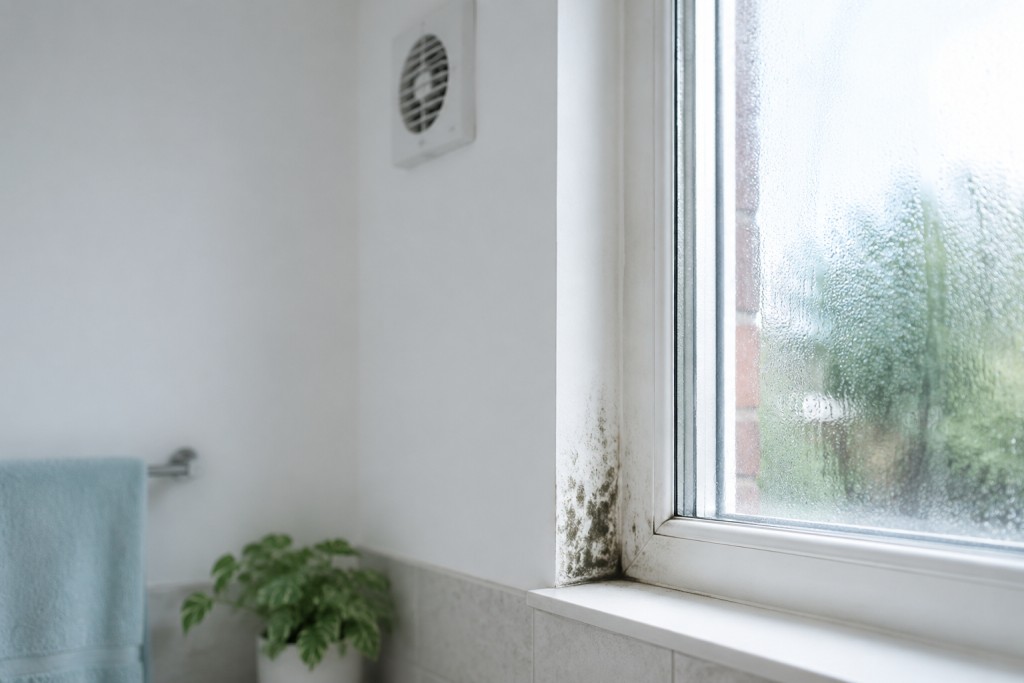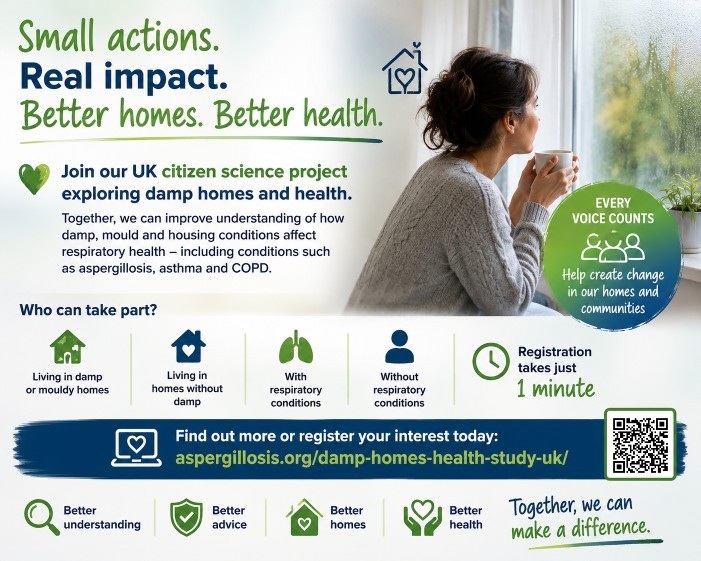
We are asking patients, carers and members of the public to help us improve a draft questionnaire for our new UK Citizen Science project on damp homes, mould and health.
Draft 1 of questionnaire download here: Health Effects of Indoor Mould Questionnaire
Key points
- We are developing a questionnaire for a Citizen Science project about damp homes, mould and health.
- Before using it in the study, we want feedback from people who may complete it.
- We are not just asking people to check spelling or grammar.
- We want to know whether the questionnaire asks the right questions, is easy to understand, and collects useful information.
- Your comments can help shape the final version of the study.
Why are we doing this project?
Damp homes and indoor mould are common problems in the UK. Many people worry that dampness, condensation and mould may affect their breathing, allergies, infections, fatigue or general wellbeing.
Our Citizen Science project aims to learn more about the links between homes, indoor mould and health by working directly with patients, carers and householders.
Citizen Science means that members of the public are not just research subjects. They help shape the research, collect information, and improve the questions being asked.
What is the questionnaire for?
The questionnaire is designed to collect information about:
- the type of home someone lives in
- signs of damp, condensation or mould
- heating and ventilation
- previous water damage, leaks or flooding
- respiratory symptoms and other health problems
- whether symptoms seem to change in different environments
- how damp or mould affects everyday life and wellbeing
This information will help researchers understand whether there are patterns between housing conditions and health. It will also help guide the next stages of the project, including possible home sampling and laboratory analysis.
Why do we need feedback?
A questionnaire can look clear to researchers but feel very different to the people completing it.
Patients and householders may notice:
- questions that are confusing
- questions that are too difficult to answer
- important topics that are missing
- sections that feel repetitive
- questions that need a “Don’t know” option
- places where more explanation is needed
This is why your feedback is so important.
What sort of comments are we looking for?
We are especially interested in comments on the following areas.
1. Is the questionnaire easy to understand?
Please tell us if any wording is unclear, too technical, or open to different interpretations.
2. Are any important questions missing?
For example, should we ask more about:
- previous mould exposure in other homes
- roof leaks, plumbing leaks or flooding
- diagnosed respiratory conditions
- asthma, allergic bronchopulmonary aspergillosis, chronic pulmonary aspergillosis or other lung conditions
- steroid treatment or immune-suppressing medicines
- whether symptoms improve away from home
- whether symptoms changed after moving house
3. Is the questionnaire too long?
Long questionnaires can be tiring, especially for people living with chronic illness. We want to collect enough information to make the study useful, but not so much that people give up before finishing.
4. Are any questions difficult to answer accurately?
Some people may not know exact details about their home, heating system, building age or past water damage. We want to identify questions where people may need clearer options, such as “Not sure” or “Don’t know”.
5. Are any questions sensitive?
Questions about housing, health and personal circumstances can sometimes feel sensitive. Please tell us if any question needs a clearer explanation of why it is being asked.
The most important question
One of the most useful questions we can ask is:
If this study could answer one question about damp homes, mould and health, what would you most like to know?
This helps us understand what matters most to patients, carers and householders.
How to send us your comments
Click here for a short Google Form where you can send your feedback.
The feedback form will ask questions such as:
- How easy was the questionnaire to understand?
- Were any questions unclear or confusing?
- Do you think any important questions are missing?
- Were any questions unnecessary or repetitive?
- Was the questionnaire too long, too short, or about right?
- If this study could answer one question about damp homes, mould and health, what would you most like to know?
- Do you have any other comments or suggestions?
You do not need to answer every question. Any feedback is helpful.
This is not a grammar exercise
We are not mainly asking people to proofread the questionnaire.
What we really want to know is:
Does this questionnaire help us collect the information needed to understand whether damp homes and mould may be affecting health, and are we asking the right questions?
Thank you
Thank you for helping us improve this questionnaire. Your comments will help us design a better study and make sure the project reflects the experiences and priorities of the people affected by damp homes and mould.
By sharing your views at this early stage, you are helping shape research that could improve understanding of indoor mould, housing conditions and health.
“`

Did this page help you?
Tell us in one minute