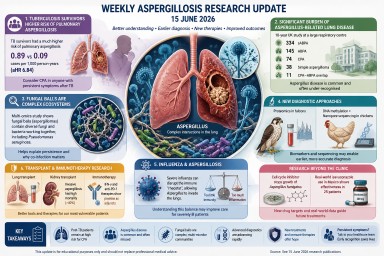
Illustration showing recent aspergillosis research advances including improved diagnostics, ABPA risk factors, chronic pulmonary aspergillosis testing, immune therapies and patient-centred care.

Aspergillosis Research Update: Earlier Diagnosis, Better Testing and New Treatment Possibilities

Illustration showing recent aspergillosis research advances including improved diagnostics, ABPA risk factors, chronic pulmonary aspergillosis testing, immune therapies and patient-centred care.
Recent aspergillosis research highlights advances in diagnosis, understanding of Allergic Bronchopulmonary Aspergillosis (ABPA), chronic pulmonary aspergillosis (CPA), immune responses and emerging treatment approaches.

Research update covering mid-May to early June 2026

Key points

  • New research suggests Aspergillus infection may develop during tuberculosis treatment, rather than only years afterwards.
  • A large cystic fibrosis registry study has improved understanding of who is most at risk of developing Allergic Bronchopulmonary Aspergillosis (ABPA).
  • A case report highlights that ABPA can occasionally cause severe mucus plugging and even lung collapse.
  • New studies continue to improve testing for Chronic Pulmonary Aspergillosis (CPA), including Aspergillus antibody tests.
  • Several papers evaluated newer diagnostic tools including PCR, galactomannan, lateral flow testing and metagenomic sequencing.
  • Researchers are increasingly exploring treatments that support the immune system, rather than only targeting the fungus directly.

Introduction

The last two weeks have seen a wide range of new aspergillosis research covering diagnosis, risk factors, immune responses and future treatment possibilities.

A clear theme emerging from recent studies is the move towards earlier diagnosis and more personalised approaches to care. Researchers are also increasingly investigating how the immune system interacts with Aspergillus and whether improving immune function could become part of future treatment strategies.

Can Aspergillus infection begin during tuberculosis treatment?

One of the most interesting studies came from Peru, where researchers investigated Aspergillus infection among patients receiving treatment for pulmonary tuberculosis.

Traditionally, doctors have believed that Chronic Pulmonary Aspergillosis often develops months or years after tuberculosis causes lung damage. However, this study raises the possibility that Aspergillus infection may sometimes emerge during active tuberculosis treatment itself.

This finding is important because CPA is a recognised complication of tuberculosis worldwide. If future studies confirm these findings, clinicians may need to monitor some tuberculosis patients more closely for signs of fungal infection much earlier than previously thought.

Read the PubMed record

Large registry study improves understanding of ABPA risk

Researchers in Turkey analysed data from a national cystic fibrosis registry to examine how often Allergic Bronchopulmonary Aspergillosis develops and which patients are most likely to be affected.

Large registry studies are valuable because they include information from many patients over extended periods of time. This allows researchers to identify patterns that smaller studies may miss.

The study helps improve understanding of how frequently ABPA develops, which patients appear to be at greatest risk, and which factors may be associated with disease development.

Read the PubMed record

ABPA can sometimes cause severe airway blockage

A striking case report described a patient whose ABPA presented with complete collapse of one lung and respiratory failure.

Although uncommon, this case highlights an important aspect of ABPA that many patients already recognise from personal experience: mucus plugging can sometimes become severe.

In ABPA, inflammation causes excessive mucus production within the airways. In some cases, thick mucus plugs can partially or completely block sections of the lung.

Read the PubMed record

Improved blood tests for Chronic Pulmonary Aspergillosis

Researchers have reported new work aimed at improving Aspergillus antibody testing for Chronic Pulmonary Aspergillosis.

Diagnosis of CPA often depends on a combination of symptoms, CT scan findings, evidence of Aspergillus infection and Aspergillus antibody testing. Current blood tests are useful but not perfect. Improving their accuracy could help reduce missed diagnoses and improve confidence when diagnosing CPA.

Read the PubMed record

New diagnostic technologies continue to advance

PCR testing

A clinical evaluation of a commercial Aspergillus fumigatus PCR test in patients with haematological malignancies examined how accurately the test identifies invasive pulmonary aspergillosis.

Read the PubMed record

Metagenomic sequencing

Researchers also published a systematic review and meta-analysis examining metagenomic next-generation sequencing for invasive pulmonary aspergillosis.

This technology analyses genetic material from all organisms present in a sample rather than looking for a single pathogen. Although currently expensive and not widely available, it may play an increasing role in future fungal diagnostics.

Read the PubMed record

Lateral flow testing

Another study evaluated a lateral flow device designed to detect Aspergillus antigens. These tests could eventually help make fungal diagnostics faster and more accessible.

Read the PubMed record

New insights into galactomannan testing

Researchers investigated whether comparing galactomannan levels in bronchial washing samples and blood samples could improve diagnosis of pulmonary aspergillosis.

Galactomannan is one of the most widely used fungal biomarkers. Refining how it is interpreted may improve diagnostic accuracy and help clinicians distinguish between infection and other conditions.

Read the PubMed record

Could future treatment involve strengthening the immune system?

Some of the most exciting research focused on immune-based therapies. Rather than directly targeting Aspergillus, researchers are exploring ways to improve the body's ability to fight infection.

Anti-PD-1 and interferon-gamma

A study examined emerging evidence for anti-PD-1 therapy and interferon-gamma as adjunctive immunotherapy in invasive mould infections.

These approaches aim to reverse immune exhaustion and improve natural antifungal responses. They remain experimental, but they represent an important future direction.

Read the PubMed record

Enhancing neutrophil function

Another study examined how G-CSF may improve neutrophil activity during Aspergillus fumigatus infection.

Neutrophils are among the body's most important immune cells for controlling Aspergillus. Improving their function could potentially help patients whose immune systems struggle to clear fungal infections.

Read the PubMed record

Therapeutic drug monitoring remains important

A case report highlighted how voriconazole blood levels changed significantly as inflammation improved during treatment.

This reinforces an important principle already recognised by specialist centres: antifungal drug levels can change over time, and therapeutic drug monitoring remains an important part of safe and effective treatment.

Read the PubMed record

What does this mean for patients?

Several themes stand out from this fortnight's research.

First, researchers continue to focus heavily on earlier diagnosis. Better blood tests, improved PCR methods, lateral flow devices and sequencing technologies all aim to identify aspergillosis more accurately and more quickly.

Second, there is growing interest in understanding which patients are most at risk of developing aspergillosis. This may eventually lead to more personalised monitoring and earlier intervention.

Finally, scientists are increasingly exploring immune-based therapies. While antifungal drugs remain the foundation of treatment, future care may involve helping the immune system fight fungal infection more effectively.

When should patients seek medical advice?

Patients should seek medical advice if they experience:

  • worsening breathlessness
  • persistent cough
  • new coughing up of blood
  • unexplained weight loss
  • increasing fatigue
  • persistent chest symptoms despite treatment

Patients with previous tuberculosis, bronchiectasis, severe asthma or cystic fibrosis should be particularly aware of symptoms that do not improve as expected.

References

  • Bigot J et al. Aspergillus serology for chronic pulmonary aspergillosis diagnosis. Journal of Clinical Microbiology, 2026. PubMed
  • Demir HI et al. Yearly distribution and risk factors for ABPA in the Turkish cystic fibrosis registry. Chronic Illness, 2026. PubMed
  • Gibert C et al. Clinical evaluation of a commercial Aspergillus fumigatus PCR assay. Journal of Infectious Diseases, 2026. PubMed
  • Lv H et al. Diagnostic accuracy of metagenomic next-generation sequencing for invasive pulmonary aspergillosis. International Journal of Infectious Diseases, 2026. PubMed
  • Madden AE et al. Prevalence and clinical implications of Aspergillus infection among tuberculosis patients in Peru. Journal of Infection, 2026. PubMed
  • Medina A et al. Real-life performance of AspLFD in lower respiratory tract and serum specimens. Diagnostic Microbiology and Infectious Disease, 2026. PubMed
  • Rai DK et al. ABPA presenting as unilateral lung collapse with respiratory failure. BMJ Case Reports, 2026. PubMed
  • Serris A et al. Anti-PD-1 and interferon-gamma as adjunctive immunotherapy in invasive mould infections. mBio, 2026. PubMed
  • Toychiev A et al. Vitamin D status and immune response in pulmonary tuberculosis patients with CPA. Tuberculosis, 2026. PubMed
  • Yamaguchi K et al. Bronchial washing-to-serum galactomannan antigen ratio for pulmonary aspergillosis diagnosis. Journal of Microbiological Methods, 2026. PubMed

Last reviewed: 1 June 2026

```


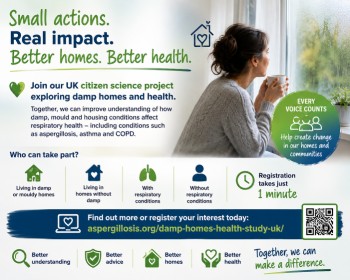
Help us understand how damp homes affect health

We are supporting a UK research project looking at how damp homes may affect health, including respiratory health and conditions such as aspergillosis.

This study is being led by the National Aspergillosis Centre at Manchester University NHS Foundation Trust, and is being shared through aspergillosis.org to support research into damp homes and health.

We are currently inviting people across the UK to register their interest in taking part.

Registering your interest should take less than one minute and does not commit you to taking part.


Register your interest now

Why this matters

Damp and mould are often linked to health problems, but there is still limited real-world evidence from people’s homes across the UK.

This project aims to help improve understanding of how home environments may affect health by gathering information from people living in a wide range of housing conditions.

Who can register interest?

We would like to hear from people living in the UK, including:

  • people with lung or respiratory conditions
  • people without any known lung or breathing condition
  • people who have experienced damp or mould at home
  • people who have not experienced damp or mould at home
  • members of the general public who would like to contribute to the research

We are keen to hear from people with different health backgrounds and a wide range of home environments.

What is the study about?

This research is exploring how damp homes may affect health. The aim is to improve understanding of the relationship between home environments and health symptoms in real-world settings.

This project is for research purposes only and does not provide medical advice or diagnosis.

What might taking part involve later?

If the study opens, some people who register interest may later be invited to:

  • complete a short questionnaire about their home and health symptoms
  • receive a simple home sampling kit by post
  • collect and return a small household sample, for example dust from the home, for research purposes

The home sampling part is intended to be simple and practical. Full instructions would be provided.

Registering your interest now does not commit you to taking part later.

Important information

  • Registering interest is voluntary.
  • You do not have to take part in the full study later.
  • Your details will only be used to contact you about this project.
  • Your data will be handled in line with UK data protection regulations.
  • You can decide later whether or not to take part.

Frequently asked questions

Am I signing up to take part in the study now?

No. At this stage, you are only registering your interest in hearing more about the study.

Do I need to have a lung condition to register interest?

No. We would like to hear from people with and without lung conditions.

Do I need to have damp or mould in my home?

No. We are interested in hearing from people with a wide range of home environments and experiences.

Will I definitely receive a kit?

Not necessarily. Registering interest helps the research team understand the level of interest and contact people if the study opens.

Will I get personal results about my home or health?

At this stage, no individual results are being promised. More information would be provided if the study proceeds.

What happens after I register interest?

You do not need to do anything further straight away. If the study opens, you may be contacted with more information so you can decide whether you would like to take part.

Register your interest

Ready to help? Complete the form below.

This secure form should take less than one minute to complete.

If the form does not load, you can open it here:

Open the form in a new window


Help shape the future of aspergillosis care across Uk & Europe

Many people living with aspergillosis, and many carers, reach a point where they ask:

“Can patients do more than just cope with this condition?”

The answer is yes.

The European Lung Foundation (ELF)
and its
Aspergillosis Patient Advisory Group (PAG)
give patients and carers a chance to contribute to something bigger: better awareness, better information, better research, and better care.

What is ELF?

ELF is a Europe-wide organisation that brings patients, carers, healthcare professionals and researchers together to improve lung health information, treatment and care.

One of ELF’s strongest advantages is that it works across Europe, not just in one country. It also makes key information available in several languages, helping more people access reliable information about lung conditions, including aspergillosis.

You can read ELF’s patient information on aspergillosis here:
Aspergillosis – European Lung Foundation.

What is the Aspergillosis Patient Advisory Group?

The Aspergillosis PAG is part of ELF’s wider network of
Patient Advisory Groups.
These groups bring together people with experience of specific lung conditions, or experience as carers, so that patient views can help improve treatment and healthcare.

The Aspergillosis PAG works to raise awareness of aspergillosis and improve diagnosis, treatment and care. It also works alongside healthcare professionals and researchers involved in the Chronic Pulmonary Aspergillosis Network (CPAnet), helping identify research priorities and information gaps for both patients and professionals.

Why does this matter?

Aspergillosis is still not well understood in many places. Diagnosis can be delayed, information can be hard to find, and patients often feel that few people truly understand what living with the condition is like.

By involving patients and carers directly, ELF helps ensure that real-life experience is not left out of the conversation. This can influence education, awareness work, research priorities and wider discussions about care across Europe.

What is in it for the patient or carer?

This is an important question, because volunteering your time and energy is a big ask, especially when you are already managing illness, fatigue, appointments, uncertainty or caring responsibilities.

So it is only fair to be clear and honest about what people may gain from taking part.

1. A chance to make your experience count

Many people with aspergillosis have learned difficult lessons the hard way. Getting involved gives you a chance to turn that experience into something useful — helping improve information, shape priorities and make life a little easier for future patients.

2. Better understanding and confidence

Being involved can help you better understand how research, awareness work and patient representation operate. Some people find that this gives them more confidence when speaking about their condition and navigating their own care.

3. Connection beyond your local area

Because ELF is Europe-wide, patients are not limited to the perspective of one hospital, one region or one country. For people living with a relatively uncommon condition, that wider connection can feel valuable and reassuring.

4. The opportunity to be heard

Many patients are used to feeling overlooked. PAGs are designed so that patient and carer perspectives are actively included in projects and discussions, rather than being an afterthought.

5. A sense of purpose

Some people find that involvement helps them move from simply living with a difficult condition to doing something constructive with that experience. It will not suit everyone, but for some it can be meaningful.

6. Support and training

ELF says it provides support, guidance and training to help people share their perspective and get involved in projects. It also encourages interested patients and carers to use its free online European Patient Ambassador Programme (EPAP), which introduces the skills and knowledge needed to represent yourself and others effectively.

What it is not

It is also important to be realistic.

  • It is not medical care.
  • It does not replace your doctor, nurse or specialist team.
  • It is not a route to faster treatment.
  • It is not a paid role.

ELF states that PAG involvement is voluntary and that it is unable to pay for people’s time.

Who can join?

ELF says most PAGs are open to new members from European countries. In general, people are invited to get involved if they are over 18, have experience as a patient or carer, live in a European country, can communicate in English, are interested in improving healthcare and treatment across Europe, and are willing to share their perspective.

That said, this should not feel like an all-or-nothing commitment. Not everyone can give a lot of time, and health can change. Even modest involvement can still be worthwhile.

Why mention this to our groups?

Many people in aspergillosis support communities have exactly the kind of insight that is valuable here: the reality of diagnosis, treatment, daily management, side effects, uncertainty, isolation, and learning how to cope.

Those experiences matter. They can help improve what is researched, what is explained, and how future patients are supported.

Interested?

You can explore more here:

You do not need to be an expert. You do not need to be highly confident. You do not need to commit to everything.

But if you have lived with aspergillosis, or cared for someone who has, your experience may be more valuable than you think.


In short: this is a voluntary opportunity to help improve understanding, research and care for aspergillosis across Europe, while connecting with a wider patient community and making sure lived experience is heard.


How Inflammation in One Part of the Body Can Affect the Rest of the Body

Last reviewed: 24 March 2026
Audience: Patients, families, and non-specialist clinicians
Author: Aspergillosis.org editorial team

Many people think of inflammation as something that stays in one place: a painful joint, an inflamed lung, an irritated sinus, or a bowel flare. In reality, inflammation is often a whole-body process. Signals released at one site can travel through the blood, nervous system, and immune system, influencing other organs and changing how the body feels and functions overall.

This helps explain why a local health problem can sometimes lead to symptoms that seem much broader, such as fatigue, poor concentration, low mood, loss of appetite, aches, disturbed sleep, or worsening of other long-term conditions.

Key points

  • Inflammation is not always confined to one organ or body part.
  • Inflamed tissues release chemical messengers that can circulate throughout the body.
  • The brain, heart, kidneys, liver, gut, lungs, and immune system all communicate with one another.
  • This “cross-talk” can be helpful in short-term illness, but harmful when inflammation becomes prolonged.
  • Ongoing inflammation is linked with fatigue, brain fog, low mood, cardiovascular strain, and worsening of other chronic diseases.

Table of contents

What is inflammation?

Inflammation is part of the body’s defence system. It is one of the ways the immune system responds to infection, injury, irritation, allergens, or tissue damage. In the short term, inflammation is often helpful. It can help the body fight infection, clear damaged tissue, and begin repair.

But inflammation can also become too strong, too prolonged, or poorly controlled. When that happens, the effects may no longer stay limited to the original problem area.

Why inflammation does not always stay local

When tissue becomes inflamed, immune cells release small signalling proteins called cytokines and other inflammatory mediators. These act like chemical messages. Some stay nearby, but many enter the bloodstream and influence distant organs.

This is why inflammation in one part of the body can sometimes cause:

  • tiredness or exhaustion
  • feeling unwell or “washed out”
  • poor concentration or “brain fog”
  • worsening appetite
  • sleep disruption
  • higher strain on the heart or kidneys
  • worsening of other inflammatory conditions

Researchers increasingly describe this as systemic inflammation or organ cross-talk. In other words, organs do not operate in isolation. They are part of an interconnected network.

How the body communicates during inflammation

1. Chemical messengers in the blood

Inflamed tissues can release cytokines such as interleukin-6 (IL-6), interleukin-1 beta (IL-1β), and tumour necrosis factor alpha (TNF-α). These may affect blood vessels, metabolism, the brain, the heart, and other immune cells.

These signals are useful during short-term illness, but if they remain elevated they may contribute to chronic symptoms and long-term health effects.

2. Organ-to-organ immune cross-talk

Modern immunology shows that the gut, liver, lungs, brain, heart, kidneys, and bone marrow can influence one another through immune signalling. A problem in one organ may therefore alter immune behaviour somewhere else.

This can be protective, but it can also become part of a vicious circle, especially in chronic disease.

3. Nerve signalling between the body and brain

Inflammation is not communicated only by blood. The nervous system also plays a role. Signals from inflamed tissues can travel through nerves, including the vagus nerve, to the brain. The brain then responds by adjusting immune activity and body-wide stress responses.

This helps explain why inflammation can affect fatigue, mood, motivation, sleep, and mental clarity.

4. Stress, hormones, and metabolism

Inflammation also interacts with the body’s hormonal and metabolic systems. This can influence energy use, blood sugar regulation, muscle strength, and appetite. Over time, chronic inflammation may put extra strain on the cardiovascular and kidney systems.

Common whole-body effects of inflammation

Fatigue

One of the most common effects of inflammation is fatigue. This is not simply feeling sleepy. It can be a profound lack of physical and mental energy. Many chronic inflammatory illnesses are associated with this kind of exhaustion.

Brain fog and mood changes

Inflammatory signals can affect the brain, contributing to reduced concentration, slowed thinking, low motivation, anxiety, or low mood. This does not mean symptoms are “all in the mind”. It means that immune activity can influence brain function.

Heart and blood vessel effects

Inflammation can make blood vessels less healthy over time and may contribute to a higher cardiovascular risk. This is one reason why long-standing inflammatory diseases are often linked to heart and circulatory problems.

Kidney effects

The kidneys are sensitive to inflammatory stress. In some conditions, long-term systemic inflammation can contribute to kidney damage or worsen existing kidney disease. Kidney disease itself can also increase inflammation, creating a two-way relationship.

Muscle weakness and reduced stamina

Ongoing inflammation can alter how muscles use energy and recover after activity. This may contribute to weakness, reduced exercise tolerance, and slower recovery after exertion.

Why this matters in lung disease and aspergillosis

For people with chronic lung conditions, including some forms of aspergillosis, inflammation in the airways or lungs may have effects beyond breathing alone. The lungs are not separate from the rest of the body.

Inflammation in the lungs may contribute to:

  • general fatigue
  • poor stamina
  • sleep disruption
  • brain fog
  • loss of appetite
  • worsening of other conditions

This can be especially relevant for people living with long-term inflammatory lung disease, repeated infections, allergic inflammation, or complex treatment burdens.

It is also one reason why patients sometimes feel that their symptoms are “bigger” than what would be expected from the lungs alone. Often, that experience is real and biologically plausible.

Acute inflammation versus chronic inflammation

Acute inflammation

This is the short-term response seen with infection, injury, or a sudden flare. It may cause fever, pain, swelling, and marked tiredness. Usually, it settles when the trigger is controlled.

Chronic inflammation

This is lower-grade or persistent inflammation that continues over time. It may be driven by chronic infection, immune dysregulation, ongoing tissue damage, obesity, autoimmune disease, long-term lung disease, or other medical problems. Chronic inflammation is often less dramatic but may have broader long-term effects.

What can help?

The right approach depends on the underlying cause. Broadly, management focuses on:

  • identifying and treating the cause of inflammation where possible
  • controlling infections or allergic triggers
  • optimising treatment of the underlying disease
  • supporting sleep, nutrition, and pacing of activity
  • monitoring the effects on other organs when relevant

There is rarely a single quick fix for chronic inflammation. Good management usually means looking at the whole person, not just the inflamed organ.

When to seek medical advice

Please seek medical advice if inflammation-related symptoms are worsening or if you develop:

  • new or severe breathlessness
  • chest pain
  • confusion or marked drowsiness
  • new swelling, reduced urine output, or signs of dehydration
  • persistent fevers
  • rapid decline in energy, mobility, or daily functioning

If symptoms are sudden, severe, or alarming, seek urgent medical help.

Common questions

Does inflammation always damage the whole body?

No. Short-term, controlled inflammation is a normal and useful response. Problems are more likely when inflammation is severe, repeated, or persistent.

Can one inflamed organ affect another?

Yes. There is now strong evidence that organs influence one another through immune, vascular, metabolic, and nerve-based pathways.

Can inflammation cause fatigue even if blood tests are not dramatically abnormal?

Yes. Symptoms and blood markers do not always match perfectly. Some people experience substantial fatigue and other systemic symptoms even when routine blood tests are only mildly abnormal or intermittently raised.

Is this relevant to chronic lung disease?

Yes. Lung inflammation can have effects that go beyond breathing, including fatigue, reduced stamina, and wider body effects.

References

  1. Dou J, et al. The Interplay of Cross-Organ Immune Regulation in Inflammation and Cancer. MedComm. 2025.
  2. Jin H, Li M, et al. A body–brain circuit that regulates body inflammatory responses. Nature. 2024.
  3. Katkenov N, et al. Systematic Review on the Role of IL-6 and IL-1β in Cardiovascular Diseases. Journal of Cardiovascular Development and Disease. 2024.
  4. Nowak KL, et al. Targeting Inflammation in CKD. Current Opinion in Nephrology and Hypertension. 2025.
  5. Paganin W, et al. Inflammatory biomarkers in depression: a scoping review. 2024.
  6. Mehta NN, et al. IL-6 and Cardiovascular Risk: A Narrative Review. 2024.
  7. Che H, et al. Organ cross-talk: molecular mechanisms, biological functions and therapeutic opportunities. 2026.

Disclaimer: This article is for general information and education. It is not a substitute for personalised medical advice. If you are worried about worsening symptoms, new symptoms, or the effect of inflammation on your health, speak to your clinical team.


Using AI Safely When You Have Aspergillosis

Artificial intelligence (AI) tools (for example, ChatGPT and other “medical chatbots”) can help people living with aspergillosis understand information, prepare for appointments, and feel more confident asking questions.

Used well, AI can be like a helpful explainer.
Used badly, it can be misleading — especially for conditions like aspergillosis where treatment decisions are complex.

This page explains what is safe, what is not safe, and how to use AI in a way that supports (not replaces) your clinical team.


Who is this page for?

This guidance is for people affected by:

  • Chronic Pulmonary Aspergillosis (CPA)

  • Allergic Bronchopulmonary Aspergillosis (ABPA)

  • Severe Asthma with Fungal Sensitisation (SAFS)

  • Aspergillus bronchitis

  • Other long-term Aspergillus-related lung problems


A simple rule that keeps you safe

AI should improve your understanding — it should not change your treatment.

If an AI tool suggests starting, stopping, or changing medication, do not act on it without speaking to your clinician.


What AI is good for

AI tools are usually helpful for:

Explaining medical words in plain language

Examples:

  • “What is Aspergillus Immunoglobulin G (IgG)?”

  • “What does ‘eosinophils’ mean?”

  • “What is a CT scan finding such as ‘cavity’ or ‘bronchiectasis’?”

Understanding medicines (general information)

AI can explain:

  • What a medicine is for

  • How it works in the body

  • Common side effects (in general terms)

  • Why monitoring is needed

This can be helpful for antifungal medicines such as itraconazole, voriconazole, posaconazole, and isavuconazole.

Preparing for appointments

AI can help you create a list of questions, for example:

  • “What monitoring do I need while on antifungals?”

  • “What symptoms should prompt urgent review?”

  • “How do we judge whether treatment is working?”

Summarising research articles

If you paste a paragraph from a paper (or describe it), AI can often translate it into patient-friendly language.
(Always remember: AI can sometimes get details wrong — see below.)

Organising your story

Many people find it useful to ask AI to format:

  • A timeline of symptoms

  • A list of medicines and dates

  • A short “what I want from this appointment” summary

This can make consultations more productive.


What AI is NOT safe for

AI should not be used for:

Diagnosis

Aspergillosis diagnosis usually depends on a careful combination of:

  • Symptoms and clinical history

  • Imaging (often computed tomography, CT)

  • Blood tests

  • Sputum tests / microbiology

  • Sometimes bronchoscopy results

AI cannot reliably “diagnose” from symptoms or a single test result.

Treatment decisions

Do not use AI to decide:

  • Whether you should start or stop antifungals

  • Steroid doses or tapering plans

  • Whether you “should” try biologics (for example, omalizumab)

  • Whether a side effect is safe to ignore

These decisions must be individualised and clinician-led.

Urgent situations

If you have worsening breathlessness, fever, chest pain, or coughing blood (haemoptysis), seek medical advice urgently.
AI is not an emergency service.


Why aspergillosis needs extra caution

Aspergillosis care can be complicated because:

  • Some antifungal medicines have important drug interactions

  • Blood levels may need monitoring (therapeutic drug monitoring)

  • Side effects can overlap with symptoms of lung disease

  • Different Aspergillus-related conditions can look similar but need different management

AI tools can also:

  • Over-generalise from asthma guidance

  • Confuse chronic disease with invasive disease

  • “Hallucinate” (invent) facts, references, or confident-sounding explanations

  • Be out of date


Privacy and confidentiality: what not to share with AI

To protect your privacy, avoid typing in:

  • Your full name

  • Date of birth

  • NHS number

  • Home address

  • Phone number

  • Identifiable clinic letters or reports (unless anonymised)

A safer way to write questions

Instead of pasting an entire letter, use a summary like:

“Adult with chronic lung disease, on itraconazole 200 mg daily, recent CT shows cavities, asking about monitoring and side effects.”

That’s usually enough for education and planning questions.


A safe “4-step” way to use AI

  1. Ask AI to explain (terms, tests, general concepts)

  2. Ask AI to help you prepare questions

  3. Discuss those questions with your clinician

  4. Only change treatment after clinical advice


A quick safety checklist

Before trusting an AI answer, ask:

  • Is this general education, or is it telling me what I should do?

  • Does it recommend changing my medicine or dose?

  • Does it mention checking interactions or monitoring?

  • Does it conflict with my current plan?

  • Is this situation urgent?

If any answer worries you: pause and ask your care team.


Example prompts patients can use safely

You can copy/paste these into an AI tool:

  • “Explain Chronic Pulmonary Aspergillosis (CPA) in plain language.”

  • “What questions should I ask about long-term itraconazole treatment?”

  • “What monitoring is commonly recommended for antifungal medicines?”

  • “Can you help me write a one-page symptom and medication summary for my clinic appointment?”

  • “Here is a paragraph from a research paper — can you summarise it in patient-friendly language and list any uncertainties?”

Tip: If you want a more cautious response, add:
“Please be conservative and tell me what you’re unsure about.”


Signs an AI answer may be unreliable

Be cautious if the AI:

  • Sounds very confident but gives no clear reasoning

  • Gives exact doses or taper schedules

  • Claims “this is definitely ABPA/CPA” from limited information

  • Provides references you cannot find elsewhere

  • Dismisses side effects, interactions, or monitoring

  • Encourages you to delay medical care


Final reminder

AI can be a helpful tool for understanding and preparing — but it is not a substitute for a specialist team.

If you are unsure, or something feels wrong, it is always reasonable to contact your clinician, specialist nurse, or GP.


Medical disclaimer

This page is for general information only and is not medical advice. Always follow the guidance of your healthcare team, especially regarding diagnosis, medicines, and urgent symptoms.


Looking further into the future - could we control lung damage, preserve healthy lung tissue better?

Can Lungs Repair Themselves?

What New Research Means for People with CPA (and Other Aspergillosis)

A recent scientific discovery has helped researchers understand how certain lung cells decide whether to focus on repairing damage or defending against infection. The work, highlighted by the Mayo Clinic and published in Nature Communications, describes a molecular “switch” inside specialised lung cells that influences this balance.

For people living with Chronic Pulmonary Aspergillosis (CPA) — and also those with Allergic Bronchopulmonary Aspergillosis (ABPA) — this kind of research is relevant. But it needs careful explanation.

This is not about rebuilding destroyed lungs.
It is about understanding how to better protect and preserve the lung tissue that remains.


The Discovery: A “Repair vs Defence” Switch

Researchers identified a regulatory circuit in alveolar type II (AT2) cells — specialised cells that:

  • Produce surfactant (which keeps air sacs open)

  • Act as a reserve “repair” population in the lung

  • Can regenerate other essential lung cells after injury

The study showed that these cells operate under tight control. When infection is present, they prioritise defence. When injury needs healing, they can switch into repair mode.

The key insight is that this switch is biologically regulated. It is not random. That means, in theory, it may one day be possible to influence it.


What “Repair” Means — and What It Does Not Mean

When we talk about lung repair in this context, we must be very clear.

It does not mean:

  • Lung cavities caused by CPA will close in the foreseeable future

  • Established fibrosis will melt away

  • Bronchiectasis will reverse

  • Severely distorted lung architecture will rebuild

CPA cavities represent major structural remodelling — destruction of alveoli, scarring, altered blood supply, and thickened pleura. Reconstructing that complex architecture is biologically extremely challenging and not currently realistic within the next decade.


What repair does realistically mean

In chronic lung disease, “repair” is more likely to mean:

  • Supporting survival of remaining alveoli

  • Preventing excessive fibrotic signalling

  • Helping lung lining cells recover more efficiently after inflammation

  • Reducing cumulative injury from repeated infection

  • Slowing progression of structural change

In other words:

Not rebuilding what is gone — but better protecting what remains.

For many people with CPA, this is a crucial distinction.


Why Preservation Is a Major Goal in CPA

CPA usually develops in lungs already weakened by conditions such as tuberculosis, non-tuberculous mycobacteria, chronic obstructive pulmonary disease, or severe pneumonia.

Over time, CPA can lead to:

  • Expanding cavities

  • Progressive scarring

  • Reduced gas exchange

  • Reduced exercise tolerance

Many patients have limited lung reserve. Even small additional losses of functioning lung tissue can significantly increase breathlessness or fatigue.

If future therapies could slow the rate of progression — even modestly — that would meaningfully affect long-term outcomes.

Flattening the decline curve is not trivial. It changes quality of life.


Why This Also Matters in ABPA

In ABPA, repeated inflammatory episodes can lead to:

  • Airway remodelling

  • Mucus plugging

  • Development or progression of bronchiectasis

Better control of inflammatory signalling — combined with improved epithelial recovery — could reduce long-term airway damage.

Again, this is about preservation rather than reversal.


Where Development Has Reached

The current research is still laboratory-based. It used advanced techniques such as:

  • Single-cell sequencing

  • Imaging of lung tissue

  • Preclinical models of injury

No human treatments based on this discovery are yet available.

However, the significance lies in identifying:

  • A defined molecular pathway

  • A controllable regulatory mechanism

  • A clearer understanding of why repair fails in chronic inflammation

That foundational knowledge is what eventually allows targeted drug development.


The Balance Challenge in Aspergillosis

There is an additional complexity in fungal lung disease.

Any attempt to promote repair must not weaken antifungal defence.

The immune system must:

  • Control Aspergillus

  • Avoid causing excessive inflammatory damage

Future therapies would need to strike that balance carefully.


What This Means for Patients Now

This discovery does not change current treatment.

The most effective preservation strategies today remain:

  • Consistent antifungal therapy when indicated

  • Careful inflammatory control

  • Biologic therapies where appropriate

  • Airway clearance

  • Vaccination and infection prevention

  • Avoiding damp and mould exposure

  • Pulmonary rehabilitation

These measures are already forms of lung preservation.


A Realistic and Hopeful Perspective

It is unlikely that cavities from CPA will be repaired in the near future.

It is realistic that within the next 5–10 years we may see improved strategies aimed at:

  • Slowing structural progression

  • Supporting endogenous repair cells

  • Reducing fibrotic signalling

  • Improving recovery after exacerbations

For people living long-term with CPA or ABPA, even incremental preservation could significantly affect independence and quality of life.

The science is still early — but understanding how the lung decides to repair itself is an important step forward.


Reference

Sawhney, A.S., Deskin, B.J., Cai, J. et al. A molecular circuit regulates fate plasticity in emerging and adult AT2 cells. Nat Commun 16, 8924 (2025). https://doi.org/10.1038/s41467-025-64224-1


How to Ask Fewer, Better Questions in Appointments

Focusing on what matters most to you—without feeling you’re wasting time

Many patients and carers worry about “asking too much” in clinic. Appointments are short, clinicians are busy, and you may already have a long list of questions in your head. The aim isn’t to stop asking questions—it’s to ask the right ones, at the right time, in the right way.

Here are practical strategies that help you stay focused, feel heard, and make the most of limited time.


1. Decide your Top 3 priorities before you go

Before the appointment, write down everything you’re thinking about. Then circle just three things that matter most right now.

Good priorities are usually:

  • A symptom that is new, worsening, or frightening

  • A treatment issue that affects daily life (side-effects, adherence, cost, function)

  • A decision you need to make soon

If it doesn’t change what happens in the next few weeks, it may not need airtime today.

If you remember only one thing: appointments are for decisions, not encyclopaedias.


2. Separate “need to know” from “nice to know”

It’s easy to mix curiosity with urgency.

Need to know (ask now):

  • Is this symptom important?

  • Is this treatment still right for me?

  • What should I do if X happens?

  • Are we monitoring the right things?

Nice to know (park for later):

  • Mechanisms, pathways, emerging research

  • Rare side-effects without symptoms

  • “What if” scenarios far in the future

Keep a “parking list” for later reading or discussion.


3. Frame questions around impact, not theory

Clinicians work best when questions are grounded in real life.

Instead of:

  • “I read a paper saying X might affect Y…”

Try:

  • “I’m noticing X in daily life—does that change what we do?”

  • “Is this symptom something you’d want to investigate?”

This signals relevance and helps clinicians triage quickly.


4. Ask one question at a time

Long, multi-part questions feel overwhelming and are easy to partially answer.

Break them down:

  • First: Is this important?

  • Then (if yes): What do we do about it?

  • Then (if needed): What should I watch for?

You’ll often find later questions become unnecessary once the first is answered.


5. Use the “Is this something we should…” test

This single phrase keeps questions concise and respectful of time:

  • “Is this something we should investigate?”

  • “Is this something that changes treatment?”

  • “Is this something I should worry about?”

A clear yes/no (or not yet) is often all you need.


6. Accept that not everything fits in one appointment

It’s okay—and normal—to say:

  • “I know we may not have time today—what should I prioritise?”

  • “Which of these matters most from your point of view?”

This shows partnership, not passivity.

If something needs more time, ask how best to handle it:

  • Another appointment

  • A nurse specialist

  • Written advice

  • Monitoring and review later


7. Bring written notes (but don’t read them all out)

A short list helps you stay focused under pressure.

Tip:

  • Highlight your top 3

  • Tick them off as they’re addressed

  • If time runs out, you still covered what mattered most


8. For carers: ask on behalf, not over

Carers often worry about dominating the conversation.

Helpful approaches:

  • Ask the patient first: “What do you most want answered today?”

  • Step in only if something important is being missed

  • Offer to follow up questions outside the appointment if possible


9. Reassure yourself: clinicians don’t expect perfection

You are not expected to:

  • Understand everything

  • Ask the “right” questions every time

  • Cover your entire condition in one visit

Good clinicians prefer:

a focused conversation
over
a rushed, overloaded one


10. A simple closing question that saves time

If time is tight, end with:

  • “Is there anything you think I should have asked but didn’t?”

This often surfaces the most important point of all.


The takeaway

You are not wasting time by asking questions—you’re wasting time by asking too many unfocused ones.

Clarity, prioritisation, and relevance help everyone:

  • You leave with answers that matter

  • Clinicians can make better decisions

  • Anxiety is reduced, not fuelled


Learning About Aspergillosis (and Related Treatments)

How to stay curious, informed, and safe — without overload

Many people living with aspergillosis, or caring for someone who is, become highly motivated learners. You may read scientific papers, books, online articles, social media posts, AI summaries, and news stories about antifungal treatments, steroids, biologics, side-effects, immunity, mould exposure, diet, exercise, and wellbeing.

That curiosity is a strength. It helps you ask better questions, notice changes early, and feel more involved in your care.

At the same time, not all information is reliable, relevant, or helpful, and even good information can become harmful if it is over-interpreted or taken out of context. This article is about finding the balance: learning with confidence, without increasing anxiety or risk.


Why learning helps — and why it can sometimes backfire

The positives

  • Empowerment: Understanding your condition improves confidence.

  • Better conversations: Appointments are more productive when you share a common language.

  • Early awareness: You may recognise symptoms or side-effects sooner.

  • Reassurance: Knowledge can reduce uncertainty and fear.

The risks

  • Over-interpretation: A single paper or post can feel more important than it is.

  • Variable quality: Some research is weak, outdated, biased, or misapplied.

  • Loss of context: Lab studies or rare case reports may not apply to you.

  • Rising anxiety: Constant searching can amplify worry rather than reduce it.

  • Information overload: Too much input can make decisions harder, not easier.


A healthier approach to learning

1. Think in weight of evidence, not single findings

One article, story, or AI answer almost never changes medical care on its own.

When you read something new, ask:

  • Is this supported by more than one study?

  • Does it appear in guidelines or specialist practice?

  • Is it discussed cautiously, or presented as a breakthrough?

A useful rule of thumb:

The more dramatic the claim, the stronger the evidence needs to be.


2. Separate biological possibility from clinical reality

Many things are biologically plausible — immune pathways, hormones, inflammation, the microbiome — but that doesn’t mean they are proven or clinically relevant.

Helpful questions include:

  • Was this studied in people, or only in the lab?

  • Were the patients similar to me?

  • Did it improve symptoms or outcomes, not just blood tests?


Choosing trusted health information: practical guidance

Learning safely isn’t about reading less. It’s about choosing better sources and knowing how much weight to give them.

3. Start with sources that anchor practice

Your most reliable foundations are sources that:

  • Reflect clinical consensus, not speculation

  • Are written or reviewed by specialist teams

  • Change slowly because they are evidence-based

Examples include:

  • Specialist centre or hospital websites

  • National or international guidelines

  • Established patient organisations linked to clinical services

Examples:

    • NHS website
      A good starting point for clear, balanced information on symptoms, tests, treatments, and general health advice.
      Useful for understanding what is considered standard care in the UK.

    • British National Formulary (BNF)
      The main UK reference for medicines.
      Particularly helpful for:

      • Medication side-effects

      • Drug interactions (including antifungals, steroids, and inhalers)

      • Practical prescribing information
        Side-effects are listed cautiously, so not everything applies to every person.

    • aspergillosis.org
      A specialist resource focused specifically on aspergillosis, written for patients, carers, and professionals.
      Helpful for understanding different forms of aspergillosis, investigations, treatments, and living with the condition.

    • European Lung Foundation – Aspergillosis resources
      Patient-focused information developed with respiratory specialists and patient representatives across Europe.
      Particularly useful for:

      • Plain-language explanations

      • Patient priorities and lived experience

      • Shared decision-making and questions to ask in clinic

    • Asthma + Lung UK (BLF)
      A trusted source for asthma and other lung diseases.
      Helpful for inhaler use, breathlessness, flare-ups, lifestyle advice, and living well with chronic lung conditions.

    • Aspergillosis Trust
      This website was created by patients who suffer from Aspergillosis. Please navigate around the website to read more about this disease, also the impact it has upon patients and their carers.

These sources may feel less exciting — but they set the safe boundaries of what is known.


4. Learn to spot interpretation versus evidence

Two people can read the same paper and draw very different conclusions.

Ask yourself:

  • Is this source presenting evidence, or interpreting it strongly?

  • Are limitations and uncertainty acknowledged?

  • Is the language careful or absolute?

Trusted sources often say:

“Evidence suggests…” or “We don’t yet know…”

Less reliable ones often say:

“This proves…” or “This explains everything.”


5. Use a simple credibility checklist

You don’t need to be a scientist to judge quality.

When reading anything, consider:

Who wrote it?
Clinical specialists, recognised organisations, or anonymous individuals?

Why was it written?
To inform and support — or to sell, persuade, or provoke?

What evidence is used?
Multiple studies and guidelines — or a single paper or personal story?

What tone is used?
Balanced and cautious — or dramatic and fear-based?

Several warning signs together should lower confidence.


6. Be cautious with “hidden” or “overlooked” explanations

Phrases that should trigger caution include:

  • “Doctors don’t tell you this…”

  • “The hidden cause…”

  • “The real reason…”

  • “One simple explanation…”

Conditions like aspergillosis are complex. Simple, universal explanations are rarely accurate.


7. Understand where research sits on the evidence ladder

Not all research carries the same weight.

Very roughly:

  1. Clinical guidelines and consensus statements

  2. Large clinical trials and systematic reviews

  3. Observational studies

  4. Case reports

  5. Laboratory or animal studies

  6. Opinions and anecdotes

Lower down the ladder does not mean “worthless” — but it does mean less certain and less likely to change care on its own.


8. Treat patient stories and forums as experience, not prediction

Patient experiences are invaluable for:

  • Feeling less alone

  • Understanding day-to-day challenges

  • Sharing coping strategies

They are not reliable predictors of:

  • What will happen to you

  • How common a problem is

  • Whether a treatment will help or harm you

A helpful distinction:

Stories help you feel understood. Evidence helps guide decisions.


9. Use AI tools wisely

AI can be excellent for:

  • Explaining terminology

  • Summarising broad topics

  • Helping you generate questions

AI cannot:

  • Replace specialist judgement

  • Fully understand your medical history

  • Balance risk in the way clinicians do

Treat AI as:

“A map to the topic,”
not
“An answer about me.”


10. Limit your sources — and give yourself permission to stop

Many people feel calmer once they:

  • Choose two to four trusted sources

  • Revisit those instead of endlessly searching

  • Accept that not every new paper needs action

Stopping is not giving up — it is protecting your wellbeing.


Bringing what you’ve learned into clinic

A good sign you’ve chosen reliable information:

  • You feel comfortable sharing it with clinicians

  • It leads to discussion, not confusion

  • It helps prioritise decisions

You might say:

  • “I’ve been reading from a specialist source — how relevant is this to me?”

  • “This helped me understand X, but I’m not sure how much weight to give it.”


When to pause or rebalance your learning

Consider stepping back if:

  • Searching increases anxiety every time

  • You feel pressure to solve everything yourself

  • Conflicting information leaves you stuck

  • Illness becomes the only thing you think about

Taking breaks from research is not disengagement — it is self-care.


The key message

Learning is a powerful tool. Used well, it supports confidence, partnership, and resilience. Used without guardrails, it can undermine peace of mind.

Aim for:

  • Curiosity with caution

  • Knowledge with context

  • Questions with balance

You don’t need to know everything.
You need to know what helps you live well and safely.


This article pairs with:
Making the Most of Appointments: Asking Fewer, Better Questions — a practical guide to deciding what to raise in clinic and how to use limited time effectively.