
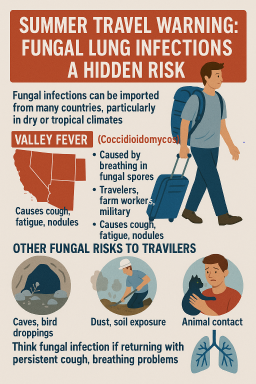
Important information for UK travellers, GPs and patients with chronic lung conditions
As more UK residents prepare to travel this summer — whether for holidays, charity work, military duty, or visiting family abroad — it’s important to raise awareness of a growing health risk that is often overlooked: fungal lung infections.
These conditions can be serious, persistent, and easily mistaken for other illnesses — including long COVID, TB, or bacterial pneumonia.
🌍 Fungal Infections Can Be Acquired Abroad — and Not Just in the Tropics
Fungal spores live in soil, compost, dust, and decaying organic matter. In many parts of the world, especially dry or tropical climates, travellers can unknowingly inhale spores that can cause long-term lung disease — often weeks or months after returning to the UK.
🧳 Key Risk Regions and Infections
🇺🇸 Valley Fever (Coccidioidomycosis)
-
Endemic to the southwestern United States — including Arizona, California, Nevada, Texas, and New Mexico
-
Caused by inhaling Coccidioides spores from dry, dusty soil
-
Affects travellers, farm workers, and military personnel
-
Can cause chronic cough, fatigue, joint pain, and lung nodules
❗ UK patients with unexplained lung symptoms should be asked about travel to these areas — Valley Fever can mimic CPA or even lung cancer.
🌎 Other Endemic Fungal Risks for Travellers
| Disease | Region(s) | Typical Exposure |
|---|---|---|
| Histoplasmosis | Central/South America, Africa, Asia | Caves, bird/bat droppings, demolition sites |
| Blastomycosis | Central USA (Great Lakes, Mississippi) | Soil, wood, riverside areas |
| Paracoccidioidomycosis | Brazil, Colombia | Rural farming dust |
| Talaromycosis | SE Asia, Southern China, India | Dusty environments (esp. in immunocompromised) |
| Sporotrichosis | Latin America, Africa, Japan | Plant thorns, soil, cat scratches |
| Cryptococcosis | Worldwide | Bird droppings, tree bark |
🌾 UK Risks Still Apply at Home
Even without travel, UK residents can develop Aspergillus-related conditions (CPA, ABPA) through:
-
Gardening (esp. with compost)
-
Farming or stables
-
Building or renovation work
-
Damp housing
Drug-resistant Aspergillus fumigatus is also rising in the UK — partly due to the use of agricultural fungicides.
🩺 Advice for GPs and Respiratory Teams
Ask:
-
Have you travelled to dry, dusty regions or tropical countries this year?
-
Have you been exposed to soil, caves, animals, compost, or renovation dust?
-
Do you have underlying lung disease (e.g. asthma, COPD, bronchiectasis)?
Consider:
-
Fungal testing (Aspergillus IgG/IgE, fungal cultures)
-
CT imaging for persistent nodules or cavitations
-
Early referral to respiratory or infectious disease specialists
-
Contacting the National Aspergillosis Centre for persistent or complex cases
✅ What Travellers Can Do
-
Wear a dust mask when gardening, hiking, or working around soil
-
Avoid enclosed spaces with bird or bat droppings
-
Seek help if you return from travel and develop:
-
A cough that won’t go away
-
Fatigue, fever, or weight loss
-
Chest tightness or unexplained breathlessness
-
📌 Final Reminder
Fungal infections are not rare — they’re under-recognised.
This summer, think fungal if you or your patient return from travel with persistent lung symptoms. Early diagnosis can make all the difference.

Latest News posts
News archive