A lung flush (also called a bronchoalveolar lavage, or BAL) isn’t a regular treatment for Allergic Bronchopulmonary Aspergillosis (ABPA), but it’s sometimes used selectively in NHS hospitals.
💧 What Happens During a Lung Flush
It’s done during a bronchoscopy, where a thin, flexible tube is passed through the nose or mouth into the lungs.
A small amount of sterile saline is washed into part of the lung and then gently suctioned back out.
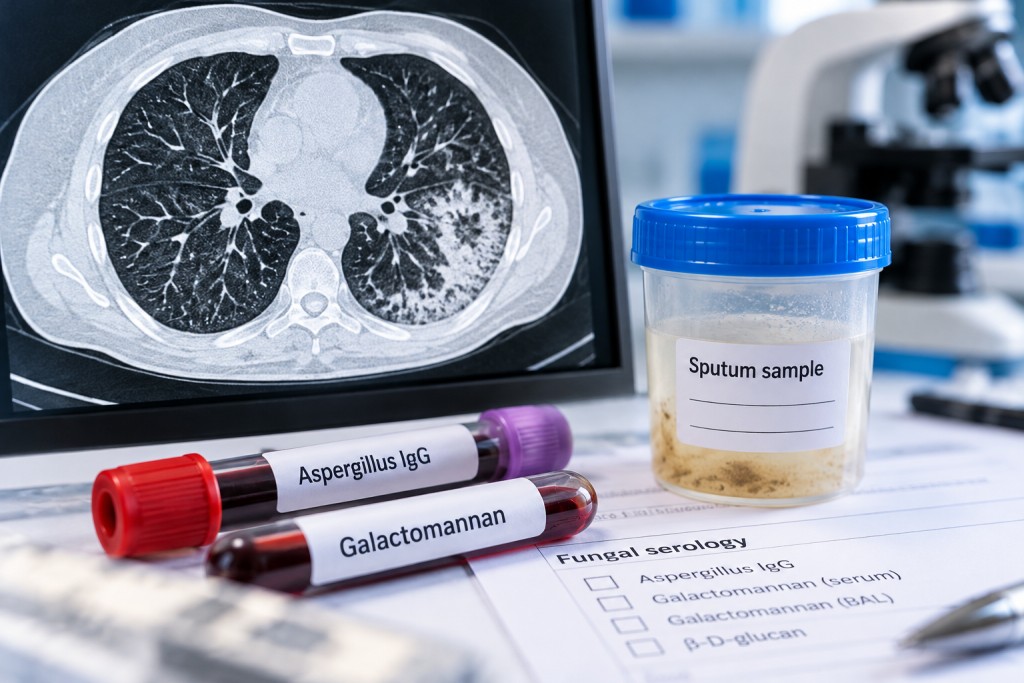
The fluid is tested for:
-
Aspergillus growth or DNA
-
Other infections (bacteria, fungi, viruses)
-
Signs of inflammation or allergic activity
You’re given local anaesthetic and light sedation, so you stay comfortable but sleepy. Most people go home the same day.
🧪 Main Purpose – Diagnosis
In most ABPA cases, a lavage is done to find out what’s causing symptoms – whether they’re due to Aspergillus, another infection, or ongoing inflammation.
The results help doctors fine-tune treatment, such as adjusting antifungal doses or deciding if a biologic drug might help.
🫁 Sometimes Used to Clear Mucus
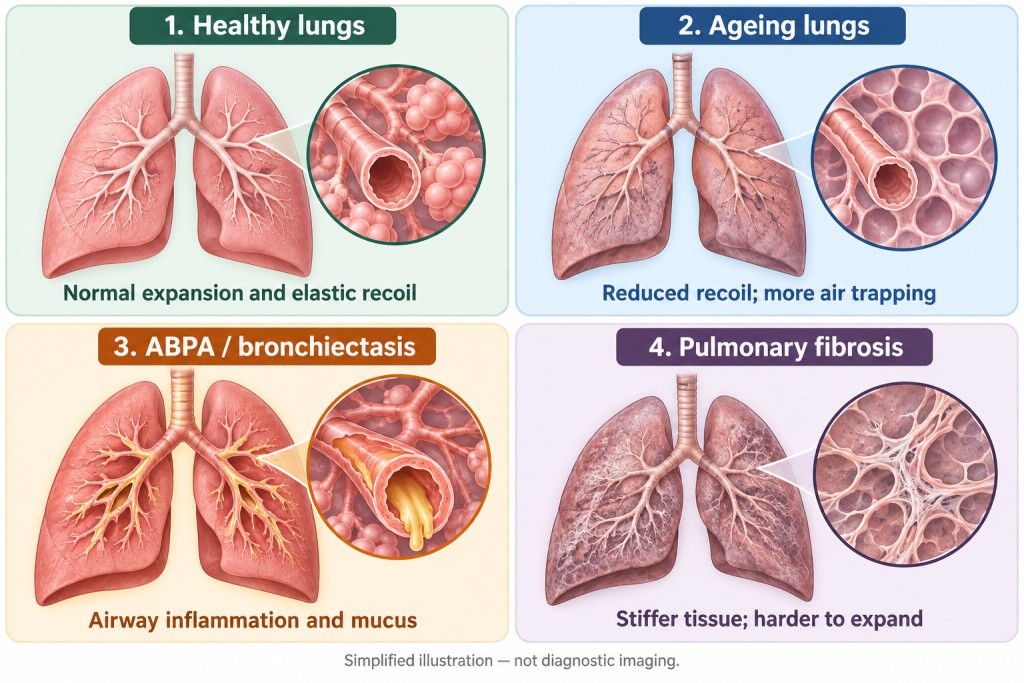
In certain situations – especially when thick mucus plugs are blocking airways or causing part of a lung to collapse – doctors may use lavage as a therapeutic “flush.”
This can wash out sticky secretions and temporarily improve airflow, helping physiotherapy and medication work more effectively.
It’s usually a short, day-case procedure, and most people feel back to normal after a day or two.
⚠️ Why It’s Only Short-Term Relief
Although lavage can clear mucus, ABPA is caused by an allergic immune reaction, not by the mucus itself.
Unless that reaction is controlled with:
-
Corticosteroids (to reduce inflammation),
-
Antifungal drugs (to lower the fungal load), or
-
Biologic injections (to block allergy pathways),
…the lungs will continue to produce thick, sticky mucus, which can re-accumulate within days or weeks.
So while a “lung flush” can make breathing easier in the short term, the effect is temporary – like clearing a blocked drain while the tap is still running.
⚠️ Risks and After-Effects
A bronchoscopy with lavage is generally safe, but it is still an invasive procedure. Possible effects include:
-
Temporary sore throat, cough, or hoarseness (common)
-
Mild bleeding or streaks of blood in sputum for a short time
-
Low oxygen levels during or after the procedure (monitored carefully)
-
Chest tightness, infection, or fever – uncommon but possible
-
Bronchospasm (airway narrowing) in people with very sensitive lungs, which is why it’s done in a hospital with respiratory support available
Because of these small but real risks, the NHS uses lavage only when the benefits outweigh the downsides – for example, when mucus is causing serious blockage or when test results will change management.
💬 In Summary
A “lung flush” can temporarily clear mucus and ease breathing, but it doesn’t stop ABPA’s underlying allergic inflammation.
The mucus often returns unless that inflammation is brought under control with long-term medical treatment.
It’s a useful tool when needed, but not something done regularly or lightly.

Did this page help you?
Tell us in one minute