Subtitle: How understanding your medicines can protect you and improve your quality of life.
💬 Awareness Means Safety
For people managing aspergillosis or related lung conditions, awareness isn’t just about learning facts — it’s about staying safe.
Knowing how your treatment works, what to expect, and who to ask for help gives you control and confidence.
1️⃣ Awareness Builds Understanding
Understanding each medicine’s purpose helps you:
-
Recognise genuine warning signs early.
-
Avoid anxiety over mild or harmless side effects.
-
Know when something needs professional advice.
Example: a patient who knows voriconazole can cause brief light sensitivity won’t panic, but they will report a new rash or jaundice straight away.
2️⃣ Awareness Improves Communication
Informed patients are better partners in care.
You can explain symptoms clearly, ask the right questions, and notice how medicines affect you.
This helps doctors and nurses tailor treatment quickly and safely.
3️⃣ Awareness Supports Safer Treatment
Many aspergillosis patients take multiple interacting medicines — antifungals, steroids, antibiotics, and sometimes biologics.
Being aware of potential interactions means you can prevent problems before they happen.
You can check interactions using the official
👉 BNF Interactions Checker – NICE Medicines Guidance
(Free, reliable, and used by UK healthcare professionals.)
💡 Tip: If you find a possible interaction online, don’t stop any medicine yourself. Take a screenshot or note and discuss it with your pharmacist or specialist.
🧴 Awareness Includes Working With Your Pharmacist
Pharmacists — both hospital and community — are a vital part of your care team.
They are medicine specialists who can:
-
Review your prescriptions for clashes between antifungals, steroids, and other drugs.
-
Advise how to take medicines for best absorption (for example, itraconazole with food, not with omeprazole).
-
Explain potential side effects and how to manage them safely.
-
Contact your GP or hospital consultant if adjustments are needed.
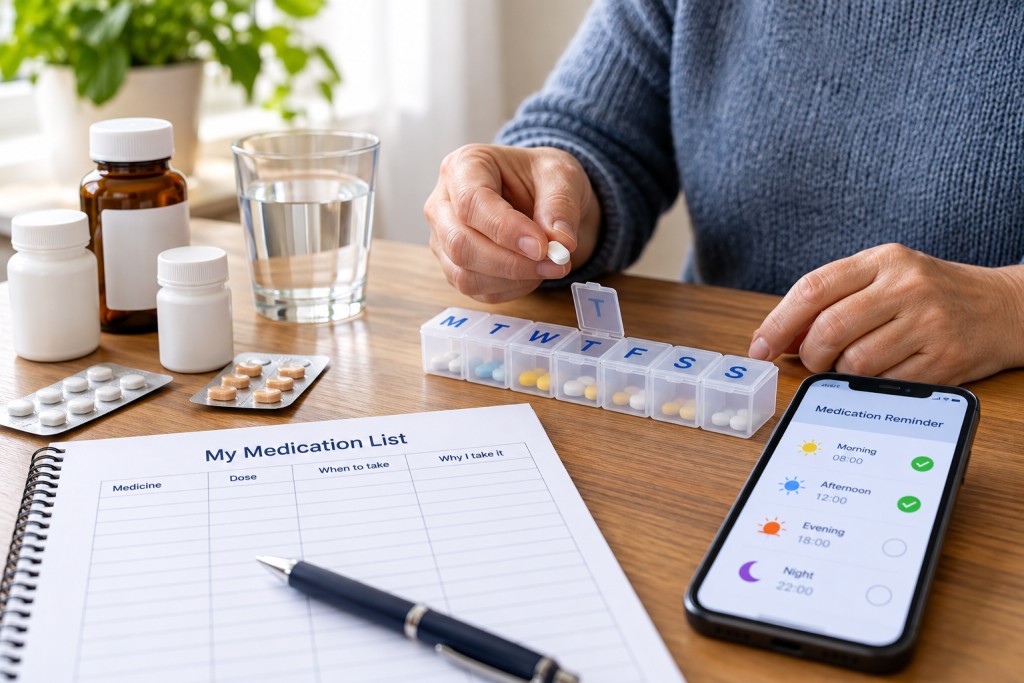
Whenever you start or stop a medicine — even an over-the-counter painkiller or herbal supplement — let your pharmacist know.
They can quickly check your full medication list using the same professional databases doctors use.
🧭 Remember: Your pharmacist is your first safety checkpoint.
They’re there to protect you, clarify confusion, and help your medicines work safely together.
4️⃣ Awareness Builds Confidence and Control
Long-term illness can feel unpredictable.
Understanding your medicines helps you:
-
Manage flare-ups calmly.
-
Recognise early changes and act quickly.
-
Feel more confident talking with your care team.
Research shows that informed patients have fewer hospital admissions, better symptom control, and improved wellbeing.
⚖️ Balanced Information
Awareness is only helpful if it’s accurate.
Stick to trusted sources such as:
-
aspergillosis.org
-
Your hospital’s patient information leaflets
-
Local or hospital pharmacists who can explain details clearly
Avoid social-media “miracle cures” or alarming headlines that lack evidence.
🌱 The Bottom Line
Awareness doesn’t just make you more knowledgeable — it makes you safer.
Learn what each medicine does, recognise early warning signs, and use trusted resources like the BNF Interactions Checker and your pharmacist to keep your treatment on track.
Awareness turns uncertainty into confidence — and confidence into better health.
🔗 Related Resource
Managing Side Effects of Aspergillosis Treatments » — detailed guide to medicines, monitoring, and how pharmacists and doctors work together to keep you safe.

Did this page help you?
Tell us in one minute