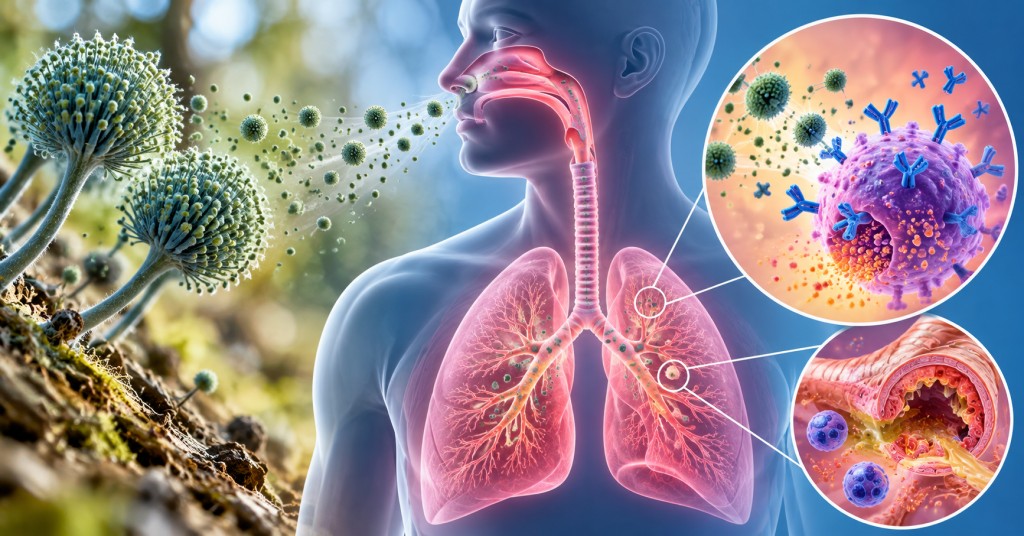
Estimated prevalence: 15–30% of severe asthma patients show fungal sensitisation.
Severe Asthma with Fungal Sensitisation (SAFS) describes a group of patients with severe asthma who show sensitisation (allergy) to Aspergillus or other environmental moulds but do not meet criteria for ABPA. These patients often experience persistent inflammation, breathlessness, mucus production, and exacerbations that are not adequately controlled by standard asthma therapies.
Although SAFS is common in severe asthma clinics, it remains poorly recognised, frequently mislabelled, and rarely discussed in routine practice. Yet identifying SAFS is crucial because it opens the door to specific interventions — including antifungals or targeted biologics — that can improve symptoms and reduce hospital admissions.
⭐ How Common Is SAFS?
SAFS is more common than ABPA and CPA combined in asthma services.
| Population | Estimated prevalence |
|---|---|
| Moderate asthma | ~5% |
| Severe asthma | 15–30% |
| Patients with frequent exacerbations | up to 40% |
| ABPA-negative patients with mucus plugging | high likelihood |
Across the UK, this represents tens of thousands of people.
⭐ Why SAFS Is Missed
1. The diagnosis is not widely understood
Unlike ABPA or CPA, SAFS lacks:
-
universally agreed diagnostic criteria
-
clear imaging features
-
a single confirmatory test
This leads to variability in thinking and detection.
2. Symptoms mimic uncontrolled asthma
SAFS patients typically experience:
-
severe breathlessness
-
wheeze
-
mucus production
-
airway plugging
-
poor response to inhalers
-
frequent steroid courses
These appear indistinguishable from “difficult” or “type 2–high” asthma.
3. IgE and eosinophils may be normal
Unlike ABPA:
-
total IgE may be modest
-
Aspergillus IgE may be borderline
-
eosinophils may fluctuate, especially with steroids or biologics
Clinicians are often looking for very high IgE levels — but SAFS patients usually don’t show them.
4. Sputum and CT scans appear non-specific
Typical imaging:
-
mucus plugging
-
small-airway thickening
-
variable, patchy inflammation
-
bronchiectasis may or may not be present
Radiologists often report these changes as:
-
“consistent with asthma”
-
“post-infective”
-
“non-specific inflammatory pattern”
5. The fungal link is overlooked
Many clinicians are unfamiliar with:
-
the role of mould exposure
-
sensitisation thresholds
-
the overlap between environmental allergy and airway disease
-
when antifungals are appropriate
This leads to delays in recognising fungal-driven asthma.
⭐ Who Is at Highest Risk?
1. Severe asthma patients unresponsive to maximal inhaled treatment
Particularly those with:
-
frequent exacerbations
-
nocturnal symptoms
-
long-term steroid use
-
persistently low lung function
-
mucus plugging events
2. Patients sensitised to Aspergillus or multiple moulds
Positive skin tests or specific IgE indicate airway allergy that can drive symptoms.
3. Patients with damp or mould exposure at home or work
An important environmental factor often overlooked.
4. ABPA-negative asthma patients with mucus plugging
A large proportion of these patients fit the SAFS profile.
5. Those with co-existing bronchiectasis
Bronchiectasis amplifies the inflammatory response to fungal exposure.
⭐ Specialties That Need Greater Awareness
-
Severe asthma services & biologics clinics
(primary diagnostic opportunity) -
General respiratory clinics
-
Primary care & urgent care
(patients seen frequently with “persistent asthma symptoms”) -
Radiology
(important for identifying mucus plugging) -
Allergy/Immunology
(mould sensitisation is central to diagnosis) -
Environmental health teams
(exposure to mould and dampness often perpetuates symptoms)
The National Aspergillosis Centre can provide specialist input when diagnosis is unclear or response to treatment is suboptimal.
⭐ Red Flags Suggesting SAFS
1. Severe asthma poorly controlled despite maximal inhalers
Including biologics (omalizumab, mepolizumab, benralizumab, dupilumab, tezepelumab).
2. Sensitisation to Aspergillus fumigatus or multiple moulds
3. Repeated mucus plugging episodes
(or “sticky mucus” symptoms)
4. More than 2–3 steroid-treated exacerbations per year
5. Asthma + bronchiectasis
Even mild bronchiectasis increases fungal risk.
6. Symptoms triggered by damp/mould exposure
7. Persistent airway inflammation despite correct inhaler technique
⭐ Misdiagnoses That Delay Recognition
-
“Difficult asthma”
-
“Brittle asthma”
-
“Post-viral inflammation”
-
“Poor adherence to inhalers”
-
“Asthma–COPD overlap”
-
“Psychogenic dyspnoea”
-
“Recurrent chest infections”
SAFS is a diagnosis hiding in these labels.
⭐ The Cost of Missed SAFS Diagnosis
For patients:
-
persistent symptoms
-
steroid dependence
-
increased risk of ABPA
-
progressive airway damage
-
hospital admissions
-
poor quality of life
-
possible career and lifestyle impact
For healthcare systems:
-
repeated A&E visits
-
asthma admissions
-
high biologic usage without adequate response
-
unnecessary antibiotics
-
escalating steroid toxicity
-
missed environmental interventions
⭐ Conclusion
SAFS is one of the most common — yet least recognised — fungal-related lung conditions. Although it lacks the dramatic imaging changes of ABPA or CPA, its impact on patients is profound.
Recognising mould sensitisation in severe asthma, understanding the role of fungal allergens, and considering targeted therapies can transform disease control. For complex cases or when the diagnosis is uncertain, referral to the National Aspergillosis Centre is recommended.
Early identification and appropriate treatment reduce steroid use, exacerbations, and long-term airway damage.

Did this page help you?
Tell us in one minute