
Key points
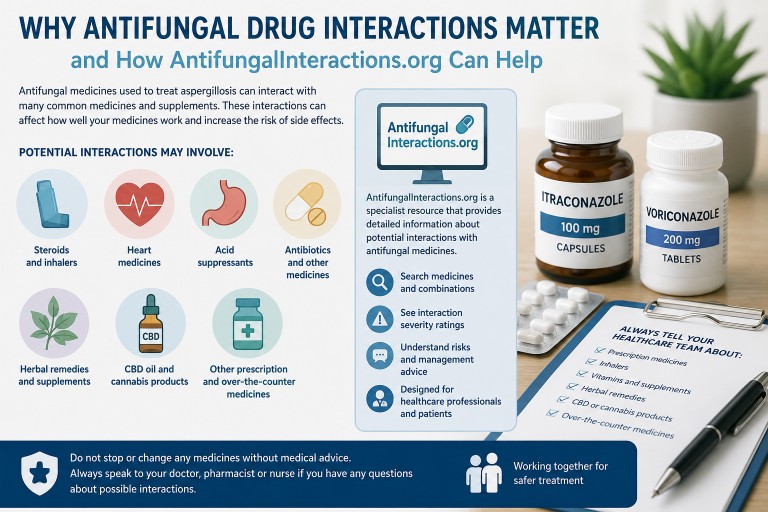
- Antifungal medicines used in aspergillosis can interact with many common medicines and supplements.
- Some interactions are mild, while others can significantly affect drug levels or side effects.
- Interactions may involve steroids, inhalers, antibiotics, heart medicines, acid suppressants and herbal supplements.
- Patients should always tell healthcare teams about all medicines, vitamins and supplements they take.
- AntifungalInteractions.org is a specialist resource designed to help healthcare professionals and patients understand potential antifungal interactions.
Why do antifungal interactions matter so much?
The antifungal medicines used to treat aspergillosis are powerful and highly specialised drugs. They are extremely important in controlling fungal disease, but many also affect the way the body processes other medicines.
This is particularly true for azole antifungals such as:
- itraconazole,
- voriconazole,
- posaconazole,
- isavuconazole.
These medicines are processed through enzyme systems in the liver, especially the cytochrome P450 system. Unfortunately, many other medicines also use these same pathways.
This means antifungals can sometimes:
- increase levels of other medicines,
- reduce levels of other medicines,
- increase side effects,
- affect liver function,
- change how well treatments work.
Because aspergillosis patients often take several medicines at the same time, interactions become particularly important.
Common medicines that may interact with antifungals
Not every interaction is dangerous, and many medicines can still be used safely with careful monitoring. However, some combinations require dose adjustments or additional caution.
Steroids and inhalers
Many patients with allergic bronchopulmonary aspergillosis (ABPA), severe asthma or bronchiectasis take steroid medicines.
Interactions can occur with:
- prednisolone,
- methylprednisolone,
- inhaled steroids such as fluticasone or budesonide.
Azole antifungals can increase steroid exposure, potentially increasing the risk of side effects such as:
- weight gain,
- skin thinning,
- high blood sugar,
- adrenal suppression,
- mood changes.
Heart medicines
Some antifungals can affect heart rhythm or interact with medicines used for:
- high blood pressure,
- irregular heartbeat,
- blood thinning,
- cholesterol management.
This is one reason doctors and pharmacists carefully review medication lists before starting antifungal treatment.
Acid suppressants
Medicines used for acid reflux or stomach protection may affect how well some antifungals are absorbed.
This includes:
- omeprazole,
- lansoprazole,
- esomeprazole,
- antacid preparations.
In some cases, antifungal levels may become too low to work effectively.
Antibiotics and other anti-infective medicines
Some antibiotics and antifungals can interact in ways that increase side effects or affect the electrical activity of the heart.
This is particularly important in people already taking multiple medicines.
Supplements and herbal remedies
Patients are often surprised that supplements may also interact with antifungals.
Potential concerns include:
- CBD oil or cannabis products,
- St John’s Wort,
- high-dose vitamins,
- herbal sleep remedies,
- sports supplements.
“Natural” products can still affect liver enzyme systems and may alter medicine levels.
What is AntifungalInteractions.org?
AntifungalInteractions.org is a specialist online interaction checker designed specifically for antifungal medicines.
The site was developed to help healthcare professionals identify and manage potential interactions involving antifungal drugs.
It is widely used internationally and is regularly updated by specialist pharmacy experts.
Why is it useful?
General drug references do not always provide detailed fungal-specific interaction guidance.
AntifungalInteractions.org focuses specifically on antifungal medicines and often provides:
- more detailed interaction information,
- clearer explanations of risks,
- practical management advice,
- colour-coded interaction severity ratings.
This can help patients better understand why clinicians sometimes adjust medicines, order blood tests or recommend monitoring.
Can patients use the website themselves?
Yes — many patients find it useful for understanding their treatment better.
However, it is important not to interpret interaction checkers without context.
An interaction warning does not automatically mean:
- a medicine combination is unsafe,
- treatment must stop,
- harm will definitely occur.
Many interactions can be safely managed by:
- dose adjustments,
- blood test monitoring,
- timing changes,
- careful clinical supervision.
What should patients do?
Patients should try to keep an up-to-date list of:
- prescription medicines,
- inhalers,
- vitamins,
- supplements,
- CBD or cannabis products,
- over-the-counter medicines.
It is particularly important to mention supplements or herbal remedies because these are easily overlooked during clinic visits.
Do not stop medicines without advice
One of the most important messages is that patients should not stop antifungal medicines or other prescribed treatments based only on an online interaction checker.
Antifungal treatment decisions are often carefully balanced against:
- severity of fungal disease,
- lung function,
- other illnesses,
- alternative treatment options.
Healthcare teams can often safely manage interactions once they are aware of them.
The bottom line
Drug interactions are an important part of antifungal treatment, particularly for people living with aspergillosis who may already take several medicines.
AntifungalInteractions.org is an excellent specialist resource that can help patients and healthcare professionals better understand these interactions.
However, online interaction checkers should support discussions with healthcare professionals rather than replace them.
Useful link
Visit AntifungalInteractions.org
BNF to check any other medication interactions
Author and review information
Prepared as general educational information for people affected by aspergillosis and related lung conditions.
This article does not replace personalised medical advice.
Last reviewed: May 2026

Latest News posts
News archive