
Key points
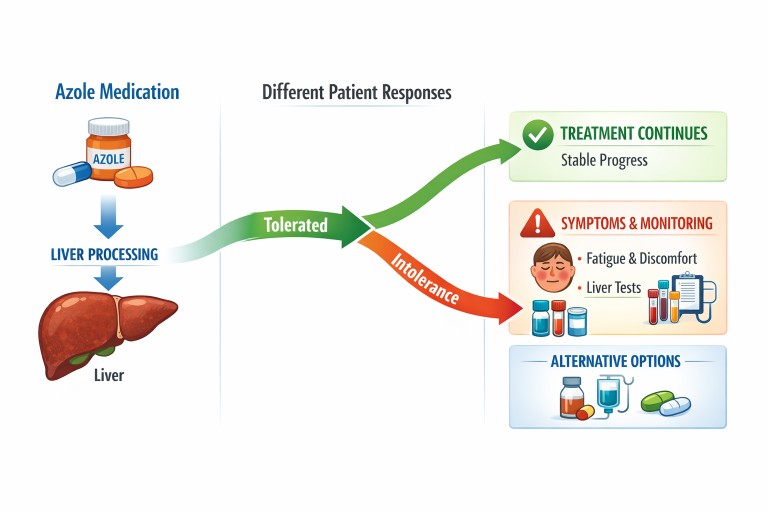
- Azole antifungals are commonly used to treat aspergillosis, but not everyone tolerates them well.
- “Azole intolerance” means the body reacts badly to the medication, even if it is otherwise effective.
- Symptoms can include fatigue, flushing, shaking, nausea, and discomfort around the liver area.
- In some cases, blood tests show changes in liver function.
- If azoles are not tolerated, there are often alternative approaches your clinical team can consider.
Contents
- What are azole antifungals?
- What is azole intolerance?
- Why does azole intolerance happen?
- Common symptoms to look out for
- The role of the liver
- What can be done if azoles are not tolerated?
- Why monitoring is important
- Common questions
- When to seek medical advice
What are azole antifungals?
Azole antifungals are a group of medicines used to treat fungal infections such as aspergillosis. They work by interfering with the fungal cell membrane, helping to stop the fungus growing.
Common examples include:
- Fluconazole
- Itraconazole
- Voriconazole
- Posaconazole
They are often used long-term in conditions like chronic pulmonary aspergillosis (CPA) or allergic bronchopulmonary aspergillosis (ABPA).
What is azole intolerance?
Azole intolerance means that a person develops unpleasant or harmful side effects when taking these medications, even at standard doses.
This is different from:
- Allergy – an immune reaction (e.g. rash, swelling, breathing difficulty)
- Resistance – when the fungus is not affected by the drug
With intolerance, the drug may still work against the fungus—but the body cannot tolerate its effects.
Why does azole intolerance happen?
There is no single cause. Instead, several factors can contribute:
1. How the body processes the drug
Azoles are broken down in the liver. People vary in how efficiently this happens, which can lead to higher levels of the drug in the body.
2. Effects on liver enzymes
Azoles affect enzymes (called cytochrome P450 enzymes) that are involved in processing many medications. This can:
- Increase drug levels
- Cause interactions with other medications
- Put strain on the liver
3. Individual sensitivity
Some people are simply more sensitive to these drugs, even when blood levels are within the expected range.
4. Other health factors
- Existing liver conditions
- Age
- Other medications
- Nutritional status
Common symptoms to look out for
Patients describe a range of symptoms when azoles are not well tolerated, including:
- Flushed or hot cheeks
- Shaking or tremor
- Severe fatigue
- Nausea or reduced appetite
- Discomfort or pain in the upper abdomen, back, or sides (where the liver sits)
- General feeling of being unwell
These symptoms can appear soon after starting treatment or develop over time.
The role of the liver
The liver plays a central role in processing azole antifungals.
In some cases, this can lead to:
- Raised liver enzymes on blood tests
- Inflammation or irritation of the liver
It is important to note that:
- Some people have abnormal blood tests without symptoms
- Others feel unwell even when tests are only mildly changed
This is why both symptoms and blood tests are considered together.
What can be done if azoles are not tolerated?
If azole intolerance is suspected, your clinical team may consider several approaches:
Adjusting treatment
- Reducing the dose
- Changing how the medication is taken (e.g. with food)
Switching to another azole
Some people tolerate one azole better than another.
Therapeutic drug monitoring (TDM)
Blood tests can measure drug levels to help ensure they are not too high or too low.
Considering non-azole treatments
In some cases, different classes of antifungal medication may be considered.
The best approach depends on the individual, the condition being treated, and how severe the side effects are.
Why monitoring is important
Because azoles affect the liver and interact with other medications, monitoring is a routine part of care.
This may include:
- Regular liver function blood tests
- Drug level monitoring (for some azoles)
- Review of other medications
Monitoring helps detect problems early and allows treatment to be adjusted safely.
Common questions
Does intolerance mean I cannot take any antifungal treatment?
No. Many patients who cannot tolerate one medication can use another, or a different approach may be possible.
Will the symptoms settle if I continue?
In some cases mild symptoms improve, but persistent or worsening symptoms should always be reviewed.
Is this common?
Most people tolerate azoles reasonably well, but intolerance is recognised and not rare in specialist clinics.
When to seek medical advice
You should contact your healthcare team if you experience:
- Persistent or worsening fatigue
- Pain in the upper abdomen, back, or sides
- Nausea affecting eating or drinking
- New or unusual symptoms after starting medication
Seek urgent medical attention if you notice:
- Yellowing of the skin or eyes (jaundice)
- Dark urine or pale stools
- Severe abdominal pain
Summary
Azole antifungals are an important part of treating aspergillosis, but some people experience intolerance.
This is usually related to how the body processes the medication—particularly in the liver—and varies from person to person.
If intolerance occurs, it does not mean that treatment options have run out. With careful monitoring and specialist input, alternative strategies can often be found.
Further reading
- Chronic pulmonary aspergillosis (CPA)
- Allergic bronchopulmonary aspergillosis (ABPA)
- Information for healthcare professionals
Author & review
This article has been prepared for patients and carers using information aligned with UK specialist practice, including the National Aspergillosis Centre (Manchester, UK).
Important: This content is for general educational purposes only and is not a substitute for medical advice. Always speak to your healthcare team about your own situation.

Latest News posts
News archive