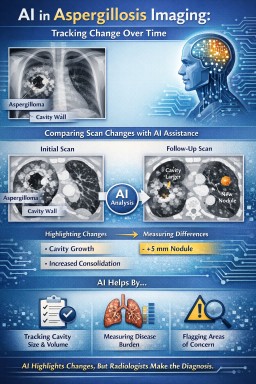
Imaging — especially chest X-ray and high-resolution CT (HRCT) — is one of the most important tools for recognising, diagnosing and monitoring aspergillosis. Because the condition can affect the lungs in very different ways, seeing what is happening inside the chest is essential for both patients and clinicians.
This guide explains why imaging matters, how it is used, and provides links to trusted resources that show what aspergillosis looks like on scans.
Why Imaging Matters in Aspergillosis
Aspergillosis affects the lungs deep within the airway and lung tissue. Many of these changes cannot be detected by a stethoscope or blood tests alone. Imaging helps detect:
-
mucus plugging
-
bronchiectasis (damaged widened airways)
-
cavities (holes) in the lungs
-
fungal balls (aspergillomas)
-
inflammation and consolidation
-
scarring or fibrosis
-
signs of haemoptysis risk
In Allergic Bronchopulmonary Aspergillosis (ABPA), imaging may show mucus impaction or central bronchiectasis.
In Chronic Pulmonary Aspergillosis (CPA), it may show cavities, thickened cavity walls, or a fungus ball.
In invasive aspergillosis, imaging can detect early nodules, the “halo sign”, or rapidly progressing changes.
Understanding these patterns helps clinicians choose the right treatment at the right time, and helps patients make sense of what is happening in their lungs.
Key Online Resources for Aspergillosis Imaging
Radiopaedia – Open Radiology Reference
One of the clearest, most comprehensive imaging resources available.
-
Pulmonary aspergillosis overview:
https://radiopaedia.org/articles/pulmonary-aspergillosis?lang=gb -
Invasive pulmonary aspergillosis:
https://radiopaedia.org/articles/invasive-pulmonary-aspergillosis?lang=gb -
Aspergilloma (fungal ball):
https://radiopaedia.org/articles/aspergilloma?lang=gb
Why it’s useful:
Radiopaedia shows real CT and X-ray examples from multiple patients, helping you understand what radiologists look for and how different forms of aspergillosis appear on imaging.
Peer-Reviewed Pictorial Reviews
These academic reviews provide side-by-side CT examples of the full spectrum of disease, written in an accessible style and extremely useful for both patients and clinicians.
-
Imaging Spectrum in Chronic Pulmonary Aspergillosis (Garg et al., 2022)
https://pmc.ncbi.nlm.nih.gov/articles/PMC9833062/ -
Pictorial Essay: Forms of Pulmonary Aspergillosis (Tamkevičiūtė et al., 2024)
(abstract) https://www.ejradiology.com/article/S0720-048X%2824%2900006-8/abstract
These explain in pictures:
-
how cavities form
-
how aspergillomas look
-
early vs late changes
-
how ABPA patterns differ from CPA
-
what stable vs progressive disease looks like
They are especially helpful for GPs, respiratory trainees, and nurses learning to interpret fungal disease imaging.
Classic RSNA Radiographics Review (Franquet et al.)
A foundational article describing radiologic patterns in allergic, chronic and invasive aspergillosis.
Although technical, this remains a reference standard for understanding how fungal disease presents on CT.
National Aspergillosis Centre (UK) – Patient-Friendly Information
Clear explanations of why imaging is needed, how CT is used, and what typical findings mean.
-
Chronic Pulmonary Aspergillosis (CPA):
https://mft.nhs.uk/wythenshawe/services/infectious-diseases/national-aspergillosis-centre/about-aspergillosis/chronic-pulmonary-aspergillosis-cpa/
These pages are ideal for newly diagnosed patients, people preparing for CT scans, and clinicians who want a quick overview.
Asthma + Lung UK – General Aspergillosis Overview
Patient-friendly explanations of the different types of aspergillosis, diagnosis and treatment.
Includes mention of imaging when relevant.
How Imaging Guides Clinical Decisions
1. Confirming the Diagnosis
Different forms of aspergillosis look different on scans:
-
ABPA may show “finger-in-glove” mucus plugging or central bronchiectasis.
-
CPA requires a cavity seen on imaging for >3 months.
-
Aspergilloma is a fungal ball sitting within a cavity.
-
Invasive disease shows nodules, halo signs, or rapidly evolving infiltrates.
Without CT imaging, these distinctions cannot reliably be made.
2. Checking for Complications
Imaging detects:
-
new cavities
-
cavity wall thickening
-
risk of haemoptysis (bleeding)
-
pleural thickening
-
fibrosis
-
co-existing infections
These findings often trigger urgent or proactive treatment modifications.
3. Monitoring Progression and Treatment Response
Symptoms alone are not enough. Imaging shows whether:
-
disease is stable or progressing
-
antifungal treatment is working
-
inflammation is reducing
-
mucus plugging is clearing
-
new areas are becoming involved
This is why people with CPA or ABPA may have repeat CT scans, usually every 6–12 months or when symptoms worsen.
Using These Resources Safely
These resources are not for self-diagnosis. Instead, they help:
-
patients understand their own scan reports
-
GPs recognise when to refer to a specialist
-
hospital teams spot aspergillosis in complex or unclear cases
-
nurses and allied health professionals visualise lung changes
-
clinicians communicate findings more clearly
Imaging must always be interpreted by a trained radiologist or specialist team, but these materials help demystify the process.
Summary
Imaging is central to the diagnosis and management of aspergillosis. Whether you are a patient trying to understand your scans, a GP seeing a complex chest X-ray, or a hospital clinician assessing breathlessness, these imaging resources provide clear, trustworthy examples.
By learning what different patterns look like — mucus plugging, cavities, aspergillomas, fibrosis or invasive changes — non-specialists can make more confident decisions, and patients can better understand their condition.

Did this page help you?
Tell us in one minute