
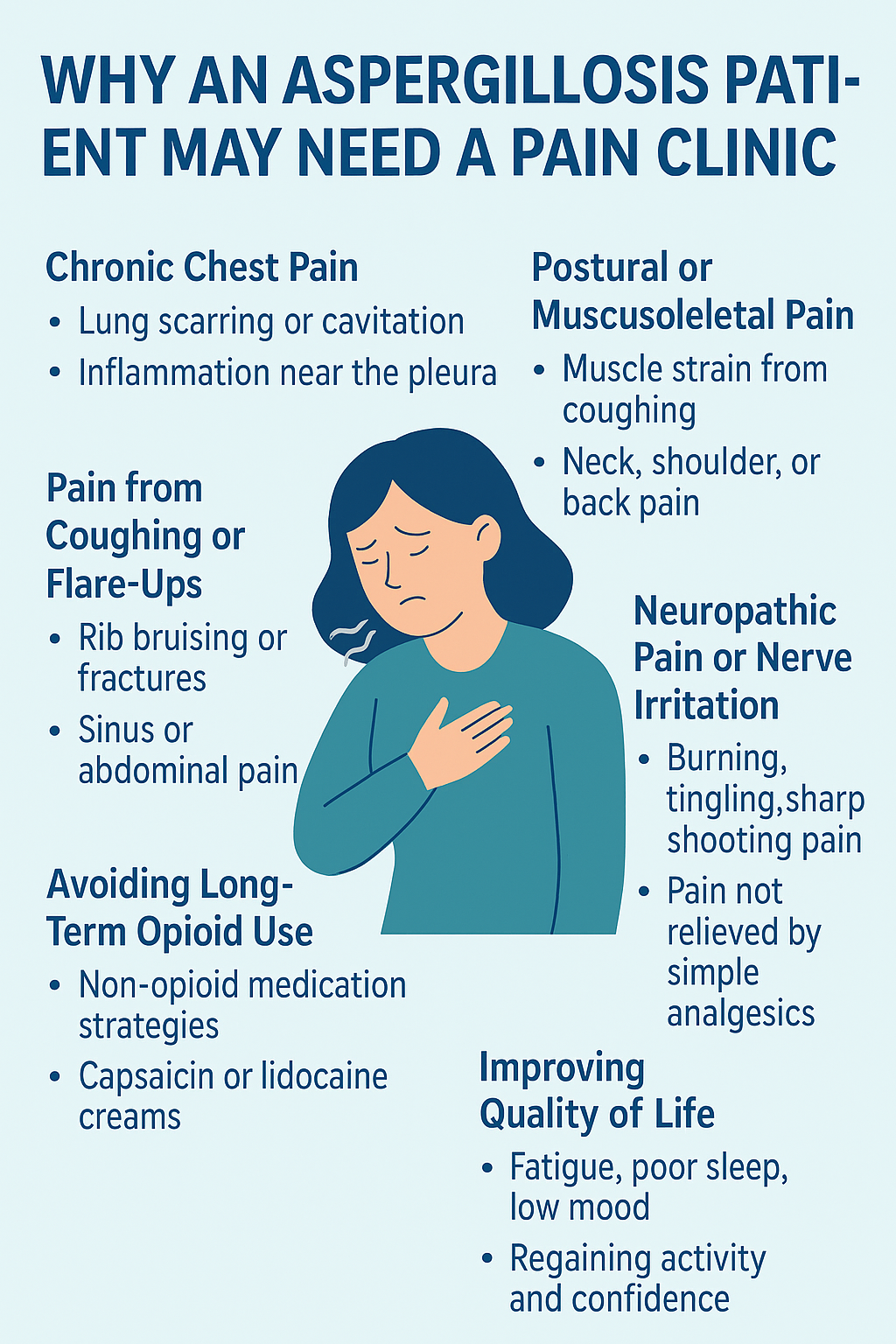
Chronic Chest Pain
-
Some patients with CPA, especially those with lung scarring, cavitation, or aspergillomas, develop persistent chest wall pain.
-
This can be caused by:
-
Chronic inflammation or infection near the pleura (lining of the lungs)
-
Pressure or stretching from damaged lung tissue
-
Muscle strain from chronic coughing
-
-
A pain clinic can assess neuropathic pain and offer non-opioid or low-dose medication strategies.
2. Postural or Musculoskeletal Pain
-
Long-term breathing difficulties can change how patients sit, stand, or move, leading to:
-
Neck, shoulder, or back pain
-
Costochondritis (pain around rib joints)
-
-
Pain clinics often include physiotherapists and occupational therapists who can help correct posture and reduce strain.
3. Pain from Coughing or Flare-Ups
-
Recurrent coughing fits in ABPA or CPA can lead to:
-
Rib bruising or even fractures
-
Abdominal muscle pain
-
Headaches and facial pain from sinus pressure
-
-
Clinics can help identify safer ways to manage flare-ups, including breathing strategies and adjunct treatments.
4. Neuropathic Pain or Nerve Irritation
-
Invasive aspergillosis (or surgical interventions for aspergilloma) can affect surrounding nerves, leading to:
-
Burning, tingling, or sharp shooting pain
-
Pain unresponsive to simple analgesics
-
-
Pain specialists may use gabapentinoids, tricyclics, or even nerve blocks to reduce symptoms.
5. Avoiding Long-Term Opioid Use
-
Pain clinics can help avoid or reduce opioid dependence by offering:
-
Safer, evidence-based medication options
-
Capsaicin creams, lidocaine patches, or infusions
-
Psychological support for the emotional toll of chronic pain
-
6. Improving Quality of Life
-
Chronic pain can lead to fatigue, poor sleep, low mood, and reduced activity.
-
Pain clinics work holistically, often involving:
-
Clinical psychologists for CBT or ACT (pain-focused therapy)
-
Personalised pacing plans
-
Tools for managing flare-ups and regaining confidence
-
✅ Summary:
Pain is real and common in aspergillosis — but often under-recognised. A referral to a specialist pain clinic offers a structured, supportive, and multidisciplinary approach to relief.
Attending an NHS pain clinic can offer several important advantages for people living with aspergillosis-related pain, as well as other long-term or complex pain conditions. GPs often have limited tools, time, and prescribing freedom — but pain clinics bring together specialist teams and a much broader range of options.
✅ Advantages of Attending an NHS Pain Clinic
1. Multidisciplinary Care
Pain clinics usually involve:
-
Pain consultants (anaesthetists or neurologists)
-
Specialist nurses
-
Physiotherapists
-
Clinical psychologists
This team approach helps tackle pain from multiple angles — physical, emotional, and functional.
2. Access to a Wider Range of Treatments
Pain clinics can offer things your GP usually can’t prescribe or organise, such as:
-
Topical capsaicin or lidocaine plasters
-
Nerve blocks or steroid injections
-
Low-dose ketamine or lidocaine infusions (in hospital setting)
-
Medications like duloxetine, amitriptyline, or low-dose opioids used carefully
-
Neuromodulation techniques (e.g. TENS, PENS, spinal cord stimulators in some cases)
3. Safer Use of Medication
Specialists understand how to balance benefits and risks of pain medications — including when to use opioids, and how to minimise side effects or dependence.
They can also help you taper safely if you’ve been on pain meds long-term.
4. Improved Quality of Life
Pain clinics often focus on function over cure — helping you:
-
Sleep better
-
Move more confidently
-
Reduce pain flare-ups
-
Return to work or hobbies
-
Break the cycle of stress, pain, and fatigue
5. Psychological Support (Optional, but Useful)
Chronic pain is exhausting — emotionally as well as physically. Pain clinics may offer:
-
CBT for pain
-
Mindfulness or ACT (Acceptance and Commitment Therapy)
-
Support with coping, pacing, and flare-up planning
This isn’t about “it’s all in your head” — it’s about helping your brain and body deal with ongoing pain more effectively.
6. Validation and Advocacy
Just being believed and supported by a pain specialist can be a huge relief. They can also:
-
Write to your GP with specialist recommendations
-
Support benefits applications or workplace adjustments
-
Help you navigate complex diagnoses like aspergillosis + fibromyalgia, or lung disease + neuropathic pain
📍 When Should You Ask for a Referral?
-
If pain is lasting more than 3 months
-
If it’s affecting your daily function or mental wellbeing
-
If you’re relying on medications that aren’t working or cause side effects
-
If you want to explore non-drug options

Latest News posts
News archive