
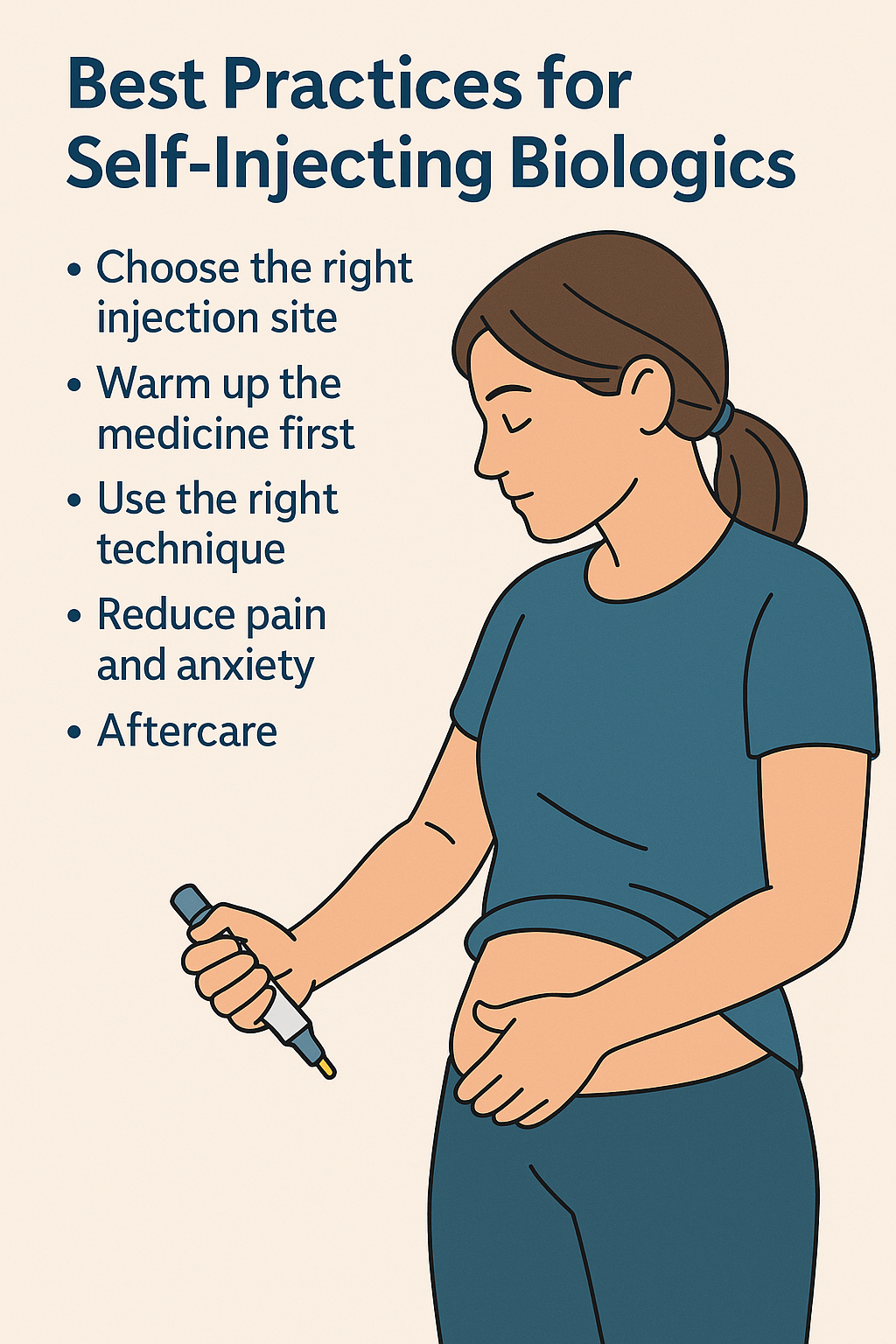
✅ 1. Choose the Right Injection Site
Biologics are usually given subcutaneously (just under the skin).
Most common sites:
-
Abdomen (at least 2 inches away from the belly button)
-
Thighs (top outer area)
-
Sometimes upper outer arm (if someone else is injecting)
👉 Rotate sites to avoid irritation or lumps.
🧊 2. Warm Up the Medicine First
-
Take it out of the fridge 30–60 minutes before injecting
-
Cold biologics can sting — warming it to room temperature reduces discomfort
❌ Never heat in a microwave or hot water — just let it sit at room temperature.
🧼 3. Prepare Properly
-
Wash your hands
-
Clean the injection site with an alcohol swab — let it dry fully before injecting
-
Check the pen or syringe for:
-
Expiry date
-
Clarity of solution (should be clear, no lumps or particles)
-
💡 4. Use the Right Technique
-
If using a pre-filled syringe:
-
Pinch the skin gently
-
Insert the needle at a 45° angle
-
Inject slowly and steadily
-
-
If using an auto-injector (pen):
-
Place flat against the skin
-
Press firmly until you hear a click
-
Hold for the full time recommended (usually 5–15 seconds)
-
Don’t rub the site afterward — this can increase irritation.
🧘♀️ 5. Reduce Pain and Anxiety
-
Breathe out slowly as you inject — this reduces muscle tension
-
Use distraction (music, cold pack, or mental focus techniques)
-
If nervous, consider numbing the skin with an ice pack for 30 seconds before cleaning with alcohol
-
Inject slowly with syringes — fast injection = more sting
🧴 Aftercare
-
Apply light pressure with a cotton ball or tissue
-
Avoid rubbing or massaging
-
Use a cold pack if sore or bruised
-
Report any ongoing redness, swelling, or allergic reaction
🛠️ Tools That Help
-
Needle-free injection devices (limited availability)
-
Numbing creams like lidocaine/prilocaine (available OTC or by GP)
-
Sharps disposal bin — request one from your pharmacy or consultant team
-
Injection reminder apps if on a schedule (e.g. MyTherapy, Medisafe)
🧑⚕️ When to Speak to Your Team
-
If injections remain very painful
-
If you’re unsure about technique
-
If you develop redness, swelling, or lumps that last more than 24–48 hours
-
If you feel light-headed or allergic afterward

Latest News posts
News archive