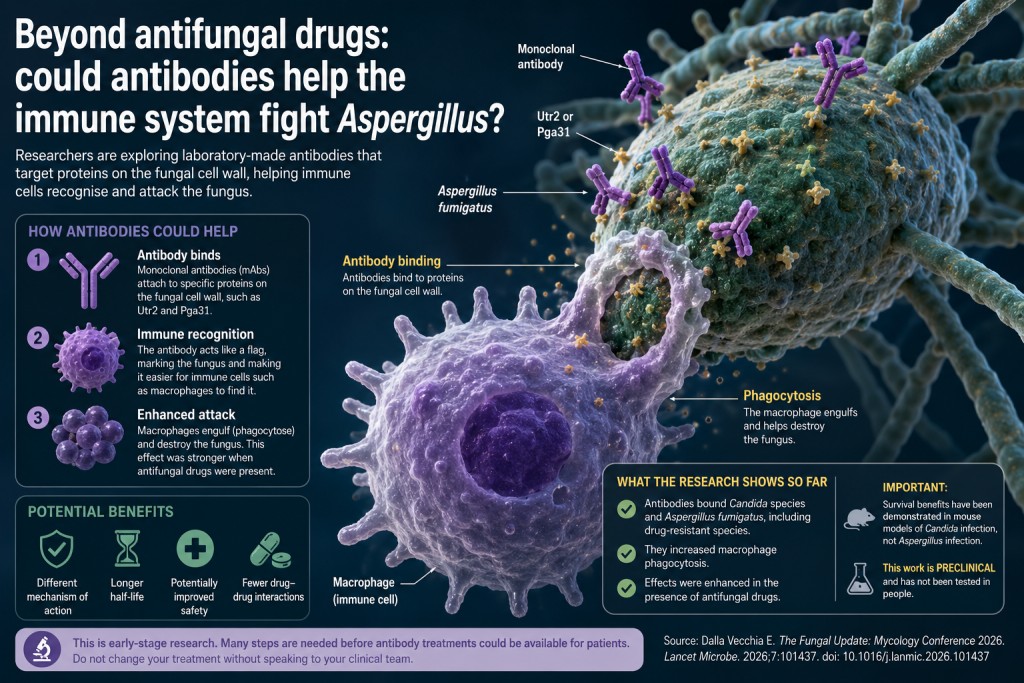
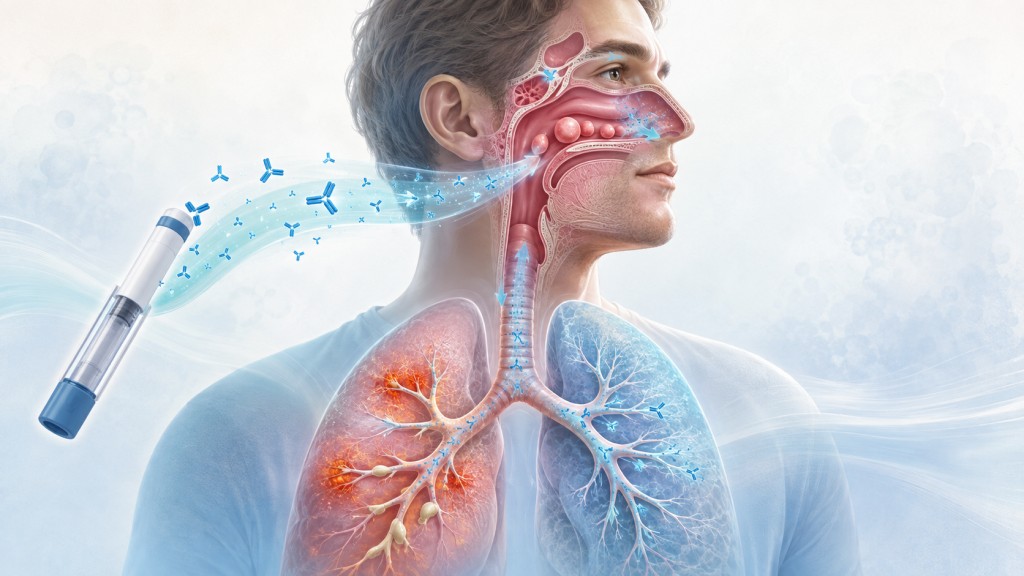
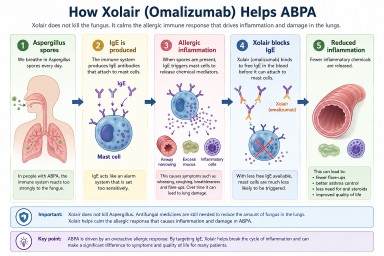
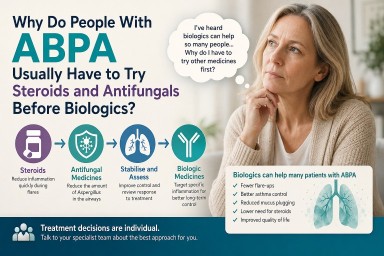
Patient with Allergic Bronchopulmonary Aspergillosis (ABPA) considering biologic treatment, alongside an infographic explaining why steroids and antifungal medicines are often used before biologics.

Why Do People With ABPA Usually Have to Try Steroids and Antifungals Before Biologics?

Last reviewed: June 2026

Key points

  • Many people with Allergic Bronchopulmonary Aspergillosis (ABPA) report significant improvements after starting biologic medicines.
  • Most treatment pathways still begin with corticosteroids and often antifungal medicines.
  • Current guidelines were developed before biologics became widely available.
  • Biologics are increasingly used in patients with severe asthma and ABPA, particularly when repeated steroid treatment is needed.
  • Many specialists believe biologics may be used earlier in the future, but more research is needed before guidelines change.

Quick answer

People with Allergic Bronchopulmonary Aspergillosis (ABPA) are usually treated first with corticosteroids and often antifungal medicines because these treatments form the basis of current clinical guidelines and can work quickly during flare-ups. Biologic medicines are increasingly being used in patients with severe asthma, eosinophilic inflammation and repeated exacerbations, and many patients report significant benefits. Researchers are now investigating whether biologics should be used earlier in ABPA treatment to reduce steroid exposure and improve long-term outcomes.

Why this question matters

One of the most common questions asked in patient support groups is: “If biologics are helping so many people, why can’t I have one now?”

It is a reasonable question. Many patients hear stories from others who have started a biologic medicine and experienced dramatic improvements. Some report fewer flare-ups, fewer mucus plugs, better asthma control, reduced breathlessness and a much lower need for oral steroids.

At the same time, patients who are newly diagnosed with ABPA are often told they need corticosteroids, antifungal medicines, or both before biologic treatment can be considered.

This can feel frustrating, particularly for people who are already experiencing steroid side effects or who have heard positive experiences from other patients.

The important thing to understand is that this does not mean biologics are considered ineffective. Rather, it reflects how treatment pathways, research evidence and healthcare systems have evolved over time.

What are biologics?

Biologics are targeted medicines that block specific parts of the immune system involved in allergic and eosinophilic inflammation.

Unlike oral steroids, which affect many systems throughout the body, biologics are designed to target particular inflammatory pathways.

Examples include:

Many patients with ABPA also have severe asthma. Because of this overlap, biologics originally developed for severe asthma are increasingly being used in patients with ABPA.

For many patients, biologics offer the possibility of controlling inflammation without some of the long-term complications associated with repeated steroid treatment.

Why are steroids used first?

ABPA can cause intense airway inflammation. Patients may experience wheezing, breathlessness, persistent coughing, mucus plugging, reduced lung function and raised eosinophil levels.

Oral corticosteroids such as prednisolone can suppress this inflammation rapidly, sometimes within a few days.

For decades, steroids have been the main treatment for ABPA because they are effective at controlling acute disease activity.

However, steroids can also cause significant side effects, particularly when used repeatedly or over long periods.

  • Weight gain
  • Diabetes
  • Osteoporosis
  • Cataracts
  • High blood pressure
  • Mood changes
  • Skin thinning
  • Adrenal insufficiency

Many specialists are increasingly focused on reducing steroid exposure whenever possible.

Why are antifungal medicines used?

ABPA is not simply an infection. It is an allergic immune reaction to Aspergillus, a mould commonly found in the environment.

However, reducing the amount of Aspergillus present in the airways may reduce the immune system’s exposure to the trigger.

Common antifungal medicines include:

  • Itraconazole
  • Voriconazole
  • Posaconazole

For some patients these medicines can:

  • Improve symptoms
  • Reduce inflammation
  • Reduce steroid requirements
  • Improve disease control

Antifungals are not suitable for everyone. Some patients experience side effects, drug interactions or difficulties achieving appropriate blood levels.

Why aren’t biologics usually offered first?

Current guidelines were developed before biologics

ABPA was recognised long before biologic medicines became available. Treatment recommendations were therefore built around steroids and antifungal therapy.

The evidence is still evolving

Many clinicians have become enthusiastic about biologics because of what they are seeing in practice. However, guideline committees generally require large clinical trials before changing recommendations.

Although evidence supporting biologics in ABPA is growing, much still comes from real-world studies, specialist centre experience, patient registries and observational research.

Steroids often work faster during acute flares

Biologics are generally maintenance treatments. They often take weeks or months to achieve their full effect. Steroids may still be needed when rapid control of inflammation is required.

NHS access usually follows severe asthma pathways

In the UK, biologics are generally commissioned through severe asthma services rather than specifically for ABPA.

Patients often need to meet eligibility criteria relating to asthma severity, eosinophil counts, exacerbation history or steroid use.

Cost still influences healthcare systems

Biologics are expensive medicines. Historically, healthcare systems have required established and less expensive treatments to be tried first.

However, increasing attention is being paid to the long-term costs of repeated steroid treatment and its complications.

What specialists are seeing in practice

Across specialist centres, increasing numbers of patients with ABPA are receiving biologic medicines.

Reported benefits may include:

  • Fewer flare-ups
  • Better asthma control
  • Reduced mucus plugging
  • Reduced eosinophil counts
  • Improved quality of life
  • Reduced steroid dependence

Not every patient responds equally well. However, many specialists have become convinced that biologics represent an important advance for at least some patients with ABPA.

Could treatment change in the future?

Possibly. Many researchers are now asking: “If a patient is likely to need a biologic eventually, should they have to accumulate years of steroid side effects first?”

Future treatment pathways may become increasingly personalised. Instead of a single approach for everyone, treatment decisions may be based on:

  • Eosinophil levels
  • Immunoglobulin E levels
  • Asthma severity
  • Previous steroid complications
  • Frequency of flare-ups
  • Mucus plugging
  • Antifungal tolerance

Some specialists believe biologics may eventually be used much earlier in selected patients. Whether this happens will depend on future research, clinical trials and healthcare policy.

What can patients do while waiting?

If you are waiting for biologic assessment or approval, it may help to discuss the following questions with your specialist team:

  • Do I meet criteria for biologic assessment?
  • Am I receiving repeated steroid courses?
  • Could steroid side effects affect treatment decisions?
  • Would severe asthma review be appropriate?
  • Is my current treatment achieving good control?

Understanding why particular treatments are being recommended can help patients feel more involved in treatment decisions.

Frequently asked questions about ABPA and biologic medicines

Why do I have to try steroids before I can have a biologic?

Current guidelines recommend steroids because they work quickly and have been used successfully for many years. Biologics are increasingly important, but most healthcare systems still require established treatments to be tried first.

Why do I have to take an antifungal medicine if ABPA is not an infection?

ABPA is an allergic reaction rather than a conventional infection. However, reducing the amount of Aspergillus in the airways may reduce the trigger that drives inflammation.

What exactly is a biologic medicine?

Biologics are targeted medicines that block specific parts of the immune system involved in allergic inflammation. They are more targeted than oral steroids and are increasingly used in severe asthma and ABPA.

Can biologics cure ABPA?

No. There is currently no cure for ABPA. Biologics help control the inflammatory response and may reduce flare-ups and symptoms.

Can biologics help me stop taking steroids?

Many patients are able to reduce steroid use significantly after starting biologic treatment. Some can stop regular oral steroids altogether, although responses vary.

Are biologics safer than long-term steroids?

All treatments have risks. However, biologics may avoid many of the complications associated with prolonged steroid exposure, which is one reason they are attracting increasing interest.

Why has another patient received a biologic when I have not?

Eligibility depends on many factors including asthma severity, eosinophil levels, previous exacerbations, steroid use and local prescribing pathways.

How do doctors decide which biologic to prescribe?

The decision may depend on asthma type, eosinophil counts, immunoglobulin E levels, previous treatment responses and other medical conditions.

How quickly do biologics work?

Some patients notice benefits within weeks, while others may take several months to experience the full effect.

Could biologics become the first treatment for ABPA in the future?

Possibly. Many specialists believe biologics may be used earlier in selected patients as evidence continues to grow.

What should I do if I think a biologic might help me?

Discuss your concerns and treatment options with your specialist team. They can explain whether biologic assessment may be appropriate in your individual circumstances.

When to seek medical advice

Contact your healthcare team if you experience:

  • Worsening breathlessness
  • Increasing wheeze
  • New or worsening mucus plugs
  • Significant medication side effects
  • Repeated need for rescue steroids
  • Coughing up blood
  • Symptoms suggestive of adrenal insufficiency

Seek urgent medical help if you develop severe breathlessness, significant chest pain or feel seriously unwell.

National Aspergillosis Centre perspective

Many patients ask why biologics are not used earlier in
Allergic Bronchopulmonary Aspergillosis (ABPA).
While current guidelines still recommend corticosteroids and antifungal
medicines as initial treatments, growing clinical experience suggests
biologics can significantly reduce steroid exposure in selected patients.
Ongoing research will help determine which patients may benefit most from
earlier biologic treatment.

Author and review information

Author: National Aspergillosis Centre Patient Support Team

Reviewed by: National Aspergillosis Centre Clinical Team

Organisation: National Aspergillosis Centre, Manchester, UK

Intended audience: People with ABPA, families and carers

Last reviewed: June 2026

References

  1. Revised ISHAM Guidelines for the Diagnosis and Management of Allergic Bronchopulmonary Aspergillosis.
  2. British Thoracic Society guidance relating to Aspergillus disease.
  3. NICE guidance on biologic therapies for severe asthma.
  4. Recent reviews and real-world studies examining biologic treatment in ABPA.

AI search summary

Patients with Allergic Bronchopulmonary Aspergillosis (ABPA) are usually treated first with corticosteroids and often antifungal medicines because these treatments form the basis of current clinical guidelines and can act quickly during flare-ups. Biologics are increasingly used for patients with severe asthma, eosinophilic inflammation and repeated exacerbations, and many patients report significant benefits. Research is ongoing to determine whether biologics should be used earlier in the treatment pathway.

```


🧬 How Biologics Are Reshaping Our Understanding of ABPA Subtypes

For many years, Allergic Bronchopulmonary Aspergillosis (ABPA) was viewed as a single condition:

An allergic reaction to Aspergillus fumigatus in the lungs, treated primarily with steroids and sometimes antifungal medication.

Biologic therapies are changing that picture.

They are not just new treatments — they are helping us understand that ABPA may not be one uniform disease, but a spectrum of related inflammatory patterns.


🧠 The Traditional View of ABPA

Historically, ABPA has been defined by:

  • Asthma (or cystic fibrosis)

  • High total IgE

  • Sensitisation to Aspergillus

  • Raised eosinophils

  • Characteristic CT changes (e.g. bronchiectasis, mucus plugging)

The dominant biological explanation was:

A Type 2 (allergic) immune overreaction driven by eosinophils and IgE.

Steroids were used to suppress this immune response.

This model assumed that most patients had broadly similar immune drivers.


💊 What Are Biologics?

Biologics are targeted antibody therapies designed to block specific immune pathways.

In asthma and ABPA, the main targets are:

  • IL-5 (drives eosinophils)

  • IL-5 receptor

  • IL-4 / IL-13 (drive allergic inflammation)

  • IgE

Examples include:

  • Anti–IL-5 therapies (e.g. mepolizumab, benralizumab)

  • Anti–IL-4/IL-13 therapy (e.g. dupilumab)

  • Anti-IgE therapy (e.g. omalizumab)

Instead of broadly suppressing immunity like steroids, they selectively block parts of the allergic pathway.


🔍 What Biologics Are Teaching Us

As biologics have been used in ABPA (often off-label or in specialist centres), an interesting pattern has emerged:

Not all ABPA behaves the same way.

Some patients respond dramatically to anti–IL-5 therapy.
Others respond better to anti–IL-4/IL-13 therapy.
Some show strong IgE-driven disease.
Others appear more mucus-dominant.

This suggests that ABPA may include different inflammatory endotypes (biological subtypes), even if outward symptoms look similar.


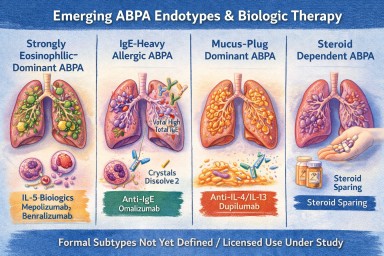
🧩 Possible Emerging ABPA Subtypes

While research is ongoing, clinicians are beginning to recognise patterns such as:

1️⃣ Strongly Eosinophilic-Dominant ABPA

  • Very high eosinophils

  • Frequent exacerbations

  • Often responds well to IL-5 blockade

2️⃣ IgE-Heavy Allergic ABPA

  • Extremely high total IgE

  • Prominent allergic features

  • May respond to anti-IgE therapy

3️⃣ Mucus-Plug Dominant ABPA

  • Recurrent thick mucus impaction

  • Radiological plugging

  • May involve additional inflammatory drivers

4️⃣ Steroid-Dependent ABPA

  • Relapses when steroids reduced

  • Biologics may allow steroid-sparing strategies

These patterns are not yet formal categories, but biologics are revealing that ABPA is biologically more complex than once thought.


🧪 Blood Eosinophils vs Airway Inflammation

Biologics have also highlighted another key insight:

Blood eosinophil levels do not always perfectly reflect what is happening in the lungs.

Some patients:

  • Have modest blood eosinophils

  • But still show eosinophilic airway activity

Biologic response patterns are helping refine how we interpret these markers.


🧠 Moving From “Diagnosis” to “Endotype”

Traditionally, medicine focused on:

Diagnosis (ABPA vs not ABPA)

Biologics are pushing us toward:

Endotype (which immune pathway is dominant in this patient?)

This matters because targeted therapy works best when matched to the dominant pathway.

In future, ABPA may be classified not just by clinical features, but by molecular drivers.


🫁 What This Means for Patients

Biologics offer:

  • Reduced steroid dependence

  • Fewer exacerbations

  • Improved lung function in selected patients

  • Potential improvement in mucus burden

But they also help answer deeper questions:

  • Why do some patients relapse frequently?

  • Why do some have extreme eosinophilia?

  • Why do others have more mucus plugging than inflammation?

They are helping personalise ABPA care.


⚖ Important Caveats

  • Biologics are not currently licensed specifically for ABPA in many countries.

  • Evidence is growing but still developing.

  • They are usually considered in specialist centres.

  • They are not appropriate for every patient.

Steroids and antifungals remain core treatments.


🔭 The Future

Over the next decade, we may see:

  • Better classification of ABPA subtypes

  • Biomarker-guided treatment selection

  • Reduced long-term steroid exposure

  • Improved understanding of mucus plug biology

  • Trials specifically designed for ABPA (rather than extrapolated from asthma)

Biologics are not just new drugs.

They are acting as scientific tools that are reshaping how we think about ABPA itself.


🧠 Key Takeaway

ABPA is no longer seen as one single uniform allergic condition.

Biologic therapies are revealing that:

ABPA is likely a spectrum of related inflammatory patterns — and treatment may increasingly be tailored to the dominant pathway in each individual.


References

Agarwal R, Sehgal IS, Muthu V, Denning DW, Chakrabarti A, Soundappan K, Garg M, Rudramurthy SM, Dhooria S, Armstrong-James D, Asano K, Gangneux JP, Chotirmall SH, Salzer HJF, Chalmers JD, Godet C, Joest M, Page I, Nair P, Arjun P, Dhar R, Jat KR, Joe G, Krishnaswamy UM, Mathew JL, Maturu VN, Mohan A, Nath A, Patel D, Savio J, Saxena P, Soman R, Thangakunam B, Baxter CG, Bongomin F, Calhoun WJ, Cornely OA, Douglass JA, Kosmidis C, Meis JF, Moss R, Pasqualotto AC, Seidel D, Sprute R, Prasad KT, Aggarwal AN. Revised ISHAM-ABPA working group clinical practice guidelines for diagnosing, classifying and treating allergic bronchopulmonary aspergillosis/mycoses. Eur Respir J. 2024 Apr 4;63(4):2400061. doi: 10.1183/13993003.00061-2024. PMID: 38423624; PMCID: PMC10991853.


Depemokimab – a new long-acting treatment for severe asthma: what aspergillosis patients need to know

A new medicine called depemokimab is being reviewed by European and UK regulators as a possible treatment for severe eosinophilic (type-2) asthma. Many people with aspergillosis-related conditions – especially allergic bronchopulmonary aspergillosis (ABPA) and severe asthma with fungal sensitisation (SAFS) – also have this type of inflammation, so new options are always important.

⭐ What is depemokimab?

Depemokimab is a biologic treatment, similar to medicines like mepolizumab or benralizumab, but designed to last much longer in the body. It blocks interleukin-5 (IL-5), one of the key signals that drives eosinophils – a type of white blood cell involved in allergy, asthma and ABPA flares.

⭐ What makes it different?

The most important difference is how rarely it needs to be taken.

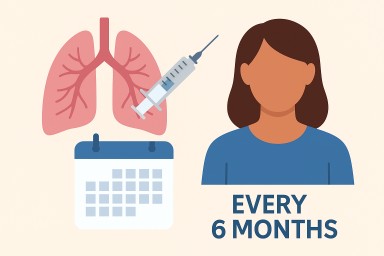
Current biologics for type-2 asthma are given every 4, 6 or 8 weeks.
Depemokimab is designed to be taken twice a year – only once every six months.

For many people, this could mean:

  • Fewer injections

  • More steady asthma control

  • Less disruption to daily life

  • A treatment that’s easier to stick with over time

In clinical trials, depemokimab also helped to:

  • Reduce asthma attacks

  • Lower the need for oral steroids

  • Improve symptoms in people with chronic sinusitis and nasal polyps, which commonly affects ABPA and SAFS patients

⭐ Is this a treatment for ABPA or CPA?

Not specifically.
Depemokimab is not a treatment for the Aspergillus fungus itself and it does not replace antifungal medicines.

However, for people whose asthma drives their ABPA symptoms, better asthma control can mean:

  • fewer flare-ups

  • better breathing

  • less need for steroids

  • reduced pressure on already damaged airways

So while it is not an antifungal, it may become another option in the toolkit for managing asthma linked to aspergillosis.

⭐ When might this be available in the UK?

Depemokimab is currently under review by European regulators.
In the UK, the NICE appraisal for NHS use is underway, with a decision expected in March 2026.

If approved, it could become available on the NHS sometime in 2026.

⭐ What should patients do now?

At this stage:

  • There is no action needed from patients.

  • Your asthma or ABPA team will be the first to know when new biologics are approved.

  • If you already receive a biologic (e.g., mepolizumab, benralizumab, omalizumab, dupilumab), there is no change to your treatment plan.

  • If you struggle with frequent injections or poor asthma control, your clinician may consider depemokimab in the future once approved.


🌿 Biologics when ABPA and CPA overlap: What Patients Need to Know

Understanding how they work, when they’re helpful, and when extra care is needed

Biologic medicines (such as omalizumab, mepolizumab, benralizumab, dupilumab and newer options like tezepelumab) are increasingly used to treat Allergic Bronchopulmonary Aspergillosis (ABPA) and severe asthma. They can be life-changing for some people.

However, their place in Chronic Pulmonary Aspergillosis (CPA) — especially in people who have both ABPA and CPA together — is more complicated and needs careful specialist supervision.

This article explains what we know so far.


🌟 1. ABPA and CPA are different conditions — but some people have both

  • ABPA is mainly an allergic reaction to Aspergillus in the airways.

  • CPA is a chronic fungal infection that causes cavities, scarring, and long-term lung damage.

  • Some people start with ABPA and later develop CPA, or the two conditions overlap.

  • The 2024 international ABPA guidelines now recognise this overlap as real and important.

Because biologics target allergy pathways rather than fungal infection, treatment decisions must look at both sides of the disease.


🌿 2. Biologics in ABPA: the evidence is strong and growing

Biologics can help patients with ABPA or severe asthma by:

  • reducing steroid use

  • improving breathing

  • decreasing mucus plugging

  • lowering flare-ups

  • improving quality of life

Biologics most commonly used in ABPA include:

Biologic Target Notes
Omalizumab IgE Well established, helps many ABPA patients
Mepolizumab IL-5 Helps eosinophilic inflammation
Benralizumab IL-5Rα Similar to mepolizumab; long-acting
Dupilumab IL-4Rα Very promising for allergic disease; growing evidence for ABPA
Tezepelumab TSLP Very new; limited ABPA data so far

For many people with ABPA, biologics are safe and effective when monitored.


⚠️ 3. Biologics and CPA: much less evidence

  • CPA is caused by persistent fungal infection and structural lung damage.

  • Biologics do not treat fungal infection, and they do not prevent cavities.

  • In CPA, the mainstay of treatment is still:

    • antifungal medication (usually itraconazole, voriconazole or posaconazole)

    • careful imaging (CT scans)

    • airway clearance

    • sometimes surgery or bronchoscopy

There is no strong evidence that biologics help CPA itself.


🔄 4. What about patients who have both ABPA and CPA?

This is where things become more complex.

Biologics may help the allergic part (ABPA), but:

  • they do not treat fungal infection

  • they do not stop fungal cavities from progressing

  • they may reduce inflammation that normally helps the body contain infection

If antifungal treatment is interrupted or not strong enough, fungal activity may increase while the allergic symptoms improve — so regular monitoring is essential.

Specialist centres (like the NAC) now emphasise:

✔️ Continue antifungals if CPA is active
✔️ Watch cavities with regular CT scans
✔️ Monitor Aspergillus IgG/IgE and fungal cultures
✔️ Check whether symptoms are from allergy, infection, or both
✔️ Make joint plans between asthma/airway doctors and mycology specialists


5. Are some biologics better than others for ABPA/CPA overlap?

There is no official guidance yet, but early observations suggest:

Most promising for ABPA:

  • Dupilumab seems particularly effective for allergic disease (IgE, mucus, airflow), though still off-label for ABPA.

Increasing interest:

  • Tezepelumab works outside the eosinophil pathway and may be useful in some asthma types, but research in ABPA is only just starting.

Useful in selected cases:

  • Anti-IL-5 biologics (mepolizumab, benralizumab) help airway eosinophils but may not help every ABPA patient.

⚠️ Uncertain in CPA:

  • None of the biologics treat fungal infection or cavities directly.

  • Their role in active CPA remains unclear and requires careful oversight.


🧭 6. What this means for patients

If you have ABPA only, biologics may be an excellent option — especially if:

  • steroids cause side-effects

  • your asthma is uncontrolled

  • you have frequent flare-ups

  • your IgE levels are very high

  • mucus plugging or wheezing continues despite treatment

If you have CPA or cavities, treatment needs to be more cautious:

  • antifungal medication usually needs to continue

  • biologics may still help if the allergic component is significant

  • CT scans must be repeated to make sure cavities are not progressing

  • specialists must weigh benefits vs. risk for each patient individually


💬 7. Summary

  • Biologics can be extremely helpful for ABPA.

  • They do not treat CPA, and cannot replace antifungal medicines.

  • In patients with both ABPA and CPA, the approach must be personalised.

  • Dupilumab and (possibly) tezepelumab are emerging biologics with promise, but evidence is still developing.

  • Decisions should always be made with a specialist centre such as the National Aspergillosis Centre (NAC).


Side effects from Biologic Medication

It’s completely understandable to feel unsure before starting a biologic — especially when you’ve heard different experiences from different people.
Most patients with ABPA or severe Aspergillus-related asthma do very well on biologics. Side effects can happen, but they’re usually mild and settle quickly.

🌟 Most people report very few problems

Patients often say:

  • The injections are straightforward

  • They feel the same or better within days or weeks

  • There’s little or no impact on daily life

🌟 Common, mild side effects

These are the ones we hear most often across omalizumab, benralizumab, dupilumab and tezepelumab:

📌 Injection-site reactions

  • Redness

  • Itching

  • A small tender lump

  • Bruising
    These usually disappear within 24–48 hours.

📌 Mild tiredness

Some people feel slightly “wiped out” after the first few doses.

📌 Headache

Very common with the first injection. Less so afterwards.

📌 Minor joint or muscle aches

A bit like the feeling after a flu jab.

📌 Nasal or sinus changes

Occasional mild dryness or congestion, especially with dupilumab.

🌟 Less common (still mild)

  • Mild tummy upset

  • Sore throat

  • A brief “flu-ish” feeling

  • Temporary increase in eczema (mainly with dupilumab)

  • Slight mood dip for a day or two (rare)

🌟 Rare but important

These are very uncommon, and your team will explain what to look out for:

  • Allergic reaction shortly after an injection
    (This is why your first dose is supervised.)

  • Eye inflammation — mostly linked to dupilumab, usually mild and treatable

Your team will give you clear advice on what to do if anything unusual happens.

🌟 What ABPA patients often notice

People with ABPA frequently describe:
👉 Fewer allergic symptoms
👉 Clearer breathing
👉 Much less mucus
👉 Fewer flare-ups and fewer steroids

But biologics don’t help everyone — which is why the first few months are monitored closely.

🌟 Final reassurance

For many aspergillosis patients, biologics are far easier than long-term steroids or antifungals. Most say the benefits outweigh the side effects — but every person’s experience is individual.


🌿 Your Immune System, Biologics, and Steroids: What’s Suppressed — and What Stays Strong

A clear, reassuring guide for people living with ABPA, CPA, asthma, SAFS, or bronchiectasis

Treatments for aspergillosis-related conditions often involve steroids, and more recently, biologics.
Many patients understandably wonder:

  • What do these medicines suppress?

  • Do they affect my ability to fight infection?

  • Why are biologics considered safer than long-term steroids?

  • Which parts of my immune system stay strong?

This guide explains the full picture in simple terms.


🧬 1. Understanding Your Immune System: The Three Layers

Your immune system has three major lines of defence.


A. Barriers — the first line

These stop pathogens entering in the first place:

  • Skin

  • Mucus in airways

  • Cilia sweeping mucus out

  • Tears, saliva, stomach acid

  • Healthy bacteria (microbiome)

👉 Biologics do NOT affect barriers.
👉 Steroids can weaken skin and airway lining if used long-term.


B. Innate immunity — fast responders

These act within minutes or hours.

Key cells:

  • Neutrophils → main killers of Aspergillus

  • Macrophages → engulf spores

  • Dendritic cells → show pathogens to T-cells

  • NK cells → kill virus-infected cells

Sensors:

  • Dectin-1 → recognises fungal walls

  • TLRs

  • Complement proteins

👉 Biologics do NOT weaken these.
👉 Steroids weaken several key functions, especially neutrophils and macrophages.


C. Adaptive immunity — targeted, long-term defence

Slower but specialised.

T-cells:

  • Th1 → fight bacteria/viruses

  • Th17 → major antifungal fighters

  • Th2 → allergic pathways (IgE, eosinophils)

  • Tregs → calm inflammation

B-cells & antibodies:

  • IgG / IgA / IgM → normal infection defence

  • IgE → allergy and ABPA pathway

👉 Biologics only suppress Th2/IgE pathways.
👉 Steroids suppress many T-cell and B-cell functions, not just allergy.


🎯 2. What Biologics Suppress (Targeted & Selective)

Biologics used in ABPA and difficult asthma (omalizumab, mepolizumab, benralizumab, dupilumab, tezepelumab) only turn down allergic inflammation, not infection-fighting immunity.

🔻 A. They suppress:

  • IgE

  • Eosinophils

  • IL-4 / IL-5 / IL-13

  • Type-2 allergic inflammation

  • Mucus hypersecretion (IL-13)

  • TSLP airway alarm signalling

🛡️ B. They do NOT suppress:

  • Neutrophils

  • Macrophages

  • Th1 immunity

  • Th17 antifungal pathways

  • T-cell killing function

  • Antibiotic/cell-mediated defences

  • Complement

  • Dectin-1 fungal recognition

This is why biologics do NOT increase fungal infection risk.


🔥 3. What Oral Steroids Suppress (Broad & Non-Specific)

Oral steroids like prednisolone reduce inflammation everywhere — including places you need for infection defence.

A. They suppress key immune cells

  • Neutrophils → move slower, kill less effectively

  • Macrophages → reduced pathogen killing

  • T-cells → weaker antiviral/antifungal defence

  • B-cells → reduced antibody production

B. They suppress important cytokines

  • IL-1, IL-2, IL-6

  • TNF-α

  • Interferons

  • IL-12, IL-23 (Th1/Th17 pathways)

These are essential for fighting viruses, bacteria, and fungi.

C. They weaken antigen presentation

Dendritic cells and macrophages become less effective at “showing” pathogens to T-cells.

D. They weaken barriers

  • Thinner skin

  • Thinner airway lining

  • Slower wound healing

This increases infection risk.

E. They reduce eosinophils and IgE (similar to biologics)

But they do this alongside suppressing many healthy parts of your immune system.


🛡️ 4. What Remains Intact on Each Treatment

✔ On biologics (strongest preserved immunity):

  • Neutrophil antifungal killing

  • Macrophage function

  • Th1 & Th17 immunity

  • Antibodies (IgG, IgA, IgM)

  • Complement

  • Mucus & cilia defences

  • NK cell antiviral defence

  • Fever & inflammation responses

⚠️ On steroids (weaker preserved immunity):

  • Complement

  • Some antibody production

  • Basic barrier function (though thinner)

Many infection-fighting cells work less effectively.


🫁 5. Why Biologics Are Safer Long-Term for ABPA/SAFS

Because biologics:

  • target only a tiny portion of immunity

  • do not increase fungal growth

  • do not raise infection risk

  • reduce inflammation without broad suppression

  • help avoid long-term steroid complications

Steroids:

  • increase infection risk

  • can worsen fungal colonisation

  • damage lung structure over time

  • cause weight gain, bone thinning, adrenal issues

  • must be used short-term only when essential


🌈 6. Summary Table

Immune Feature Biologics Steroids
IgE suppression
Eosinophil suppression
Neutrophils Unaffected Suppressed
Macrophages Unaffected Suppressed
Th1/Th17 antifungal pathways Unaffected Suppressed
Viral defence Unaffected Suppressed
Barrier integrity Unaffected Weakened
Infection risk No increase Increased
Long-term safety High Low

🌟 7. One-Sentence Takeaway

Biologics turn down the allergic part of immunity (IgE, IL-4, IL-5, IL-13, eosinophils), while steroids suppress many of the infection-fighting parts as well — which is why biologics are much safer long-term.


🌿 ABPA: Infection, Allergy, Biologics, and What It All Means for You

A calm, supportive guide for patients living with Allergic Bronchopulmonary Aspergillosis (ABPA)

Allergic Bronchopulmonary Aspergillosis (ABPA) can be confusing.
Some people hear “fungus” and think it is a dangerous infection.
Others hear “allergy” and think it has nothing to do with fungi at all.

The truth is somewhere in the middle — and understanding this can make your treatment feel much clearer and less frightening.

This article explains:

  • Whether ABPA is an infection, an allergy, or both

  • How the fungus Aspergillus fumigatus fits into the picture

  • Why biologics help — and whether they allow the fungus to grow

  • Why your future with ABPA is more hopeful than ever


🌼 1. Is ABPA an infection or an allergic over-reaction?

The simplest explanation is:

ABPA happens when Aspergillus lives in mucus in the airways, and the immune system overreacts. It’s driven by allergy, not by fungal invasion.

In ABPA:

  • Aspergillus fumigatus sits in mucus, especially in asthma, bronchiectasis or cystic fibrosis

  • It does not invade or damage lung tissue

  • The immune system becomes over-sensitised and reacts too strongly

This allergic reaction triggers:

  • Very high IgE

  • High eosinophils

  • Swelling, tightness, wheeze

  • Thick “stringy” mucus or plugs

  • Repeated flare-ups that feel like chest infections

The inflammation — not the fungus — is what damages the lungs over time.


🌻 2. If it’s not a typical infection, why treat the fungus?

Even though ABPA is allergic, reducing fungal load can still help.

Here’s why:

  • Less fungus in mucus → less allergen

  • Less allergen → less immune reaction

  • Less reaction → fewer flare-ups, better breathing

This is why some people take antifungals.
But antifungals are not always necessary, especially today with the arrival of biologics.


🌈 3. Do biologics weaken the immune system and let the fungus grow?

No.
This is a very common worry — but the biologics used for ABPA do not suppress the parts of the immune system that keep you safe from fungi.

Biologics such as:

  • Omalizumab (anti-IgE)

  • Mepolizumab / Benralizumab (anti-IL-5)

  • Dupilumab (anti-IL-4/IL-13)

  • Tezepelumab (anti-TSLP)

target overactive allergic pathways, not antifungal defences.

They do not affect:

  • Neutrophils

  • Macrophages

  • Dectin-1

  • TLR antifungal pathways

  • Complement

These are the real fungus-clearing systems — and biologics leave them intact.


🍃 4. Do biologics actually help clear fungus? Surprisingly, sometimes yes.

Many patients on biologics show:

  • Fewer mucus plugs

  • Better airflow

  • Fewer positive sputum cultures

  • Reduced symptoms

  • Lower exacerbation rates

  • Less need for steroids or antifungals

When mucus plugs shrink, fungus loses its hiding place.
Your natural defences can finally clear it.

So biologics do not encourage growth — they may even help reduce fungal load.


🌺 5. Why are outcomes improving so much?

ABPA used to be a condition dominated by:

  • frequent flare-ups

  • repeated steroids

  • fear of lung damage

  • long periods of being unwell

Today, with biologics:

  • far fewer flare-ups

  • easier breathing

  • more stable lung function

  • much less steroid use

  • better quality of life

  • higher confidence and control

For many patients, biologics are transforming ABPA from a cycle of crises into a more manageable long-term condition.


🌼 6. Key reassurance

If you remember only one sentence, let it be this:

Biologics calm the allergic response that causes ABPA, without weakening your natural ability to clear fungus — and many patients do better than ever on them.


🌟 7. Moving forward with confidence

ABPA is complex, but it is treatable, manageable, and increasingly well-understood.
You are not dealing with a dangerous lung infection — you are dealing with an over-active immune response that modern treatments can control.

With the right support, airway clearance, the best inhalers, and (where needed) biologics or antifungals, most people:

  • stabilise

  • breathe more easily

  • reduce flare-ups

  • protect their lungs

  • live full, active lives

You’re not alone — and the future for ABPA care has never looked brighter.


🌟 Biologics and the Future: A Toolkit for Severe Asthma, ABPA & Beyond

Many people with severe asthma or Allergic Bronchopulmonary Aspergillosis (ABPA) now have access to biologic medicines — treatments that block very specific signals in the immune system. For some, the results can feel miraculous. For others, the effect may fade or never fully take hold. But the exciting news is that science is building a toolkit of biologics that can be matched more closely to each person.


✨ Why biologics sometimes stop working

  • Biologics like tezepelumab (which blocks TSLP) can give dramatic improvements, but in some people the benefit doesn’t last.

  • That may be because the immune system “switches pathways” — other signals (like IL-5 or IL-13) start to dominate.

  • It doesn’t mean treatment is over — it means we need to try a different tool in the kit.


🧰 The current toolkit

Each biologic blocks a different “messenger” (called cytokines) in the immune system:

  • IgE blocker (omalizumab): helps in allergy-driven asthma/ABPA.

  • IL-5 / IL-5R blockers (mepolizumab, benralizumab, reslizumab, and soon depemokimab): reduce eosinophils (a type of white blood cell) that cause inflammation.

  • IL-4 / IL-13 blocker (dupilumab): controls type-2 inflammation, also helpful in eczema and nasal polyps.

  • TSLP blocker (tezepelumab): targets an “alarmin” high up in the pathway, useful across many asthma types.

  • IL-33 blockers (in development): another upstream “alarmin” that could help in the future.


🚀 What’s new and coming soon

  • Depemokimab: a long-acting IL-5 treatment, given only twice a year.

  • Inhaled anti-TSLP: same target as tezepelumab, but in inhaler form.

  • IL-33 blockers: still experimental, but promising because IL-33 is involved in fungal allergy and ABPA.


💡 What this means for ABPA

  • ABPA involves allergy (IgE), eosinophils (IL-5), and other signals like IL-33.

  • That’s why some patients respond to omalizumab, others to mepolizumab/benralizumab, others to dupilumab, and some to tezepelumab.

  • In the future, doctors may be able to choose the exact biologic (or even combination) that best matches your immune profile — just like targeted cancer treatments today.


🧩 The Biologic Toolkit (summary table)

Target Signal Biologics How it Helps Relevance to ABPA
IgE (allergy antibody) Omalizumab Calms allergic reactions Useful when IgE is high and fungus/allergy is a trigger
IL-5 / IL-5R (eosinophils) Mepolizumab, Benralizumab, Reslizumab, Depemokimab (6-monthly) Reduces eosinophils that damage lungs Helpful in many ABPA patients with high eosinophils
IL-4 / IL-13 (type-2 inflammation) Dupilumab Reduces mucus, inflammation, and steroid need Good in patients with eczema or nasal polyps alongside ABPA
TSLP (alarmin, upstream trigger) Tezepelumab, Inhaled anti-TSLP (in trials) Blocks an “early alarm” that activates many asthma pathways Early evidence: big improvements in some ABPA patients
IL-33 / ST2 (alarmin) Itepekimab, Astegolimab (in development) Switches off another early “danger signal” IL-33 is strongly linked to fungal allergy → promising for ABPA

🫁 COPD, Bronchiectasis & Mucus Plugging

  • COPD: Some biologics (like anti-IL-5) show benefit in patients with high eosinophils, and IL-33 blockers are being tested. Not yet routine NHS use.

  • Bronchiectasis: Biologics mainly help when asthma/ABPA overlap is present. Airway infections remain the bigger challenge.

  • Mucus plugging: Dupilumab can reduce mucus production. Other biologics may help indirectly, but airway clearance techniques remain essential.


💷 Why new medicines are expensive

  • Developing a new drug takes 10–15 years and can cost over £1 billion.

  • Most drugs fail — profits from a few successes must cover all the failures.

  • Patents give companies a period of exclusivity to recover costs, after which cheaper copies (generics or biosimilars) appear.


📊 Open market vs NHS

  • In the US (open market), companies set prices, and insurers or patients decide if they can pay → faster access, but very high costs and inequality.

  • In the UK (NHS), the system is funded by taxpayers. NICE weighs up cost vs benefit before approving drugs → slower access sometimes, but once approved, everyone gets it fairly.


🧬 Rare diseases and fungal infections

  • For rare diseases like ABPA and CPA, the market is too small to attract big pharma on profit alone.

  • Organisations like GAFFI (Global Action for Fungal Infections) and DNDi (Drugs for Neglected Diseases initiative) work with universities, charities, and governments to develop antifungals.

  • Examples:

    • Olorofim (F2G, UK biotech): a brand-new antifungal class, developed with public and charity support.

    • Rezafungin: a long-acting antifungal supported by government and public funding.

  • Without these partnership models, fungal drugs for ABPA/CPA would likely not exist.


🌈 The takeaway

  • Biologics are transforming treatment for asthma and ABPA — and new ones are coming.

  • If one biologic doesn’t work, others may.

  • COPD, bronchiectasis, and mucus plugging may also benefit in future.

  • New drugs are costly to develop, but the NHS negotiates to keep access fair.

  • For rare diseases like ABPA/CPA, partnerships and advocacy are crucial to get new drugs developed at all.


📖 Glossary of Acronyms

ABPAAllergic Bronchopulmonary Aspergillosis
A lung condition caused by allergy to Aspergillus fungus, leading to inflammation, mucus plugging, and lung damage.

CPAChronic Pulmonary Aspergillosis
A long-term lung infection with Aspergillus fungus, usually in people with existing lung disease.

COPDChronic Obstructive Pulmonary Disease
A group of lung conditions (like chronic bronchitis and emphysema) that cause breathing difficulties.

NHSNational Health Service
The publicly funded healthcare system in the UK.

NICENational Institute for Health and Care Excellence
The body that decides which treatments the NHS should fund, based on cost and benefit.

QALYQuality-Adjusted Life Year
A way of measuring the benefit of a treatment: how much it improves both the length and quality of life.

ILInterleukin
A type of messenger protein (cytokine) used by the immune system to trigger inflammation. Different ILs have numbers (IL-4, IL-5, IL-13, IL-33).

IgEImmunoglobulin E
An antibody linked to allergies. Very high IgE levels are common in asthma and ABPA.

TSLPThymic Stromal Lymphopoietin
An “alarmin” (early danger signal) that tells the immune system to start reacting. Blocked by tezepelumab.

ST2Suppression of Tumorigenicity 2
The receptor for IL-33. Drugs like astegolimab block this pathway.

GAFFIGlobal Action For Fungal Infections
A non-profit organisation pushing for better care, awareness, and research into fungal disease.

DNDiDrugs for Neglected Diseases initiative
An international group that develops treatments for rare or overlooked diseases (including fungal infections).

EAMSEarly Access to Medicines Scheme
A UK programme that allows patients to use promising medicines before full approval.

FDA / EMA / MHRAFood and Drug Administration (US) / European Medicines Agency (EU) / Medicines and Healthcare products Regulatory Agency (UK)
The agencies that approve and regulate medicines.


💊 Biologics for ABPA & Severe Asthma: How NHS Doctors Choose

Biologics are modern injection or infusion treatments that target the immune system. They can help people with Allergic Bronchopulmonary Aspergillosis (ABPA) by reducing inflammation, cutting down on steroid use, and lowering flare-ups.

In the UK, consultants must follow NICE (National Institute for Health and Care Excellence) guidance, which sets both clinical criteria and cost-effectiveness rules.


🔎 Step 1: Who qualifies?

  • You must already be on high-dose inhalers and still have severe symptoms.

  • Decisions are made by a specialist severe asthma / ABPA clinic team (MDT).

  • Blood tests, flare history, and steroid use are all considered.


🧭 Step 2: Which biologic?

Consultants match the drug to the type of inflammation you have:

Pathway / Clues Possible Biologic Notes
IgE-allergic (allergic tests positive, high IgE) Omalizumab (Xolair) Works best if perennial allergies are driving symptoms.
Eosinophilic (high eosinophil counts, frequent flare-ups, or long-term steroid use) Mepolizumab (Nucala) or Benralizumab (Fasenra) NHS requires doctors to choose the least-expensive if both fit.
Eosinophils ≥400 + frequent flare-ups Reslizumab (Cinqaero, IV drip) Less used, but an option if IV therapy is acceptable.
Still severe after above / not eligible Dupilumab (Dupixent) Also helps if you have eczema or nasal polyps.
Any type, severe with ≥3 flare-ups or on daily steroids Tezepelumab (Tezspire) Works even if blood tests don’t show high eosinophils or IgE.

🛑 Step 3: Stop if no benefit

NICE requires a 12-month review.

  • If your flare-ups or daily steroid dose haven’t fallen enough (usually by ≥50%), treatment should stop.


💷 Why cost matters

  • The NHS only funds biologics judged “cost-effective.”

  • If two drugs are equally suitable, consultants must use the least-expensive one.

  • This doesn’t mean you won’t get the right drug — but sometimes doctors must justify why one biologic is better for you personally.


📌 What this means for ABPA patients

  • ABPA is not directly covered by NICE guidance, but the same biologics are often used if you also meet asthma criteria.

  • Main goals:

    • Reduce oral steroids (prednisolone) and their side-effects.

    • Control flare-ups and lung damage.

  • Evidence supports omalizumab, mepolizumab, benralizumab, and dupilumab in ABPA; tezepelumab has less data so far.


Bottom line:
Biologics can be life-changing for ABPA patients, but the NHS pathway means the choice depends on your blood results, flare history, steroid needs — and cost-efficiency rules. If one option doesn’t work, another may still be possible.


Biologics and Long Term Side Effects

What Are Biologics?

Biologics are targeted treatments made from living cells. They work by blocking parts of the immune system that cause inflammation — for example:

  • IL-4, IL-5, IL-13: linked to eosinophilic inflammation

  • IgE: linked to allergies and ABPA

They are not immunosuppressants like steroids or chemotherapy, but rather immune modulators.


💊 Long-Term Side Effects – What Do We Know?

👨‍⚕️ What research and experience show:

Biologic Used for Long-term safety known? Side effects most reported
Omalizumab (Xolair) Allergic asthma, ABPA 20+ years of use Injection site reactions, headache, very rare anaphylaxis
Mepolizumab (Nucala) Eosinophilic asthma, CPA 10+ years Fatigue, headache, shingles (rare), mild infections
Benralizumab (Fasenra) Severe asthma, CPA ~6–7 years Headache, pharyngitis, injection site issues
Dupilumab (Dupixent) Asthma, eczema, nasal polyps 6–8 years Eye dryness/redness, cold sores, joint pain (rare)
Tezepelumab (Tezspire) Severe asthma ~2 years Sore throat, joint pain, injection site reactions

⚠️ Possible Long-Term Concerns (but rare)

  • Infections: Some concern about slightly increased risk of herpes zoster (shingles) or respiratory viruses, but overall risk is very low compared to steroids.

  • Immunogenicity: Your body might develop antibodies to the drug over time, reducing its effect — this is more a loss of benefit, not a dangerous side effect.

  • Cancer risk: No consistent evidence linking asthma/ABPA biologics to cancer.

  • Unknowns: Because some biologics are new (e.g. tezepelumab), we don't yet have 20-year data — but so far the safety profile is reassuring.


🩺 Compared to Oral Steroids

Treatment Side Effects Over Time
Steroids (e.g. prednisolone) Weight gain, diabetes, infections, bone thinning, cataracts, adrenal suppression
Biologics Mostly minor – injection site pain, headache, mild infection risk, rare allergic reaction

So in most cases, biologics reduce the need for steroids and therefore reduce long-term harm.


💬 Patient Experience

Most patients report:

  • Improved quality of life

  • Reduced asthma/ABPA attacks

  • Fewer hospital visits

  • Very few stop due to side effects


✅ Summary

Question Answer
Do biologics have long-term side effects? Usually mild and rare; mostly injection reactions or mild infections
Are they safer than long-term steroids? Yes, especially over years
Should I be worried? Not usually — but always monitor with your team
How long have they been used? 6–20+ years, depending on the biologic, with very good safety data