
Audience: Patients, carers, and non-specialist healthcare professionals
Key Points
- Muscle cramps—especially at night—are commonly reported by people with long-term lung conditions such as allergic bronchopulmonary aspergillosis (ABPA) and chronic pulmonary aspergillosis (CPA).
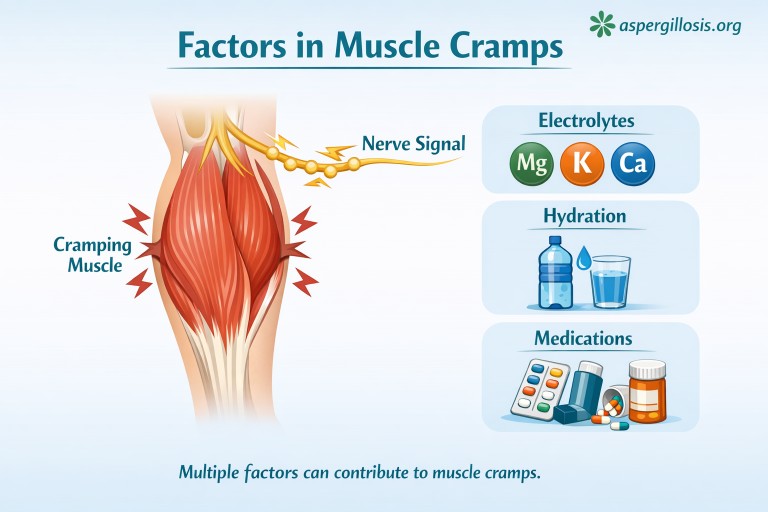
- There is usually no single cause; cramps often result from a combination of factors including medications, fatigue, hydration, and electrolyte balance.
- In CPA, additional factors such as antifungal therapy and kidney function may play an important role.
- Persistent or worsening cramps should be discussed with a healthcare professional, as some causes are treatable.
Contents
- Overview
- Why do muscle cramps happen?
- How is this linked to aspergillosis and its treatment?
- Additional considerations in chronic pulmonary aspergillosis (CPA)
- Common contributing factors
- What may help reduce cramps
- When to seek medical advice
- Common questions
- References
Overview
Muscle cramps are sudden, involuntary contractions of a muscle that can last from seconds to several minutes. Many people describe them as painful tightening or “locking” of the muscle, often affecting the calves, thighs, feet, or hands.
For people living with aspergillosis, including allergic bronchopulmonary aspergillosis (ABPA) and chronic pulmonary aspergillosis (CPA), cramps are frequently discussed in patient communities. They are particularly common at night and may affect sleep and quality of life.
Importantly, while cramps can be uncomfortable and sometimes severe, they are often manageable once contributing factors are identified.
Why do muscle cramps happen?
Muscle cramps occur when the normal signals between nerves and muscles become disrupted. This can be influenced by:
- Changes in fluid balance (hydration)
- Electrolyte levels (such as magnesium, potassium, calcium)
- Muscle fatigue or overuse
- Nerve sensitivity or irritation
In many cases, more than one of these factors is involved.
How is this linked to aspergillosis and its treatment?
People with aspergillosis may experience additional factors that increase the likelihood of cramps:
- Medications – some treatments used in lung disease (including antifungals, corticosteroids, and inhalers) may affect muscle function or electrolyte balance
- Chronic inflammation – ongoing inflammation in the body can affect muscles and nerves
- Reduced activity or sudden changes in activity – both inactivity and overexertion can trigger cramps
- Co-existing conditions – such as kidney or hormonal conditions, which can influence electrolyte balance
Because many patients take multiple medications, it can sometimes be difficult to identify a single cause.
Additional considerations in chronic pulmonary aspergillosis (CPA)
People living with chronic pulmonary aspergillosis (CPA) may experience additional factors that increase the likelihood of muscle cramps.
- Long-term antifungal therapy – medications such as azoles (e.g. itraconazole or voriconazole) can affect electrolyte balance or interact with other medicines
- Kidney function – the kidneys play a key role in regulating electrolytes, and even mild changes may contribute to cramping
- Electrolyte imbalance – including magnesium, potassium, and calcium levels, which may fluctuate despite supplementation
- Medication combinations – multiple treatments may have additive effects on muscles or nerves
- Fatigue and reduced conditioning – common in chronic lung disease and may increase susceptibility to cramps
These factors mean that cramps in CPA are often multifactorial and may change over time.
Common Contributing Factors
Based on patient reports and clinical understanding, the following are commonly associated with muscle cramps:
- Physical exertion – especially in physically demanding jobs
- Age-related muscle changes
- Dehydration
- Electrolyte imbalance
- Medication effects
- Poor sleep or positioning
Some people also report cramps affecting multiple muscle groups at the same time, which can feel particularly intense.
What May Help Reduce Cramps
While individual responses vary, some general approaches that people find helpful include:
- Maintaining hydration
- Gentle stretching before bed
- Regular, moderate activity
- Medication review with a clinician or pharmacist
- Balanced nutrition
Important: Supplements such as magnesium are commonly used, but may not be effective for everyone and should be discussed with a healthcare professional—particularly if you have kidney conditions or are taking multiple medications.
When to Seek Medical Advice
You should consider speaking to your GP or specialist team if:
- Cramps are becoming more frequent or severe
- They involve multiple muscle groups regularly
- They are disrupting sleep or daily life
- You have recently started or changed medications
Seek more urgent medical advice if:
- Muscle weakness develops
- There is swelling or redness
- Dark urine or reduced urine output occurs
Common Questions
Are muscle cramps a symptom of aspergillosis?
They are not a defining symptom but are commonly reported, likely due to a combination of treatment effects and general health factors.
Why do cramps happen at night?
Night-time cramps are common and may relate to fatigue, hydration, and circulation changes during rest.
If I take magnesium, shouldn’t cramps stop?
Not necessarily. Muscle cramps often have multiple causes.
Are cramps more important to report in CPA?
Yes—particularly if you are on long-term antifungal treatment or have kidney-related issues, as these may be relevant.
References & Further Reading
- National Institute for Health and Care Excellence (NICE) – Muscle cramps guidance
- UK National Health Service (NHS) – Leg cramps overview
- General clinical literature on electrolyte balance and muscle function
Author & Review Information
Author: Aspergillosis Patient Education Team
Review status: General educational content aligned with UK clinical practice
Disclaimer: This article is for information only and does not replace medical advice. Always consult your healthcare team regarding symptoms or treatment.

Latest News posts
News archive