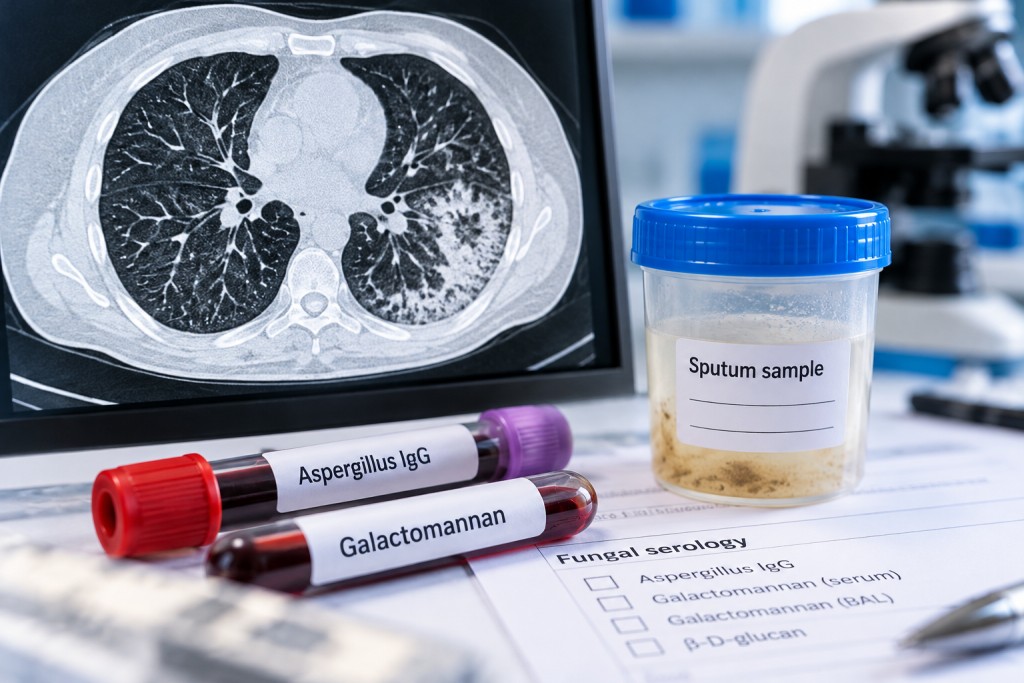
People living with Primary Ciliary Dyskinesia (PCD) and bronchiectasis often face long-term challenges with their lungs. These conditions can make it difficult to clear mucus effectively, creating a perfect environment for bacteria and fungi to grow — including Aspergillus species and bacteria such as Haemophilus influenzae.
What Is Primary Ciliary Dyskinesia?
Primary Ciliary Dyskinesia is a rare, inherited condition that affects the microscopic hair-like structures (cilia) that line the airways, ears, and sinuses. Normally, cilia move in a coordinated way to sweep mucus, bacteria, and debris out of the lungs.
In PCD, these cilia don’t move properly. As a result, mucus builds up, causing chronic infections and inflammation.
How PCD Leads to Bronchiectasis
Over time, repeated infections and inflammation can damage the airways, leading to bronchiectasis — a condition where the bronchial tubes become widened and scarred. This makes it even harder to clear mucus and allows bacteria and fungi to settle in the lungs more easily.
Common organisms that may persist include:
-
Haemophilus influenzae
-
Pseudomonas aeruginosa
-
Staphylococcus aureus
-
Aspergillus fumigatus
The Role of Aspergillus
When Aspergillus spores are inhaled, most people clear them easily.
In PCD and bronchiectasis, however, mucus clearance is reduced and the airways are damaged — so Aspergillus can remain trapped.
Over time, this can lead to sensitisation (as in Allergic Bronchopulmonary Aspergillosis, ABPA) or even chronic infection (Chronic Pulmonary Aspergillosis, CPA).
Both conditions can worsen existing bronchiectasis and make bacterial infections harder to control.
Why Bacteria Like Haemophilus Stick Around
Many patients with PCD or bronchiectasis find that bacteria such as Haemophilus influenzae are always present in their sputum, even when they feel well.
This doesn’t always mean there’s an active infection — it can simply reflect colonisation (the bacteria living there without causing symptoms).
However, when bacterial numbers rise or resistance develops, this can trigger a flare-up with more cough, sputum, or breathlessness.
Managing Persistent Infections
Because eradication is often not possible, the goal is control rather than cure.
Typical strategies include:
-
Regular sputum cultures to monitor bacterial and fungal growth and check for antibiotic resistance.
-
Targeted antibiotic treatment when symptoms worsen, chosen based on recent resistance results.
-
Airway clearance techniques, such as physiotherapy, postural drainage, or devices that help loosen mucus.
-
Nebulised saline (often hypertonic) to thin mucus and make it easier to clear.
-
Vaccinations (e.g., flu and pneumococcal) to reduce viral triggers.
-
Anti-inflammatory and antifungal treatments when fungal infection or allergic sensitisation are part of the problem.
-
Regular monitoring with a respiratory specialist to adjust treatment plans.
Living Well with PCD and Bronchiectasis
Many people manage to live active lives by learning what works best for their lungs — combining daily airway clearance, careful infection monitoring, and prompt treatment of flare-ups.
Some also find it useful to join patient support groups, where experiences with long-term bacterial and fungal infections can be shared.
Key Takeaway
For people with PCD and bronchiectasis, infections like Haemophilus influenzae and Aspergillus fumigatus often can’t be completely removed. The focus is on keeping infection levels low, preventing flare-ups, and protecting the lungs for the long term. With good self-management, regular review, and the right treatment plan, symptoms can be controlled and quality of life maintained.

Did this page help you?
Tell us in one minute