
Key Points
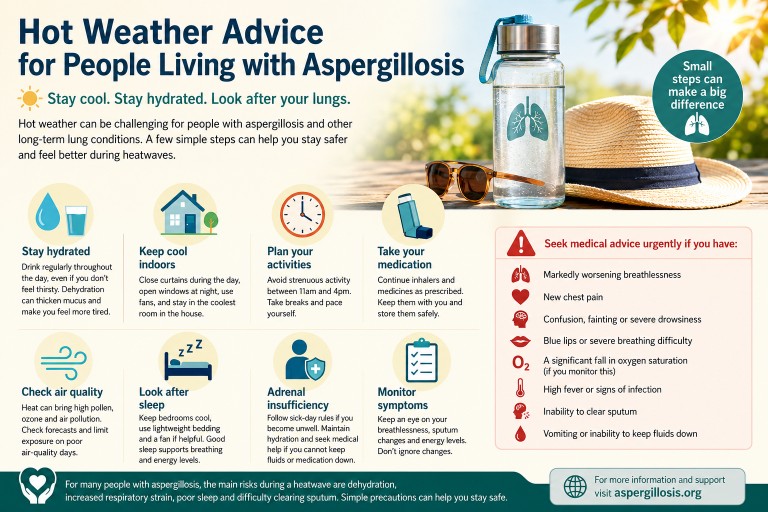
- Hot weather can worsen breathlessness, fatigue and sleep quality.
- Dehydration can make mucus thicker and more difficult to clear.
- People with asthma, bronchiectasis, Chronic Pulmonary Aspergillosis (CPA) and Allergic Bronchopulmonary Aspergillosis (ABPA) may notice increased symptoms during heatwaves.
- Stay hydrated, keep cool and avoid strenuous activity during the hottest part of the day.
- Some antifungal medications can increase sensitivity to sunlight.
- Seek medical advice if symptoms worsen significantly or you develop signs of heat-related illness.
Can Hot Weather Make Aspergillosis Worse?
Yes. Hot weather can worsen symptoms for some people living with aspergillosis.
Heat can increase breathlessness, contribute to dehydration, make mucus thicker
and harder to clear, disturb sleep, and increase fatigue.
People with Chronic Pulmonary Aspergillosis (CPA), Allergic Bronchopulmonary
Aspergillosis (ABPA), bronchiectasis, asthma, or adrenal insufficiency may need
to take extra precautions during heatwaves.
Why Heat Can Affect Breathing
When temperatures rise, the body works harder to keep cool. This increases demand
on the heart and lungs and can make breathing feel more difficult.
- Increased breathing rate
- Worsening breathlessness
- Increased fatigue
- More difficult airway clearance
- Poorer sleep
- Reduced exercise tolerance
Stay Well Hydrated
Good hydration is one of the most important steps you can take during hot weather.
Dehydration can make sputum thicker and harder to clear, particularly for people
with bronchiectasis or Chronic Pulmonary Aspergillosis (CPA).
- Drink regularly throughout the day.
- Carry water when travelling.
- Increase fluid intake if sweating heavily.
- Avoid waiting until you feel thirsty before drinking.
Signs of dehydration may include:
- Dark urine
- Dizziness or light-headedness
- Headache
- Dry mouth
- Increased fatigue
- Thick, sticky sputum
If you have heart failure, severe kidney disease or have been advised to restrict
fluids, follow the guidance provided by your healthcare team.
Keep Your Home Cool
- Close curtains and blinds during the day.
- Open windows overnight when temperatures fall.
- Use fans to improve airflow.
- Spend time in the coolest room of the house.
- Avoid ovens and other heat-producing appliances during the hottest periods.
Plan Activities Carefully
Try to avoid strenuous activity between approximately 11am and 4pm when
temperatures are highest.
- Walk early in the morning or later in the evening.
- Take frequent breaks.
- Pace yourself.
- Ask for help with physically demanding tasks during the hottest days.
Medication Considerations
Inhalers
Continue taking inhalers exactly as prescribed. Carry reliever inhalers when away
from home and avoid leaving inhalers in hot cars or direct sunlight.
Antifungal Medicines and Sunlight
Some antifungal medicines can increase sensitivity to sunlight. This is
particularly important for people taking voriconazole.
- Use high-factor sunscreen.
- Wear a hat and protective clothing.
- Avoid prolonged exposure to direct sunlight.
- Report new or changing skin lesions to your healthcare team.
Adrenal Insufficiency
People with adrenal insufficiency may be more vulnerable to dehydration, low blood
pressure and heat-related illness.
- Maintain good hydration.
- Carry steroid emergency information.
- Follow sick-day guidance if you become unwell.
- Seek urgent medical advice if you cannot keep fluids or medication down.
Air Quality Matters Too
Hot weather is often associated with increased pollen levels, elevated ozone
pollution, wildfire smoke or other poor air-quality episodes. These can aggravate
asthma, bronchiectasis and aspergillosis-related respiratory symptoms.
- Check local air-quality forecasts if symptoms worsen.
- Consider staying indoors during peak pollution periods.
- Keep rescue medication available.
Protect Your Sleep
- Use lightweight bedding.
- Close curtains during the day.
- Use a fan at night if helpful.
- Keep water nearby.
- Cool wrists or feet with cool water before bed.
When to Seek Medical Advice
Do not assume that worsening symptoms are always caused by the heat. Seek medical
advice if you experience:
- Markedly worsening breathlessness
- New chest pain
- A significant fall in oxygen saturation, if monitored
- Confusion or fainting
- High fever
- Inability to clear sputum
- Severe weakness
- Vomiting or inability to keep fluids down
Seek urgent medical attention for severe breathing difficulties, collapse, or
signs of heatstroke.
Hot Weather Checklist
- Drink regularly throughout the day.
- Keep cool indoors.
- Avoid strenuous activity during peak heat.
- Monitor breathlessness and sputum changes.
- Continue medicines as prescribed.
- Protect your skin if taking voriconazole.
- Check air-quality forecasts.
- Keep bedrooms cool.
- Seek medical advice if symptoms worsen unexpectedly.
Further Information and Trusted Resources
General Hot Weather Advice
- NHS: How to cope in hot weather
- NHS: Heat exhaustion and heatstroke
- UK Health Security Agency: Beat the Heat
- UKHSA Heat Health Alerts
Related Aspergillosis.org Resources
- Living Well with Aspergillosis
- Managing Breathlessness
- Bronchiectasis and Aspergillosis
- Air Pollution and Lung Health
- Travelling with Aspergillosis
- Exercise, Fatigue and Energy Management
- Adrenal Insufficiency and Steroid Treatment
Frequently Asked Questions
Can hot weather make aspergillosis symptoms worse?
Yes. Heat can worsen breathlessness, fatigue, dehydration and sleep quality, all
of which may make symptoms feel more severe.
Why is hydration so important?
Dehydration can make mucus thicker and more difficult to clear, potentially
worsening cough and breathlessness.
Does hot weather affect Allergic Bronchopulmonary Aspergillosis (ABPA)?
Some people with Allergic Bronchopulmonary Aspergillosis (ABPA) find that heat,
pollen and poor air quality can aggravate asthma symptoms and increase
breathlessness.
Does hot weather affect Chronic Pulmonary Aspergillosis (CPA)?
People with Chronic Pulmonary Aspergillosis (CPA) may notice increased fatigue,
breathlessness and difficulty clearing sputum during hot weather, particularly if
they become dehydrated.
Should I avoid going outside?
Not necessarily. However, avoiding strenuous activity during the hottest part of
the day is often sensible, especially if you have significant lung disease.
What if I take voriconazole?
Voriconazole can increase sensitivity to sunlight. Extra sun protection is
recommended during hot weather.
When to Seek Medical Help
Contact your healthcare team if you experience worsening respiratory symptoms,
increasing fatigue, difficulty clearing sputum, or concerns about dehydration.
Seek urgent medical attention for severe breathing difficulties, collapse,
confusion, or suspected heatstroke.
Author: National Aspergillosis Centre (NAC)
Last reviewed: June 2026
Next review: June 2027

Latest News posts
News archive