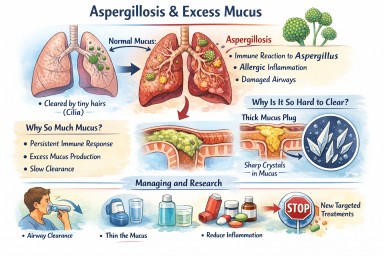
1. What exactly is a biofilm?
A biofilm is a structured community of microbes—bacteria, fungi, or a mixture—that attaches to a surface and produces a self-generated protective matrix.
The building blocks
Biofilms contain:
-
Cells: e.g., Aspergillus fumigatus, Pseudomonas aeruginosa, Staphylococcus aureus
-
Extracellular polymeric substances (EPS):
-
Sticky sugars (polysaccharides)
-
Proteins
-
DNA released from dead cells (eDNA)
-
Lipids
These form the thick “slime” layer.
-
Microbial ‘specialisation’
Within a biofilm, microbes change behaviour:
-
Some become slow-growing persister cells, which survive drug exposure.
-
Others produce signalling molecules (“quorum sensing”) to coordinate defence systems.
-
The deeper layers become low-oxygen and acidic, making antifungals and antibiotics less effective.
Where do biofilms form in lung disease?
-
In bronchiectatic airways, where mucus stagnates
-
Around Aspergillus cavities in chronic pulmonary aspergillosis (CPA)
-
In mucus plugs in ABPA
-
In sinuses of patients with chronic fungal sinusitis
-
On medical devices (catheters, stents)
2. Why biofilms create so many problems
Biofilm problem 1: Immense drug resistance
Microbes in biofilms can be 100–1,000× more tolerant to antifungals/antibiotics.
This is due to:
-
EPS matrix blocking drug penetration
-
Slow metabolic rate → drugs that target growth become less effective
-
Persister cells surviving even high doses
-
Enzymes in the biofilm breaking down drugs
Aspergillus biofilms show increased resistance to:
-
Azoles (itraconazole, voriconazole)
-
Amphotericin B
-
Echinocandins to a lesser extent
Pseudomonas biofilms resist:
-
Ciprofloxacin
-
Colistin (partially)
-
Beta-lactams
This helps explain your recent comment about Pseudomonas now being resistant even though you haven’t used ciprofloxacin for years—biofilms drive spontaneous resistance through evolution, stress responses, and gene exchange.
Biofilm problem 2: Immune evasion
Immune cells (neutrophils, macrophages) cannot easily penetrate the EPS layer.
This leads to:
-
Incomplete clearance → long-term infection
-
Chronic inflammation → lung damage, fatigue
-
Continuous mucus production triggered by inflammation
For Aspergillus, the fungus can switch genes on/off to avoid immune detection when it grows as a biofilm-like sheet rather than as airborne spores.
Biofilm problem 3: Mixed infections behave differently
When bacteria and fungi coexist, they interact:
-
Pseudomonas produces molecules that stimulate Aspergillus regrowth, or vice versa
-
Each organism’s biofilm strengthens the other
-
Mixed biofilms activate more intense inflammation
-
They can shift the entire lung microbiome into a more disease-promoting “ecology”
This is why people with bronchiectasis or ABPA often experience:
-
Frequent exacerbations
-
Slow recovery
-
Mucus plugging
-
Worsening lung function over time
3. Why people with aspergillosis and bronchiectasis are especially vulnerable
Stagnant mucus
Biofilms love:
-
Thick mucus
-
Low airflow
-
Damp surfaces
All of which are present in:
-
Bronchiectasis
-
ABPA (due to mucus plugging)
-
Chronic pulmonary aspergillosis
-
Severe asthma with fungal sensitisation (SAFS)
Altered immunity
Long-term steroid use, high IgE, eosinophilia, and chronic inflammation all influence how readily biofilms form and how well the immune system can clear them.
Frequent antibiotic/antifungal exposure
This shapes the microbial community in a way that makes biofilms more likely and more resistant.
4. What we are doing to tackle biofilms
1. Airway clearance is the single most effective biofilm disruptor
Physiotherapy techniques that help:
-
ACTs (Active Cycle of Breathing Techniques)
-
Oscillating devices (Flutter, Acapella)
-
Postural drainage
-
Autogenic drainage
-
Saline nebulisation
These physically remove biofilms, which no drug can fully achieve alone.
2. Nebulised therapies
-
Hypertonic saline (3–7%) helps break down mucus and destabilise the EPS matrix
-
Inhaled antibiotics (tobramycin, colistin, aztreonam) target bacterial biofilms
-
Nebulised antifungals are being explored, though not yet standard care
3. Anti-inflammatory control
Steroids/biologics help reduce airway swelling and mucus stasis, indirectly reducing biofilm formation.
4. Managing comorbidities
-
Reducing reflux
-
Improving sinus clearance
-
Treating asthma aggressively
All reduce the “fuel” available to biofilms.
B. Research and innovation
1. New antifungals with anti-biofilm activity
-
Olorofim
-
Fosmanogepix
-
Ibrexafungerp
These show better penetration and less susceptibility to biofilm-related resistance.
2. Quorum sensing blockers
Compounds that prevent microbes from “communicating” so they cannot coordinate a biofilm. In trials for Pseudomonas.
3. Enzymes to dissolve the biofilm matrix
Research into:
-
DNases
-
Polysaccharide-breaking enzymes
-
Surfactants
These aim to weaken the EPS “scaffolding”.
4. Microbiome-based approaches
Understanding how lung microbial ecosystems shift in disease could allow:
-
Removal of harmful species
-
Strengthening protective species
-
Reducing biofilm formation overall
5. Combination therapies
Antifungal + antibiotic + mucolytic
is likely the future for patients with mixed fungal–bacterial biofilms.
5. Key takeaways
-
Biofilms are highly organised microbial fortresses that are difficult for drugs and the immune system to reach.
-
They cause persistent infection, inflammation, and drug resistance.
-
In aspergillosis and bronchiectasis, they play a central role in ongoing symptoms and flare-ups.
-
Airway clearance remains the cornerstone of treatment today.
-
New antifungals, antibiofilm agents, and microbiome therapies offer real hope for breaking biofilm-related disease cycles.

Did this page help you?
Tell us in one minute