For patients in the UK and internationally
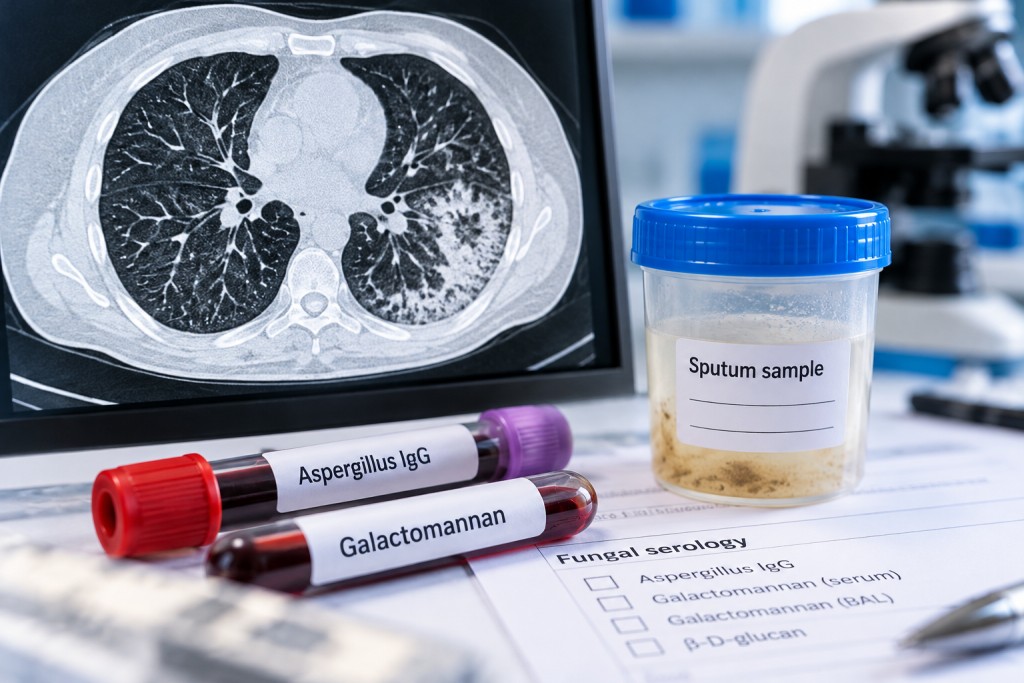
Blood tests for Aspergillus are often an important part of investigating and monitoring aspergillosis. They can be confusing because a result may be raised for several reasons, different laboratories use different methods, and no single blood test can diagnose every form of aspergillosis on its own.
This guide explains the three results people most commonly ask about: total IgE, Aspergillus-specific IgE and Aspergillus-specific IgG.
What do the different tests measure?
| Test | What it measures | How it may help |
|---|---|---|
| Total IgE | The overall level of an allergy-related antibody in the blood. | Often raised in allergic conditions, including ABPA, but also in asthma, eczema and other conditions. It is not specific to Aspergillus. |
| Aspergillus-specific IgE | Evidence that the immune system is sensitised to Aspergillus, usually A. fumigatus. | Important when investigating allergic bronchopulmonary aspergillosis (ABPA) or fungal sensitisation in asthma. |
| Aspergillus-specific IgG | A different immune response, often associated with longer-term exposure or infection. | Can support investigation of chronic pulmonary aspergillosis (CPA) and can contribute to assessment of ABPA. The laboratory method and clinical context matter greatly. |
Why the number alone is not the answer
Laboratories use different testing platforms, units and locally validated reference ranges. This means that a result cannot safely be interpreted by comparing it with a number found online or with somebody else’s result. Always keep the result together with the laboratory reference range and the name of the test.
In particular, IgG results from different assays are not interchangeable. A result may be reported in mgA/L, AU/mL or another unit, with a different threshold for that assay.
How blood tests fit into ABPA assessment
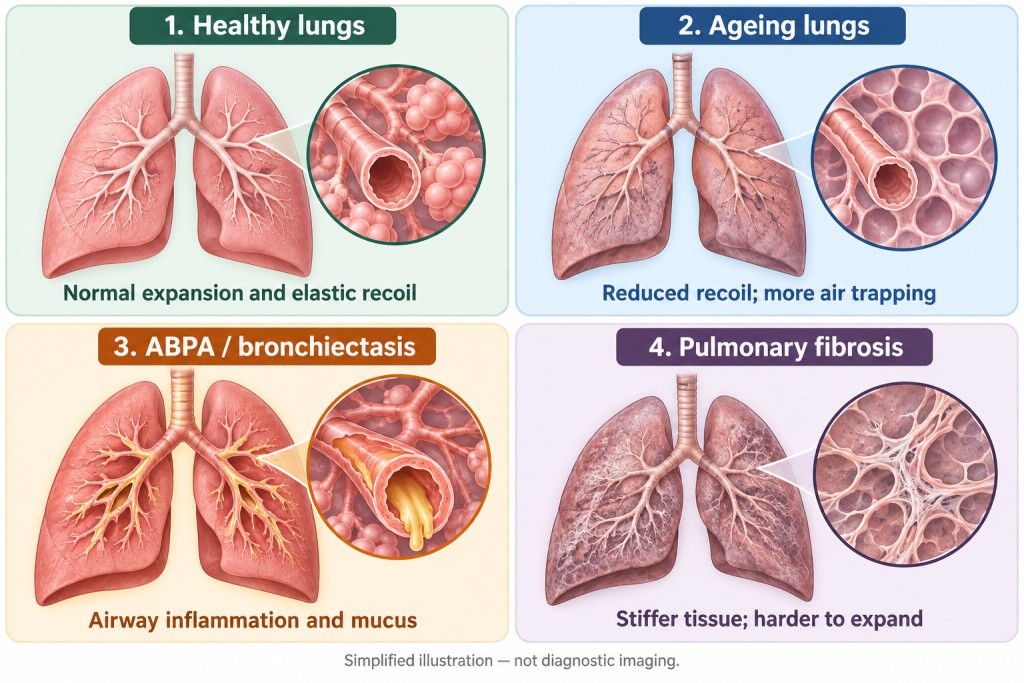
ABPA is an allergic lung condition that usually occurs in people with asthma or cystic fibrosis, and sometimes in people with a compatible clinical and radiological picture. Current international guidance uses a combination of findings rather than one result.
In broad terms, clinicians look for:
- evidence of sensitisation to Aspergillus (usually a positive A. fumigatus-specific IgE);
- a total IgE of 500 IU/mL (kU/L) or above, although treatment such as oral steroids can affect the result;
- and supporting evidence, such as Aspergillus-specific IgG, a current or previous raised eosinophil count, or characteristic changes on chest imaging.
This is a diagnostic framework, not a home diagnostic test. Some people with asthma have fungal sensitisation without ABPA, and some people with suspected ABPA need repeat testing or specialist interpretation.
What about CPA?
For chronic pulmonary aspergillosis, an Aspergillus-specific IgG result can be an important clue, but it is considered alongside symptoms lasting over time, lung imaging and evidence of Aspergillus infection. A normal or only slightly raised result does not settle the question on its own, particularly if there is a strong clinical reason to investigate further.
What tests might be needed as well?
| Test or information | Why it may matter |
|---|---|
| Symptoms and medical history | Asthma control, cough, mucus, breathlessness, weight loss, previous lung disease and treatment history all change how results are understood. |
| Chest imaging | A chest X-ray or CT may show bronchiectasis, mucus plugging, cavities, nodules or other changes that help distinguish different conditions. |
| Sputum culture or PCR | May detect Aspergillus in the airways. A result still needs clinical interpretation: detecting the fungus is not always the same as proving disease. |
| Eosinophil count and lung function | Can help assess allergic airway inflammation and asthma, but can be altered by steroids and some biologic medicines. |
Can treatment affect the results?
Yes. Oral steroids can reduce some signs of allergic inflammation, including eosinophils, and biologic medicines can make eosinophil counts look lower than they were before treatment. This is one reason why your clinician may look at older blood results, repeat a test, or interpret a result differently in the light of your medicines.
For people with ABPA, total IgE is sometimes measured over time as one part of monitoring response or a possible flare. The pattern matters more than a single isolated number, and results should usually be compared using the same laboratory method where possible.
Questions you can ask at an appointment
- Which Aspergillus blood tests have I had, and what are the laboratory reference ranges?
- Does this result suggest sensitisation, infection, both, or neither?
- Do my symptoms and scan findings fit with the blood test result?
- Could my current steroid or biologic treatment affect the result?
- Would repeating the test, checking sputum, or seeking specialist advice help?
When to seek advice promptly
Seek clinical advice promptly if you have worsening breathlessness, chest pain, coughing up blood, a significant fever, rapidly worsening asthma symptoms or feel severely unwell. Blood-test results should not delay assessment of worrying symptoms.
Further reading
- Revised ISHAM guidance on diagnosing and managing ABPA
- Allergic bronchopulmonary aspergillosis (ABPA)
- Chronic pulmonary aspergillosis (CPA)
- Diagnosing Aspergillus infections in the lungs
Last reviewed: August 2026.

Did this page help you?
Tell us in one minute