
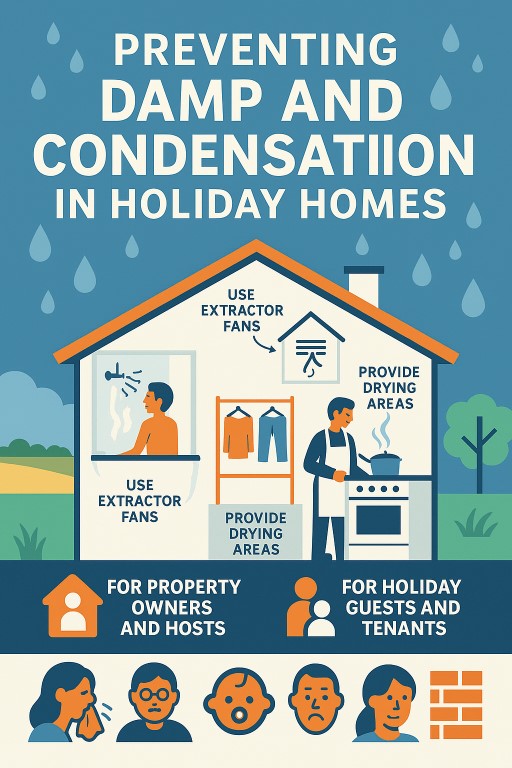
A detailed guide for both property owners and guests – working together for a healthier stay
Condensation is the most common cause of damp and mould in UK homes, especially in older or well-insulated properties. For holiday cottages or short-term lets, where different people stay for brief periods, it’s essential that both owners and guests understand how to prevent moisture problems.
This guide explains:
-
How owners can set the home up to reduce condensation
-
What guests can do during their stay
-
Why it’s a shared responsibility
-
How these steps benefit everyone, especially the most vulnerable
🔧 Part 1: For Property Owners and Holiday Let Managers
Even well-maintained homes can develop damp if moisture builds up faster than it can escape. Here’s how to set up your home for success:
🪟 1. Improve Ventilation in Every Room
-
Fit extractor fans in bathrooms and kitchens. Fans should ideally have:
-
A humidistat (activates automatically above 65–70% humidity)
-
A run-on timer (continues working after lights go off)
-
-
Keep trickle vents open at all times.
-
Consider Positive Input Ventilation (PIV) for older homes or those with solid walls.
🧱 2. Insulate Cold Surfaces
-
Insulate external or solid walls using breathable materials.
-
Install underfloor heating in bathrooms or damp-prone areas.
-
Use thermal curtains or blinds to help reduce cold zones near windows.
🎨 3. Use Breathable Finishes
-
Choose lime plaster, clay paints, and breathable wall finishes.
-
Avoid vinyl paints and woodchip wallpapers that trap moisture.
-
Leave gaps between furniture and walls to promote airflow.
💨 4. Provide Drying Areas
-
Offer a well-ventilated drying space for coats and laundry.
-
Install a heated towel rail, airing cupboard, or portable dehumidifier.
-
Avoid encouraging radiator drying where possible.
📊 5. Monitor and Educate
-
Use digital hygrometers to keep track of humidity (ideal: 40–60%).
-
Include guest-friendly guidance in welcome materials or visible signage.
-
Ask cleaners to report signs of mould or moisture early.
🧍♂️ Part 2: For Holiday Guests and Tenants
Moisture builds up quickly from cooking, bathing, and drying clothes. These small actions can help:
🚿 1. Bathroom Habits
-
Use the extractor fan or open a window after showers or baths.
-
Leave the door shut for 15–30 minutes after use.
-
Hang towels on rails rather than radiators to help them dry evenly.
🍳 2. In the Kitchen
-
Always use the extractor fan when cooking.
-
Use lids on pans and open a window if no fan is available.
-
Wipe down steamy surfaces and windows to stop mould forming.
👕 3. Drying Clothes
-
Use airers or drying racks rather than radiators.
-
Keep a window slightly open while drying indoors.
-
Don’t leave wet items in piles or draped over furniture.
🛏️ 4. Living and Sleeping Areas
-
Keep trickle vents open – they allow constant low-level airflow.
-
Air the home each morning for 5–10 minutes.
-
Don’t push furniture tight against walls – allow some airflow space.
🔄 Part 3: Shared Responsibility – Why Both Parties Matter
| Owner Sets Up | Guest Helps By |
|---|---|
| Installing good ventilation | Using fans and vents |
| Providing drying facilities | Drying clothes responsibly |
| Monitoring humidity | Opening windows regularly |
| Choosing breathable materials | Avoiding habits that trap moisture |
❤️ Part 4: Why These Steps Help Everyone
These precautions don’t just protect buildings or prevent cleaning bills. They actively support the health, wellbeing, and comfort of a wide range of people:
👃 1. People with Breathing Problems
-
Asthma, ABPA, bronchiectasis, and COPD can all be triggered or worsened by damp air and mould.
-
Condensation precautions reduce airborne spores, allergens, and moisture.
🧓 2. Older Adults
-
Older people are vulnerable to damp-induced joint pain, cold-related illness, and falls from slippery surfaces.
-
Warm, dry homes improve comfort and reduce hospitalisation risk.
👶 3. Babies and Children
-
Developing lungs and sensitive immune systems are affected by poor indoor air quality.
-
Dry air reduces the chance of chest infections, wheeze, and eczema flare-ups.
🤧 4. People with Allergies or Sensitivities
-
Lower humidity reduces dust mites, mould spores, and VOC off-gassing.
-
Fewer reactions = fewer health complaints during stays.
🧠 5. People with Anxiety, Depression, or Chronic Illness
-
Mould and damp worsen low mood and fatigue.
-
Dry, well-aired homes are more comfortable, restful, and reassuring.
🧑🔧 6. Cleaners, Carers, and Workers
-
People who spend time cleaning or maintaining homes are often first exposed to hidden damp.
-
Good setup protects their health and helps them do their jobs more safely.
🧱 7. The Building Itself
-
Damp causes rot, damage to plaster, and paintwork failure.
-
Good moisture control extends the life of the building and reduces maintenance costs.
✅ Summary: Everyone Benefits
Whether you’re a landlord, a tenant, or just staying for a few nights – moisture-aware behaviour and property setup benefits everyone.
These changes are:
-
Low cost
-
Easy to implement
-
Proven to improve comfort and reduce risk

Latest News posts
News archive