
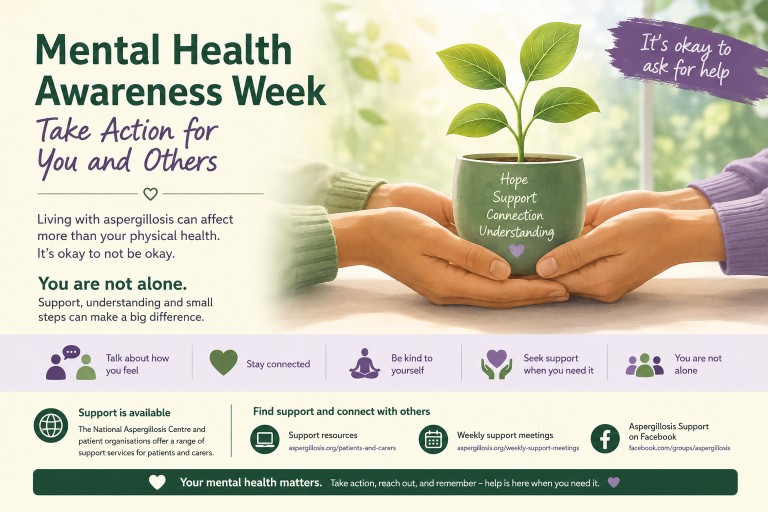
Mental Health Awareness Week is a reminder that health is not only physical.
For people living with aspergillosis, and for the family members and carers who support them,
the emotional impact of a long-term lung condition can be significant.
Aspergillosis can bring uncertainty, fatigue, breathlessness, repeated appointments,
medication changes, worries about test results, and concerns about the future.
It is understandable that some people experience anxiety, low mood, frustration,
isolation, or disturbed sleep.
Carers may also feel under pressure. Supporting someone with a chronic illness can be rewarding,
but it can also be tiring and emotionally demanding. Looking after your own mental health is not selfish;
it helps you continue to support the person you care about.
Small steps can help
- Talk to someone you trust about how you are feeling.
- Stay connected with friends, family, or peer support groups.
- Pace your activities and allow time for rest.
- Try gentle movement if this is safe and manageable for you.
- Write down worries or questions before appointments.
- Ask your healthcare team for support if anxiety, low mood, or stress is affecting daily life.
You are not alone
Many people with aspergillosis find it helpful to speak with others who understand what it is like
to live with a rare fungal lung condition. Peer support can reduce isolation and help patients and carers
feel more informed and understood.
The National Aspergillosis Centre and associated patient organisations provide support, information,
and opportunities to connect with others affected by aspergillosis:
- Aspergillosis support resources for families and carers
- Weekly aspergillosis support meetings
- Aspergillosis Support Facebook group
When to seek help
If you are feeling persistently overwhelmed, very low, anxious, unable to cope,
or if your mental health is affecting your day-to-day life, please speak to your GP,
specialist nurse, or healthcare team. Mental health support is an important part of healthcare.
If you feel at immediate risk of harming yourself, or you do not feel safe,
seek urgent help by calling emergency services or going to your nearest emergency department.
More information about Mental Health Awareness Week is available from the
Mental Health Foundation
Your mental health matters. Support, understanding, and connection can make a difference.

Latest News posts
News archive