
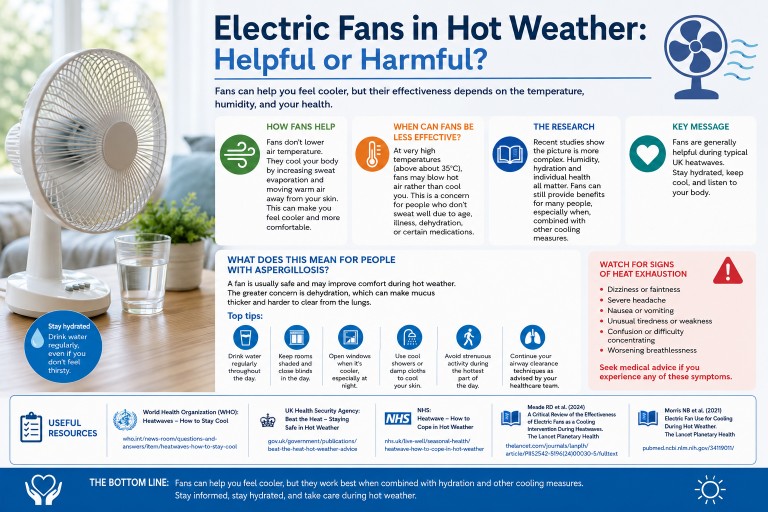
As temperatures rise across the UK, many people reach for an electric fan to stay cool. However, you may have seen advice suggesting that fans should be used with caution during very hot weather. Why is that, and what does it mean for people living with aspergillosis and other chronic lung conditions?
Key Points
- Electric fans can help most people stay comfortable during UK heatwaves.
- Fans cool the body by increasing the evaporation of sweat.
- In extreme heat (above about 35°C), fans may become less effective for some people.
- Hydration remains one of the most important ways to protect yourself during hot weather.
- People with chronic lung conditions should pay particular attention to avoiding dehydration, which can make mucus thicker and harder to clear.
How do electric fans cool us?
Electric fans do not lower the temperature of the air. Instead, they move air across the skin, helping sweat evaporate more quickly. Because evaporation removes heat from the body, this can make you feel cooler and more comfortable.
For most people, particularly during typical UK summer temperatures, fans are a useful and inexpensive way to reduce discomfort during hot weather.
Why is there advice to limit fan use in extreme heat?
Some public health guidance advises caution when temperatures rise above about 35°C. At these temperatures, a fan may simply blow very hot air across the body. If a person is unable to sweat effectively because of age, illness, dehydration, or certain medications, the cooling benefit may be reduced.
This concern led organisations such as the NHS, UK Health Security Agency (UKHSA), and World Health Organization (WHO) to recommend that fans should not be relied upon as the only cooling strategy during extreme heat.
However, research over the last few years has shown that the situation is more complicated than a simple temperature cut-off. Factors such as humidity, hydration, age, and overall health all influence whether a fan is helpful.
What does the research say?
Recent studies suggest that electric fans may still provide benefits for many people, even when temperatures exceed 35°C, particularly if humidity levels are high and the body is able to sweat normally.
Researchers now recognise that there is no single temperature at which fans suddenly become harmful. Instead, their effectiveness depends on the balance between heat gained from the surrounding air and heat lost through sweat evaporation.
The overall message from researchers and public health organisations is that fans remain useful for many people but should be combined with other cooling measures such as drinking fluids, seeking shade, and cooling the skin with water.
What does this mean for people with aspergillosis?
For people living with aspergillosis, asthma, chronic pulmonary aspergillosis (CPA), allergic bronchopulmonary aspergillosis (ABPA), or bronchiectasis, a fan is generally safe and may improve comfort during hot weather.
The greater concern is often dehydration. Hot weather can lead to fluid loss through sweating, which may cause mucus and sputum to become thicker and more difficult to clear from the lungs. This can increase coughing, breathlessness, and discomfort.
If you use a fan during hot weather:
- Drink water regularly throughout the day.
- Keep curtains or blinds closed on sun-facing windows.
- Open windows when outdoor temperatures are cooler, particularly overnight.
- Use cool showers, damp cloths, or a spray bottle to cool the skin.
- Avoid strenuous activity during the hottest part of the day.
- Continue any airway clearance techniques recommended by your healthcare team.
Watch for signs of heat exhaustion
Seek medical advice if you experience:
- Dizziness or fainting
- Severe headache
- Nausea or vomiting
- Excessive tiredness or weakness
- Confusion or difficulty concentrating
- Worsening breathlessness
The bottom line
For most people in the UK, electric fans remain a helpful way to stay comfortable during hot weather. Current evidence suggests that fans are generally beneficial during typical UK heatwaves, especially when used alongside other cooling measures.
The most important message for people with chronic lung conditions is to stay hydrated. Fans can help you feel cooler, but drinking enough fluids, avoiding overheating, and recognising the signs of heat-related illness are equally important.
Further Reading
- World Health Organization (WHO): Heatwaves – How to Stay Cool
- UK Health Security Agency (UKHSA): Beat the Heat – Staying Safe in Hot Weather
- NHS: Heatwave – How to Cope in Hot Weather
- Meade RD et al. A Critical Review of the Effectiveness of Electric Fans as a Cooling Intervention During Heatwaves. Lancet Planetary Health.
- Morris NB et al. Electric Fan Use for Cooling During Hot Weather. Lancet Planetary Health.
Further Reading
- World Health Organization (WHO): Heatwaves – How to Stay Cool
- UK Health Security Agency (UKHSA): Beat the Heat – Staying Safe in Hot Weather
- NHS: Heatwave – How to Cope in Hot Weather
- Meade RD et al. A Critical Review of the Effectiveness of Electric Fans as a Cooling Intervention During Heatwaves. The Lancet Planetary Health (2024)
- Morris NB et al. Electric Fan Use for Cooling During Hot Weather. The Lancet Planetary Health (2021)
Author: National Aspergillosis Centre Team
Reviewed: June 2026
Next Review: June 2027
This article is intended for educational purposes and should not replace advice from your healthcare team.

Latest News posts
News archive