
Last reviewed: June 2026
Key Points
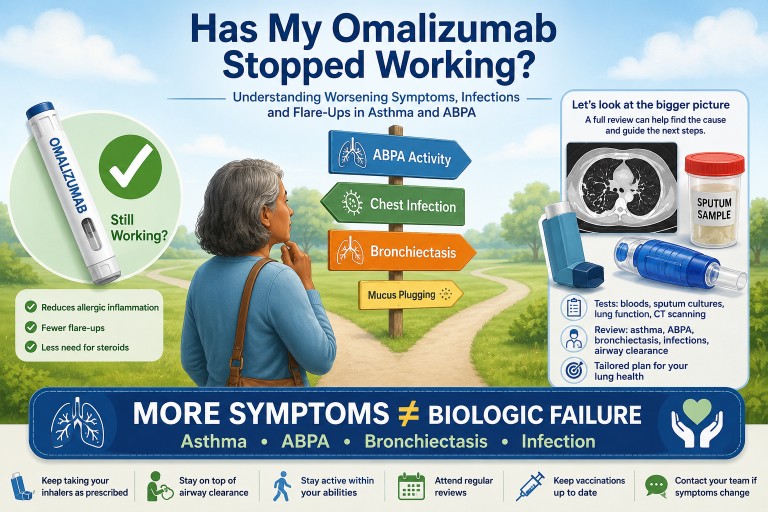
- Omalizumab can remain effective for many years.
- Worsening symptoms do not automatically mean the treatment has stopped working.
- Increasing chest infections may be caused by bronchiectasis, bacterial infection, mucus plugging or another lung condition.
- Asthma and Allergic Bronchopulmonary Aspergillosis (ABPA) can change over time.
- Biologics are usually one part of a wider treatment plan and do not replace inhalers, airway clearance or routine monitoring.
- A specialist review may include blood tests, sputum cultures, lung function tests and CT imaging.
Contents
- Why patients ask this question
- What is omalizumab?
- Does omalizumab wear off?
- Why symptoms may worsen after years of treatment
- What else could be going on?
- Possible reasons for worsening symptoms
- The role of bronchiectasis and infection
- Don’t forget the basics
- What tests might help?
- Questions to ask your specialist
- Frequently asked questions
- When to seek medical advice
- The bottom line
Why Patients Ask This Question
Many people living with severe asthma or Allergic Bronchopulmonary Aspergillosis (ABPA) experience major improvements after starting omalizumab. They may have fewer flare-ups, require fewer courses of oral steroids and enjoy a much better quality of life.
However, some patients notice that after several years they begin needing more antibiotics, more steroid courses or more medical reviews. Symptoms such as cough, sputum production, wheeze or breathlessness may start to increase again.
This often leads to a worrying question:
“Has my biologic stopped working?”
In reality, the answer is often more complicated than a simple yes or no.
What Is Omalizumab?
Omalizumab (Xolair®) is a biologic medication that targets immunoglobulin E (IgE), an antibody involved in allergic inflammation.
It is commonly used to treat severe allergic asthma and is also used in some patients with ABPA where allergic inflammation is an important part of the disease.
By reducing IgE activity, omalizumab can help reduce asthma exacerbations, improve symptom control and reduce the need for oral corticosteroids in many patients.
Does Omalizumab Wear Off?
Current evidence suggests that omalizumab can remain effective for many years. Studies following patients with severe allergic asthma have shown sustained benefits in many people over five years or more.
There is currently no strong evidence that most patients develop predictable tolerance to omalizumab simply because they have been taking it for a long time.
This means that if symptoms worsen after four, five or more years of treatment, specialists will usually look for other explanations before concluding that the medication has stopped working.
Why Symptoms May Worsen After Years of Treatment
There are several reasons why symptoms may worsen despite ongoing biologic treatment.
Lung Damage Can Continue to Cause Problems
Many patients with ABPA also have bronchiectasis. Bronchiectasis is permanent widening and damage of the airways that can develop after repeated inflammation and infection.
Even when allergic inflammation is well controlled, bronchiectasis can still cause:
- Persistent cough
- Sputum production
- Breathlessness
- Fatigue
- Recurrent chest infections
In these situations, the biologic may still be helping while another aspect of the lung disease becomes more important.
Infection May Become More Important
Patients with bronchiectasis are more vulnerable to chest infections. Symptoms caused by infection can sometimes look very similar to an asthma or ABPA flare.
Signs suggesting infection may include:
- Increased sputum production
- Darker or thicker sputum
- Fever
- Feeling generally unwell
- More frequent need for antibiotics
Asthma and ABPA Can Change Over Time
Asthma is not a single disease. The pattern of inflammation in the airways may change over time.
Some patients who initially respond very well to anti-IgE treatment may later develop different patterns of airway inflammation, mucus production or airway remodelling.
This is one reason why specialists sometimes review whether a different biologic may be appropriate.
What Else Could Be Going On?
When symptoms worsen after several years of successful biologic treatment, specialists often look beyond asthma and ABPA alone.
Several different conditions can cause cough, breathlessness, sputum production, fatigue and recurrent chest infections.
Bronchiectasis Progression
Even if allergic inflammation is well controlled, bronchiectasis can continue to cause mucus retention, recurrent infections and worsening respiratory symptoms.
Bacterial Infection
Repeated chest infections can become a major cause of symptoms. Common bacteria include:
- Pseudomonas aeruginosa
- Haemophilus influenzae
- Staphylococcus aureus
- Moraxella catarrhalis
Mucus Plugging
Thick mucus can block airways, causing cough, breathlessness and reduced airflow.
Aspergillus Bronchitis
Some patients develop persistent airway infection with Aspergillus species. Symptoms may include chronic productive cough, increased sputum and recurrent respiratory symptoms.
Chronic Pulmonary Aspergillosis (CPA)
Although less common, some patients with previous lung damage may develop chronic pulmonary aspergillosis. Symptoms can include fatigue, weight loss, chronic cough and sometimes coughing up blood.
Nontuberculous Mycobacterial (NTM) Infection
Patients with bronchiectasis may be at increased risk of infection caused by environmental mycobacteria.
Changing Asthma Biology
The type of airway inflammation present when treatment begins may change over time.
The important point is that worsening symptoms do not automatically mean that omalizumab has stopped working.
Several different conditions may produce similar symptoms and require different treatments.
Possible Reasons for Worsening Symptoms
| Possible Cause | Typical Clues |
|---|---|
| ABPA flare | Increasing asthma symptoms, rising IgE, worsening inflammation |
| Bronchiectasis progression | More sputum, recurrent infections, increasing need for airway clearance |
| Bacterial infection | Change in sputum colour, fever, feeling unwell, antibiotics helping |
| Mucus plugging | Sudden worsening breathlessness, blocked airways |
| Aspergillus bronchitis | Persistent productive cough and sputum despite standard treatment |
| Chronic Pulmonary Aspergillosis (CPA) | Weight loss, fatigue, chronic symptoms, coughing up blood |
| NTM infection | Gradual worsening symptoms despite repeated treatment courses |
The Role of Bronchiectasis and Infection
For many patients with ABPA, the most useful question is not:
“Has omalizumab stopped working?”
but rather:
“What is causing my recent increase in symptoms and infections?”
If the main change is increasing antibiotic use, sputum production or recurrent chest infections, the focus may need to shift towards understanding what is happening within the airways.
This may include reviewing sputum cultures, airway clearance techniques, physiotherapy, exercise levels and bronchiectasis management plans.
Don’t Forget the Basics
One of the challenges of successful biologic treatment is that patients often feel so much better that other aspects of their disease can gradually receive less attention.
This is completely understandable. When symptoms improve, it is natural to focus less on daily disease management.
However, biologics such as omalizumab do not cure asthma, bronchiectasis or ABPA. They help control specific parts of these conditions.
For example, omalizumab may reduce allergic inflammation and asthma exacerbations, but it does not reverse existing bronchiectasis, remove mucus from the airways or prevent every chest infection.
Think of your lung health as a garden. Omalizumab may be very effective at controlling one type of weed, but the garden still needs regular maintenance. If that maintenance stops, other problems can gradually take over.
Continuing to Manage Your Lung Health
- Take prescribed inhalers regularly.
- Continue airway clearance techniques if recommended.
- Stay physically active within your abilities.
- Monitor changes in sputum volume, colour or thickness.
- Attend routine specialist reviews.
- Keep vaccinations up to date.
- Follow asthma and bronchiectasis action plans where provided.
- Report increasing breathlessness, cough or infections promptly.
Biologics can be highly effective, but they work best as part of a broader management plan rather than replacing it.
The Bottom Line
If symptoms worsen after several years on omalizumab, it does not automatically mean the medication has stopped working.
In patients with asthma and ABPA, increasing antibiotics and steroid use may reflect changing asthma control, ABPA activity, bronchiectasis-related infection, mucus plugging or another lung condition.
Successful biologic treatment can sometimes make it easy to forget that asthma, bronchiectasis and ABPA still require ongoing management. Continuing inhalers, airway clearance, exercise, monitoring and regular review remains important even when symptoms have improved.
A careful specialist review can often identify what has changed and guide the most appropriate next steps.

Latest News posts
News archive