Why oral health problems may be more common than many patients expect
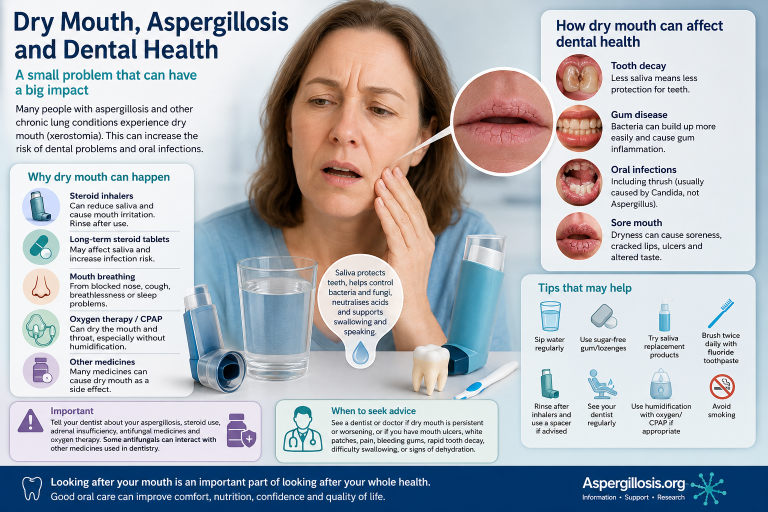
People living with aspergillosis often focus understandably on symptoms such as breathlessness, coughing, fatigue, wheezing or chest infections. However, many patients also notice problems affecting the mouth, throat and teeth — particularly dry mouth, soreness, altered taste and worsening dental health.
Although Aspergillus itself does not usually directly infect the mouth, the wider effects of chronic respiratory disease, medications and long-term treatment can sometimes have a significant impact on oral health and wellbeing.
Key points
- Dry mouth is commonly reported by patients with chronic respiratory disease and aspergillosis.
- Saliva is important for protecting teeth and gums.
- Steroid inhalers, mouth breathing and oxygen therapy can all contribute to dryness.
- Long-term dry mouth may increase the risk of tooth decay, gum disease and oral infections.
- Good oral hygiene and regular dental care are especially important.
- Dentists should be informed about antifungal medications and steroid treatment.
Why does dry mouth happen?
Dry mouth, sometimes called xerostomia, occurs when the mouth does not produce enough saliva or when saliva does not protect the mouth as effectively as usual.
Saliva plays several important roles. It helps protect teeth from decay, controls bacteria and fungi, reduces acidity in the mouth, supports swallowing and speech, and protects the delicate tissues inside the mouth.
When saliva levels fall, patients may notice:
- a sticky or dry feeling in the mouth;
- waking with a dry mouth;
- difficulty swallowing dry foods;
- sore gums, tongue or throat;
- bad breath;
- cracked lips;
- increased thirst;
- altered taste;
- mouth soreness or burning.
Why might aspergillosis patients be affected?
In many cases, the problem is not caused directly by Aspergillus itself. Instead, several factors linked to respiratory disease and treatment may combine together.
Steroid inhalers
Inhaled corticosteroids are commonly used in asthma, Allergic Bronchopulmonary Aspergillosis (ABPA), severe eosinophilic lung disease and other respiratory conditions.
These medicines are important and should not be stopped without medical advice, but they can sometimes contribute to mouth irritation, dryness, hoarseness, oral thrush and throat discomfort.
Using a spacer device, where appropriate, and rinsing the mouth after inhaler use may help reduce some local side effects.
Long-term steroid tablets
Some patients with aspergillosis or severe asthma have taken oral steroid tablets such as prednisolone, sometimes for prolonged periods. Long-term steroid exposure may affect immunity and can increase the risk of infections such as oral thrush.
Some patients may also develop adrenal suppression or adrenal insufficiency after prolonged steroid exposure. Patients with known adrenal insufficiency should make sure their dentist and healthcare team are aware before significant dental treatment or procedures.
Mouth breathing
Many people with chronic respiratory disease breathe through their mouth more often, especially overnight. This may happen because of blocked nose, sinus disease, breathlessness, coughing, asthma symptoms or poor sleep.
Over time, regular mouth breathing can dry the mouth and throat, especially during the night.
Oxygen therapy and CPAP
Supplemental oxygen and continuous positive airway pressure (CPAP) devices may dry the upper airways, particularly if humidification is not used.
Some patients notice dry lips, sore throat, dry nose, thick mucus or increased mouth discomfort overnight.
Medication side effects
A number of commonly prescribed medicines may contribute to dry mouth. These can include antihistamines, antidepressants, some pain medicines, bronchodilators and some blood pressure medicines.
The combined effect of several medicines may become significant, especially in people managing complex long-term health conditions.
Why does dry mouth matter for dental health?
Dry mouth is more than simply uncomfortable. Saliva normally helps protect the teeth and gums. Without enough saliva, plaque bacteria can grow more easily, acids remain in contact with teeth for longer, enamel may weaken and gums may become inflamed.
Some patients are surprised by how quickly dental problems can develop after periods of illness, long-term treatment or persistent dry mouth.
Possible problems include:
- tooth decay;
- gum disease;
- sensitive teeth;
- mouth ulcers;
- oral thrush;
- cracked lips;
- denture discomfort;
- difficulty eating or speaking comfortably.
Oral thrush and fungal infections
Patients with aspergillosis sometimes worry that oral fungal infections mean Aspergillus is spreading in the mouth. In most cases, oral thrush is caused by Candida yeast rather than Aspergillus.
Symptoms of oral thrush may include white patches, soreness, redness, altered taste, painful swallowing or cracking at the corners of the mouth.
Steroid inhalers and dry mouth can both increase the risk of thrush. Patients should seek medical or dental advice if symptoms persist or recur.
Important information for dentists
Patients should inform their dentist about:
- their aspergillosis diagnosis;
- inhaled or oral steroid use;
- adrenal insufficiency or adrenal suppression;
- antifungal medicines;
- oxygen therapy or CPAP use;
- significant breathlessness or difficulty lying flat.
This is important because some antifungal medicines, including itraconazole, voriconazole and posaconazole, can interact with other medicines. Dentists and doctors can help check for possible interactions when procedures, antibiotics, pain relief or sedation are being considered.
Practical tips that may help
Some patients find the following measures helpful:
- sip water regularly;
- avoid excessive alcohol and caffeine;
- use sugar-free gum or lozenges if suitable;
- ask a pharmacist or dentist about saliva replacement sprays, gels or mouthwashes;
- rinse the mouth after steroid inhalers;
- use a spacer device if recommended;
- brush twice daily with fluoride toothpaste;
- clean between teeth if able;
- attend regular dental reviews;
- avoid smoking;
- discuss persistent symptoms with a GP, dentist, pharmacist or specialist team.
Patients using oxygen or CPAP may wish to ask their respiratory team whether humidification is appropriate.
When to seek medical or dental advice
Seek advice if dry mouth is persistent, worsening or causing problems with eating, sleeping, swallowing or speaking.
Medical or dental review is particularly important if there are mouth ulcers, white patches, bleeding gums, rapid tooth decay, severe soreness, repeated oral thrush, signs of dehydration, dizziness or marked weakness.
Patients with adrenal insufficiency, severe respiratory disease or complex medication regimens should make sure healthcare professionals are aware before major dental procedures.
A commonly overlooked part of chronic illness
Living with aspergillosis often involves managing far more than lung symptoms alone. Dry mouth and dental health problems may seem minor at first, but over time they can affect comfort, nutrition, sleep, confidence, communication and overall quality of life.
Recognising these issues early may help patients seek support sooner and reduce longer-term complications.
Further information
Author and review information
Prepared by: National Aspergillosis Centre CARES Team / Aspergillosis Website Editorial Team
Last reviewed: May 2026
References and further reading
- NHS information on dry mouth and oral thrush.
- Dental and oral medicine guidance on xerostomia and prevention of tooth decay.
- Respiratory guidance on inhaled corticosteroids and inhaler technique.
- Medicines information for azole antifungals and corticosteroids.

Did this page help you?
Tell us in one minute