
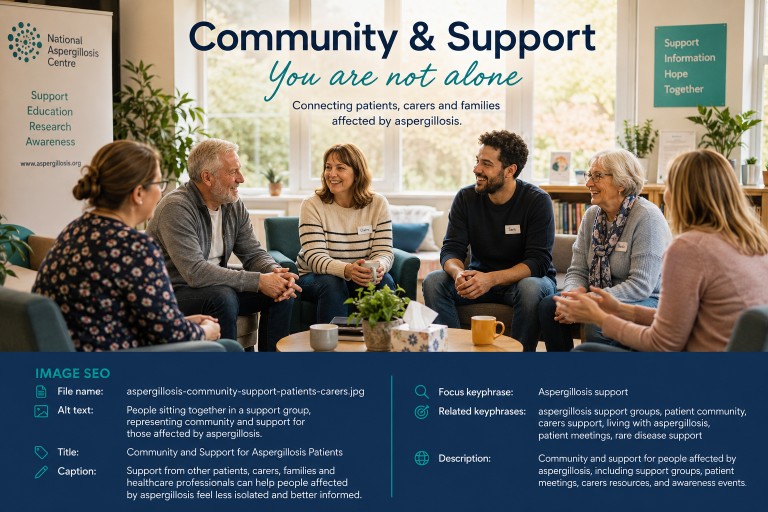
Living with aspergillosis can sometimes feel isolating. Many people spend months or even years searching for answers before receiving a diagnosis. Even after diagnosis, patients often discover that friends, family members and healthcare professionals may never have heard of aspergillosis or fully understand the challenges it can bring.
Nobody should have to face aspergillosis alone. Support can come from family, friends, carers, healthcare professionals, patient organisations and others living with the condition.
This section brings together support services, patient communities, educational events, patient stories and opportunities to connect with others affected by aspergillosis.
Quick summary
- Aspergillosis can affect emotional wellbeing as well as physical health.
- Support may come from family, carers, healthcare teams and patient communities.
- Patient support groups can help people feel less isolated.
- Educational events provide opportunities to learn from specialists and other patients.
- Many people find value in sharing experiences, raising awareness and helping others.
Why support matters
Rare diseases can be lonely. Many people with aspergillosis have never met another person with the condition. It can be difficult to explain fatigue, breathlessness, treatment side effects or the uncertainty that sometimes comes with living with a long-term illness.
Connecting with others can help by providing:
- Emotional support
- Practical coping strategies
- Shared experience of treatments and monitoring
- Greater confidence when discussing care with healthcare professionals
- Better understanding of the condition
- Reduced isolation
Support does not remove the challenges of aspergillosis, but it can make them easier to face.
NAC CARES
NAC CARES is the patient support and education programme linked with the National Aspergillosis Centre.
The programme aims to help people affected by aspergillosis access reliable information, understand their condition and connect with others facing similar challenges.
Activities may include:
- Patient meetings
- Educational webinars
- Question and answer sessions
- Research updates
- Patient involvement opportunities
- Resources for carers and families
Whether you are newly diagnosed or have been living with aspergillosis for many years, NAC CARES aims to provide trustworthy information and support.
Online support communities
Online communities allow patients and carers to connect regardless of where they live. For people who experience fatigue, mobility difficulties or breathlessness, online support can be particularly valuable.
Facebook support group
The aspergillosis Facebook community provides a space where patients, carers and families can share experiences, ask questions and support one another.
The group is moderated to help maintain a safe and supportive environment. Members are encouraged to share personal experiences while recognising that individual medical advice should come from qualified healthcare professionals.
Telegram community
The aspergillosis Telegram community provides another way for patients and carers to connect, discuss everyday challenges and share practical support.
Many people find comfort in speaking with others who understand the realities of living with a rare fungal disease.
Support for families and carers
Aspergillosis affects more than the person who receives the diagnosis. Partners, parents, children, relatives and friends often play an important role in providing practical and emotional support.
Carers may help with medications, appointments, transport, household tasks or simply being there during difficult periods. Caring for someone with a long-term illness can also be demanding.
Carers may benefit from:
- Reliable information about aspergillosis
- Help understanding treatments and monitoring
- Support from other carers
- Advice from healthcare professionals
- Local carer support services
- Opportunities to discuss their own wellbeing
Supporting carers is an important part of supporting patients.
Educational meetings and events
Knowledge can be empowering. Patient meetings and educational events provide opportunities to learn from clinicians, researchers, specialist nurses and fellow patients.
Topics often include:
- New treatments
- Research developments
- Clinical trials
- Symptom management
- Medication safety
- Living well with aspergillosis
- Patient experiences
Many people find that attending educational meetings improves their understanding of the condition and helps them feel more confident in managing their health.
Patient stories
Every aspergillosis journey is different. Some people are diagnosed quickly. Others spend years searching for answers. Some experience significant limitations, while others continue to work, travel and pursue active lifestyles.
Patient stories can:
- Provide hope and reassurance
- Share practical lessons
- Increase awareness of delayed diagnosis
- Help newly diagnosed patients feel less alone
- Demonstrate the many different ways people adapt to life with aspergillosis
Hearing from others who have faced similar challenges can be one of the most powerful forms of support.
Awareness and advocacy
Many people affected by aspergillosis choose to help raise awareness of the condition. Awareness helps improve understanding among patients, families, healthcare professionals, policymakers and the wider public.
Greater awareness can contribute to earlier diagnosis, improved care and increased research interest.
Ways to get involved may include:
- Sharing reliable information
- Supporting awareness campaigns
- Participating in patient involvement activities
- Contributing to research discussions
- Helping educate healthcare professionals about patient experience
- Supporting World Aspergillosis Day
Every contribution helps increase understanding of fungal disease.
World Aspergillosis Day
World Aspergillosis Day brings together patients, carers, clinicians, researchers and organisations from around the world.
The day aims to:
- Raise awareness of aspergillosis
- Promote earlier diagnosis
- Highlight research and innovation
- Share patient experiences
- Celebrate the global aspergillosis community
It serves as a reminder that people affected by aspergillosis are part of a worldwide community working together to improve awareness, support and care.
Finding your community
Support looks different for different people. Some find comfort in online groups. Others prefer educational meetings, one-to-one conversations, family support or simply knowing that reliable information is available when needed.
There is no right way to seek support. What matters is knowing that help is available and that you do not have to navigate aspergillosis alone.
Frequently asked questions
Are there support groups for aspergillosis?
Yes. Support may be available through specialist centres, patient organisations, online communities, educational meetings and social media groups.
Can family members or carers join support groups?
Many aspergillosis support communities welcome carers and family members, recognising the important role they play in supporting patients.
Are patient meetings recorded?
Some educational meetings are recorded and made available online. Availability depends on the event and speaker permissions.
Can online support groups provide medical advice?
Online groups can provide peer support and shared experiences, but they should not replace advice from healthcare professionals who know your medical history.
How can I help raise awareness of aspergillosis?
You can help by sharing reliable information, supporting awareness campaigns, participating in events and sharing your experience where appropriate.
Can I get involved in aspergillosis research?
Many research projects include opportunities for patient and public involvement. Specialist centres and patient organisations often share opportunities to participate.
Author and review information
This page is intended for people living with aspergillosis, carers, families, patient advocates and non-specialist healthcare professionals.
Content should be reviewed periodically to ensure information about support services, communities and events remains current.
Last reviewed: June 2026.
Did this page help you?
Tell us in one minute