

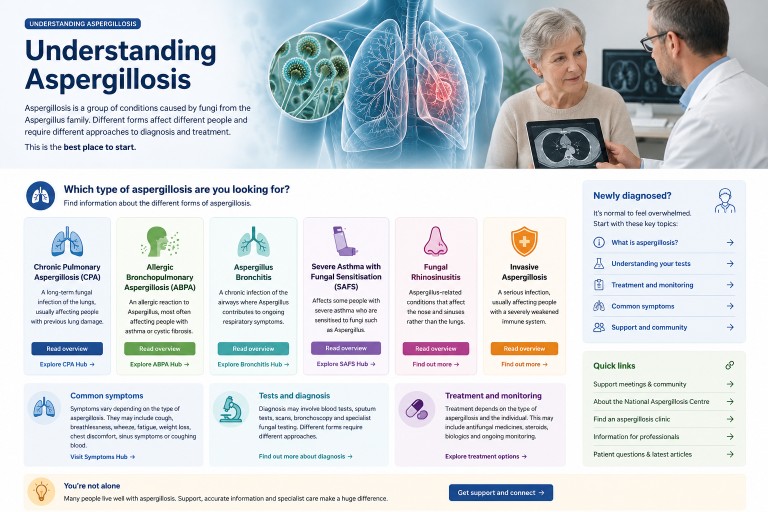
Understanding Aspergillosis
Start here if you are newly diagnosed, supporting someone with aspergillosis, or trying to understand which type of aspergillosis you have.
Aspergillosis is not one single illness. It is a group of conditions caused by fungi from the Aspergillus family. Different forms of aspergillosis affect different people and require different approaches to diagnosis, treatment and long-term management.
This page brings together the main condition pages, Knowledge Hubs and introductory resources on aspergillosis.org. Think of it as your starting point for understanding aspergillosis.
Key Points
- Aspergillosis is a group of diseases caused by fungi from the Aspergillus family.
- The most common forms discussed on this website are Allergic Bronchopulmonary Aspergillosis (ABPA), Chronic Pulmonary Aspergillosis (CPA), Aspergillus Bronchitis and Severe Asthma with Fungal Sensitisation (SAFS).
- Symptoms, diagnosis and treatment vary depending on the type of aspergillosis involved.
- This page acts as the main gateway to condition-specific Knowledge Hubs.
- Support, education and specialist resources are available through the National Aspergillosis Centre CARES programme.
Newly Diagnosed?
Many people have never heard of aspergillosis before diagnosis. It is normal to feel overwhelmed by unfamiliar medical terms, tests and treatments.
If you are just starting out, these pages may help:
- What is Aspergillosis?
- About the National Aspergillosis Centre
- Support Meetings and Community
- Search over 1,000 patient questions and articles
Which Type of Aspergillosis Are You Looking For?
The following condition pages and Knowledge Hubs provide the best starting point for understanding your diagnosis.
Chronic Pulmonary Aspergillosis (CPA)
CPA is a long-term fungal infection of the lungs that usually develops in people with previous lung damage or lung cavities.
Read the CPA overview
Explore the CPA Hub
Allergic Bronchopulmonary Aspergillosis (ABPA)
ABPA is an allergic reaction to Aspergillus that most commonly affects people with asthma or cystic fibrosis.
Read the ABPA overview
Explore the ABPA Hub
Aspergillus Bronchitis
Aspergillus bronchitis is a chronic infection of the airways in which Aspergillus contributes to ongoing respiratory symptoms.
Read the Aspergillus Bronchitis overview
Explore the Aspergillus Bronchitis Hub
Severe Asthma with Fungal Sensitisation (SAFS)
SAFS affects some people with severe asthma who are sensitised to fungi, including Aspergillus.
Read the SAFS overview
Explore the SAFS Hub
Fungal Rhinosinusitis
Some Aspergillus-related diseases affect the nose and sinuses rather than the lungs.
Read about fungal rhinosinusitis
Invasive Aspergillosis
Invasive aspergillosis is a serious infection that most commonly affects people whose immune systems are severely weakened.
Read about invasive aspergillosis
Common Symptoms
Symptoms vary depending on the form of aspergillosis involved but may include:
- Persistent cough
- Breathlessness
- Wheeze
- Fatigue
- Weight loss
- Chest discomfort
- Increased sputum production
- Sinus symptoms
- Coughing blood (haemoptysis)
Understanding Tests and Diagnosis
Diagnosis may involve a combination of:
- Blood tests
- Sputum testing
- Computed Tomography (CT) scans
- Bronchoscopy
- Specialist fungal laboratory testing
Common tests include total Immunoglobulin E (IgE), Aspergillus-specific antibodies, eosinophil counts, fungal cultures and imaging studies.
- Diagnosing Allergic Forms of Aspergillosis
- Diagnosing Aspergillus Infections in the Lungs
- Monitoring and Safety Hub
Treatment and Monitoring
Treatment depends on the condition involved and the individual patient.
Possible treatments include:
- Antifungal medicines
- Oral corticosteroids
- Biologic therapies
- Inhalers and nebulised treatments
- Long-term monitoring
- Management of Aspergillosis
- Medication and Side Effects Hub
- Steroids and Tapering Hub
- Biologics
- Monitoring and Safety Hub
Related Knowledge Hubs
- Symptoms Hub
- Monitoring and Safety Hub
- Medication and Side Effects Hub
- Mental Health Hub
- Research Hub
- NAC Communities Hub
Frequently Asked Questions
Is aspergillosis contagious?
No. Aspergillosis is not usually spread from person to person.
Can aspergillosis be cured?
This depends on the type of aspergillosis involved. Some forms may resolve completely, while others require long-term management.
Will I need lifelong treatment?
Not necessarily. Treatment plans vary considerably between patients and conditions.
Where can I get support?
Support meetings, educational resources and patient communities are available through aspergillosis.org and the National Aspergillosis Centre CARES programme.
Suggested Links
- About the National Aspergillosis Centre
- Find an Aspergillosis Clinic
- Support Meetings and Community
- Information for Professionals
- Patient Questions and Latest Articles
Last reviewed: June 2026
Did this page help you?
Tell us in one minute