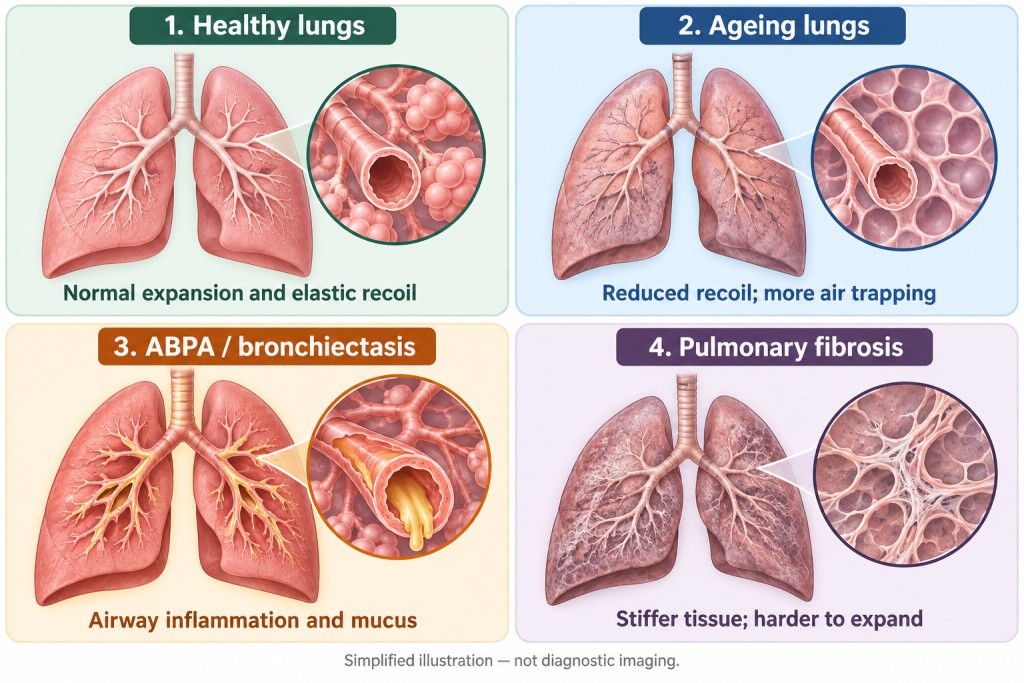
If you’ve been diagnosed with asthma or ABPA (Allergic Bronchopulmonary Aspergillosis), your healthcare team may use a test called FeNO to help assess your condition. But what exactly is FeNO — and what does it tell us?
Let’s break it down in simple terms.
✅ What Is FeNO?
FeNO stands for “Fractional exhaled Nitric Oxide.” It’s a simple breathing test that measures how much nitric oxide gas you breathe out.
Why is this important? Because nitric oxide levels in your breath are linked to inflammation in your airways, especially the kind caused by allergic (eosinophilic) asthma.
🧪 What Does a FeNO Test Involve?
It’s quick and painless:
-
You blow slowly into a handheld machine
-
It measures the level of nitric oxide in parts per billion (ppb)
-
You get the result right away — often within a few minutes
No needles. No blood tests. Just a long, steady breath.
📉 What Does a Low FeNO Mean?
A low FeNO reading usually means that:
-
Your airways aren’t inflamed from allergy (at that moment)
-
Your asthma or ABPA may be well controlled
-
Or, your inflammation may not be the “eosinophilic” type (there are other types)
But it’s not the full picture — you can still have symptoms even if your FeNO is low. It just means the type of inflammation may be different or currently under control.
📈 What Does a High FeNO Mean?
A high FeNO result (often above 50 ppb in adults) suggests:
-
You may have active allergic inflammation in your lungs
-
Your asthma may not be well controlled
-
You may need a review of your medications, especially inhaled steroids
FeNO can also rise if you’ve been exposed to allergens (like dust or mould), or if you’ve not been taking your preventer inhaler regularly.
🌡️ What About FeNO in ABPA?
People with ABPA often have high levels of inflammation in their lungs due to allergy to Aspergillus fumigatus. This usually causes:
-
High FeNO (due to allergic response)
-
High IgE levels in the blood
-
Frequent asthma symptoms or flare-ups
BUT — FeNO may drop if you’re taking steroids, especially oral steroids, as they reduce airway inflammation. So a low FeNO doesn’t always mean your condition is inactive — it may just be well treated at the time.
🧠 Why Is FeNO Useful?
FeNO is a helpful tool for your doctor to:
-
Confirm a diagnosis of allergic asthma or ABPA
-
Check how well your treatment is working
-
Spot when inflammation is rising — even before symptoms worsen
-
Decide if you might benefit from a change in treatment (like biologics)
It’s just one piece of the puzzle — along with symptoms, blood tests (like IgE or eosinophils), CT scans, and your response to treatment.
💬 Final Thoughts
FeNO testing is a valuable, non-invasive way to check for allergic inflammation in the lungs. If you have asthma or ABPA, it can help your doctors better understand what’s going on inside your lungs — and how best to treat it.
If your FeNO is low but you still have symptoms, don’t panic — talk to your team. It just means the inflammation might be of a different kind, or affecting different parts of the lungs.
Always remember: Your symptoms matter too, not just the numbers on a machine.

Did this page help you?
Tell us in one minute