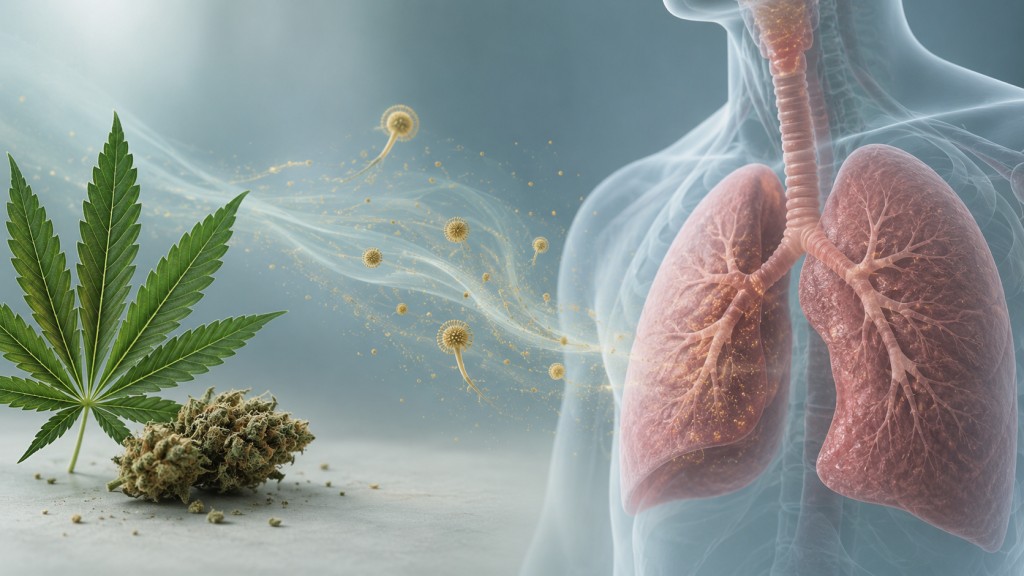
Fungal contamination, smoking, vaping, prescribed cannabis and what people with aspergillosis need to know
Cannabis—also called marijuana—may be used recreationally, obtained as a prescribed cannabis-based medicinal product or purchased as a cannabidiol (CBD) product. These products and methods of use are not interchangeable.
For someone with aspergillosis or another chronic lung disease, the greatest concern is inhaling cannabis smoke or aerosol. Dried cannabis flower can carry fungi, including Aspergillus, while smoke and vapour can irritate already vulnerable airways.
Key message
People with aspergillosis should avoid smoking cannabis. Those who are immunocompromised or at risk of invasive aspergillosis should also avoid inhaling vaporised cannabis flower and discuss any cannabis use with their specialist team.
Heating cannabis does not provide a reliable guarantee that fungal contamination has been removed. A prescribed or regulated product may have stronger quality controls than an unregulated product, but inhalation still affects the lungs.
Contents
- Why is cannabis relevant to aspergillosis?
- What does the evidence show?
- Can cannabis contain Aspergillus?
- Smoking cannabis
- Vaping or vaporising cannabis
- Edibles, oils, sprays and other non-inhaled products
- What if cannabis has been prescribed?
- Who is at greatest risk?
- Practical advice and talking to your clinical team
- When should I seek medical advice?
- The position in the UK
Why Is Cannabis Relevant to Aspergillosis?
There are two separate respiratory concerns.
1. Fungal contamination
Cannabis is a plant product. During cultivation, harvesting, drying, storage or handling, it may become contaminated with fungi. Studies have detected several fungal genera on cannabis, including Aspergillus.
A contaminated product may look and smell normal. Visible mould is a clear reason not to handle or use it, but the absence of visible mould does not prove that a product is free from fungal spores.
2. Irritation and injury from inhalation
Burning cannabis produces smoke containing particles and chemicals that irritate the airways. Regular cannabis smoking has been associated with cough, sputum production, wheeze and symptoms of chronic bronchitis. Those symptoms are particularly unhelpful for someone already living with asthma, bronchiectasis, ABPA or chronic pulmonary aspergillosis.
Vaporising avoids combustion but still delivers an aerosol into the lungs. It should therefore not be described as harmless, especially in people with established respiratory disease.
What Does the Evidence Show?
The evidence consists of several different types of information:
- laboratory studies demonstrating fungal contamination of cannabis
- case reports describing aspergillosis in people who used cannabis
- observational evidence linking cannabis use with fungal-infection diagnoses
- respiratory studies linking cannabis smoking with bronchitic symptoms
Cases of invasive aspergillosis associated with cannabis have been reported particularly in people receiving cancer treatment, people with leukaemia, transplant recipients and others with severely weakened immune systems. ABPA and chronic forms of pulmonary aspergillosis have also been reported, but these reports cannot establish how often cannabis was the cause.
A 2020 analysis of US insurance records found coded fungal infections in 0.08% of people with a cannabis-use code and 0.03% of those without one. After adjustment for age and recorded immunocompromising conditions, fungal infections remained more frequently coded among cannabis users.
That study shows an association, not proof of causation. It could not determine whether cannabis was smoked or eaten, whether products were contaminated, or whether other differences—including illness severity and tobacco use—explained part of the finding. Cannabis use was also likely to be substantially under-recorded.
Putting the risk in perspective
Documented fungal infections were uncommon, even in the observational study. However, aspergillosis can be severe, and inhaling a potentially contaminated plant product is an avoidable exposure—particularly for someone who already has aspergillosis or a weakened immune system.
Can Cannabis Contain Aspergillus?
Yes. Aspergillus, Penicillium, Mucor and other fungi have been detected in cannabis samples. Contamination depends on cultivation, humidity, drying, processing, storage, testing and handling.
Unregulated cannabis has no dependable, independently verifiable production or microbial-testing standard. The user cannot know:
- where or how it was grown
- whether fungicides or other chemicals were used
- how it was dried and stored
- whether it has been tested for fungi, bacteria, pesticides or heavy metals
- whether a vape cartridge contains what its label claims
Regulated medicinal products are subject to quality requirements, and some cannabis flower is treated to reduce microbial contamination. This should reduce risk, but “tested” or “treated” does not necessarily mean sterile. Patients at high risk of invasive fungal disease still need individual advice.
Does smoking or vaporising kill the fungus?
Do not assume so. Heating can reduce the number of viable microorganisms, but the effect depends on temperature, time, device and how the material is used. It is not a validated home sterilisation process.
Grinding, loading or smelling dried flower may also disturb contaminated material before it reaches the heated part of a device. Neither smoking nor vaporising provides a reliable guarantee that fungal particles will not be inhaled.
Do not attempt to rescue visibly mouldy cannabis by heating, drying, washing or cutting away the affected area.
Smoking Cannabis
Smoking is the least suitable route for someone with aspergillosis or chronic lung disease.
It can:
- deliver fungal particles from contaminated material directly towards the lungs
- irritate and inflame the airways
- increase cough, sputum and wheeze
- make it harder to distinguish smoking-related symptoms from infection or worsening lung disease
- add tobacco exposure when cannabis and tobacco are mixed
- expose other people through second-hand smoke
Deep inhalation and breath-holding do not make cannabis medically more effective and may increase deposition of smoke and particles in the lungs.
Water pipes or bongs do not make smoke safe. Water does not reliably remove fungal spores or the harmful products of combustion, while inadequately cleaned equipment can become another source of contamination.
Vaping or Vaporising Cannabis
Two different practices are often described as vaping:
- heating dried cannabis flower in a vaporiser
- heating a liquid, oil or concentrate in a vape cartridge
Neither involves burning the product in the same way as smoking, so exposure to combustion products may be lower. That does not make either option safe for diseased lungs.
Vaporised dried flower
The raw plant material remains the possible source of fungal contamination. Device heating should not be treated as guaranteed sterilisation. A person with aspergillosis may also cough or wheeze in response to the aerosol itself.
THC oils and cartridges
A properly manufactured extract is different from dried flower, and fungal spores may be less likely after validated processing. However, illicit or informal cartridges introduce other risks: unknown ingredients, contaminants, diluting agents, pesticides, heavy metals and inaccurate THC concentrations.
Severe lung injury has occurred with some unregulated THC vaping products. Never use an informal, refilled or homemade cartridge on the assumption that vaping is automatically safer.
Edibles, Oils, Sprays and Other Non-Inhaled Products
A non-inhaled formulation avoids delivering smoke, aerosol and plant particles directly into the lungs. For someone who has been prescribed a cannabis-based medicine, it may therefore be reasonable to ask whether a licensed or regulated non-inhaled alternative can meet the same clinical need.
Non-inhaled does not mean risk-free. Depending on the product, possible issues include:
- sleepiness, dizziness and falls
- changes in mood, perception, memory or concentration
- delayed and unpredictable effects from edible products
- interactions with alcohol, sedatives and other medicines
- effects on the liver
- inaccurate strength or ingredients in unregulated products
CBD and THC can affect the way other medicines work. This matters in aspergillosis because many patients take several medicines, and azole antifungals themselves have extensive drug–drug interactions.
Before combining a cannabis or CBD product with itraconazole, voriconazole, posaconazole, isavuconazole or other regular medication, ask the prescribing clinician or pharmacist to check the interaction.
What If Cannabis Has Been Prescribed?
Do not stop a prescribed medicine abruptly because of this article. Contact the prescribing specialist and explain that you have aspergillosis, bronchiectasis, asthma or another respiratory condition.
Useful questions include:
- Is this a licensed medicine or an unlicensed cannabis-based product?
- Does it contain THC, CBD or both?
- Is the intended route inhaled or non-inhaled?
- Has the product undergone microbial testing or a validated decontamination process?
- Is there a suitable oral, sublingual or spray alternative?
- Could it interact with my antifungal, steroid or other medication?
- What symptoms or side effects should prompt me to stop and seek advice?
Prescribed cannabis flower should only be used exactly as directed by the specialist. In the UK, cannabis-based medicinal products cannot legally be administered by smoking.
Who Is at Greatest Risk?
The strongest advice to avoid inhaled cannabis applies to people at increased risk of invasive fungal infection, including some:
- stem-cell or solid-organ transplant recipients
- people with neutropenia or certain blood cancers
- people receiving chemotherapy or intensive immunosuppressive treatment
- people taking prolonged high-dose systemic corticosteroids
- people with advanced immune deficiency
- people with a previous invasive mould infection
People with ABPA, severe asthma, bronchiectasis or CPA may not have the same risk of invasive disease, but smoke, aerosol and fungal exposure can still aggravate airways or complicate symptom assessment.
Risk is individual. A low-dose inhaled steroid for asthma does not create the same degree of immune suppression as transplant treatment or prolonged high-dose oral steroids.
Practical Advice and Talking to Your Clinical Team
Healthcare professionals need accurate information to assess symptoms and medicine interactions. Tell them:
- what product you use
- whether it is prescribed, regulated or obtained informally
- whether you smoke, vaporise, eat or use it under the tongue
- how often and approximately how much you use
- whether it contains THC, CBD or tobacco
- whether respiratory symptoms change after use
This is clinical information, not a confession. An honest, non-judgemental conversation can prevent missed interactions and help separate airway irritation from infection or progression of aspergillosis.
If you are not ready to stop
The safest respiratory option is not to inhale cannabis. If you are continuing while seeking advice:
- do not use visibly mouldy, musty or damp material
- do not rely on smell or appearance as proof that a product is safe
- do not mix cannabis with tobacco
- do not use illicit or homemade vape liquids or cartridges
- do not share smoking or vaping equipment
- keep devices clean and dry according to their instructions
- avoid using cannabis around anyone with lung disease or a weakened immune system
- ask for help with stopping or changing route rather than concealing use
These steps reduce some risks but do not make inhaled cannabis safe for aspergillosis.
Growing cannabis
Cultivation adds exposure to soil, compost, humid growing environments, decaying leaves and mouldy plant material. Someone with aspergillosis—particularly a person who is immunocompromised—should avoid handling mouldy plants or working in a contaminated growing space.
When Should I Seek Medical Advice?
Seek clinical advice if you develop new or worsening:
- cough, sputum or wheeze
- breathlessness or chest pain
- fever or systemic illness
- coughing of blood
- oxygen levels below your normal range
Seek urgent help for severe breathing difficulty, blue or grey lips or skin, confusion, fainting, significant chest pain or major haemoptysis. Follow the emergency advice appropriate to your country.
Do not start leftover antifungal treatment following a cannabis exposure. Aspergillosis requires proper assessment, and azole antifungals have important side effects and interactions.
The Position in the UK
Cannabis-based products for medicinal use have been available under specialist prescription in the UK since 2018, but prescriptions remain limited. NHS prescriptions are normally initiated by, or used under the supervision of, a specialist hospital doctor.
Possessing or supplying non-prescribed cannabis remains illegal in the UK, and cannabis is a Class B controlled drug. Smoking a cannabis-based medicinal product is not a permitted method of administration.
CBD food supplements are not the same as prescribed cannabis medicines. Product composition, evidence, regulation and intended use differ. Laws also vary between countries and may change, so check current official guidance for your location.
Summary
- Cannabis can carry fungi, including Aspergillus.
- Smoking adds airway irritation and bronchitic symptoms to the contamination concern.
- Vaporising dried flower avoids combustion but does not guarantee sterilisation or protect diseased lungs.
- Unregulated THC cartridges introduce additional contamination and lung-injury risks.
- Non-inhaled prescribed formulations avoid direct lung exposure but still have side effects and drug interactions.
- People who are immunocompromised should avoid inhaled cannabis and obtain individual specialist advice.
- Tell clinicians what you use and how you use it so that symptoms and interactions can be assessed accurately.
For lungs already affected by aspergillosis, avoiding inhaled cannabis is the clearest risk-reduction step.
Further Reading and References
- NHS: Medical cannabis
- NICE guideline NG144: Cannabis-based medicinal products
- NHS: Cannabis—health effects and UK law
- Benedict K, Thompson GR and Jackson BR: Cannabis use and fungal infections in a commercially insured population
- Gwinn KD and colleagues: Fungal and mycotoxin contaminants in cannabis and hemp flowers
- Sopovski DS and colleagues: Investigation of microorganisms in cannabis after heating in a commercial vaporiser
- Tashkin DP and colleagues: Impact of changes in regular marijuana and tobacco use on chronic bronchitis
- NHS England: Cannabis-based products for medicinal use
Last reviewed: August 2026.

Did this page help you?
Tell us in one minute