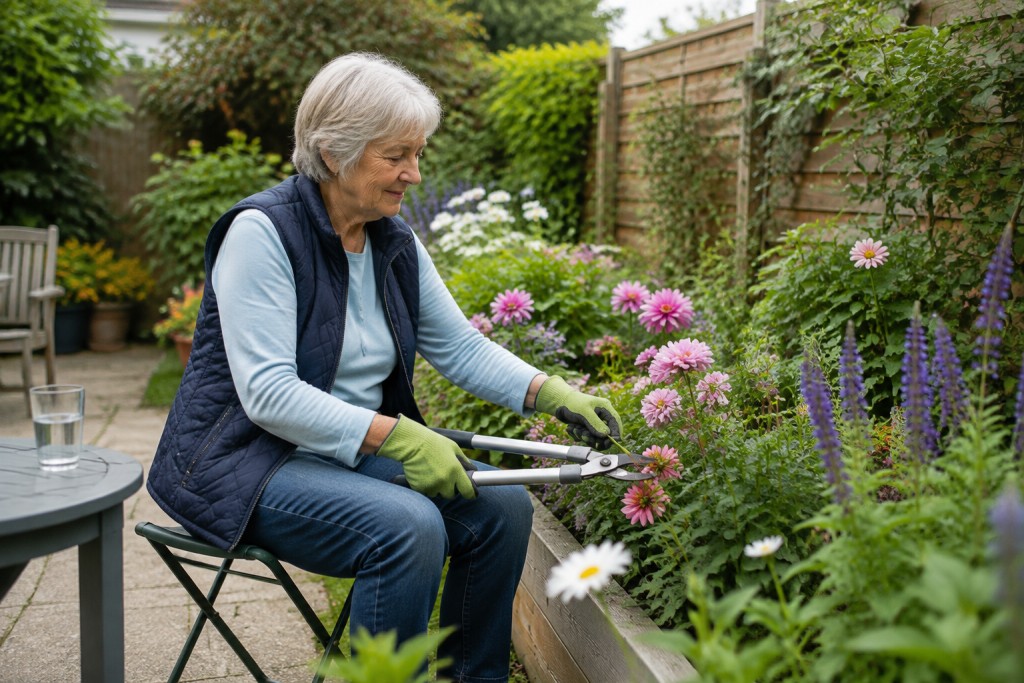
How to enjoy gardens while reducing exposure to compost, soil, dust, mould spores and pollen
Gardening can provide gentle physical activity, enjoyment, purpose and valuable time outdoors. Having aspergillosis does not automatically mean that you must give it up.
However, Aspergillus is common in soil, compost and decaying vegetation. Activities that disturb these materials can release large numbers of spores and other particles into the air. The sensible approach is therefore to identify the highest-exposure jobs, adapt or delegate them, and take precautions suited to your individual health.
Quick guide
- Enjoy the garden, but reduce avoidable exposure.
- Avoid turning compost heaps, shredding decaying vegetation, using leaf blowers and opening dusty compost bags yourself.
- Never open or tip compost, bark, mulch or potting mix inside a greenhouse, shed or other enclosed space.
- Ask someone else to do the dustiest jobs whenever possible.
- If exposure cannot be avoided, use a well-fitting certified respirator—preferably FFP3 for high levels of mould spores—and understand its limitations.
- Wear gloves, cover cuts, wash your hands and change dusty clothing afterwards.
- If you are severely immunocompromised, ask your specialist team whether you should avoid soil and compost completely during the high-risk period.
Contents
- Why can gardening create an exposure?
- Does everyone with aspergillosis need the same precautions?
- Which gardening jobs create the most exposure?
- Lower-exposure ways to enjoy gardening
- Compost, potting mix, mulch and bark
- Choosing and using a mask
- Before, during and after gardening
- Greenhouses, sheds and enclosed spaces
- What about pollen and asthma?
- When should I seek medical advice?
Why Can Gardening Create an Exposure?
Aspergillus species occur naturally throughout the environment. They help break down dead plant material and are particularly associated with soil, compost, leaf litter, stored vegetation and other decomposing organic matter.
The fungus produces microscopic airborne spores. We all breathe some spores during everyday life, and completely avoiding them is impossible. Exposure can rise sharply, however, when contaminated material is disturbed.
Examples include:
- opening and tipping a bag of compost
- turning a warm compost heap
- sweeping a dry shed or greenhouse
- shredding leaves or woody garden waste
- using a leaf blower
- moving damp or mouldy bark, mulch or wood chips
- handling decaying plants
The concern is inhalation rather than simply touching an ordinary healthy plant. The amount released varies greatly with the material, moisture, temperature, weather, ventilation and how vigorously it is disturbed.
Compost is also one of the environmental settings in which azole-resistant Aspergillus fumigatus has been detected. This is another reason to reduce intense compost exposure, but it does not mean that every compost bag contains resistant fungus or that a single gardening session will cause infection.
Does Everyone With Aspergillosis Need the Same Precautions?
No. “Aspergillosis” includes several different illnesses, and people’s immune systems, lungs, treatments and gardening activities differ.
| Situation | How to think about gardening |
|---|---|
| Aspergillus allergy, asthma or ABPA | Dust, fungal particles and pollen may provoke airway symptoms. Concentrate on avoiding visible dust and high-spore tasks and make sure asthma treatment is well controlled. |
| CPA, bronchiectasis or another chronic lung condition | There is no precise exposure threshold known to be safe or harmful. Reducing concentrated exposure is sensible, while adapted lower-exposure gardening may remain valuable. |
| Severely weakened immune system | People who are neutropenic, receiving certain chemotherapy or transplant treatments, or otherwise at high risk of invasive aspergillosis may be advised to avoid gardening, soil, compost and dusty outdoor work. Follow the specialist team’s advice. |
| Taking corticosteroids or other immune-modifying treatment | Risk depends on the medicine, dose, duration and the rest of your health. Do not assume that every steroid inhaler creates the same risk as high-dose systemic immunosuppression; ask the clinical team if uncertain. |
If your immune status has recently changed—for example, following transplantation, chemotherapy, a major increase in systemic steroid treatment or a very low white-cell count—check whether your previous gardening routine remains appropriate.
Protective measures reduce exposure; they cannot make a high-exposure activity completely risk-free. The more vulnerable the person, the more important avoidance and delegation become.
Which Gardening Jobs Create the Most Exposure?
Consider asking someone else to do the following:
- turning or emptying a compost heap or bin
- opening, tipping or mixing bagged compost, manure, bark or mulch
- shredding or chipping garden waste
- handling heaps of dead leaves, grass clippings or rotting vegetation
- using a leaf blower or dry power sweeper
- mowing very dry grass, particularly if grass or pollen triggers symptoms
- cleaning a dusty or mouldy greenhouse, shed or plant pot store
- moving mouldy wood, hay, straw or stored bulbs
- pressure-washing or dry-brushing visibly mouldy surfaces
Distance matters. If someone else is doing one of these jobs, do not stand nearby. Stay upwind and allow airborne dust to settle before returning.
Dry and windy conditions make dust harder to control. Waiting for calmer weather or lightly dampening dry soil before someone works on it may reduce dust, although it will not remove fungal spores or make mouldy material safe.
Lower-Exposure Ways to Enjoy Gardening
Many activities involve little or no disturbance of compost or decaying matter. Depending on your mobility and respiratory health, possibilities include:
- watering established plants
- dead-heading healthy flowers before material begins to decay
- light pruning of healthy plants
- planning planting schemes or choosing plants
- harvesting fruit, vegetables or herbs from established plants
- using raised beds to reduce bending and effort
- working with someone else who handles soil and compost
- buying pre-planted containers rather than filling pots yourself
- photography, birdwatching or simply spending time in the garden
A “no-dig” approach may reduce repeated soil disturbance, although the compost or mulch used to establish it should be handled and spread by someone else.
Gardening can still be physically demanding. Pace activity, use lightweight or long-handled tools, sit for suitable tasks and take rests before breathlessness becomes severe. Pulmonary rehabilitation principles—gradual activity, pacing and breathing control—can be useful in the garden too.
Compost, Potting Mix, Mulch and Bark
Commercial bags are not sterile. Compost and related materials may contain fungi even when they look normal and carry no visible mould.
If possible, ask someone else to:
- open bags outdoors
- stand upwind while opening or pouring them
- avoid squeezing a sealed bag and forcing dusty air towards the face
- tip the material gently rather than from a height
- prepare pots before you enter the area
- close or cover unused material and store it outside living areas
Never open compost inside the home, greenhouse, conservatory, garage or shed. Enclosed spaces allow released particles to become concentrated and remain in the air.
Homemade compost heaps are particularly active biological environments. Adding kitchen or garden waste from a distance is less disturbing than turning, sieving or emptying the heap, but a severely immunocompromised person may be advised to avoid the area entirely.
Choosing and Using a Mask
A loose surgical mask, fabric face covering or single-strap “nuisance dust mask” is not designed to provide reliable protection from fine airborne dust and mould spores.
Use a certified filtering respirator marked to the appropriate standard. In the UK, disposable respirators should carry the relevant conformity marking and EN 149 classification.
- FFP2: may reduce inhalation during lower-level dusty tasks when it fits correctly.
- FFP3: provides a higher level of filtration and is advised by the Health and Safety Executive for high levels of mould spores.
The stated protection is only achieved when the respirator seals properly to the face.
- Follow the manufacturer’s fitting instructions.
- Check the seal every time it is worn.
- A beard or heavy stubble prevents a tight seal on most disposable respirators.
- Replace a disposable respirator if it becomes damp, damaged, dirty or difficult to breathe through.
- Do not touch the contaminated outside unnecessarily.
- Do not store a used disposable respirator in a dusty shed for repeated use.
A respirator can feel hot and may increase the sensation of breathing effort. If you have severe lung disease, discuss suitable respiratory protection with your clinical team. A reusable or powered option may sometimes be more appropriate, but it also requires correct selection, cleaning and maintenance.
A mask is the last line of protection, not the first. Avoiding or delegating a high-spore task is more reliable than using a mask to make the task appear completely safe.
Before, During and After Gardening
Before
- Check whether the planned job involves compost, decaying plants or visible dust.
- Choose a calm day and avoid the hottest part of the day if heat worsens breathlessness.
- Make sure prescribed inhalers and any agreed respiratory action plan are available.
- Cover cuts and broken skin with a waterproof dressing.
- Wear gloves, closed shoes and clothing that covers exposed skin for soil-related work.
- Use eye protection when pruning thorny plants, using powered tools or where debris may fly.
During
- Work upwind of any dust source.
- Avoid touching the face or adjusting the respirator with dirty gloves.
- Stop if you become unusually wheezy, tight-chested, dizzy or breathless.
- Do not push through severe symptoms simply to finish a job.
After
- Remove dusty shoes and outer clothing before entering the main living space.
- Wash hands and exposed skin thoroughly.
- Clean any scratches or puncture wounds promptly with soap and water.
- Shower and wash hair after a particularly dusty exposure if practical.
- Keep visibly dusty work clothing separate until it can be washed.
- Clean reusable protective equipment according to its instructions.
Plant thorns and sticks can injure the eye and, rarely, introduce fungi. Seek prompt assessment for eye pain, redness, sensitivity to light or blurred vision following a gardening injury.
Greenhouses, Sheds and Enclosed Spaces
A greenhouse or shed can accumulate dust, decaying leaves, old compost and mouldy wood. Because the air volume is small and ventilation may be poor, disturbing this material can create a more concentrated exposure than doing the same task outdoors.
- Ventilate the space fully before entering.
- Ask someone else to remove old compost, mouldy pots and decaying plants.
- Use wet-wiping rather than dry sweeping where appropriate.
- Do not use a leaf blower inside.
- Do not store open compost beside a frequently used chair or workspace.
- If the building smells strongly musty or has extensive visible mould, avoid entering until it has been dealt with.
What About Pollen and Asthma?
Fungal exposure is not the only gardening issue. Grass and other plant pollen can aggravate allergic rhinitis and asthma in susceptible people.
If pollen is one of your triggers:
- check the pollen forecast
- avoid mowing or being nearby while grass is cut
- garden outside peak pollen periods where possible
- choose plants less likely to release large quantities of wind-borne pollen
- change clothes and wash after high-pollen exposure
- keep asthma and allergy treatment under review
Pollen sensitivity and Aspergillus sensitivity are not the same thing, although a person may have both.
When Should I Seek Medical Advice?
A brief garden exposure does not automatically mean that you have developed a new fungal infection, and it is not usually possible to attribute ordinary day-to-day symptoms to a single exposure.
Follow your existing respiratory action plan and seek advice if symptoms are new, persistent or substantially worse than usual, particularly:
- increasing cough, wheeze or chest tightness that does not settle
- worsening breathlessness
- fever or feeling systemically unwell
- new or increased coughing of blood
- a sustained fall in oxygen levels from your usual range
Seek urgent medical help for severe breathing difficulty, blue or grey lips or skin, confusion, chest pain, fainting or significant haemoptysis. Follow the emergency advice appropriate to your country.
If you are severely immunocompromised and have had a major soil, compost or mould exposure, contact your specialist team for individual advice rather than starting or changing antifungal treatment yourself.
Finding a Sustainable Balance
Gardening offers genuine physical and emotional benefits. The aim of this guidance is not to remove those benefits unnecessarily.
For many people with aspergillosis, a workable balance is to continue lower-exposure activities while delegating compost handling, leaf blowing, shredding, dry sweeping and other jobs that generate concentrated dust. Correctly fitted respiratory protection adds another layer when exposure cannot be avoided.
People at high risk of invasive aspergillosis need more cautious, personalised advice and may need to avoid soil and compost work during vulnerable periods.
Keep the garden where possible; change the way the riskiest jobs are done.
Further Reading and References
- NHS: Aspergillosis
- US Centers for Disease Control and Prevention: Reducing risk for aspergillosis
- Health and Safety Executive: Disposable dust masks, fit and protection levels
- Shelton JMG and colleagues: Citizen-science surveillance of triazole-resistant Aspergillus fumigatus in UK residential garden soils
- Poole CJM and colleagues: Allergic bronchopulmonary aspergillosis in garden-waste compost workers
- US Centers for Disease Control and Prevention: Fungal eye infections and plant-material injuries
- Royal Horticultural Society: Gardening for health and wellbeing
Last reviewed: August 2026.

Did this page help you?
Tell us in one minute