


🌿 New Antifungal Medicines on the Horizon: Olorofim and Fosmanogepix
For many years, doctors have relied on the same small group of antifungal drugs — mainly azoles (like itraconazole and voriconazole), amphotericin, and echinocandins. These have saved lives, but some fungi are becoming resistant, and some people can’t tolerate them because of side-effects or drug interactions.
Two completely new antifungal medicines — Olorofim and Fosmanogepix — are now in the final stages of research. They work in new ways and could help patients whose infections no longer respond to current treatments.
🧬 Olorofim (by F2G Ltd, UK)
How it works:
Olorofim blocks a vital process that fungi need to make DNA. It belongs to a brand-new group called orotomides, and works very differently from other antifungals.
Which infections it targets first:
-
The first planned use will be for people with invasive mould infections (for example, Aspergillus fumigatus and some rare moulds) when existing medicines don’t work or can’t be used.
-
It is especially promising for azole-resistant Aspergillus, which is becoming more common.
How it might help in the future:
Although early studies are focused on severe infections in people with weak immune systems, Olorofim has also shown good results in some patients with chronic pulmonary aspergillosis (CPA) who could not take azoles.
Once it is licensed, hospitals such as the National Aspergillosis Centre may be able to use it for difficult or resistant cases of CPA on a specialist-approval basis.
When it might be available:
F2G has completed late-stage studies and is preparing for regulatory approval.
If all goes well, Olorofim could be available around 2026–2027 in some countries, with the UK likely to follow once it is approved and adopted by the NHS.
⚗️ Fosmanogepix (by Basilea and Pfizer)
How it works:
Fosmanogepix (converted in the body to manogepix) blocks the fungus from making a protective coating around its cell surface. This prevents it from growing and spreading. It belongs to another new group of antifungal drugs.
Which infections it targets first:
-
The first major study is for Candida bloodstream infections (candidemia) and other serious yeast infections.
-
A second study focuses on invasive mould infections, including aspergillosis, in patients with few treatment options.
How it might help in the future:
Once approved for invasive infections, Fosmanogepix could later be tested in longer-term or chronic lung infections, such as CPA, if it proves safe for long-term use.
When it might be available:
-
The first approval (for Candida) may come around 2027.
-
The aspergillosis trial is still running and not expected to finish before 2028–2029, so that indication will follow later.
🩺 What This Means for People with Aspergillosis
| Drug | New or existing? | First use likely for | Could later help with | When available (approx.) |
|---|---|---|---|---|
| Olorofim | New class (orotomide) | Invasive Aspergillus and resistant moulds | Difficult or resistant cases of chronic pulmonary aspergillosis (CPA) | 2026–2027 |
| Fosmanogepix | New class (Gwt1 inhibitor) | Candida bloodstream infections | Invasive mould infections, possibly CPA later | 2027–2029 |
🧩 In summary
-
These two drugs represent the first completely new antifungal classes in decades.
-
They are being tested mainly for life-threatening fungal infections where current medicines fail.
-
Once approved, they may offer new options for people with resistant or difficult-to-treat forms of aspergillosis, including some patients with CPA.
-
They are not yet available on prescription, but progress looks very promising.


When Scents Cause Symptoms: What Patients Say About Odour Triggers
Many people living with asthma, Allergic Bronchopulmonary Aspergillosis (ABPA), or bronchiectasis describe strong reactions to everyday smells — perfumes, cleaning products, paints, or air fresheners.
These reactions can cause immediate coughing, wheezing, throat irritation, or chest tightness, and they can last for hours or even days.
To understand this better, we asked members of our patient community:
“Are there any smells that don’t affect you?”
Their replies were detailed, honest, and very relatable.
💬 What patients told us
“I’m OK with most perfumes, but not Estée Lauder. Aftershaves can be troublesome.”
“Unfragranced alcohol hand sanitiser is fine — even though it smells strong.”
“Cooking smells are OK if it’s food I can eat, but not frying.”
“Crowded rooms full of cleaning products or perfume — that’s when I start coughing.”
“I use peppermint essential oil to mask other smells if I get caught off guard.”
“If I avoid mould, dust, aerosols, and detergents, I can generally stay well.”
These voices show that odour sensitivity varies hugely from person to person — and what’s tolerable one day might trigger symptoms another.
🌸 Smells people can usually tolerate
Even among those highly sensitive to scents, a few odours were commonly reported as “safe”:
-
Some light or natural perfumes
-
Alcohol-based hand sanitisers (if unfragranced)
-
Food smells from meals the person can eat
-
Saline or hypertonic saline nebulisers
-
Outdoors air after rain — described by some as “clear” or “fresh”
Many added that they simply don’t notice safe smells — because their airways stay calm.
🚫 Common odour triggers
| Category | Examples mentioned by patients |
|---|---|
| Fragrances & aerosols | Perfume, hairspray, carpet freshener, pet grooming sprays, room sprays, vapes |
| Household products | Detergents, polish, disinfectants, scented candles, new rugs or furniture “off-gassing”, silicone sealant, fresh paint |
| Environmental triggers | Dust, damp wood, mould, oil fumes, cigarette smoke, some trees or plants |
| Crowded indoor air | Theatres, shops, salons, or restaurants where several products and fragrances combine |
Reactions were often described as immediate:
“Aerosols set me off straight away — I feel it in my chest before I even notice the smell.”
🧩 Why odours trigger symptoms
Odour sensitivity isn’t usually an allergy — it’s caused by airway hyperreactivity.
In these conditions, nerve endings in the bronchial walls become oversensitive.
When exposed to volatile organic compounds (VOCs), aerosols, or fine particles, the airways tighten and release inflammatory mediators — a reaction that’s stronger and longer-lasting in those with existing lung inflammation.
People with ABPA, Severe Asthma with Fungal Sensitisation (SAFS), or Chronic Pulmonary Aspergillosis (CPA) often have inflamed, mucus-filled, or scarred airways, making them far more reactive to irritants.
🧭 Factors that make reactions worse
Patients pointed out that it’s not just what’s in the air, but also:
-
Concentration – strong or enclosed fumes trigger faster responses
-
Combination – multiple scents together (perfume + cleaner + paint) are far harder to tolerate
-
Duration – prolonged exposure leaves lingering symptoms
💡 Tips for managing odour sensitivity
Plan ahead
-
Choose quiet times for haircuts, shopping, or social events.
-
Check if venues use air fresheners or scented cleaning products.
Control your environment
-
Use fragrance-free detergents and cleaning products.
-
Ventilate your home after cleaning or decorating.
-
Keep dehumidifiers and air purifiers running in damp areas.
Be prepared
-
Carry a reliever inhaler or antihistamine if prescribed.
-
Consider a FFP2/FFP3 mask in heavily fragranced or dusty places.
-
A small bottle of peppermint oil or menthol inhaler may help mask irritant odours temporarily.
Communicate
-
Let friends, family, or workplaces know that fragrances affect your breathing.
-
If public spaces (like theatres or salons) are overwhelming, it’s okay to step out — health comes first.
🧠 Understanding and empathy
“It’s not about disliking smells — it’s that my lungs treat them as an attack.”
For many, this sensitivity means planning life around exposure — avoiding crowds, timing visits, or even missing social events.
Recognising that these reactions are physiological, not psychological, can help families, friends, and employers offer real support.
❤️ Takeaway message
Odour sensitivity is part of the lived experience of reactive airway disease.
It isn’t always predictable, but understanding your triggers — and which scents are safe — can make everyday life much easier.
As one patient put it:
“If I can avoid mould, dust, aerosols, and detergents, I can generally stay well.”
By sharing these experiences, patients are helping others realise they’re not alone — and helping clinicians understand just how much “harmless” smells can matter.

Understanding Risk from Aspergillosis — and What’s Improving
🧫 How risky is aspergillosis?
The outlook for people with aspergillosis has improved dramatically in the past two decades.
Two things have changed that make a huge difference:
-
We diagnose it earlier.
Better scans, blood tests (like galactomannan and PCR), and greater awareness mean the infection or allergic reaction is recognised much sooner. -
We treat it better.
Modern antifungal medicines, steroid-sparing biologics, and specialist clinics have all transformed care and monitoring.
⚖️ Risk of death — managed vs. unmanaged
| Type of Aspergillosis | If well managed | If unmanaged or poorly treated |
|---|---|---|
| Allergic (ABPA) | Survival > 95 % | About 90 % (may progress to chronic lung damage) |
| Chronic (CPA) | 5-year survival ≈ 80–90 % | 5-year survival ≈ 50 % |
| Invasive (IA) | 5-year survival ≈ 50–70 % | < 20 % (often fatal if untreated) |
Across all forms of aspergillosis, the risk of death has fallen by roughly 50 % since the early 2000s.
💊 What’s driven this improvement
-
New antifungal drugs — triazoles (itraconazole, voriconazole, posaconazole, isavuconazole) now form the backbone of long-term therapy.
-
Rapid diagnosis — galactomannan, PCR, and CT scanning detect infection days earlier than before.
-
Improved hospital and ICU care — faster recognition and better ventilation strategies save lives in invasive cases.
-
Specialist clinics and monitoring — regular blood tests, imaging, and drug-level checks prevent deterioration and drug toxicity.
-
Biologic therapies — agents that target allergic inflammation (like anti-IgE or anti-IL-5 biologics) help reduce steroid use and preserve lung function.
🚀 What could make outcomes even better
Researchers and clinicians are optimistic about the next decade.
Future advances are already on the horizon:
| Future area | How it helps |
|---|---|
| Next-generation antifungals – Olorofim, Fosmanogepix | Active against azole-resistant strains and safer for long-term use |
| Combination or personalised therapy | Matching the right drug and dose to each patient’s response pattern |
| Routine antifungal-resistance testing | Prevents treatment failure by identifying resistant Aspergillus early |
| Rapid home or bedside testing | Detects infection flare-ups before symptoms become severe |
| Improved imaging and AI-supported analysis | Spots fungal cavities or airway changes at an earlier, reversible stage |
| Global stewardship of agricultural azoles | Reduces environmental resistance by limiting unnecessary fungicide use |
| Patient self-monitoring and digital follow-up | Enables early reporting of symptoms and better long-term adherence |
⚠️ Potential barriers to further progress
Even with all these advances, several important challenges could slow improvement if left unaddressed:
| Barrier | Why it matters |
|---|---|
| Antifungal resistance | Aspergillus fumigatus is developing resistance to azoles used both in medicine and agriculture. Resistant strains can make first-line treatment fail unless resistance testing is done. |
| Delayed or missed diagnosis | Symptoms often mimic other lung conditions. Late recognition allows infection or inflammation to cause irreversible damage. |
| Limited access to specialist care | Some regions lack experienced clinicians, diagnostic testing, or antifungal drug availability, increasing global inequality in outcomes. |
| Drug toxicity and interactions | Long-term antifungal therapy can affect the liver or interfere with other medicines if not closely monitored. |
| Environmental change | Warmer, wetter climates and increased composting or construction may raise Aspergillus exposure for vulnerable people. |
| Healthcare strain and cost | Long-term follow-up, monitoring, and expensive new drugs may challenge already stretched healthcare systems. |
Each of these barriers needs attention through research, public health policy, and education to ensure the gains of the last 20 years continue.
❤️ The key message
Aspergillosis is still a serious disease, but its outlook is far better than it used to be.
With modern antifungals, biologics, and regular monitoring, most people live many years — and new treatments promise even better results.
Patients can help by:
-
Reporting new symptoms early.
-
Keeping up with regular blood and imaging checks.
-
Asking about resistance testing and treatment options.
-
Staying informed about new drugs and trials.
🌅 A hopeful future
In just twenty years, deaths from aspergillosis have halved.
If we continue improving diagnosis, drug development, and resistance control, survival will rise even higher — turning aspergillosis from a life-threatening infection into a long-term but manageable condition for most people.

Understanding Risk: How Common Is “Rare”?
When doctors talk about risk, it can sound worrying — especially when you’re already living with a lung condition.
But every day, we all take small, managed risks without realising it.
Understanding how everyday risks compare with medical or vaccine risks helps put the numbers into perspective — and shows why treatment is almost always worth it.
🚶♀️ Everyday activities carry small risks
Everyday life is full of tiny risks we accept because the benefits are clear — exercise, travel, independence, and social connection.
| Activity | Estimated risk of serious harm | Equivalent comparison |
|---|---|---|
| Driving a car for 250 miles | About 1 in 1 million chance of fatal accident | Roughly the same as the risk of a severe vaccine reaction |
| Cycling for 30 minutes | About 1 in 3 million | Similar to being struck by lightning in your lifetime |
| Walking near traffic for a day | Around 1 in 15 million | Negligible, but not zero |
| Taking a domestic flight (UK) | Less than 1 in 10 million chance of fatal accident | Far safer than most road journeys |
| Catching flu during winter | Around 1 in 10 chance of getting ill | Much higher risk than most medicine side effects |
We don’t think of these activities as “dangerous” because the benefit far outweighs the risk — just as it does with most treatments.
💊 Medicines and vaccines we take safely every day
Most common medicines have mild, short-lived side effects. Serious reactions are possible but extremely rare.
| Medicine | Typical mild effects | Serious reactions (approx. frequency) | Comment |
|---|---|---|---|
| Paracetamol (acetaminophen) | Nausea, rash | Serious liver injury ≈ 1 in 100,000 (usually after overdose) | Very safe when taken correctly |
| Ibuprofen | Heartburn, upset stomach | Ulcer or stomach bleed ≈ 1 in 1,000 if used long term | Safer when taken with food |
| Amoxicillin | Diarrhoea, mild rash | Severe allergic reaction ≈ 1 in 5,000–10,000 | Rare but recognised |
| Influenza vaccine | Sore arm, tiredness | Severe allergic reaction ≈ 1 in 1 million | Prevents thousands of serious infections yearly |
| COVID-19 vaccine | Mild flu-like symptoms (≈ 1 in 10) | Severe allergic reaction ≈ 1 in 100,000 | Benefits far outweigh risks |
| Oral steroids (short course) | Increased appetite, insomnia | Major side effects only with prolonged use | Vital during ABPA or asthma flares |
⚕️ What does “serious side effect” really mean?
When you read about serious reactions in medical leaflets or vaccine information, it doesn’t necessarily mean life-changing.
The term “serious” has a specific medical meaning, used by the MHRA, EMA, and WHO.
A reaction is called serious if it:
-
leads to hospitalisation,
-
is life-threatening at the time,
-
causes temporary disability or incapacity,
-
results in death, or
-
causes a birth defect.
👉 It’s about medical urgency, not always long-term harm.
In reality, most serious reactions are short-lived and fully reversible with prompt treatment.
For example:
-
An anaphylactic reaction to a vaccine is medically serious because it needs immediate care — but nearly everyone recovers completely once treated.
-
A high fever or rash that requires a day in hospital may be serious in reporting terms, but causes no permanent damage.
By contrast, life-changing reactions (such as nerve injury or organ failure) are extraordinarily rare — far rarer than being struck by lightning.
“When doctors say ‘serious reaction’, they mean something that needs urgent medical attention — not something that will leave you permanently unwell.”
🩺 More common health risks we all face
While medicine risks are very small, the everyday risks to life and health are much higher — especially if conditions go untreated.
| Health event or cause | Approximate annual risk (UK adult) | Lifetime risk | Notes |
|---|---|---|---|
| Heart attack | Around 1 in 200–300 per year | 1 in 4 men, 1 in 6 women | Increases with age, smoking, and high blood pressure |
| Stroke | Around 1 in 250 per year | About 1 in 5 adults | Preventable with healthy lifestyle and medication |
| Cancer (any type) | Around 1 in 125 per year | Around 1 in 2 people in their lifetime | Most treatable when found early |
| Serious road accident | About 1 in 15,000 per year | Around 1 in 100 lifetime | Far higher than a vaccine reaction |
| Severe flu needing hospital care | Around 1 in 500 per winter | Higher for people with lung disease | Preventable by flu vaccination |
| Fatal asthma attack | About 1 in 100,000 per year | Higher in uncontrolled asthma | Preventable with good management |
| COVID-19 death (current UK levels) | Around 1 in 2,000–5,000 per year for older/vulnerable adults | Major reason vaccination still matters | |
| Lightning strike | About 1 in 15 million per year | Around 1 in 300,000 lifetime | Benchmark for “extremely rare” risk |
⚖️ Making sense of the numbers
-
A 1 in 1,000 risk means one person in a large GP practice might experience it.
-
A 1 in 100,000 risk means one person in a football stadium crowd.
-
A 1 in 1 million risk is so rare that most doctors never see it in their career.
So when you hear that a serious vaccine reaction occurs in one in a million people, that’s about the same as:
-
being struck by lightning once in your life, or
-
winning a small lottery prize several times in a row.
❤️ The real takeaway
The greatest risks to life and health are the common diseases we can prevent or treat — not the rare side effects of treatment.
Every vaccine or medicine is carefully assessed so that its benefits far outweigh its risks, especially for people with asthma, ABPA, bronchiectasis, or weakened immunity.
Treatments don’t add danger — they reduce the much bigger risks from infection, inflammation, and lung damage.
🧭 Key message
We all live with risk, but:
-
Most everyday and health-related risks are far greater than the tiny chance of a medicine reaction.
-
Managing your lung condition well — with the right treatment, vaccines, and follow-up — protects your lungs and lengthens your life.
-
The safest path is always informed care, not avoidance through fear.

Aspergillosis & Asthma: When Risks Peak Through the Year
Many people living with aspergillosis, asthma, or bronchiectasis notice that their symptoms change with the seasons.
This is no coincidence — environmental factors such as temperature, humidity, pollen, spores, and viral infections all vary through the year, and these can strongly influence both lung health and allergic or fungal disease.
Understanding these patterns can help you plan ahead, reduce exposure, and know when to take extra care.
🌸 Spring: Pollen and Early Spore Season
As temperatures rise, tree pollen (especially birch, oak, and plane) and Aspergillus spores begin to increase in outdoor air.
For people with Allergic Bronchopulmonary Aspergillosis (ABPA) or Severe Asthma with Fungal Sensitisation (SAFS), this can trigger cough, wheeze, and chest tightness.
-
Keep an eye on Met Office pollen and spore forecasts.
-
Open windows on dry days, but check for signs of mould indoors, especially around windows and bathrooms.
-
If you notice symptoms flaring every spring, let your respiratory team know — small medication adjustments may help.
📊 Data source: Met Office spore count data.
☀️ Summer: Soil, Compost, and Renovation Hazards
Warm, humid conditions mean fungi thrive — especially outdoors.
Compost heaps, garden soil, and grass cuttings can release very high levels of Aspergillus spores.
People with chronic lung disease, ABPA, or Chronic Pulmonary Aspergillosis (CPA) are at greater risk of exacerbations during this period.
-
If gardening or using compost, wear gloves and an FFP2/FFP3 mask.
-
Avoid turning compost heaps or cleaning bird feeders if you are immunocompromised.
-
Keep home humidity below 60% and ventilate well during warm spells.
🪴 Source: Protective mask and compost safety advice.
🍂 Autumn: Damp Homes and Viral Load
As the weather cools, we close windows and turn on heating — trapping moisture indoors.
This increases damp and mould growth, particularly in poorly ventilated areas.
At the same time, colds, flu, and RSV infections surge, all of which can make fungal or allergic conditions worse.
-
Use a dehumidifier and ensure air can circulate behind furniture.
-
Check for leaks, condensation, or cold corners.
-
Stay up to date with flu and COVID vaccinations if eligible.
💧 Source: Aspergillosis.org damp guidance.
❄️ Winter: Indoor Season and Medication Review
Outdoor spore levels are lowest in winter, but indoor exposure dominates — from bathrooms, humidifiers, and heating systems.
Viral infections remain a major trigger for asthma and ABPA flare-ups, and antifungal or steroid treatments may need review.
-
Keep homes warm but ventilated where possible.
-
Review your treatment plan with your clinical team, especially if you’re using steroids or biologics.
-
Contact your GP or specialist early if you notice an increase in cough, breathlessness, or mucus plugs.
🧭 Key Takeaway
Aspergillosis and asthma flare-ups often follow the seasons:
| Season | Main Risks | Take Action |
|---|---|---|
| Spring | Pollen, outdoor spores | Monitor counts, check home for mould |
| Summer | Compost, soil, renovation dust | Use masks/gloves, avoid heavy exposure |
| Autumn | Damp homes, viruses | Dehumidify, ventilate, manage infections |
| Winter | Indoor air, viruses | Keep warm, review treatment |
By spotting your personal pattern, you and your care team can plan ahead — reducing exacerbations and staying well all year.
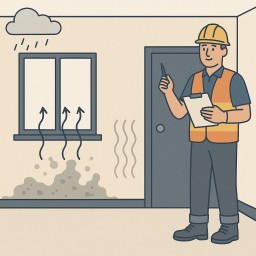
🏗️ Damp, Dust and Indoor Air Quality
Essential Guidance for Builders, Contractors and Property Managers
(More information: aspergillosis.org/aspergillus-and-damp and aspergillosis.org/damp-homes-uk-policy-and-research)
💧 Why Damp Matters
Damp buildings damage both fabric and health.
When moisture gets trapped or ventilation is poor, it can promote:
-
Mould spores (Aspergillus, Penicillium, Stachybotrys)
-
Bacteria and microbial toxins from stagnant materials
-
Allergens from mites, birds, rodents, and decayed debris
-
Fine particulates (PM₂.₅ / PM₁₀) from dust, insulation, and sanding
-
Volatile Organic Compounds (VOCs) from paints, sealants, and adhesives
These pollutants reduce indoor air quality and can trigger coughing, wheezing, eye irritation, fatigue and, for some people, serious respiratory illness.
Asthma, chronic lung disease, and suppressed immunity are common in the population — and very young or elderly occupants are particularly vulnerable.
Every project should therefore apply moisture and air quality controls — not just hospitals or special buildings.
1️⃣ Identify and Stop the Moisture at Source
Before starting work, always inspect for water ingress and poor airflow:
-
Check for leaking roofs, gutters, downpipes, flashing, and plumbing.
-
Look for damp patches on walls, skirtings, insulation, or behind plasterboard.
-
Identify cold bridges and condensation points (e.g. metal lintels, window reveals).
-
Ensure ventilation pathways (vents, air bricks, extractor fans) are open and working.
-
Maintain indoor relative humidity below 60%.
-
Dry wet materials within 48 hours using fans, heat, or dehumidifiers.
-
Never seal or cover damp materials — fix the cause first.
2️⃣ Control Dust and Airborne Particles
-
Use M- or H-class extractors with HEPA filtration on all sanding, grinding, or cutting tools.
-
HEPA vacuum and damp-wipe after work — never dry-sweep or blow dust.
-
Contain work areas with plastic sheeting, zipper doors, and sticky mats.
-
Clean tools, boots, and PPE before leaving site.
-
Schedule dusty work when occupants can be absent and ventilate thoroughly afterward.
3️⃣ Handle Mould Safely – Especially Aspergillus
-
Aspergillus thrives on damp plaster, wallpaper paste, insulation, and chipboard.
-
Remove and bag visibly mouldy porous materials — don’t just spray or paint over.
-
Clean hard surfaces with detergent and dry fully.
-
Avoid fogging or biocides unless properly risk-assessed and ventilated.
-
Wear PPE: FFP3 respirator, gloves, goggles, disposable overalls.
-
Warn occupants if they have asthma, COPD, aspergillosis, or weakened immunity.
Further practical guidance:
🔗 aspergillosis.org/aspergillus-and-damp
4️⃣ Manage VOCs and Chemical Exposure
-
Use low-VOC paints, sealants, and adhesives.
-
Keep areas well-ventilated during application and drying.
-
Seal and store solvents away from occupied rooms.
-
Avoid heating or sealing rooms while solvent coatings are curing.
5️⃣ Protect Workers and Occupants
-
Isolate and ventilate the work zone.
-
Use HEPA extraction and regular cleaning.
-
FFP3/P3 masks and gloves for all dusty or mouldy tasks.
-
Double-bag and seal waste before removal.
-
Communicate with clients about health risks and ventilation needs, especially for homes with children, elderly, or medically vulnerable occupants.
✅ Best Practice Summary
| Priority | Good Practice |
|---|---|
| Check for water ingress & leaks | Roofs, gutters, pipework, damp patches |
| Fix moisture sources first | Prevent re-occurrence of mould |
| Dry within 48 hours | Stop fungal/bacterial growth |
| Maintain RH < 60% | Prevent condensation and damp |
| Ensure good ventilation | Extractors, trickle vents, air bricks |
| HEPA dust control | M/H-class vacuums & extractors |
| Use low-VOC products | Reduce chemical exposure |
| Protect workers & residents | PPE, containment, safe waste removal |
🚫 Don’t
-
❌ Dry-brush, sweep, or blow mouldy dust.
-
❌ Trap damp under new finishes or sealants.
-
❌ Paint over visible mould.
-
❌ Block vents or air bricks.
-
❌ Leave wet debris or bird droppings exposed.
⚠️ When to Escalate
Call a specialist if:
-
Damp or mould affects multiple rooms or structural elements.
-
Musty odours persist despite cleaning.
-
The property houses asthma, ABPA, CPA, transplant, chemo, or elderly occupants.
Further UK policy and technical guidance:
🔗 aspergillosis.org/damp-homes-uk-policy-and-research

🫁 Understanding Chronic Cough in Aspergillosis
What the latest British Thoracic Society statement means for you
🌬️ Why This Matters
If you live with aspergillosis, Allergic Bronchopulmonary Aspergillosis (ABPA), or bronchiectasis, coughing can dominate your life. It’s tiring, painful, and socially awkward — especially when people assume it means infection.
Doctors used to see cough as just a symptom of another problem, but the British Thoracic Society (BTS) Clinical Statement on Chronic Cough in Adults (2023) recognises something new:
For many people, a cough can become a condition in its own right — caused by airway and nerve hypersensitivity, not just infection.
This matters for aspergillosis patients because fungal allergy and inflammation make the airways especially sensitive.
💡 What Is “Chronic Cough”?
A chronic cough is one lasting eight weeks or more.
It may be:
-
Dry – little or no mucus
-
Productive – thick sputum (common in bronchiectasis or chronic aspergillosis)
-
Triggered by dust, cold air, perfume, or strong scents
For people with aspergillosis, several overlapping causes may exist:
-
Fungal colonisation or infection
-
Allergic inflammation (ABPA)
-
Bronchiectasis and mucus retention
-
Reflux or post-nasal drip
-
Nerve hypersensitivity
This is why one treatment rarely fixes everything — different “treatable traits” must be addressed together.
🧬 Why It Happens
1️⃣ The Hypersensitive Cough Reflex
People with aspergillosis often develop overactive airway nerves — so normal irritants like dust, scent, or cold air trigger coughing fits.
This “cough reflex hypersensitivity” happens because:
-
Ongoing inflammation damages the airway lining.
-
Nerve endings in the throat and lungs become over-responsive.
-
Even mild triggers set off powerful reflexes.
This is a real physiological process, not psychological.
It’s why cough can continue even when infection is under control.
2️⃣ Treatable Traits – Finding the Real Drivers
| Treatable Trait | What It Means | What Helps |
|---|---|---|
| Airway infection or colonisation | Persistent fungi or bacteria | Antifungal or antibiotic therapy, sputum tests |
| Allergic inflammation | ABPA or asthma-type airway swelling | Corticosteroids, biologics (e.g., mepolizumab, benralizumab) |
| Cough reflex hypersensitivity | Overactive airway nerves | Speech therapy, nerve-modulating medication |
| Airway clearance problems | Mucus that’s hard to shift | Physiotherapy, saline or mucolytic therapy |
| Reflux or postnasal drip | Acid or sinus drainage irritation | Reflux management, ENT care |
Identifying these traits helps your clinician personalise treatment.
💊 Medications That Can Cause or Worsen Cough
The BTS statement highlights that some medicines can trigger or amplify chronic cough — especially in people with already-sensitive lungs.
🔹 ACE Inhibitors (Blood pressure or heart disease)
Examples: Ramipril, Lisinopril, Enalapril, Perindopril
-
Can cause a dry, tickly cough due to bradykinin build-up.
-
Happens in ~1 in 5 users, sometimes months after starting.
-
GP can switch to a similar drug (ARB – e.g., losartan) that doesn’t cause cough.
🔹 Beta Blockers (Heart or migraine medicines)
Examples: Atenolol, Propranolol, Bisoprolol
-
May tighten airways, worsening wheeze or cough.
-
Safer “lung-selective” versions exist but should still be monitored.
🔹 Inhalers
Examples: Fluticasone, Budesonide, Salbutamol
-
Can irritate the throat if used without a spacer or if technique is poor.
-
Always rinse or gargle after use, and ask your pharmacist to review inhaler technique.
🔹 Antifungal or Reflux Medicines
-
Antifungals (itraconazole, voriconazole) don’t directly cause cough, but reflux or nausea can trigger coughing indirectly.
-
PPIs (omeprazole, lansoprazole) usually help reflux-related cough, but long-term use should be reviewed regularly.
🔹 Other Drugs
-
Amiodarone, methotrexate, and some biologics can rarely cause cough due to lung inflammation.
-
Nasal sprays or lozenges with menthol/alcohol may irritate already-sensitive airways.
💬 If you suspect a medicine is contributing, don’t stop it suddenly — speak to your doctor or pharmacist first.
They can review interactions using the
👉 BNF Interactions Checker – NICE Medicines Guidance.
🔍 How Doctors Assess Chronic Cough
BTS recommends a structured pathway:
-
Basic tests: chest X-ray, spirometry, bloods (eosinophils, IgE), FeNO if available.
-
Further tests: CT scan, allergy or sputum studies if initial tests are abnormal.
-
Trait-based review: identifying overlapping issues — fungal, allergic, nerve-related, or reflux-related.
-
Specialist referral: to a Cough Clinic or Aspergillosis Centre if symptoms persist.
🧴 Pharmacists: Your Safety Specialists
Pharmacists — hospital or community — are crucial for managing long-term cough and medication safety:
-
Check for cough-inducing drugs or interactions.
-
Advise on best timing for antifungal and steroid doses.
-
Help switch to fragrance-free personal or cleaning products.
-
Liaise with your GP and consultant to fine-tune treatment.
🧭 Regular medication reviews every few months can prevent small problems becoming major triggers.
💬 How It Feels — and Why It’s Misunderstood
People with aspergillosis often describe:
“A tickle that turns into a spasm I can’t stop.”
“People think I’m ill, but it’s just the air or perfume.”
This happens because your airway nerves and immune cells are already primed.
Coughing doesn’t mean you’re infectious — it’s your body’s protective reflex in overdrive.
🩺 What Helps Most
-
Optimise your aspergillosis and ABPA treatment.
-
Cough-control physiotherapy or speech therapy for nerve-related cough.
-
Airway clearance techniques for mucus.
-
Identify and avoid irritants: perfume, smoke, strong detergents, cold air.
-
Ask about biologics if inflammation remains active despite steroids.
-
Use nerve-modulating medicines only under specialist advice.
🧘 Emotional Health Matters Too
Living with a chronic cough can cause anxiety, embarrassment, and isolation.
Support from counsellors, CBT therapists, or patient groups helps manage this stress — and can actually reduce cough frequency through better relaxation and breathing control.
🌱 Key Takeaway
Chronic cough in aspergillosis isn’t “just a symptom” — it’s often a mix of airway inflammation, fungal allergy, nerve hypersensitivity, and sometimes side effects of medicines.
The good news is that every contributing factor is treatable once identified — and cough can improve significantly with the right combination of medical, physical, and environmental care.
🔗 Trusted Resources

💼 Aspergillosis, Scent Sensitivity, and the Workplace
Understanding why everyday environments can trigger coughing — and what you can do about it
🌫️ When the Air Itself Feels Unsafe
Many people living with aspergillosis, Allergic Bronchopulmonary Aspergillosis (ABPA), or severe allergies feel anxious about returning to offices or shared spaces.
It isn’t the job that’s difficult — it’s the environment.
Dusty desks, neglected air vents, cold air-conditioning, and strong perfumes can all trigger coughing or wheezing.
Even a few minutes in a scented or dusty room can leave you coughing for hours — and explaining (again) that you’re not contagious.
If this sounds familiar, you’re not being oversensitive — you’re reacting to real biological triggers.
🧬 Why These Reactions Happen
1️⃣ Chemical Irritants and Perfumes
Perfumes, air fresheners, and cleaning sprays release volatile organic compounds (VOCs) such as limonene, linalool, and formaldehyde.
In sensitive lungs, these cause irritation and inflammation of the airways.
-
Research shows VOCs can provoke coughing, wheezing, and chest tightness in people with asthma or allergic airway disease.
-
These chemicals also activate airway nerve endings (trigeminal and vagal nerves) that trigger coughing reflexes — even when no infection or allergy is present.
This is known as neurogenic inflammation — a real, measurable process that makes you cough within seconds of exposure.
2️⃣ Damaged or Sensitive Airways
People with aspergillosis, bronchiectasis, or ABPA already have inflamed, scarred, or hypersensitive airways.
The airway lining (epithelium) is fragile and “leaky,” letting irritants trigger inflammation more easily.
Cough receptors are overactive, so small exposures — to scent, dust, or cold air — produce a big response.
Doctors call this airway hyperreactivity or irritant-induced cough reflex hypersensitivity.
It’s not psychological — it’s your lungs doing too good a job of protecting themselves.
3️⃣ Immune System Over-Response
Because aspergillosis and ABPA involve Type-2 immune inflammation (involving eosinophils and Th2 cytokines), your body’s defence cells are already primed.
When you inhale perfumes, dust, or fungal spores, those same immune pathways may flare up — releasing histamine and other inflammatory chemicals.
That’s why even non-allergic triggers can cause coughing or breathlessness.
4️⃣ Combined Triggers
Reactions are often additive.
Dust, perfume, cold air, and low humidity can act together:
-
VOCs stick to dust particles and linger.
-
Cold air increases nerve sensitivity.
-
Mould fragments or Aspergillus spores amplify inflammation.
So what seems like “just perfume” may actually be a cocktail of irritants acting on already-inflamed lungs.
💬 The Social Challenge
Explaining a chronic cough can feel awkward.
Colleagues often assume it means infection — and that’s stressful when you’re already managing symptoms.
You shouldn’t have to justify your condition, but some people find it helps to have a short, calm explanation ready:
“I have a long-term lung condition that makes me cough when the air is dusty or scented — it’s not infectious.”
If you’re comfortable, let HR or Occupational Health know so they can help set expectations and prevent misunderstandings.
🏥 Your Rights and Reasonable Adjustments (UK)
Under the Equality Act 2010, aspergillosis and severe environmental allergies can qualify as a disability because they substantially affect daily life.
That means employers have a legal duty to make reasonable adjustments, such as:
-
A clean, fragrance-free workspace
-
Portable air purifier or improved ventilation
-
Flexible or hybrid working
-
Adjusting temperature or airflow
-
Asking cleaning teams to use low-VOC products
Occupational Health can formalise these requests confidentially so you’re not seen as a “complainer.”
👉 Equality Act 2010 – Reasonable Adjustments (GOV.UK)
👉 ACAS Guidance on Long-Term Health Conditions
🧴 Pharmacists: The Unsung Safety Specialists
Your hospital or local pharmacist is an important ally.
They can:
-
Review all your medicines for interactions or side effects that might worsen coughing.
-
Advise how to take antifungals (e.g., with food, not with antacids).
-
Suggest fragrance-free personal care or cleaning products.
-
Liaise with your GP or hospital consultant if medication changes are needed.
You can also use the official
👉 BNF Interactions Checker (NICE Medicines Guidance)
to look up possible drug interactions — but always confirm findings with your pharmacist.
🏡 Considering Remote or Hybrid Work
If triggers are unavoidable in your current workplace, remote or hybrid work may be a safe and realistic alternative.
A Fit Note from your consultant or GP can recommend home working as a health adjustment.
When searching for jobs, look for roles described as remote, home-based, or flexible — many NHS, charity, and tech employers are now supportive of this.
🧘 Managing the Emotional Side
Anxiety about returning to work is natural.
Many people find that anticipating exposure — and potential misunderstanding — is almost as stressful as the symptoms themselves.
Talking to your consultant or GP about counselling or CBT for health anxiety can help you build confidence and coping strategies.
Peer support from others with chronic respiratory disease can be just as powerful — you’re not alone in feeling this way.
🌱 Key Takeaways
-
Reactions to perfume, dust, and cold air are real physiological responses, not oversensitivity.
-
They occur because inflamed airways and primed immune systems are hypersensitive to chemical and physical irritants.
-
Simple environmental changes — plus understanding from employers and colleagues — can make a huge difference.
-
Pharmacists, doctors, and occupational-health teams can help you manage medicines and advocate for a safe workspace.
You deserve an environment that helps you stay well — not one that forces you to prove you’re not sick.
Further Reading
-
“Airway Hyperresponsiveness in Asthma: Its Measurement and Clinical Significance” (PMC full-text) — a detailed review of what airway hyper-responsiveness (AHR) is, how it happens, and why it matters. Link
-
“Cough Hypersensitivity” (PDF patient leaflet, UK NHS trust) — explains how the airway nerves become too sensitive, what triggers are, and how the cycle of cough can develop. Link

🧠 Article 2: Why Awareness Matters – Staying Safe and Confident on Aspergillosis Treatment
Subtitle: How understanding your medicines can protect you and improve your quality of life.
💬 Awareness Means Safety
For people managing aspergillosis or related lung conditions, awareness isn’t just about learning facts — it’s about staying safe.
Knowing how your treatment works, what to expect, and who to ask for help gives you control and confidence.
1️⃣ Awareness Builds Understanding
Understanding each medicine’s purpose helps you:
-
Recognise genuine warning signs early.
-
Avoid anxiety over mild or harmless side effects.
-
Know when something needs professional advice.
Example: a patient who knows voriconazole can cause brief light sensitivity won’t panic, but they will report a new rash or jaundice straight away.
2️⃣ Awareness Improves Communication
Informed patients are better partners in care.
You can explain symptoms clearly, ask the right questions, and notice how medicines affect you.
This helps doctors and nurses tailor treatment quickly and safely.
3️⃣ Awareness Supports Safer Treatment
Many aspergillosis patients take multiple interacting medicines — antifungals, steroids, antibiotics, and sometimes biologics.
Being aware of potential interactions means you can prevent problems before they happen.
You can check interactions using the official
👉 BNF Interactions Checker – NICE Medicines Guidance
(Free, reliable, and used by UK healthcare professionals.)
💡 Tip: If you find a possible interaction online, don’t stop any medicine yourself. Take a screenshot or note and discuss it with your pharmacist or specialist.
🧴 Awareness Includes Working With Your Pharmacist
Pharmacists — both hospital and community — are a vital part of your care team.
They are medicine specialists who can:
-
Review your prescriptions for clashes between antifungals, steroids, and other drugs.
-
Advise how to take medicines for best absorption (for example, itraconazole with food, not with omeprazole).
-
Explain potential side effects and how to manage them safely.
-
Contact your GP or hospital consultant if adjustments are needed.
Whenever you start or stop a medicine — even an over-the-counter painkiller or herbal supplement — let your pharmacist know.
They can quickly check your full medication list using the same professional databases doctors use.
🧭 Remember: Your pharmacist is your first safety checkpoint.
They’re there to protect you, clarify confusion, and help your medicines work safely together.
4️⃣ Awareness Builds Confidence and Control
Long-term illness can feel unpredictable.
Understanding your medicines helps you:
-
Manage flare-ups calmly.
-
Recognise early changes and act quickly.
-
Feel more confident talking with your care team.
Research shows that informed patients have fewer hospital admissions, better symptom control, and improved wellbeing.
⚖️ Balanced Information
Awareness is only helpful if it’s accurate.
Stick to trusted sources such as:
-
aspergillosis.org
-
Your hospital’s patient information leaflets
-
Local or hospital pharmacists who can explain details clearly
Avoid social-media “miracle cures” or alarming headlines that lack evidence.
🌱 The Bottom Line
Awareness doesn’t just make you more knowledgeable — it makes you safer.
Learn what each medicine does, recognise early warning signs, and use trusted resources like the BNF Interactions Checker and your pharmacist to keep your treatment on track.
Awareness turns uncertainty into confidence — and confidence into better health.
🔗 Related Resource
Managing Side Effects of Aspergillosis Treatments » — detailed guide to medicines, monitoring, and how pharmacists and doctors work together to keep you safe.

🩺 Article 1: Managing Side Effects of Aspergillosis Treatments
Subtitle: What to expect, how to recognise problems early, and when to ask for help.
💊 Why This Matters
People living with aspergillosis, bronchiectasis, or Primary Ciliary Dyskinesia (PCD) often take several medicines for months or even years.
These drugs are vital for controlling infection, inflammation, and allergic reactions — but they can also cause side effects or drug interactions.
Being aware of what’s normal, what’s not, and when to seek help helps you stay safe while getting the most from treatment.
⚗️ Antifungal Medicines
Antifungal (azole) drugs are the backbone of treatment for Chronic Pulmonary Aspergillosis (CPA) and Allergic Bronchopulmonary Aspergillosis (ABPA).
They control infection but can affect the liver, heart, or skin, so regular blood monitoring is essential.
Itraconazole (Sporanox® / generic)
Used for long-term control in CPA and ABPA.
-
Common: tiredness, nausea, ankle swelling, blurred vision.
-
Serious: yellowing skin/eyes, dark urine, shortness of breath.
-
Tips:
-
Take with a main meal or fizzy drink (acidic stomach aids absorption).
-
Avoid taking it with omeprazole or similar acid-reducing drugs, as these block absorption.
-
Have regular liver-function and drug-level blood tests.
-
Report ankle swelling or jaundice immediately.
-
Voriconazole (Vfend®)
Used when itraconazole isn’t effective or tolerated.
-
Common: temporary visual flashes or blurred vision, sunlight sensitivity, mild headache.
-
Serious: severe rash, blistering, or long-term skin-cancer risk from sunlight.
-
Tips:
-
Always use SPF 30+ sun cream, even in winter.
-
Avoid prolonged sun exposure.
-
Report any visual change, rash, or fatigue promptly.
-
Blood monitoring checks for safe drug levels.
-
Posaconazole (Noxafil®)
Used for resistant infections or as a second-line therapy.
-
Common: nausea, diarrhoea, fatigue.
-
Serious: liver inflammation, low potassium (causing muscle cramps or irregular heartbeat).
-
Tips:
-
Take with a main meal or full-fat snack.
-
Report unexplained muscle weakness or palpitations.
-
Keep up with blood tests.
-
Isavuconazole (Cresemba®)
A newer antifungal option that may cause fewer interactions.
-
Common: headache, mild nausea, ankle swelling.
-
Tips:
-
Continue regular liver and kidney checks.
-
Report any new swelling, fatigue, or breathlessness.
-
💨 Corticosteroids
(Prednisolone, Methylprednisolone, Hydrocortisone)
These reduce inflammation and allergic response in ABPA and asthma.
They are powerful — but long-term use can affect weight, mood, bones, and hormone balance.
-
Common: increased appetite, fluid retention, mood swings, difficulty sleeping.
-
Long-term: thinning bones, higher blood sugar, adrenal suppression.
-
Tips:
-
Never stop suddenly — always taper under medical advice.
-
Carry a Steroid Emergency Card.
-
Ask about bone protection (vitamin D, calcium, bisphosphonates).
-
See your GP if you feel very tired, dizzy, or unwell.
-
🧬 Biologic Treatments
(Mepolizumab, Benralizumab, Omalizumab)
These injection-based medicines target inflammation or allergic responses in severe asthma or ABPA.
-
Common: mild injection-site soreness, tiredness, headache.
-
Occasional: mild fever or muscle aches.
-
Serious: allergic swelling of lips, tongue, or throat.
-
Tips:
-
Record any mild reactions.
-
If you develop swelling or difficulty breathing, call 999 immediately.
-
💊 Long-Term Antibiotics
(Azithromycin, inhaled colomycin, tobramycin)
Used to reduce bacterial infections in bronchiectasis or PCD.
-
Common: stomach upset, diarrhoea, mild throat irritation.
-
Long-term: tinnitus or hearing loss (especially with azithromycin).
-
Tips:
-
Have periodic hearing checks.
-
Rinse mouth and nebuliser after inhaled antibiotics.
-
Report ringing in the ears, severe diarrhoea, or rash.
-
⚠️ Drug Interactions
Antifungal medicines (especially azoles) can interfere with many common drugs, including:
-
Steroids (e.g., prednisolone, fluticasone) — may increase steroid levels.
-
Reflux medicines (e.g., omeprazole, lansoprazole) — reduce antifungal absorption.
-
Statins and warfarin — increase risk of side effects or bleeding.
-
Some antihistamines and antibiotics — can affect heart rhythm.
These interactions can be complex — always check before starting or stopping any medication.
✅ Check it yourself:
You can use the official BNF Interactions Checker (NICE Medicines Guidance) to see if two medicines are known to interact.
Simply type the names (e.g., itraconazole and prednisolone) and it will show the risk level, what the interaction does, and what clinicians usually recommend.
If unsure, show the result to your GP, pharmacist, or hospital team — they can interpret it for your situation.
🚨 When to Seek Help
Call your specialist or GP urgently if you notice:
-
Yellowing of skin or eyes
-
Severe rash, blistering, or peeling
-
New ankle swelling or breathlessness
-
Sudden fatigue or dark urine
-
Visual changes or increased photosensitivity
-
Ringing in the ears or hearing loss
If you feel acutely unwell, do not stop your medication abruptly — contact your hospital team or emergency services.