


💙 The NHS Is Changing: What “Value-Based Healthcare” Means for People with Aspergillosis
The NHS is beginning to look not just at how many people it treats, but how well those treatments work — and whether every pound spent makes the biggest difference to patients’ lives.
This idea is called value-based healthcare (VBHC).
🧭 What “value” means
In simple terms, value =
Better health and quality of life for patients ➗ the resources and effort used to achieve it.
It’s not about cutting care.
It’s about making sure time, money, and medicines are used where they bring the greatest benefit — especially for people with long-term or complex conditions like aspergillosis.
⚙️ From “productivity” to “value”
Until now, the NHS has mostly measured productivity — how many people are seen, how many tests or treatments are delivered, and how quickly.
That approach works for short-term or simple care (like hip replacements or cataract surgery), but it doesn’t tell the full story for complex, long-term conditions such as aspergillosis, where the real goal is to stay well, avoid hospital admissions, and maintain a good quality of life.
So, over the next few years, these older productivity measures will gradually be replaced or balanced with value-based measures that ask:
“Did this care actually help patients live better and longer — and was it a good use of NHS resources?”
This means success will be judged more on outcomes and experience than on numbers and speed.
🌿 Why this matters for people with aspergillosis
Aspergillosis, whether Allergic Bronchopulmonary Aspergillosis (ABPA) or Chronic Pulmonary Aspergillosis (CPA), is often complicated and different for every patient.
Traditional NHS targets — such as waiting times or the number of appointments — don’t always show whether patients are breathing easier, feeling stronger, or coping better at home.
Value-based care changes that by focusing on:
-
Real health outcomes – fewer flare-ups, better lung function, reduced fatigue
-
Patient experience – how well care fits your needs, and how supported you feel
-
Sensible use of treatments – balancing benefit, side effects, and cost
-
Joined-up care – making sure specialists, GPs, and community teams work together smoothly
🏥 How the National Aspergillosis Centre (NAC) fits in
The National Aspergillosis Centre (NAC) already works in a value-based way:
-
It tracks outcomes such as infection control, hospital admissions, and steroid use
-
It listens to patients through groups, surveys, and education sessions
-
It combines research, expert treatment, and patient partnership to improve care
-
It shares learning with hospitals across the UK
As the NHS moves further toward value-based care, NAC’s approach — measuring what really matters to patients — is exactly the kind of model the health service wants to grow.
🔄 What might change over the next few years
You may start to notice:
-
More focus on your experience and progress: you might be asked to fill in short questionnaires about symptoms and quality of life (called Patient-Reported Outcome Measures or PROMs).
-
Better coordination between hospital, GP, and community teams — digital health records will help your care stay connected.
-
New measures of success: NAC may report things like “flare-ups prevented” or “improvement in wellbeing” rather than only how many people were seen.
-
More evidence about what works: shared data will help identify which treatments or combinations give the most benefit.
⚠️ What it does not mean
-
It doesn’t mean fewer services or reduced access for people with complex lung disease.
-
Rare conditions like aspergillosis will continue to need specialist national centres because they provide expert care that general services can’t.
-
The goal is to show that centres like NAC deliver high value — preventing complications, reducing hospital stays, and improving lives.
💬 What you can do
-
Give feedback about your health and care — this helps measure real outcomes.
-
Take part in surveys or PROMs if asked — these are how value is proven.
-
Stay involved in patient groups and discussions — your voice helps shape what “value” means for people living with aspergillosis.
🌱 In summary
The NHS is moving from counting treatments to counting outcomes.
For people with aspergillosis, that means care that’s more personalised, joined-up, and focused on what really matters — your health, comfort, and quality of life.
The National Aspergillosis Centre is well placed to lead this change and to show how specialist, patient-centred care can deliver real value for people with complex lung disease.


🌬️ Breathing Easier: Keeping Your Air Clean at Home, Work and When Travelling
People with lung conditions such as aspergillosis, asthma, or bronchiectasis often find their symptoms worsen in certain environments — especially where the air feels dusty, damp, or polluted.
The good news is that there are simple, practical steps you can take to control your surroundings, reduce flare-ups, and make your home a safer, healthier place to breathe.
🏠 At Home
Keep It Dry and Well-Ventilated
-
Tackle damp and leaks early. Mould thrives in moist places — even hidden behind furniture or under wallpaper.
-
Trust your nose. If something smells damp, it probably is. A musty smell means moisture is trapped somewhere — investigate and dry it before mould can grow.
-
Ventilate daily. Open windows when outdoor air is clean, or use extractor fans in kitchens and bathrooms.
-
Prevent moisture spreading. When showering, cooking, or drying laundry, close doors to other rooms so steam and humidity don’t spread through the house.
-
Run the extractor fan during and for at least 15–20 minutes afterwards, or until humidity drops.
-
Short humidity spikes are normal. It’s common for relative humidity (RH) to rise above 60% during cooking, showering, or drying clothes — what matters is that it returns below 60% quickly once fans or windows are open.
-
If condensation lingers or humidity stays high for more than 30–40 minutes, increase ventilation or use a dehumidifier.
-
-
Use humidity-sensing extractor fans. These switch on automatically when humidity rises and off when it falls.
-
Choose one with a humidistat and timer, vented directly outdoors (not into a loft or wall cavity).
-
Clean the fan cover and check filters every few months.
-
-
Dry laundry safely. Use a vented or condenser tumble dryer and empty or clean filters and tanks regularly.
-
Avoid drying clothes on radiators unless you’re using a dehumidifier or have good airflow.
-
-
Monitor humidity. Use a small digital hygrometer to track RH in different rooms.
-
Aim for 40–60% most of the time — this discourages mould and keeps air comfortable.
-
Above 60% for long periods encourages condensation and spores; below 35% can dry and irritate airways.
-
-
Use the right size dehumidifier.
-
Check the model’s rated room area (m²) or litres per day extraction rate.
-
A compact unit may cope with a small bedroom or bathroom but not a whole flat or open-plan area.
-
Keep doors closed while it’s running for best results, and empty and clean the water tank regularly to prevent bacterial build-up.
-
Control Dust and Irritants
-
Vacuum regularly with a HEPA-filtered vacuum cleaner.
-
Use microfibre cloths for dusting rather than dry dusters that stir particles into the air.
-
Avoid strongly fragranced cleaning products, candles, incense, and air fresheners — they release fine particles and chemicals that irritate sensitive lungs.
-
Choose low-VOC (low-odour) paints and furnishings when redecorating.
Keep Air Clean
-
If you live near traffic or building work, keep windows closed during busy times and ventilate later.
-
A room air purifier with a true HEPA filter can remove dust, pollen, and fungal spores effectively.
-
Choose the right size for your room.
-
Check the purifier’s Clean Air Delivery Rate (CADR) or maximum room coverage and ensure it matches or slightly exceeds your room size.
-
A small desktop purifier won’t clean a large living room or bedroom effectively.
-
For open-plan or high-ceiling spaces, you may need more than one unit.
-
-
Maintain it properly:
-
Replace or clean filters exactly as the manufacturer recommends (usually every 6–12 months).
-
Never wash or vacuum a disposable HEPA filter unless the manual allows it.
-
A clogged or undersized filter won’t clean air effectively and may re-release particles.
-
🌤️ Knowing When the Outside Air Is Clean — and How to Filter It Indoors
1. Check Air Quality Before Ventilating
It isn’t always obvious when outdoor air is safe to bring inside.
Modern air-quality data helps you choose the best times to open windows or run fans.
How to check:
-
Use free apps such as Air Quality Index (AQI) UK, Breezometer, Plume Labs, or AirVisual.
-
Visit DEFRA’s UK Air Information or check BBC Weather → Air Quality.
-
Look for PM2.5 (fine particles) and NO₂ (traffic pollution) levels — these are key irritants for sensitive lungs.
-
“Good” or “Low” readings mean it’s a good time to ventilate or air rooms.
-
Avoid opening windows near busy roads during rush hour or when pollution alerts are issued.
💡 Tip: Air quality is often better early in the morning or late in the evening when traffic and heat are lower.
2. Filter the Air as It Comes In
If you live near roads, building work, or farmland, you can reduce what enters while keeping ventilation safe:
🪟 Window Vent Filters
-
Many modern trickle vents can take fine mesh or electrostatic filters to trap pollen, dust, and spores.
-
Replace or wash filters regularly — clogged filters restrict airflow.
🌀 Filtered Ventilation Systems
-
MVHR systems (Mechanical Ventilation with Heat Recovery) pull in outdoor air, filter it, and expel stale indoor air — great for energy-efficient or damp-prone homes.
-
They help control humidity and filter pollutants.
-
Filters must be cleaned or replaced every few months.
-
-
Positive Input Ventilation (PIV) systems bring in filtered air gently from a roof or external vent, improving airflow and reducing condensation.
🧺 DIY Improvements
-
Clip-on intake filters can fit over some wall vents or fan inlets.
-
Use a portable HEPA purifier placed near an open window to “clean” incoming air as it circulates.
-
Keep window ledges, vent grilles, and trickle vents dust-free — they collect spores over time.
3. Balance Fresh Air and Safety
It’s important not to seal up a home completely — stale, humid air encourages mould.
The goal is controlled ventilation:
-
Ventilate when outdoor air is cleanest and driest.
-
Keep extractor fans running during steamy activities.
-
When outdoor air quality is poor, use purifiers and dehumidifiers indoors until it improves.
4. Low-Cost Monitoring at Home
You can buy small indoor/outdoor air-quality monitors that track PM2.5, temperature, and humidity.
These help you:
-
Spot pollution drifting indoors (from traffic, wood smoke, etc.).
-
Choose the best times to ventilate.
-
See how quickly humidity or particles fall after cooking or cleaning.
🌱 Summary
| What to Do | Why It Helps |
|---|---|
| Check local air-quality apps before opening windows | Avoids letting polluted air inside |
| Ventilate during low-pollution hours | Brings in cleaner, fresher air |
| Fit filters to vents or use MVHR/PIV systems | Reduces dust and spores from incoming air |
| Clean vents, trickle filters, and window frames regularly | Prevents build-up of trapped dust |
| Use a portable HEPA purifier near open windows | Cleans incoming air in real time |
🧽 Dealing with Mould and Dust Safely
Even in well-kept homes, mould and dust can build up in damp weather or hidden corners. If you see black or green patches, or notice a musty smell, act promptly — but take care to protect your lungs.
⚠️ Before You Start
-
Protect yourself: wear a well-fitted FFP2 or N95 mask, gloves, and, if possible, eye protection.
-
Avoid dry brushing or vacuuming visible mould — this can spread spores into the air.
-
Keep the area well ventilated but close doors to other rooms so spores don’t travel.
-
If the mould covers more than 1 square metre, keeps returning, or is linked to a leak, ask your landlord or council for professional help.
🧴 Cleaning Small Areas of Mould
-
Wipe gently — don’t scrape.
Use disposable cloths or ones you can boil-wash later. Avoid wire brushes. -
Use mild cleaning solutions:
-
Mix a few drops of washing-up liquid in warm water, or
-
Use a dilute bleach solution (1 part thin bleach to 9 parts water) on tiles or uPVC — ventilate well and never mix bleach with other cleaners, or
-
Try a specialist anti-fungal cleaner for painted or porous surfaces.
-
-
Dry the area thoroughly.
Use ventilation or a dehumidifier; mould will return if the surface stays damp. -
Dispose of cloths and gloves in a sealed bag. Wash hands well afterwards.
🧹 Managing Dust and Allergens
-
Vacuum at least twice weekly with a HEPA-filtered cleaner.
-
Dust with a damp microfibre cloth, not a feather duster.
-
Wash bedding and soft furnishings regularly at 60 °C if the fabric allows.
-
Avoid clutter that collects dust (papers, books, soft toys).
-
Keep humidity within 40–60% and fix damp quickly.
🌱 Preventing Mould and Dust Returning
| Action | Why It Helps |
|---|---|
| Find and fix leaks or condensation sources | Mould needs moisture to grow |
| Ventilate kitchens, bathrooms, and drying areas | Removes steam before it spreads |
| Use humidity-sensing fans or dehumidifiers | Keeps humidity in a safe range |
| Maintain a steady indoor temperature | Reduces cold surfaces and condensation |
| Close doors during steamy activities | Stops damp air moving into other rooms |
| Replace or clean HEPA filters regularly | Maintains air-cleaning performance |
| Check behind furniture and on windowsills | Finds hidden damp early |
| Repaint cleaned areas with mould-resistant paint | Discourages regrowth |
🚫 What Not to Do
-
Don’t paint over mould — it will grow back.
-
Don’t use strong chemicals or foggers in small spaces — they can irritate lungs.
-
Don’t use steam cleaners on large mould patches — they can spread spores.
-
Don’t ignore damp smells — they always mean hidden moisture somewhere.
💼 At Work
-
Ask about ventilation and report any damp, leaks, or condensation.
-
Keep your workspace tidy and free of dust-collecting clutter.
-
If cleaning sprays or perfumes cause coughing, discuss adjustments with your manager or occupational health team.
✈️ When Travelling
-
Check air-quality forecasts before travelling and avoid outdoor activity on high-pollution or pollen days.
-
Choose clean, dry accommodation — avoid musty or damp-smelling rooms.
-
Pack a small hygrometer or travel dehumidifier for longer stays.
-
Use a well-fitted FFP2 or N95 mask in crowded or polluted environments.
-
Stay hydrated and pace activities in humid or hot weather.
🩺 Listen to Your Body
Keep a short diary of when and where your symptoms flare up, along with temperature, humidity, or smells you notice. Patterns often reveal your personal triggers.
🌱 Key Points
| Good Practice | Why It Matters |
|---|---|
| Keep home dry, clean, and ventilated | Reduces mould and spore exposure |
| If it smells damp, it probably is | Early warning of hidden moisture |
| Humidity above 60% after showering or cooking is normal — keep it short | Prevents condensation and mould |
| Close doors while cooking, showering, or drying laundry | Stops moisture spreading |
| Use humidity-sensing extractor fans | Clears steam automatically |
| Monitor humidity (40–60%) | Keeps air comfortable and discourages spores |
| Match HEPA filters and dehumidifiers to room size | Ensures real air-cleaning and drying effect |
| Maintain and replace filters regularly | Keeps air safe and fresh |
| Check outside air quality before opening windows | Avoids bringing pollution indoors |
| Filter incoming air with vents or MVHR/PIV systems | Keeps dust and spores out |
| Clean small mould patches safely with mild detergent | Removes spores without irritation |
| Fix leaks, repaint with mould-resistant paint | Prevents regrowth |
| Avoid strong scents and aerosols | Reduces airway irritation |
| Plan travel around clean-air days | Lowers risk of flares and infections |
💬 Final Thought
You can’t control every environment — but small, steady habits make a big difference.
If something smells damp, it probably is. Deal with it early, clean gently, dry thoroughly, and keep air moving.
Short humidity spikes after showering or cooking are normal — just make sure they don’t linger.
Choose purifiers and dehumidifiers that are the right size for your rooms, and maintain them well.
Check outdoor air quality before airing your home, and use filters to keep what’s good while blocking what’s not.
A dry, clean, well-ventilated home gives your lungs the best chance to stay healthy every day — wherever you are.
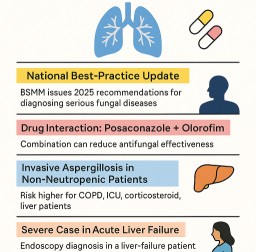
🦠 Latest Aspergillosis Updates (Weeks 45 & 46)
Over the past two weeks, several new studies and reports have deepened understanding of aspergillosis – the group of lung and sinus infections or allergic diseases caused by Aspergillus moulds.
They cover new national guidance, emerging risk groups, drug interactions, and new ideas for diagnosis.
🔹 1. National Best-Practice Update (BSMM 2025)
What’s new:
The British Society for Medical Mycology (BSMM) has released its 2025 recommendations for diagnosing serious fungal diseases such as aspergillosis.
The update emphasises:
-
using standardised blood and imaging tests across hospitals,
-
improving access to specialist mycology laboratories,
-
faster recognition in people with chronic lung disease, transplant, or immune suppression.
Why it matters:
Patients should receive the same high-quality diagnostic work-up wherever they are treated in the UK, reducing delays and missed cases.
🔹 2. Drug Interaction: Posaconazole + Olorofim
What’s new:
Researchers discovered that combining posaconazole (an existing antifungal) with olorofim (a new one still in trials) can cancel out each other’s effect in laboratory and animal tests.
Why it matters:
Doctors will avoid using these two together until proper studies confirm safety.
This ensures that new antifungal drugs are introduced carefully and responsibly, not just because they’re newer.
🔹 3. Invasive Aspergillosis in Non-Neutropenic Patients
What’s new:
Traditionally, invasive pulmonary aspergillosis (IPA) affected people with very low white-cell counts, such as cancer or transplant patients.
A new review shows that people without immune deficiency, including those in ICU, with COPD, or taking steroids, can also develop life-threatening infection.
Why it matters:
Clinicians are being urged to consider aspergillosis sooner when patients with chronic lung disease suddenly deteriorate or fail to respond to antibiotics.
🔹 4. Severe Case in Acute Liver Failure
What’s new:
A case report describes aspergillosis spreading in a patient with acute liver failure, detected by endoscopy rather than usual lung imaging.
Why it matters:
Highlights that aspergillosis can start outside the lungs and that liver-failure patients may have hidden fungal infection even without classic risk factors.
🔹 5. Post-Partum Aspergillus flavus Infection
What’s new:
A rare infection occurred soon after childbirth, caused by Aspergillus flavus rather than the usual A. fumigatus.
Why it matters:
Shows that pregnancy and recovery can temporarily lower resistance to infection.
Unusual breathlessness or fever after delivery deserves careful investigation.
🔹 6. Immune Markers for Chronic and Allergic Forms (CPA and ABPA)
What’s new:
Researchers have mapped immune-system signals (biomarkers) that could help diagnose or monitor chronic pulmonary aspergillosis (CPA) and allergic bronchopulmonary aspergillosis (ABPA) when scans or sputum tests are inconclusive.
Why it matters:
These blood-based tests could make diagnosis faster, less invasive, and more consistent – especially where bronchoscopy isn’t possible.
🧩 The Big Picture
| Theme | Main message | Take-home insight |
|---|---|---|
| National guidance | UK best-practice standardised | Earlier, fairer diagnosis nationwide |
| Antifungal drugs | New combinations must be tested | Avoid mixing old + new agents unsafely |
| Expanding risk groups | COPD, ICU, steroid use, liver disease | Aspergillosis not limited to cancer patients |
| Case lessons | Post-partum and liver-failure infections | Stay alert to rare but serious forms |
| Chronic & allergic disease | New immune biomarkers | Blood tests could support follow-up |
👥 What this means for you
-
Patients: if you have asthma, COPD, bronchiectasis, or another chronic lung problem and suddenly feel worse or don’t improve on antibiotics, ask whether aspergillosis has been considered.
Modern tests can often detect it from a blood sample. -
GPs and non-specialist staff: awareness is key. These studies stress early suspicion, use of mycology testing, and following the BSMM 2025 guidance for timely referral.
-
Researchers: note the priority areas – drug-interaction monitoring, immune-marker validation, and cross-disciplinary education between hepatology, ICU, obstetrics, and respiratory medicine.
🔗 Further reading
-
BSMM 2025 Best Practice Recommendations — Lancet Infect Dis (2025)
-
Posaconazole–Olorofim Interaction — J Antimicrob Chemother (2025)
-
IPA in Non-Neutropenic Patients — Clin Infect Dis (2025)
-
Immune Markers in CPA & ABPA — Front Immunol (2025)
Full links: 1 | 3 | 4 | 6

🧬 What IgE Is and Why It Matters
IgE is a type of antibody your immune system makes when it reacts to something it sees as harmful — such as pollen, mould, pet dander, or certain foods.
In people with allergic or fungal lung disease, IgE can rise sharply because the body’s immune system is over-reacting.
High IgE isn’t dangerous on its own, but it shows that your immune system is “switched on” and inflamed. The goal is to calm that inflammation and reduce exposure to what’s triggering it — not simply to force the number down.
✅ Best Practices for Reducing IgE Levels
1️⃣ Identify and Avoid Triggers
Reducing exposure is the first and most effective step.
-
Allergens: dust mites, moulds (especially Aspergillus), pollens, pets.
-
Environmental irritants: cigarette smoke, air pollution, strong odours, damp housing.
-
Use HEPA filters, good ventilation, and address damp or mould at home.
-
In ABPA, avoiding heavy exposure to fungal spores (e.g. gardening compost, rotting leaves, renovation dust) is particularly important.
2️⃣ Control Inflammation and Allergic Response
Because IgE is a marker of allergic inflammation, treatment focuses on calming the immune system:
-
Corticosteroids (oral or inhaled) can suppress inflammation and lower IgE over time.
-
Biologic therapies such as:
-
Omalizumab (Xolair) – directly targets IgE and lowers levels in allergic asthma or ABPA.
-
Mepolizumab, Benralizumab, or Dupilumab – reduce eosinophil-driven inflammation and may indirectly lower IgE.
-
Choice depends on your disease type and blood test results.
-
-
Antifungal therapy (e.g. itraconazole, voriconazole, posaconazole) can help reduce fungal load in ABPA and often leads to gradual IgE reduction as the reaction settles.
3️⃣ Manage Asthma or Lung Disease Well
Stable lungs mean fewer immune flares and less IgE activity:
-
Use prescribed inhalers regularly (preventers, not just relievers).
-
Follow your asthma or CPA action plan.
-
Attend regular reviews with your respiratory team.
-
Report any new symptoms such as increased cough, wheeze, or mucus plugs early.
4️⃣ Support Overall Immune Balance
Simple lifestyle steps can also help keep inflammation low:
-
Eat a balanced diet rich in fruit, vegetables, and omega-3 fats.
-
Sleep well and manage stress (both can worsen inflammation).
-
Avoid smoking or vaping.
-
Keep vaccinations (e.g. flu, COVID, pneumococcal) up to date.
📊 Interpreting IgE Levels
-
IgE levels naturally fluctuate and may take weeks or months to fall after treatment.
-
Doctors often look at the trend (rising or falling) rather than one number.
-
In ABPA, a fall of 35–50 % from baseline after treatment usually shows improvement.
-
It’s also possible to feel better while IgE remains high — so the result must always be interpreted alongside symptoms and scans.
🚫 What Not to Do
-
Don’t chase a “perfect” IgE number — focus on feeling better and reducing inflammation.
-
Don’t stop steroids or antifungals suddenly unless advised by medical doctor, as this can cause a rebound flare.
-
Don’t rely on supplements or “immune boosters” that claim to lower IgE — none are proven to help and some may worsen allergies.
🩺 In Summary
| Goal | Best Approach |
|---|---|
| Reduce IgE triggers | Avoid mould, dust, smoke, allergens |
| Calm inflammation | Steroids or biologics under medical supervision |
| Treat underlying disease | Antifungals for ABPA/CPA, good asthma control |
| Support immune balance | Healthy lifestyle, good sleep, stress reduction |
🌱 Key Message
You can’t “switch off” IgE completely — it’s part of your immune defence.
The aim is to reduce unnecessary immune activation, keep symptoms stable, and prevent lung damage.
With the right mix of trigger avoidance, anti-inflammatory treatment, and regular monitoring, IgE levels usually fall gradually as the condition improves.

🧪 Why New Antifungal Trials Start with Invasive Aspergillosis
When you hear about promising new antifungal medicines such as Olorofim or Fosmanogepix, you may wonder why the first studies always seem to involve people with invasive aspergillosis — not those with chronic pulmonary aspergillosis (CPA) or allergic bronchopulmonary aspergillosis (ABPA).
It might seem unfair, especially when chronic forms of aspergillosis are so common and long-lasting.
But there are good reasons why research has to begin with invasive disease.
Here’s how it works — and why it’s still good news for everyone living with aspergillosis.
⚠️ 1. Invasive Aspergillosis Is the Most Dangerous Form
Invasive aspergillosis happens when Aspergillus spreads deep into the lungs or bloodstream, usually in people with a very weak immune system — for example, after chemotherapy, transplant, or high-dose steroid use.
Without prompt treatment, it can be fatal within days or weeks.
Because it is so serious, regulators such as the MHRA (UK), EMA (Europe) and FDA (USA) allow new drugs for invasive infections to be tested and reviewed much faster than they would for less urgent diseases.
This approach means that if a new antifungal proves helpful and safe, it can reach patients in greatest need more quickly — often saving lives while also building the data needed for later studies in other conditions.
📈 2. It’s Easier to Measure Whether the Drug Works
For invasive disease, the goal is very clear:
The infection either clears up, or it doesn’t.
That makes the results of a study straightforward to interpret.
With chronic or allergic aspergillosis, improvement takes much longer to measure:
-
Scans may take months to show change,
-
Symptoms can fluctuate naturally, and
-
Other lung problems (like COPD or bronchiectasis) can confuse the results.
So trials in chronic disease need larger patient numbers and longer follow-up, which are expensive and take years. Starting with invasive aspergillosis lets researchers get the essential safety and efficacy answers first.
🧾 3. The Regulatory Framework Focuses on Invasive Disease
Drug-approval rules for antifungals were originally designed for the most life-threatening infections.
Official guidance documents — from the EMA, FDA and others — describe exactly how to test new drugs for invasive fungal infections, but there are no formal international standards yet for chronic or allergic aspergillosis.
That means developers start where the rules are clear — and then adapt once regulators, researchers, and clinicians agree on what a “successful outcome” looks like for chronic disease.
⚖️ 4. Safety and Ethics Come First
When a new antifungal is in early testing, doctors don’t yet know all its side-effects or how it behaves during long-term use.
For ethical reasons, it’s safer to begin in patients with very few other treatment options, where the potential benefit outweighs the risk.
As safety data builds up — including how the medicine interacts with other drugs — it becomes safer to test in people with more stable chronic conditions such as CPA.
🩺 5. Once Proven Safe, Use Can Expand
Once a drug like Olorofim or Fosmanogepix:
-
works well in invasive aspergillosis,
-
has solid safety data, and
-
earns its first licence,
the manufacturer and research partners (such as the National Aspergillosis Centre) can propose new studies in CPA or other forms of aspergillosis.
By then, regulators already know the drug’s risk profile, dosing, and monitoring needs — so further approvals for chronic disease can move faster.
🧩 In Summary
| Reason | Why invasive aspergillosis comes first |
|---|---|
| Urgency | It’s the most life-threatening form, so ethics allow faster testing |
| Clear results | Success or failure can be measured more easily |
| Existing standards | Regulatory guidance already written for invasive disease |
| Safety first | Starts with people who have no other treatment |
| Builds the base | Data from invasive disease supports later CPA/ABPA trials |
🌱 Looking Ahead
Starting with invasive aspergillosis is a gateway, not a dead-end.
Every study adds vital knowledge about how these new antifungals work, how safe they are, and which patients might benefit most.
Once enough evidence exists, clinical trials can — and almost certainly will — expand to include chronic pulmonary aspergillosis (CPA) and possibly even allergic forms of the disease.
So while the research focus may begin with the most critical cases, the progress made there ultimately helps everyone living with aspergillosis.

🩺 Why New Antifungal Medicines Aren’t for Everyone (Yet)
When new medicines are announced, it’s natural to wonder:
“If they’re better than what we already have, why can’t everyone start using them straight away?”
Two new antifungal drugs — Olorofim and Fosmanogepix — are generating real excitement because they work in completely new ways and could help people whose fungal infections no longer respond to existing treatments.
But before any new drug becomes widely available, it must go through a careful process to make sure it’s safe, effective, affordable, and used in the right patients. Here’s why most people with aspergillosis will still be treated with existing antifungal medicines for now.
🧪 1. They’re Still Being Tested
Olorofim and Fosmanogepix are still classed as investigational medicines.
That means they have shown promise in early studies — especially for severe or drug-resistant infections — but they are not yet approved for general medical use.
Regulators such as the MHRA (UK), EMA (Europe), and FDA (USA) require large, carefully controlled studies to confirm:
-
that the drugs are safe for different types of patients,
-
that they work as well as or better than existing treatments, and
-
that the benefits clearly outweigh any risks.
Until that evidence is complete, they can only be prescribed within clinical trials or under special compassionate-use programmes at specialist hospitals.
💨 2. Different Types of Aspergillosis Need Different Treatments
Aspergillosis isn’t one single disease. It includes:
-
Invasive aspergillosis, a dangerous infection in people with weak immune systems.
-
Chronic pulmonary aspergillosis (CPA), a long-term infection in people with lung damage.
-
Allergic bronchopulmonary aspergillosis (ABPA), an allergic reaction rather than a true infection.
The new antifungals are currently being tested only for invasive aspergillosis — the most severe form.
They haven’t yet been studied in chronic or allergic forms like CPA or ABPA, so we don’t yet know if they would work or be safe for those conditions.
💊 3. Current Medicines Still Work Well for Most Patients
Existing antifungal drugs such as itraconazole, voriconazole, posaconazole, and isavuconazole remain effective for most people with aspergillosis.
Doctors already know:
-
how to monitor their levels in the blood,
-
how to manage side-effects, and
-
how to combine them safely with other medicines.
New drugs can bring new possibilities — but they can also bring unknown side-effects or interactions. Doctors need strong, long-term evidence before changing large numbers of patients to new treatments.
💷 4. Cost and Access Take Time
Developing antifungal drugs takes years and costs millions of pounds.
When a new medicine is finally approved, it is often very expensive at first.
In the UK, every new treatment must go through NICE (the National Institute for Health and Care Excellence).
NICE checks:
-
how well it works,
-
how safe it is, and
-
whether the NHS can afford to provide it fairly to all who need it.
Only once NICE recommends a drug can NHS England fund it for routine use — and even then, it may be limited to certain hospitals or patient groups at first.
⚖️ 5. A Step-by-Step Approach Keeps Patients Safe
New medicines are introduced gradually — starting with people who have no other treatment options.
If they prove safe, effective, and affordable in that group, their use can be expanded step by step to include more patients and other forms of disease.
This careful rollout protects patients from unexpected risks and helps prevent early resistance, so the drugs stay effective for longer.
🧭 6. Who Decides When a New Antifungal Can Be Used for CPA?
Bringing a new antifungal from its first approval to wider use in chronic diseases like CPA involves several levels of decision-making:
1️⃣ The Manufacturer
Companies such as Shionogi Europe (Olorofim) or Basilea/Pfizer (Fosmanogepix) design the trials and decide which conditions to test first — usually the most life-threatening ones.
If early results are good, they can plan new studies for CPA or other chronic lung infections.
2️⃣ Clinical Researchers and Specialist Centres
Centres such as the National Aspergillosis Centre (NAC) collect real-world data from patients who receive these drugs through compassionate-use programmes.
If several patients with CPA improve, these results may encourage formal CPA-specific trials.
3️⃣ Regulatory Authorities
Bodies such as the MHRA (UK), EMA (Europe), or FDA (USA) decide which diseases a drug can officially be marketed for.
To add CPA as a licensed use, the company must submit:
-
new clinical trial data,
-
long-term safety information, and
-
a formal request to extend the drug’s licence.
Until that happens, doctors can only prescribe it for CPA off-label — usually within strict hospital governance systems.
4️⃣ NICE and NHS England
Even after regulatory approval, NICE must review cost and benefit before the NHS can fund the drug for CPA.
Without a positive NICE recommendation, it can’t be routinely prescribed in the UK.
5️⃣ Specialist Clinical Networks
Finally, once approved and funded, expert groups like the NAC and national respiratory networks decide how and when the drug should be used — for example:
-
only for patients with azole-resistant CPA,
-
after all standard options have failed, and
-
with careful monitoring.
This information is then built into national and local treatment guidelines.
🔄 Example Pathway: Olorofim’s Future Use for CPA
| Stage | Who acts | What happens |
|---|---|---|
| 1️⃣ | Shionogi | Gains approval for invasive aspergillosis |
| 2️⃣ | NAC & academic partners | Report successful CPA case studies |
| 3️⃣ | Shionogi + NAC | Launch a formal CPA clinical trial |
| 4️⃣ | MHRA / EMA | Extend licence to include CPA |
| 5️⃣ | NICE | Reviews cost-effectiveness for CPA |
| 6️⃣ | NHS England | Approves CPA use in NHS centres |
🩸 In Summary
| Reason | Why we can’t all switch now |
|---|---|
| Still in trials | Not yet fully approved for use |
| Different diseases | Only tested for invasive aspergillosis so far |
| Known vs unknown | Established drugs work well for most people |
| Cost and access | NHS approval and funding take time |
| Safe rollout | New drugs introduced step-by-step |
🌱 Looking Ahead
Both Olorofim and Fosmanogepix represent the most promising antifungal advances in decades.
If they continue to perform well in trials, they could become vital options for people whose infections no longer respond to standard medicines — and, in time, for chronic conditions like chronic pulmonary aspergillosis (CPA).
For now, the safest and most effective approach remains to use proven antifungals under expert supervision, while keeping a close watch on these exciting new developments.

🌿 New Antifungal Medicines on the Horizon: Olorofim and Fosmanogepix
For many years, doctors have relied on the same small group of antifungal drugs — mainly azoles (like itraconazole and voriconazole), amphotericin, and echinocandins. These have saved lives, but some fungi are becoming resistant, and some people can’t tolerate them because of side-effects or drug interactions.
Two completely new antifungal medicines — Olorofim and Fosmanogepix — are now in the final stages of research. They work in new ways and could help patients whose infections no longer respond to current treatments.
🧬 Olorofim (by F2G Ltd, UK)
How it works:
Olorofim blocks a vital process that fungi need to make DNA. It belongs to a brand-new group called orotomides, and works very differently from other antifungals.
Which infections it targets first:
-
The first planned use will be for people with invasive mould infections (for example, Aspergillus fumigatus and some rare moulds) when existing medicines don’t work or can’t be used.
-
It is especially promising for azole-resistant Aspergillus, which is becoming more common.
How it might help in the future:
Although early studies are focused on severe infections in people with weak immune systems, Olorofim has also shown good results in some patients with chronic pulmonary aspergillosis (CPA) who could not take azoles.
Once it is licensed, hospitals such as the National Aspergillosis Centre may be able to use it for difficult or resistant cases of CPA on a specialist-approval basis.
When it might be available:
F2G has completed late-stage studies and is preparing for regulatory approval.
If all goes well, Olorofim could be available around 2026–2027 in some countries, with the UK likely to follow once it is approved and adopted by the NHS.
⚗️ Fosmanogepix (by Basilea and Pfizer)
How it works:
Fosmanogepix (converted in the body to manogepix) blocks the fungus from making a protective coating around its cell surface. This prevents it from growing and spreading. It belongs to another new group of antifungal drugs.
Which infections it targets first:
-
The first major study is for Candida bloodstream infections (candidemia) and other serious yeast infections.
-
A second study focuses on invasive mould infections, including aspergillosis, in patients with few treatment options.
How it might help in the future:
Once approved for invasive infections, Fosmanogepix could later be tested in longer-term or chronic lung infections, such as CPA, if it proves safe for long-term use.
When it might be available:
-
The first approval (for Candida) may come around 2027.
-
The aspergillosis trial is still running and not expected to finish before 2028–2029, so that indication will follow later.
🩺 What This Means for People with Aspergillosis
| Drug | New or existing? | First use likely for | Could later help with | When available (approx.) |
|---|---|---|---|---|
| Olorofim | New class (orotomide) | Invasive Aspergillus and resistant moulds | Difficult or resistant cases of chronic pulmonary aspergillosis (CPA) | 2026–2027 |
| Fosmanogepix | New class (Gwt1 inhibitor) | Candida bloodstream infections | Invasive mould infections, possibly CPA later | 2027–2029 |
🧩 In summary
-
These two drugs represent the first completely new antifungal classes in decades.
-
They are being tested mainly for life-threatening fungal infections where current medicines fail.
-
Once approved, they may offer new options for people with resistant or difficult-to-treat forms of aspergillosis, including some patients with CPA.
-
They are not yet available on prescription, but progress looks very promising.

When Scents Cause Symptoms: What Patients Say About Odour Triggers
Many people living with asthma, Allergic Bronchopulmonary Aspergillosis (ABPA), or bronchiectasis describe strong reactions to everyday smells — perfumes, cleaning products, paints, or air fresheners.
These reactions can cause immediate coughing, wheezing, throat irritation, or chest tightness, and they can last for hours or even days.
To understand this better, we asked members of our patient community:
“Are there any smells that don’t affect you?”
Their replies were detailed, honest, and very relatable.
💬 What patients told us
“I’m OK with most perfumes, but not Estée Lauder. Aftershaves can be troublesome.”
“Unfragranced alcohol hand sanitiser is fine — even though it smells strong.”
“Cooking smells are OK if it’s food I can eat, but not frying.”
“Crowded rooms full of cleaning products or perfume — that’s when I start coughing.”
“I use peppermint essential oil to mask other smells if I get caught off guard.”
“If I avoid mould, dust, aerosols, and detergents, I can generally stay well.”
These voices show that odour sensitivity varies hugely from person to person — and what’s tolerable one day might trigger symptoms another.
🌸 Smells people can usually tolerate
Even among those highly sensitive to scents, a few odours were commonly reported as “safe”:
-
Some light or natural perfumes
-
Alcohol-based hand sanitisers (if unfragranced)
-
Food smells from meals the person can eat
-
Saline or hypertonic saline nebulisers
-
Outdoors air after rain — described by some as “clear” or “fresh”
Many added that they simply don’t notice safe smells — because their airways stay calm.
🚫 Common odour triggers
| Category | Examples mentioned by patients |
|---|---|
| Fragrances & aerosols | Perfume, hairspray, carpet freshener, pet grooming sprays, room sprays, vapes |
| Household products | Detergents, polish, disinfectants, scented candles, new rugs or furniture “off-gassing”, silicone sealant, fresh paint |
| Environmental triggers | Dust, damp wood, mould, oil fumes, cigarette smoke, some trees or plants |
| Crowded indoor air | Theatres, shops, salons, or restaurants where several products and fragrances combine |
Reactions were often described as immediate:
“Aerosols set me off straight away — I feel it in my chest before I even notice the smell.”
🧩 Why odours trigger symptoms
Odour sensitivity isn’t usually an allergy — it’s caused by airway hyperreactivity.
In these conditions, nerve endings in the bronchial walls become oversensitive.
When exposed to volatile organic compounds (VOCs), aerosols, or fine particles, the airways tighten and release inflammatory mediators — a reaction that’s stronger and longer-lasting in those with existing lung inflammation.
People with ABPA, Severe Asthma with Fungal Sensitisation (SAFS), or Chronic Pulmonary Aspergillosis (CPA) often have inflamed, mucus-filled, or scarred airways, making them far more reactive to irritants.
🧭 Factors that make reactions worse
Patients pointed out that it’s not just what’s in the air, but also:
-
Concentration – strong or enclosed fumes trigger faster responses
-
Combination – multiple scents together (perfume + cleaner + paint) are far harder to tolerate
-
Duration – prolonged exposure leaves lingering symptoms
💡 Tips for managing odour sensitivity
Plan ahead
-
Choose quiet times for haircuts, shopping, or social events.
-
Check if venues use air fresheners or scented cleaning products.
Control your environment
-
Use fragrance-free detergents and cleaning products.
-
Ventilate your home after cleaning or decorating.
-
Keep dehumidifiers and air purifiers running in damp areas.
Be prepared
-
Carry a reliever inhaler or antihistamine if prescribed.
-
Consider a FFP2/FFP3 mask in heavily fragranced or dusty places.
-
A small bottle of peppermint oil or menthol inhaler may help mask irritant odours temporarily.
Communicate
-
Let friends, family, or workplaces know that fragrances affect your breathing.
-
If public spaces (like theatres or salons) are overwhelming, it’s okay to step out — health comes first.
🧠 Understanding and empathy
“It’s not about disliking smells — it’s that my lungs treat them as an attack.”
For many, this sensitivity means planning life around exposure — avoiding crowds, timing visits, or even missing social events.
Recognising that these reactions are physiological, not psychological, can help families, friends, and employers offer real support.
❤️ Takeaway message
Odour sensitivity is part of the lived experience of reactive airway disease.
It isn’t always predictable, but understanding your triggers — and which scents are safe — can make everyday life much easier.
As one patient put it:
“If I can avoid mould, dust, aerosols, and detergents, I can generally stay well.”
By sharing these experiences, patients are helping others realise they’re not alone — and helping clinicians understand just how much “harmless” smells can matter.

Understanding Risk from Aspergillosis — and What’s Improving
🧫 How risky is aspergillosis?
The outlook for people with aspergillosis has improved dramatically in the past two decades.
Two things have changed that make a huge difference:
-
We diagnose it earlier.
Better scans, blood tests (like galactomannan and PCR), and greater awareness mean the infection or allergic reaction is recognised much sooner. -
We treat it better.
Modern antifungal medicines, steroid-sparing biologics, and specialist clinics have all transformed care and monitoring.
⚖️ Risk of death — managed vs. unmanaged
| Type of Aspergillosis | If well managed | If unmanaged or poorly treated |
|---|---|---|
| Allergic (ABPA) | Survival > 95 % | About 90 % (may progress to chronic lung damage) |
| Chronic (CPA) | 5-year survival ≈ 80–90 % | 5-year survival ≈ 50 % |
| Invasive (IA) | 5-year survival ≈ 50–70 % | < 20 % (often fatal if untreated) |
Across all forms of aspergillosis, the risk of death has fallen by roughly 50 % since the early 2000s.
💊 What’s driven this improvement
-
New antifungal drugs — triazoles (itraconazole, voriconazole, posaconazole, isavuconazole) now form the backbone of long-term therapy.
-
Rapid diagnosis — galactomannan, PCR, and CT scanning detect infection days earlier than before.
-
Improved hospital and ICU care — faster recognition and better ventilation strategies save lives in invasive cases.
-
Specialist clinics and monitoring — regular blood tests, imaging, and drug-level checks prevent deterioration and drug toxicity.
-
Biologic therapies — agents that target allergic inflammation (like anti-IgE or anti-IL-5 biologics) help reduce steroid use and preserve lung function.
🚀 What could make outcomes even better
Researchers and clinicians are optimistic about the next decade.
Future advances are already on the horizon:
| Future area | How it helps |
|---|---|
| Next-generation antifungals – Olorofim, Fosmanogepix | Active against azole-resistant strains and safer for long-term use |
| Combination or personalised therapy | Matching the right drug and dose to each patient’s response pattern |
| Routine antifungal-resistance testing | Prevents treatment failure by identifying resistant Aspergillus early |
| Rapid home or bedside testing | Detects infection flare-ups before symptoms become severe |
| Improved imaging and AI-supported analysis | Spots fungal cavities or airway changes at an earlier, reversible stage |
| Global stewardship of agricultural azoles | Reduces environmental resistance by limiting unnecessary fungicide use |
| Patient self-monitoring and digital follow-up | Enables early reporting of symptoms and better long-term adherence |
⚠️ Potential barriers to further progress
Even with all these advances, several important challenges could slow improvement if left unaddressed:
| Barrier | Why it matters |
|---|---|
| Antifungal resistance | Aspergillus fumigatus is developing resistance to azoles used both in medicine and agriculture. Resistant strains can make first-line treatment fail unless resistance testing is done. |
| Delayed or missed diagnosis | Symptoms often mimic other lung conditions. Late recognition allows infection or inflammation to cause irreversible damage. |
| Limited access to specialist care | Some regions lack experienced clinicians, diagnostic testing, or antifungal drug availability, increasing global inequality in outcomes. |
| Drug toxicity and interactions | Long-term antifungal therapy can affect the liver or interfere with other medicines if not closely monitored. |
| Environmental change | Warmer, wetter climates and increased composting or construction may raise Aspergillus exposure for vulnerable people. |
| Healthcare strain and cost | Long-term follow-up, monitoring, and expensive new drugs may challenge already stretched healthcare systems. |
Each of these barriers needs attention through research, public health policy, and education to ensure the gains of the last 20 years continue.
❤️ The key message
Aspergillosis is still a serious disease, but its outlook is far better than it used to be.
With modern antifungals, biologics, and regular monitoring, most people live many years — and new treatments promise even better results.
Patients can help by:
-
Reporting new symptoms early.
-
Keeping up with regular blood and imaging checks.
-
Asking about resistance testing and treatment options.
-
Staying informed about new drugs and trials.
🌅 A hopeful future
In just twenty years, deaths from aspergillosis have halved.
If we continue improving diagnosis, drug development, and resistance control, survival will rise even higher — turning aspergillosis from a life-threatening infection into a long-term but manageable condition for most people.

Understanding Risk: How Common Is “Rare”?
When doctors talk about risk, it can sound worrying — especially when you’re already living with a lung condition.
But every day, we all take small, managed risks without realising it.
Understanding how everyday risks compare with medical or vaccine risks helps put the numbers into perspective — and shows why treatment is almost always worth it.
🚶♀️ Everyday activities carry small risks
Everyday life is full of tiny risks we accept because the benefits are clear — exercise, travel, independence, and social connection.
| Activity | Estimated risk of serious harm | Equivalent comparison |
|---|---|---|
| Driving a car for 250 miles | About 1 in 1 million chance of fatal accident | Roughly the same as the risk of a severe vaccine reaction |
| Cycling for 30 minutes | About 1 in 3 million | Similar to being struck by lightning in your lifetime |
| Walking near traffic for a day | Around 1 in 15 million | Negligible, but not zero |
| Taking a domestic flight (UK) | Less than 1 in 10 million chance of fatal accident | Far safer than most road journeys |
| Catching flu during winter | Around 1 in 10 chance of getting ill | Much higher risk than most medicine side effects |
We don’t think of these activities as “dangerous” because the benefit far outweighs the risk — just as it does with most treatments.
💊 Medicines and vaccines we take safely every day
Most common medicines have mild, short-lived side effects. Serious reactions are possible but extremely rare.
| Medicine | Typical mild effects | Serious reactions (approx. frequency) | Comment |
|---|---|---|---|
| Paracetamol (acetaminophen) | Nausea, rash | Serious liver injury ≈ 1 in 100,000 (usually after overdose) | Very safe when taken correctly |
| Ibuprofen | Heartburn, upset stomach | Ulcer or stomach bleed ≈ 1 in 1,000 if used long term | Safer when taken with food |
| Amoxicillin | Diarrhoea, mild rash | Severe allergic reaction ≈ 1 in 5,000–10,000 | Rare but recognised |
| Influenza vaccine | Sore arm, tiredness | Severe allergic reaction ≈ 1 in 1 million | Prevents thousands of serious infections yearly |
| COVID-19 vaccine | Mild flu-like symptoms (≈ 1 in 10) | Severe allergic reaction ≈ 1 in 100,000 | Benefits far outweigh risks |
| Oral steroids (short course) | Increased appetite, insomnia | Major side effects only with prolonged use | Vital during ABPA or asthma flares |
⚕️ What does “serious side effect” really mean?
When you read about serious reactions in medical leaflets or vaccine information, it doesn’t necessarily mean life-changing.
The term “serious” has a specific medical meaning, used by the MHRA, EMA, and WHO.
A reaction is called serious if it:
-
leads to hospitalisation,
-
is life-threatening at the time,
-
causes temporary disability or incapacity,
-
results in death, or
-
causes a birth defect.
👉 It’s about medical urgency, not always long-term harm.
In reality, most serious reactions are short-lived and fully reversible with prompt treatment.
For example:
-
An anaphylactic reaction to a vaccine is medically serious because it needs immediate care — but nearly everyone recovers completely once treated.
-
A high fever or rash that requires a day in hospital may be serious in reporting terms, but causes no permanent damage.
By contrast, life-changing reactions (such as nerve injury or organ failure) are extraordinarily rare — far rarer than being struck by lightning.
“When doctors say ‘serious reaction’, they mean something that needs urgent medical attention — not something that will leave you permanently unwell.”
🩺 More common health risks we all face
While medicine risks are very small, the everyday risks to life and health are much higher — especially if conditions go untreated.
| Health event or cause | Approximate annual risk (UK adult) | Lifetime risk | Notes |
|---|---|---|---|
| Heart attack | Around 1 in 200–300 per year | 1 in 4 men, 1 in 6 women | Increases with age, smoking, and high blood pressure |
| Stroke | Around 1 in 250 per year | About 1 in 5 adults | Preventable with healthy lifestyle and medication |
| Cancer (any type) | Around 1 in 125 per year | Around 1 in 2 people in their lifetime | Most treatable when found early |
| Serious road accident | About 1 in 15,000 per year | Around 1 in 100 lifetime | Far higher than a vaccine reaction |
| Severe flu needing hospital care | Around 1 in 500 per winter | Higher for people with lung disease | Preventable by flu vaccination |
| Fatal asthma attack | About 1 in 100,000 per year | Higher in uncontrolled asthma | Preventable with good management |
| COVID-19 death (current UK levels) | Around 1 in 2,000–5,000 per year for older/vulnerable adults | Major reason vaccination still matters | |
| Lightning strike | About 1 in 15 million per year | Around 1 in 300,000 lifetime | Benchmark for “extremely rare” risk |
⚖️ Making sense of the numbers
-
A 1 in 1,000 risk means one person in a large GP practice might experience it.
-
A 1 in 100,000 risk means one person in a football stadium crowd.
-
A 1 in 1 million risk is so rare that most doctors never see it in their career.
So when you hear that a serious vaccine reaction occurs in one in a million people, that’s about the same as:
-
being struck by lightning once in your life, or
-
winning a small lottery prize several times in a row.
❤️ The real takeaway
The greatest risks to life and health are the common diseases we can prevent or treat — not the rare side effects of treatment.
Every vaccine or medicine is carefully assessed so that its benefits far outweigh its risks, especially for people with asthma, ABPA, bronchiectasis, or weakened immunity.
Treatments don’t add danger — they reduce the much bigger risks from infection, inflammation, and lung damage.
🧭 Key message
We all live with risk, but:
-
Most everyday and health-related risks are far greater than the tiny chance of a medicine reaction.
-
Managing your lung condition well — with the right treatment, vaccines, and follow-up — protects your lungs and lengthens your life.
-
The safest path is always informed care, not avoidance through fear.