

Can overseas patients access specialist centres like NAC? A clear guide for patients and families
Last reviewed: April 2026
Key points
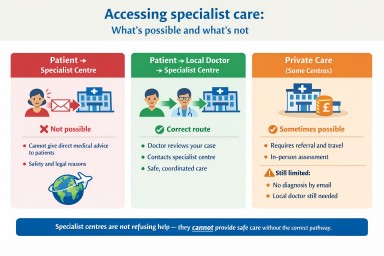
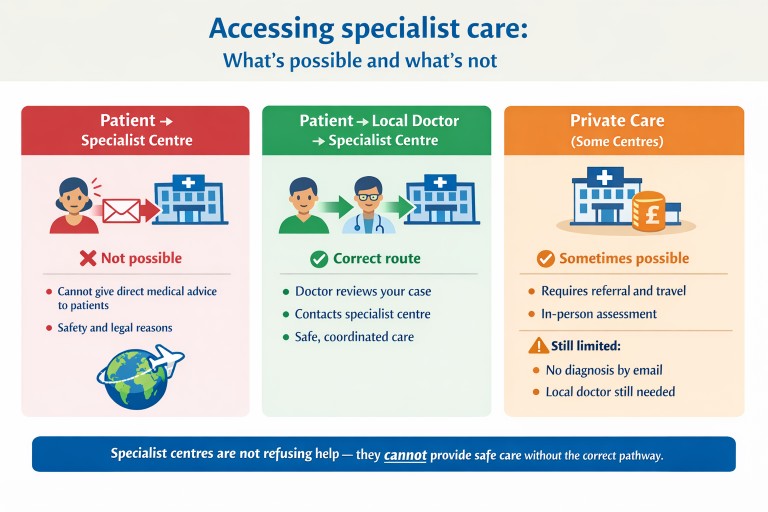
- Specialist centres such as the National Aspergillosis Centre (NAC) cannot provide individual medical advice directly to patients, especially from overseas.
- This is due to safety, legal, and clinical responsibility requirements.
- The correct route is through a local doctor, using a formal referral process.
- A referral does not guarantee that a patient will be seen.
- Even when doctors contact specialist centres, there are limits to what can be offered.
- NAC does not offer private care, although some other centres do.
Table of contents
- Why can’t specialist centres respond directly?
- The correct way to get help
- What does a referral mean?
- Will a referral always be accepted?
- Do personal requests help?
- Limits even when doctors are involved
- What about private care?
- Common myths
- When to seek urgent help
Why can’t specialist centres respond directly to patients?
It is natural to want to contact a specialist centre directly, especially when dealing with a complex condition such as aspergillosis. However, centres like NAC cannot provide individual medical advice directly to patients.
This is not a matter of choice—it is because they cannot safely or legally do so.
Patient safety
- Safe medical advice requires full access to medical records, test results, and examination findings
- Doctors must be able to monitor progress and adjust treatment
- This cannot be done through messages or emails alone
Legal and regulatory requirements
- Doctors must follow strict rules set by regulators such as the General Medical Council (GMC) in the UK
- They cannot take responsibility for a patient without a formal clinical relationship
Responsibility for care
- Any doctor giving advice must be able to take responsibility for outcomes
- This requires recognised clinical pathways and follow-up arrangements
In summary: Specialist centres are not refusing help—they cannot provide care outside safe and regulated systems.
The correct way to get help
The safest and most effective way to access specialist expertise is through your local doctor.
Step 1 – See a local specialist
- Respiratory doctor
- Infectious disease specialist
- Internal medicine specialist
Step 2 – Assessment and initial care
- Your doctor reviews your symptoms and history
- Tests are arranged where needed
- Treatment may be started
Step 3 – Referral or specialist advice
- Your doctor may refer you to a specialist centre
- Or they may contact a centre such as NAC for advice
This approach ensures your care is coordinated, safe, and based on full clinical information.
What does a referral mean?
A referral is when your doctor formally asks another specialist or centre to review your case or consider seeing you.
This is not just a message—it is a structured clinical process.
What does a referral usually include?
- Your medical history
- Details of your symptoms
- Results of tests (such as scans or laboratory results)
- Treatments you have already received
- A clear reason for referral
This allows the specialist centre to understand your situation safely and properly.
What happens next?
After reviewing the referral, the specialist centre may:
- ✔️ Accept the referral and arrange an appointment
- ✔️ Provide advice to your doctor without seeing you
- ✔️ Suggest a more appropriate service
- ❌ Decline the referral
A referral is like a formal handover between doctors—it does not guarantee an appointment.
Will a referral always be accepted?
Even when your doctor makes a referral, it is important to understand that the referral may not always be accepted.
Why might a referral not be accepted?
Eligibility criteria
- Specialist centres often have strict criteria for the patients they can see
- Some services are commissioned only for specific conditions
Geographic and funding rules
- Access may depend on healthcare system or funding arrangements
Clinical suitability
- The centre may decide your care can be managed locally
- They may offer advice instead of accepting the referral
Capacity
- Specialist centres often manage large numbers of complex patients
What happens if it is not accepted?
- Your doctor may still receive expert advice
- You may be directed to another service
- Your care continues locally
This does not mean you are being refused help.
Why specialist centres may not be able to confirm anything to you
Patients and families sometimes ask a specialist centre whether a referral has been received, reviewed, or accepted.
It is important to understand that the centre may not be able to confirm or discuss this with you directly.
Why is this?
Confidentiality and data protection
- Medical information is protected by strict confidentiality rules
- In the UK, this includes laws such as data protection legislation and professional duties of confidentiality
- Centres must be certain they are communicating with the correct person and through approved channels
Communication is usually between doctors
- Referrals are handled as clinician-to-clinician communication
- Responses are normally sent back to the referring doctor, not directly to the patient
No confirmation does not mean no action
- If you do not receive a reply from the centre, it does not necessarily mean your referral has been ignored
- Advice or decisions may already have been communicated to your doctor
What should you do?
- Contact your own doctor for updates
- Ask whether a referral has been sent and if a response has been received
- Discuss next steps with your clinical team
Summary
Specialist centres usually communicate with your doctor, not directly with patients. This is to protect your privacy and ensure safe, appropriate communication.
Do personal requests from patients or families help?
Personal requests are completely understandable, but specialist centres cannot provide individual medical advice directly to patients, even in urgent situations.
This is because they cannot safely or legally do so without a doctor involved.
These requests may still help with general information and guidance, but they do not usually lead to diagnosis or treatment advice.
Limits even when doctors are involved
When your doctor contacts a specialist centre, this is the correct route—but there are still limits.
What specialist centres can offer
- Expert opinion
- Suggestions for diagnosis
- Guidance on tests
- Interpretation of results
What they cannot usually provide
- Direct patient care
- Full responsibility for treatment
- Definitive diagnosis without full assessment
Your local doctor remains responsible for your care.
What about private care?
The National Aspergillosis Centre (NAC) does not offer private care.
- You cannot arrange to be seen there privately
- Access is through NHS referral pathways only
Some other specialist centres may offer private consultations. However:
- A referral and medical records are usually required
- An in-person assessment is typically needed
- Private care does not bypass safety or legal requirements
Common myths
- “I can contact a specialist centre directly for help”
→ Centres cannot provide individual advice directly to patients - “If it’s urgent, they will make an exception”
→ The same safety rules apply to all patients - “A referral guarantees I will be seen”
→ Referrals are reviewed and may not always be accepted - “Private care means I can be seen anywhere”
→ Not all centres offer private care (NAC does not) - “A detailed email is enough for diagnosis”
→ Diagnosis requires full clinical assessment
When to seek urgent medical help
If you or someone you care for has any of the following, seek urgent local medical care:
- Severe breathlessness
- Chest pain
- Coughing up blood
- Confusion or extreme drowsiness
- High fever that is not improving
Do not delay seeking help while trying to contact overseas specialists.
Summary
Specialist centres such as NAC play an important role in supporting complex conditions like aspergillosis. However, they must work within systems designed to keep patients safe.
The most effective way to access their expertise is through your own doctor, using formal referral pathways and specialist advice where needed.
Author & review information
Prepared for patient education purposes.
Aligned with UK specialist centre practice and patient safety guidance.
References & further reading
- General Medical Council (UK) – Good medical practice
- NHS England – Specialist services referral guidance
- European Lung Foundation – Aspergillosis information
- National Aspergillosis Centre – aspergillosis.org

AntifungalInteractions.org – A Specialist Resource for Safer Antifungal Treatment
Last reviewed: April 2026
Managing antifungal medications can be complex. Many antifungal drugs interact with other medicines, foods, and even supplements.
To support both patients and healthcare professionals, a dedicated resource is available:
AntifungalInteractions.org.
Key Points
- A specialist database focused specifically on antifungal drug interactions
- More detailed and targeted than general resources such as the British National Formulary (BNF)
- Includes guidance designed for both healthcare professionals and patients
- Regularly updated (typically several times per month)
- Maintained by an experienced clinical pharmacist and prescriber
- Owned and supported by the Fungal Infection Trust
What is AntifungalInteractions.org?
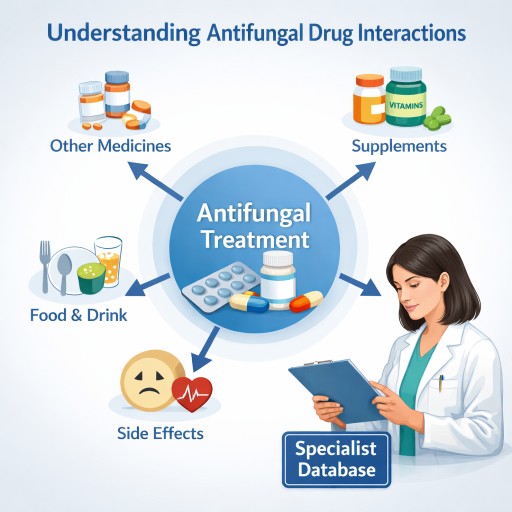
AntifungalInteractions.org is a dedicated online database designed to help users understand how antifungal medications interact with:
- Other prescribed drugs
- Over-the-counter medications
- Herbal supplements
- Certain foods and drinks
Unlike general drug reference tools, this resource focuses specifically on antifungal medicines, making it particularly useful for conditions such as aspergillosis, where treatment often involves long-term or complex therapy.
Why This Resource Matters
1. Antifungal drugs are complex
Common antifungal medications such as azoles (e.g. itraconazole, voriconazole, posaconazole) are known to interact with many other drugs.
These interactions can:
- Increase side effects
- Reduce treatment effectiveness
- Require dose adjustments or monitoring
2. General resources may not go far enough
Widely used tools like the British National Formulary (BNF) are essential, but they are designed for broad use across all medicines.
AntifungalInteractions.org provides:
- More detailed interaction explanations
- Practical interpretation of risk
- Condition-specific relevance
3. It supports informed discussions
The database is not a replacement for clinical advice, but it can help patients and clinicians:
- Prepare for consultations
- Understand potential risks
- Ask more informed questions
Who Maintains the Database?
AntifungalInteractions.org is maintained by:
Saarah Niazi-Ali
MPharm, PG Cert (General Pharmacy Practice), PG Dip (Advanced Clinical Pharmacy Practice),
Independent Pharmacist Prescriber, Non-Medical Prescribing (Level 7), Final Medical Signatory
The database is updated frequently—typically 3–4 times per month, often on a weekly basis—ensuring that information remains current and clinically relevant.
Governance and Ownership
The resource is owned and supported by the Fungal Infection Trust, a UK-based organisation dedicated to improving the understanding, diagnosis, and treatment of fungal diseases.
This ensures that the database:
- Remains focused on patient benefit
- Is aligned with specialist fungal disease care
- Supports both clinical practice and patient education
Who Is It For?
Patients and carers
- To better understand their medications
- To check for potential interactions
- To support conversations with their clinical team
Healthcare professionals
- Infectious disease specialists
- Respiratory clinicians
- Pharmacists
- GPs managing complex patients
It is particularly valuable for clinicians managing conditions such as:
- Chronic pulmonary aspergillosis (CPA)
- Allergic bronchopulmonary aspergillosis (ABPA)
- Other fungal infections requiring long-term antifungal therapy
How Does It Compare to Other Resources?
| Feature | AntifungalInteractions.org | General Drug References (e.g. BNF) |
|---|---|---|
| Focus | Antifungal-specific | All medicines |
| Level of detail | High (specialist) | Moderate (broad coverage) |
| Patient-friendly explanations | Yes | Limited |
| Update frequency | Frequent (monthly/weekly) | Regular but broader scope |
Important Notes for Patients
While this database is a valuable resource, it should be used appropriately:
- Do not stop or change medication based on what you read
- Always discuss concerns with your doctor, pharmacist, or specialist team
- Use the information to support—not replace—medical advice
When to Seek Medical Advice
Contact your healthcare provider if you:
- Start a new medication while on antifungal treatment
- Experience new or worsening side effects
- Are unsure whether a supplement or food is safe
- Have been advised of a potential interaction
Summary
AntifungalInteractions.org is a highly valuable, specialist resource that fills an important gap in antifungal care.
Its combination of:
- Expert clinical oversight
- Frequent updates
- Patient-accessible explanations
- Specialist focus
makes it an important tool for both patients and healthcare professionals managing fungal disease.
Further Reading
- British National Formulary (BNF)
- Aspergillosis treatment guidance (aspergillosis.org)
Author & Review
Prepared for Aspergillosis patient and healthcare education.
Content aligned with UK specialist practice and reviewed for clarity and safety.
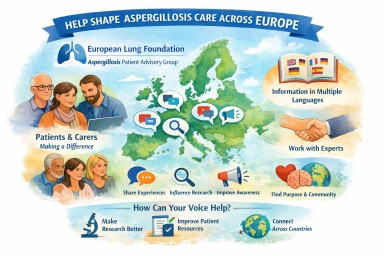
Help shape the future of aspergillosis care across Uk & Europe
“Can patients do more than just cope with this condition?”
The answer is yes.
The European Lung Foundation (ELF)
and its
Aspergillosis Patient Advisory Group (PAG)
give patients and carers a chance to contribute to something bigger: better awareness, better information, better research, and better care.
What is ELF?
ELF is a Europe-wide organisation that brings patients, carers, healthcare professionals and researchers together to improve lung health information, treatment and care.
One of ELF’s strongest advantages is that it works across Europe, not just in one country. It also makes key information available in several languages, helping more people access reliable information about lung conditions, including aspergillosis.
You can read ELF’s patient information on aspergillosis here:
Aspergillosis – European Lung Foundation.
What is the Aspergillosis Patient Advisory Group?
The Aspergillosis PAG is part of ELF’s wider network of
Patient Advisory Groups.
These groups bring together people with experience of specific lung conditions, or experience as carers, so that patient views can help improve treatment and healthcare.
The Aspergillosis PAG works to raise awareness of aspergillosis and improve diagnosis, treatment and care. It also works alongside healthcare professionals and researchers involved in the Chronic Pulmonary Aspergillosis Network (CPAnet), helping identify research priorities and information gaps for both patients and professionals.
Why does this matter?
Aspergillosis is still not well understood in many places. Diagnosis can be delayed, information can be hard to find, and patients often feel that few people truly understand what living with the condition is like.
By involving patients and carers directly, ELF helps ensure that real-life experience is not left out of the conversation. This can influence education, awareness work, research priorities and wider discussions about care across Europe.
What is in it for the patient or carer?
This is an important question, because volunteering your time and energy is a big ask, especially when you are already managing illness, fatigue, appointments, uncertainty or caring responsibilities.
So it is only fair to be clear and honest about what people may gain from taking part.
1. A chance to make your experience count
Many people with aspergillosis have learned difficult lessons the hard way. Getting involved gives you a chance to turn that experience into something useful — helping improve information, shape priorities and make life a little easier for future patients.
2. Better understanding and confidence
Being involved can help you better understand how research, awareness work and patient representation operate. Some people find that this gives them more confidence when speaking about their condition and navigating their own care.
3. Connection beyond your local area
Because ELF is Europe-wide, patients are not limited to the perspective of one hospital, one region or one country. For people living with a relatively uncommon condition, that wider connection can feel valuable and reassuring.
4. The opportunity to be heard
Many patients are used to feeling overlooked. PAGs are designed so that patient and carer perspectives are actively included in projects and discussions, rather than being an afterthought.
5. A sense of purpose
Some people find that involvement helps them move from simply living with a difficult condition to doing something constructive with that experience. It will not suit everyone, but for some it can be meaningful.
6. Support and training
ELF says it provides support, guidance and training to help people share their perspective and get involved in projects. It also encourages interested patients and carers to use its free online European Patient Ambassador Programme (EPAP), which introduces the skills and knowledge needed to represent yourself and others effectively.
What it is not
It is also important to be realistic.
- It is not medical care.
- It does not replace your doctor, nurse or specialist team.
- It is not a route to faster treatment.
- It is not a paid role.
ELF states that PAG involvement is voluntary and that it is unable to pay for people’s time.
Who can join?
ELF says most PAGs are open to new members from European countries. In general, people are invited to get involved if they are over 18, have experience as a patient or carer, live in a European country, can communicate in English, are interested in improving healthcare and treatment across Europe, and are willing to share their perspective.
That said, this should not feel like an all-or-nothing commitment. Not everyone can give a lot of time, and health can change. Even modest involvement can still be worthwhile.
Why mention this to our groups?
Many people in aspergillosis support communities have exactly the kind of insight that is valuable here: the reality of diagnosis, treatment, daily management, side effects, uncertainty, isolation, and learning how to cope.
Those experiences matter. They can help improve what is researched, what is explained, and how future patients are supported.
Interested?
You can explore more here:
- ELF information on aspergillosis
- ELF Patient Advisory Groups
- ELF Aspergillosis Patient Advisory Group
You do not need to be an expert. You do not need to be highly confident. You do not need to commit to everything.
But if you have lived with aspergillosis, or cared for someone who has, your experience may be more valuable than you think.
In short: this is a voluntary opportunity to help improve understanding, research and care for aspergillosis across Europe, while connecting with a wider patient community and making sure lived experience is heard.
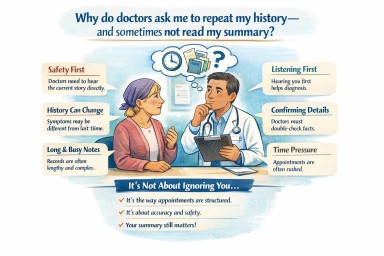
Why do doctors ask me to repeat my history — and sometimes not read my summary?
Many patients, especially those with long-term or complex health problems, say the same thing: “Why do I always have to repeat everything?” Some also say that even when they bring a short written summary, it is put to one side and does not seem to be read straight away.
This can feel frustrating, tiring, and dismissive. In most cases, though, it is not because the doctor does not care. It is usually because of how medical appointments are structured, how clinicians are trained, and the time pressures built into the healthcare system.
This article explains what may be happening, why doctors often work this way, and what can sometimes help patients get more out of appointments.
Key points
- Doctors are usually not ignoring you or your efforts.
- They are trained to hear the story directly from the patient for safety and accuracy.
- Medical notes can be long, incomplete, hard to access quickly, or spread across different systems.
- A written summary can still be helpful, but it may work best as a support tool rather than a replacement for discussion.
- The system is often particularly difficult for people with complex, long-term conditions.
Contents
- Why do doctors ask patients to repeat information?
- Why might a written summary be set aside?
- What are doctors trying to achieve?
- Why is this harder for people with long-term conditions?
- What can help in appointments?
- Common questions
- When to seek further support
Why do doctors ask patients to repeat information?
Many patients assume that if something is already in the notes, the doctor should simply read it and move on. In practice, clinicians are usually taught not to rely only on previous notes. They are expected to take a current history directly from the patient wherever possible.
1. They need a fresh history
Symptoms can change. A note written last week, last month, or even earlier the same day may no longer fully reflect what is happening now. A doctor needs to understand the present situation, not just the recorded one.
This matters because:
- new symptoms may have appeared
- older symptoms may have improved or worsened
- important details may have been left out of earlier notes
- previous notes can sometimes contain misunderstandings or errors
2. Hearing the story directly is part of diagnosis
Doctors do not just collect facts. They also listen to how symptoms are described, what concerns the patient most, what order things happened in, and whether there are any clues that do not fit the previous record.
For example, hearing a patient say “this is much worse than usual” or “the pain has changed completely” may matter just as much as what is already written down.
3. Each clinician is responsible for their own decisions
Every doctor is professionally responsible for the decisions they make in that consultation. Because of that, they usually need to confirm the key information for themselves rather than relying entirely on another person’s notes or summary.
4. Notes are not always as clear or complete as patients imagine
Patients often assume the notes tell the whole story. Sometimes they do not. They may be brief, scattered across different entries, missing key context, or written in a way that does not quickly explain the current problem.
Why might a written summary be set aside?
Patients who have made the effort to prepare a summary can feel especially upset when a doctor places it to one side. It may look like the document is being ignored. Often, however, the doctor is following a routine approach to consultation rather than rejecting the information.
1. Many consultations follow a familiar structure
Doctors are often trained to work in a rough sequence:
- listen to the patient’s account
- ask follow-up questions
- clarify the current concern
- review supporting information and records
- decide what to do next
So a written summary handed over at the start may be used later, not immediately.
2. They may not want the written summary to shape their thinking too early
Clinicians are often cautious about being overly influenced by somebody else’s wording before they have heard the patient directly. This is part of clinical reasoning and risk management. They may want to form their own understanding first, then compare it with the summary.
3. Reading while listening can be difficult
In a short appointment, a doctor may feel they cannot properly read a document, listen closely, ask questions, and maintain eye contact all at the same time. They may therefore choose to focus first on the conversation.
4. Some summaries are not easy to use quickly
Even a well-meant summary may be hard to absorb if it is too long, too detailed, or does not make the current issue obvious straight away. Doctors are often trying to answer one urgent question first:
What is the main problem today?
If that is not immediately clear from the page, they may return to direct questioning.
What are doctors trying to achieve?
From a patient’s point of view, repeating information can feel inefficient and unnecessary. From a clinician’s point of view, the consultation is often trying to achieve several things at once:
- Accuracy: understanding what is happening now, not just what happened before
- Safety: checking for changes, gaps, or warning signs
- Clarity: identifying the most important issue for that appointment
- Responsibility: making decisions based on information they have personally checked
That does not make the experience any less frustrating for patients, but it can help explain the behaviour.
Why is this harder for people with long-term conditions?
This problem is often worse for people who have:
- complex diagnoses
- multiple health conditions
- long medical histories
- many medications
- appointments with different teams or hospitals
If you live with a chronic condition, you may have repeated the same history many times. You may also already be tired, breathless, in pain, stressed, or worried. In that situation, being asked again to explain everything can feel overwhelming.
This is a real systems problem. It is not a sign that you are failing to explain yourself properly, and it is not unreasonable to find it difficult.
What can help in appointments?
There is no perfect solution, but some approaches can make appointments easier and increase the chance that useful information is taken in.
Start with the main issue today
A helpful opening sentence can be:
“The main issue today is…”
This quickly gives the doctor a focus and may reduce the need to retell everything in full.
Keep written summaries short
A one-page summary is usually easier to use than a longer document. It can include:
- main diagnoses
- current medications
- important recent events
- relevant allergies or major problems
- today’s main concern at the top
Offer the summary rather than relying on it
Instead of assuming it will be read immediately, it may help to say:
“I have brought a short summary in case it is useful.”
or:
“Would it help if I gave you a one-page summary of my background?”
This fits better with how many consultations flow.
Use the summary as a support tool
A written summary often works best as:
- a memory aid for the patient
- a quick reference for the doctor
- a back-up in case important facts are missed
It may be less effective if used as a substitute for the whole conversation.
Say when repetition is difficult
If repeating your history is hard because of pain, fatigue, breathlessness, stress, memory problems, or the complexity of your condition, it is reasonable to say so politely.
“I’m happy to summarise, but I do find repeating the full history difficult.”
That can help the doctor understand the burden on you.
Common questions
Are doctors not reading my notes at all?
Sometimes they have read some of them, but not everything. Sometimes they have skimmed the record for key issues. Sometimes the most relevant information is hard to find quickly. The fact that they ask questions does not always mean they have read nothing.
Why do they not just read my summary instead of asking me?
Because they are usually expected to hear the current story directly, check the important facts for themselves, and understand what matters most right now.
Is there any point bringing a written summary?
Yes. A good summary can still be very helpful. It may save time, improve accuracy, and make it easier to communicate complex information. It is just not always used in the way patients expect.
Does putting my summary to one side mean it has been ignored?
Not necessarily. It may be read later in the appointment, after the consultation, or used as a reference rather than read word for word in front of you.
When to seek further support
You may want more support if:
- you repeatedly feel that important information is not being understood
- your condition is complex and hard to explain in a short appointment
- you feel too unwell or distressed to repeat your history each time
- you think communication problems are affecting your care
Possible options include:
- asking whether a clinic letter or care plan summary can be used
- bringing a relative, friend, or advocate to appointments
- keeping a short up-to-date medical summary with you
- asking whether the main issue for that appointment can be agreed early on
Final thought
It can be upsetting to feel that your effort has been overlooked or that you are being asked to say the same things again and again. Usually, though, what you are seeing is not indifference but the way modern consultations are structured around safety, time pressure, and direct assessment.
Your summary is still worth bringing. The most useful expectation is often not that it will replace the conversation, but that it may support it.
Important note
This article is general educational information. It is not medical advice and cannot explain every individual consultation or healthcare setting.
Author and review information
Prepared as general patient information to help explain common experiences in healthcare appointments.
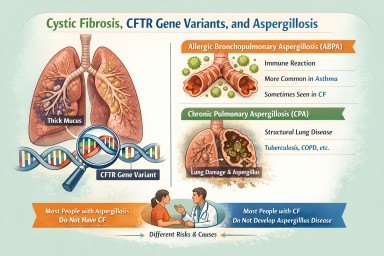
Cystic Fibrosis, CFTR Gene Variants, and Aspergillosis
Last reviewed: 8 April 2026
Some people with aspergillosis are told they have cystic fibrosis (CF), or that they carry a CFTR gene variant. This can be unexpected and may raise concerns about whether this explains their symptoms or diagnosis.
This article explains how cystic fibrosis and CFTR gene variants relate to Aspergillus-related lung disease, what current research shows, and—importantly—what conclusions should not be drawn.
Contents
- Key points
- Important reassurance
- What is cystic fibrosis?
- What is a CFTR gene variant?
- How CFTR affects the lungs
- How Aspergillus behaves in the lungs
- ABPA and cystic fibrosis
- CPA and cystic fibrosis
- Modern CF treatments and Aspergillus
- Does a CFTR variant explain symptoms?
- What should patients take from this?
- When to seek medical advice
- Conclusion
- References
Key points
- Most people with aspergillosis do not have cystic fibrosis.
- Most people with cystic fibrosis do not develop ABPA or CPA.
- ABPA is linked to mucus and immune responses, not just infection.
- CFTR variants may contribute to risk in some people, but are usually only one factor.
- CPA is mainly driven by structural lung damage, not CFTR genetics.
Important reassurance
Most people with aspergillosis do not have cystic fibrosis, and most people with cystic fibrosis do not develop Aspergillus-related disease.
Although these conditions can overlap, they are usually separate. Genetic findings such as CFTR variants should be interpreted carefully and in context.
What is cystic fibrosis?
Cystic fibrosis is a genetic condition caused by changes in the CFTR gene. This gene regulates salt and water movement across cells.
When CFTR function is reduced:
- mucus becomes thick and sticky
- airways are harder to clear
- microorganisms persist more easily
This creates an environment where bacteria and fungi can accumulate over time.
What is a CFTR gene variant?
CFTR variants range from severe mutations (causing cystic fibrosis) to mild or uncertain variants.
Carriers (with one variant):
- are common in the general population
- usually have no symptoms
- may have subtle effects in some cases
These subtle effects may include reduced mucus clearance or increased susceptibility to airway inflammation.
How CFTR affects the lungs
CFTR dysfunction affects the lungs in several key ways:
- Mucus dehydration: mucus becomes thick and difficult to clear
- Impaired clearance: particles and microbes remain in the airways
- Chronic inflammation: immune responses become exaggerated
This combination creates a “retention environment” where inhaled organisms—including Aspergillus—may persist.
How Aspergillus behaves in the lungs
Aspergillus is inhaled by everyone, but its effects vary depending on the lung environment.
- Healthy lungs: spores are cleared
- Impaired clearance: spores may persist
- Sensitive immune system: allergic reactions may develop
- Damaged lungs: chronic infection may develop
This explains why Aspergillus-related disease is diverse and depends heavily on underlying lung conditions.
ABPA and cystic fibrosis
ABPA is an allergic immune reaction to Aspergillus.
It is recognised in cystic fibrosis because:
- mucus retention increases exposure to Aspergillus
- immune responses can be exaggerated
However:
- Many CF patients never develop ABPA
- Most ABPA patients do not have CF
Some studies suggest CFTR variants may increase susceptibility, but this is not consistent across all research.
Key message: ABPA and CF can overlap, but one does not imply the other.
CPA and cystic fibrosis
CPA is a chronic fungal infection that develops in structurally damaged lungs.
The most important risk factor is:
pre-existing lung damage
This includes:
- bronchiectasis
- previous tuberculosis
- COPD
Cystic fibrosis can lead to bronchiectasis, and therefore indirectly increase CPA risk.
However:
- CPA is rarely driven directly by CFTR genetics
- most CPA patients do not have CF
Key message: CPA is primarily a disease of lung structure, not genetics.
Modern CF treatments and Aspergillus
CFTR modulators (such as elexacaftor/tezacaftor/ivacaftor) have transformed CF care.
They:
- improve CFTR function
- thin mucus
- improve clearance
Studies suggest:
- reduced Aspergillus detection in some patients
- fewer ABPA exacerbations in some cases
However:
- ABPA still occurs
- existing lung damage remains
- immune responses are not fully corrected
Overall: these therapies improve risk but do not eliminate Aspergillus-related disease.
Does a CFTR variant explain symptoms?
No single factor explains complex lung disease.
Symptoms may result from:
- underlying lung disease
- infection
- inflammation
- environmental exposure
A CFTR variant may contribute, but is rarely the sole cause.
What should patients take from this?
- CF and CFTR variants can sometimes contribute
- ABPA has the strongest connection
- CPA is mainly driven by lung damage
- Most patients with aspergillosis do not have CF
When to seek medical advice
Seek advice if symptoms worsen, change, or include coughing up blood, fever, or chest pain.
Conclusion
Cystic fibrosis and CFTR gene variants can play a role in some patients with Aspergillus-related lung disease, particularly where mucus clearance is affected. However, they should not be overemphasised. In most cases, they are just one part of a broader clinical picture involving lung structure, immune response, and environmental exposure.
References
- Miller PW et al. (1996)
- Marchand E et al. (2001)
- Eaton TE et al. (2002)
- Agarwal R et al. (2012)
- Chaudhary N et al. (2012)
- Warris A et al. (2019)
- Gamaletsou MN et al. (2018)
- Kosmidis C & Denning DW (2015)
- Moldoveanu B et al. (2021)
- Malik HS et al. (2025)
- Zeng C et al. (2025)
- Bendixen MP et al. (2025)
This article is for general information and does not replace advice from your clinical team.
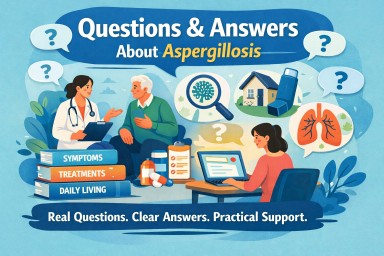
Real Questions. Clear Answers. Practical Support for People Living with Aspergillosis.
If you live with aspergillosis, or support someone who does, you will know how many questions can come up between appointments. Some are about symptoms. Some are about treatment. Some are about day-to-day life, side effects, monitoring, damp, mould, travel, fatigue, anxiety, or simply trying to understand what is happening.
That is why we have built and continue to expand our Patient Questions & Latest Articles section.
This part of our website brings together detailed answers to the kinds of questions patients and carers actually ask. Many of these articles began as real questions raised in our support meetings and online communities, then developed into fuller explanations so that others could benefit too.
Why this section is useful
Living with aspergillosis often means having to manage a lot of uncertainty. Information can be difficult to find, hard to interpret, or scattered across different places. We wanted to create a space that is easier to use: a place where people can browse practical topics, explore recent articles, and find trustworthy explanations written with patients and carers in mind.
Some people arrive with one urgent question. Others simply want to browse and see whether someone else has already asked the same thing. This section is designed to help with both.
What you will find there
- Answers to common patient and carer questions
- Detailed articles on symptoms, treatments, tests, monitoring, and side effects
- Practical explainers on issues such as damp, mould, air quality, medicines, and coping day to day
- Recent updates and newly published articles in one place
- Links into wider resources across our website
You do not need to read everything from start to finish. You can dip in when a particular question comes up, browse recent topics, or use the search function to look for something specific.
Built around real concerns
One of the strengths of this section is that it is grounded in real experience. The topics are not chosen at random. They reflect the concerns patients and carers bring to us repeatedly: the things people worry about, struggle to understand, or need explained more clearly.
That means the content is often practical, specific, and directly relevant to everyday life with aspergillosis.
Part of a wider knowledge base
If you want to browse recent questions and articles, this section is a very good place to start. If you are looking for more structured background information on aspergillosis, symptoms, tests, treatments, and monitoring, you can also move on from there to our wider Knowledge Hub.
Together, these resources are intended to make it easier for patients, families, and carers to find the information they need, when they need it.
Please use health information safely
As always, our website is here to support understanding, not replace medical advice from your own clinical team. We hope these articles help people feel better informed, better prepared, and better able to ask the right questions, but personal medical decisions should still be made with the professionals looking after your care.
Take a look
Explore the full section here:
Patient Questions & Latest Articles
If you think others may find it helpful, please feel free to share it.
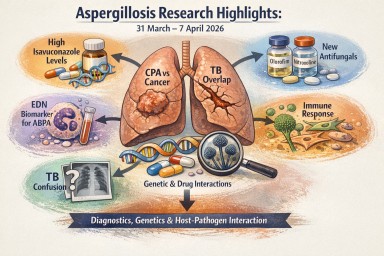
Weekly Aspergillosis Research Update: 31 March – 7 April 2026
This week’s research reinforces several consistent themes in aspergillosis: ongoing diagnostic confusion (particularly with tuberculosis and cancer), increasing movement toward precision medicine, and continued development of both antifungal therapies and biomarkers. There is also a growing emphasis on host-pathogen interactions rather than fungal burden alone.
Key Highlights
- Isavuconazole levels can become unexpectedly high due to genetics and drug interactions.
- Chronic pulmonary aspergillosis (CPA) can mimic lung cancer, risking delayed diagnosis.
- New biomarker (EDN) for ABPA shows promise for diagnosis and monitoring.
- Azole resistance research highlights differences between Aspergillus species.
- New antifungal approaches emerging (olorofim, nitroxoline).
- Host response is central – fibroblasts and immune pathways actively influence disease.
- TB vs aspergillosis confusion persists in real-world settings.
Contents
- Clinical & Diagnostic Studies
- Treatment & Pharmacology
- Biology, Immunology & Resistance
- Biomarkers & Diagnostics
- Wider Context
Clinical & Diagnostic Studies
CPA mistaken for lung cancer
Paper: PubMed
A case report describes chronic pulmonary aspergillosis presenting as suspected lung malignancy in a patient with asthma and ABPA overlap.
Why this matters: CPA continues to be misdiagnosed due to tumour-like imaging appearances. This reinforces the need to consider fungal disease in patients with underlying lung conditions.
Invasive sinus aspergillosis causing bone destruction
Paper: Free full text
Granulomatous invasive aspergillosis led to facial bone destruction and neurological symptoms.
Why this matters: Delayed diagnosis of invasive disease can lead to severe structural damage. Early imaging and specialist input are critical.
Aspergillus infection in suspected TB patients
Paper: PubMed
Study shows overlap between tuberculosis and aspergillosis in symptomatic patients.
Why this matters: Persistent global issue—shared symptoms delay correct diagnosis and treatment, particularly relevant for CPA pathways.
Invasive aspergillosis in critical illness
Paper: PubMed
Case of invasive pulmonary aspergillosis in a patient with severe viral illness.
Why this matters: Reinforces that aspergillosis is not limited to traditional risk groups and can complicate severe systemic illness.
Treatment & Pharmacology
Isavuconazole toxicity linked to genetics
Paper: Free full text
Case report of supratherapeutic isavuconazole levels linked to CYP3A5 genotype and interacting medications.
Why this matters: Even “predictable” antifungals show variability. Supports therapeutic drug monitoring and future personalised dosing approaches.
Olorofim pharmacokinetics
Paper: PubMed
Study demonstrates tissue distribution of olorofim in preclinical models.
Why this matters: Supports ongoing development of a key next-generation antifungal, particularly for resistant disease.
Nitroxoline shows antifungal activity
Paper: PubMed
Repurposed drug demonstrates activity against Aspergillus via copper disruption and oxidative stress.
Why this matters: Highlights potential for non-azole antifungal strategies in future treatment.
Biology, Immunology & Resistance
Azole resistance and Aspergillus genomics
Paper: PubMed
Genomic study of Aspergillus section Fumigati explores resistance mechanisms and pathogenicity.
Why this matters: Different species may respond differently to antifungals—accurate identification is increasingly important.
Fibroblasts actively support lung defence
Paper: PubMed
Study shows fibroblasts contribute to immune defence and tissue repair during infection.
Why this matters: Disease outcomes depend on host response, not just fungal burden—important for future therapies.
Immune pathway targeting in fungal keratitis
Paper: PubMed
PIM1 inhibition reduces inflammation via STING pathway signalling.
Why this matters: Supports growing interest in targeting immune pathways alongside antifungal therapy.
Biomarkers & Diagnostics
Eosinophil-derived neurotoxin (EDN) in ABPA
Paper: PubMed
EDN proposed as a biomarker for allergic bronchopulmonary aspergillosis.
Why this matters: Could improve diagnosis and monitoring, helping distinguish ABPA from asthma or sensitisation alone.
Commentary on ISHAM ABPA guidelines
Paper: PubMed
Discussion of updated international guidance on ABPA diagnosis and management.
Why this matters: Highlights ongoing refinement of diagnostic criteria and classification systems.
Wider Context
Fungal extracellular vesicles
Paper: PubMed
Review of fungal vesicles in pathogenesis and host interaction.
Why this matters: Emerging area that may influence future diagnostics and therapies.
Aspergillosis in broader disease settings
Why this matters: Aspergillosis continues to appear across a wide range of conditions, particularly in critically ill or immunocompromised patients.
Overall Interpretation
This week’s literature reinforces several strategic priorities:
- Earlier and more accurate diagnosis remains essential, particularly in distinguishing CPA from TB and cancer.
- Precision medicine is advancing, with growing roles for pharmacogenomics, drug monitoring, and species-level identification.
- New antifungal options are progressing, but remain largely in development.
- Host response is increasingly recognised as central to disease progression and outcomes.
Overall, the field continues to move toward more personalised, biology-driven approaches to diagnosis and management.
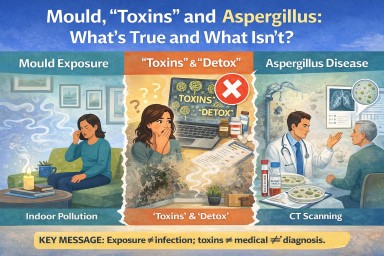
Mould, “Toxins” and Aspergillus: Understanding What’s True and What Isn’t
Last reviewed: April 2026
Key points
- Exposure to mould is not the same as having aspergillosis.
- Aspergillus is a common environmental fungus that most people inhale daily.
- “Mycotoxin” and “detox” explanations are common online but are not part of standard diagnosis.
- Symptoms usually arise from a combination of lung disease, infection, inflammation, and environment.
- Diagnosis relies on clinical tests (scans, blood tests, microbiology), not environmental testing alone.
- Specialist home testing is sometimes used—but only in specific clinical situations.
A guide for patients and carers
Many people with lung conditions come across information linking mould exposure, toxins, and Aspergillus infections. Some of this information can be helpful—but much of it can also be confusing.
This article explains the most common misunderstandings and what current medical practice actually relies on.
Important: Some tests measure exposure—but medical diagnosis requires evidence of disease.
Contents
- Why this topic is confusing
- Mould exposure vs Aspergillus disease
- Mycotoxins and “detox” claims
- Why “mould toxin tests” are not used diagnostically
- Why symptoms don’t have one single cause
- How Aspergillus conditions are actually diagnosed
- When home testing may be used
- What matters most for patients
Why this topic is confusing
- Mould is visible and easy to focus on
- Symptoms (fatigue, cough, breathlessness) are non-specific
- Online information often mixes different conditions together
This can lead to the idea that one single cause—such as “mould toxicity”—explains everything. In practice, respiratory conditions are usually more complex.
Mould exposure vs Aspergillus disease
Mould exposure
- Common in homes and outdoor air
- Can irritate airways
- May worsen symptoms
Aspergillus disease
- Occurs in specific medical contexts
- Related to lung structure and immune response
- Requires clinical diagnosis
Important context: Aspergillus spores are present in the air we breathe every day. Most people inhale them without developing disease.
Mycotoxins and “detox” claims
You may see references to:
- “Mycotoxin illness”
- “Die-off reactions”
- “Binders” to remove toxins
These ideas are widely discussed online, but they are not part of standard medical diagnosis or treatment for Aspergillus lung conditions.
This does not mean symptoms are not real. It means they are usually explained through:
- Inflammation
- Infection
- Underlying lung disease
Why “mould toxin tests” are not used diagnostically
Exposure is common
Many people have detectable environmental exposure, so results are not specific.
Results do not match symptoms reliably
Levels do not consistently correlate with disease or severity.
Lack of standardisation
Different labs use different methods, making interpretation difficult.
Not part of clinical guidelines
Major respiratory guidelines do not include these tests in diagnosing Aspergillus conditions.
Risk of confusion
- May cause unnecessary concern
- May lead to unproven treatments
Why symptoms don’t have one single cause
Symptoms often arise from a combination of:
- Underlying lung disease
- Inflammation
- Infection (fungal or bacterial)
- Environmental triggers (pollution, damp)
This is why symptoms can fluctuate and may not respond to a single explanation or treatment.
How Aspergillus conditions are actually diagnosed
Diagnosis is based on a combination of:
- CT imaging
- Blood tests (e.g. IgE, IgG)
- Microbiology (sputum or bronchoscopy)
Environmental testing alone is not sufficient to diagnose disease.
When home testing may be used
In some cases, specialist teams (for example via the Mycology Reference Centre Manchester) may arrange targeted environmental sampling.
This is different from commercial testing and focuses on:
- Specific clinically relevant fungi (e.g. Aspergillus species)
- Known allergens or pathogens
Why it is done
- Established Aspergillus-related disease
- Unexplained or persistent symptoms
- Concern about ongoing exposure
This testing is used to answer specific clinical questions and is interpreted alongside medical findings.
What matters most for patients
- Work with your clinical team for diagnosis and treatment
- Address damp and mould in your home
- Focus on practical steps that improve symptoms
- Avoid relying on a single explanation for complex symptoms
Final takeaway
Mould, environment, and Aspergillus are connected—but not in a simple cause-and-effect way.
Understanding this helps you focus on what is most likely to improve your health: appropriate treatment, good living conditions, and ongoing monitoring.
Author: aspergillosis.org
Note: Educational content only – not medical advice.
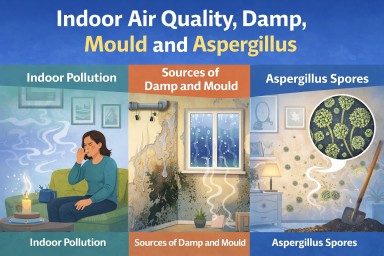
Indoor Air Quality, Damp, Mould and Aspergillus
Last reviewed: April 2026
Key points
- Indoor air problems usually relate to pollution, damp, or mould—these are different but can overlap.
- Aspergillus is a normal part of the environment and not automatically a sign of a problem indoors.
- Damp and mould can worsen breathing symptoms and should be taken seriously.
- Fixing the underlying moisture problem is more important than cleaning visible mould.
- Knowing who to contact (GP, landlord, council) is key to resolving problems.
Looking for broader information about the air you breathe? See our Clean Air and Lung Health guide for information about indoor and outdoor air pollution, ventilation, fungal spores and air filtration.
Indoor Air Quality, Damp, Mould and Aspergillus
A practical guide for patients
Many people with aspergillosis or other lung conditions are concerned about the air inside their home. This article explains how indoor air quality works, how to recognise problems, and what steps you can take to improve your environment.
Contents
- What affects indoor air?
- Three common problems
- Aspergillus in the home
- Damp and mould
- Symptoms and health effects
- Identifying problems
- Getting the right help
- Practical steps
- Air purifiers
What affects indoor air?
Indoor air quality is influenced by both indoor and outdoor factors. People spend most of their time indoors, so even small issues can have a noticeable effect on health.
Indoor air can be affected by:
- Outdoor pollution entering the building
- Damp and moisture
- Mould growth
- Cooking, heating, and cleaning products
- Dust and particles
Three common indoor air problems
1. Indoor air pollution
- Particles from cooking, heating, and candles
- Outdoor pollution enters indoors
2. Damp (moisture)
- Condensation, leaks, poor ventilation
- Creates conditions for mould growth
3. Mould
- Visible fungal growth on surfaces
- Releases spores into the air
Aspergillus in the home
Aspergillus is a common environmental fungus found in air, dust, and soil.
This means:
- Everyone breathes in Aspergillus spores regularly
- Indoor exposure is not unusual
Important: Exposure does not equal disease. Aspergillosis depends on lung health and immune response—not just environment.
Damp and mould
Damp and mould are important because they can affect respiratory health. Damp homes are linked with increased respiratory symptoms and illness.
UK guidance highlights that damp and mould can produce irritants and spores that affect the lungs and should be addressed promptly.
Symptoms and health effects
Indoor air problems may contribute to:
- Cough
- Breathlessness
- Wheeze
- Chest tightness
- Fatigue
These symptoms often overlap with infection or underlying disease, making them difficult to interpret.
Identifying problems
Signs of damp
- Condensation on windows
- Cold or damp walls
- Peeling paint or wallpaper
- Musty smell
Signs of mould
- Black or green patches
- Mould returning after cleaning
- Growth behind furniture or in corners
Hidden issues
- Persistent damp smell
- Symptoms are worse in certain rooms
Getting the right help
1. Your healthcare team
- If symptoms worsen
- If you suspect your environment is affecting your health
2. Landlord or housing provider
- Report problems early
- Keep records (photos, dates)
UK guidance makes clear that damp and mould should be addressed promptly and not ignored.
3. Local council
- If landlord does not act
- If health is affected
Further reading
See more detailed guidance and support resources here:
Housing, damp and mould articles (aspergillosis.org)
Practical steps
- Improve ventilation (especially kitchens and bathrooms)
- Reduce moisture
- Address leaks quickly
- Clean small mould areas safely
Air purifiers
Air purifiers can reduce airborne particles, but:
- They do not fix damp
- They do not remove mould from surfaces
- They do not treat aspergillosis
Final takeaway
Indoor air problems are common and often manageable. The key is to:
- Recognise the signs early
- Address moisture and mould properly
- Seek help when needed
Author: aspergillosis.org
Note: This article is for general education and does not replace medical advice.
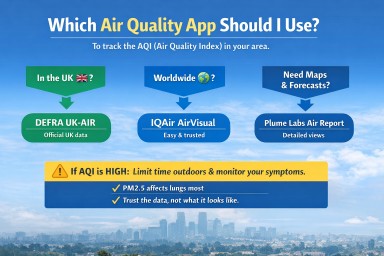
Outdoor Air Pollution and Aspergillosis
Last reviewed: April 2026
Key points
- Harmful air pollution can be visible or invisible.
- The Air Quality Index (AQI) is more reliable than how the air looks.
- Air pollution comes from natural, industrial, and everyday urban sources.
- Staying indoors can reduce exposure, but it does not remove it completely.
- People with aspergillosis, asthma, or bronchiectasis may be more sensitive to polluted air.
- Simple steps such as checking AQI, closing windows, and using filtration can help reduce exposure.
A practical guide for patients with lung conditions
Air pollution can make breathing symptoms worse for many people, especially those with existing lung disease. If you live with aspergillosis, asthma, bronchiectasis, chronic obstructive pulmonary disease (COPD), or other long-term lung problems, outdoor air quality can make a noticeable difference to how you feel day to day.
This guide explains what outdoor air pollution is, where it comes from, how to judge risk, what practical steps may help reduce exposure, and how to think sensibly about buying an air purifier.
Contents
- What is outdoor air pollution?
- Where does it come from?
- Visible or invisible pollution
- Understanding AQI (Air Quality Index)
- Where to check AQI
- Why air pollution matters in aspergillosis
- Dust storms, haze and extreme events
- How much protection does staying indoors give?
- Practical ways to reduce exposure
- Masks and air filtration
- Buying an air purifier: what matters and what does not
- Travel and changing environments
- Common misconceptions
- Managing your condition during high air pollution
- When to seek medical help
- References
What is outdoor air pollution?
Outdoor air pollution is a mixture of particles and gases in the air that can irritate the lungs and worsen breathing symptoms.
The main pollutants discussed in health guidance include:
- PM2.5 – very fine particles small enough to travel deep into the lungs
- PM10 – slightly larger particles that can still irritate the airways
- Nitrogen dioxide (NO2) – often linked to traffic and combustion
- Ozone (O3) – a gas that can irritate the lungs, especially in hot weather
- Smoke, dust and soot – depending on local conditions
Some of these pollutants are easy to see, but some are not. This is one reason why it is important not to rely only on appearance when judging air quality.
Where does it come from?
Outdoor air pollution usually comes from a combination of sources, not just one.
Natural sources
- Desert dust or sandstorms
- Wildfire smoke
- Wind-blown soil and dust
- Pollen (not usually included in AQI in the same way, but still relevant for symptoms)
Commercial and industrial sources
- Factories
- Power stations
- Shipping emissions
- Aviation emissions
- Construction and demolition dust
Domestic and urban sources
- Road traffic
- Heating systems
- Wood burners and solid fuel burning
- Cooking emissions in densely populated areas
In some situations, one source clearly dominates. For example, a severe dust event in North Africa or the Middle East may be mainly caused by natural desert dust. In a busy city, day-to-day pollution may be more strongly linked to traffic, heating, and industry. In many real-life situations, however, several sources are contributing at the same time.
Visible or invisible pollution
One of the most important things for patients to know is that harmful air pollution can be visible or invisible.
Visible pollution
- Dust or sand in the air
- Smoke
- Grey or brown smog
- Heavy haze
Invisible pollution
- Fine particles such as PM2.5
- Gases such as ozone or nitrogen dioxide
Clear sky does not always mean clean air. Equally, hazy air is not always the only dangerous situation. Some invisible pollutants can be especially harmful because they are easy to miss and can still reach deep into the lungs.
Key message: If you can see it, it may be harmful. If you cannot see it, it still may be harmful.
Understanding AQI (Air Quality Index)
The Air Quality Index (AQI) is often the most useful practical tool for patients. It gives a simple way of describing how healthy or unhealthy the air is likely to be.
| AQI | Meaning |
|---|---|
| 0–50 | Good |
| 51–100 | Moderate |
| 101–150 | Unhealthy for sensitive groups |
| 151–200 | Unhealthy |
| 201–300 | Very unhealthy |
| 300+ | Hazardous |
Very high readings can occur in severe dust events, smoke events, or heavily polluted urban conditions. For patients with lung disease, even levels well below the highest categories may still trigger symptoms.
Why AQI matters more than appearance
AQI can help you judge risk more reliably than what you can see or smell. Dust may have no obvious smell. Fine particles may be invisible. Air that looks like fog may actually be carrying a heavy particle load. Because of this, it is usually safer to trust the AQI reading rather than appearance alone.
Where to check AQI
Reliable sources for checking air quality include:
- QAir AirVisual
– widely used internationally, with real-time air quality data, forecasts, and health guidance - UK Department for Environment, Food & Rural Affairs (DEFRA) – UK-AIR
– official UK air quality data and health advice - Plume Labs
– useful for air-quality maps and forecasts - Windy
– helpful for visualising dust, smoke and weather patterns
For most people, it is best to use one app consistently, and occasionally cross-check with a second source if readings seem unusual.
Why air pollution matters in aspergillosis
People living with aspergillosis may already have lungs that are inflamed, structurally damaged, or more easily irritated. This may include people with:
- Allergic bronchopulmonary aspergillosis (ABPA)
- Chronic pulmonary aspergillosis (CPA)
- Bronchiectasis
- Asthma
- Chronic obstructive pulmonary disease (COPD)
Air pollution can potentially worsen:
- Cough
- Breathlessness
- Chest tightness
- Wheeze
- Mucus production
- General irritation of the airways
It can also make it harder to work out what is causing symptoms. A flare in symptoms is not always due to infection. Sometimes symptoms may be made worse by air pollution, airway irritation, or inflammation, even when there is no new infection.
Dust storms, haze and extreme events
In some parts of the world, especially in North Africa and the Middle East, very high AQI readings are often caused by dust and sand in the air. This can sometimes be mistaken for fog.
Clues that this may be dust rather than fog include:
- Very high AQI readings
- Dry-looking haze rather than damp mist
- Dust collecting on surfaces
- Weather reports mentioning dust, sand, or reduced visibility
Dust does not always have a noticeable smell, so the absence of smell does not mean the air is safe.
How much protection does staying indoors give?
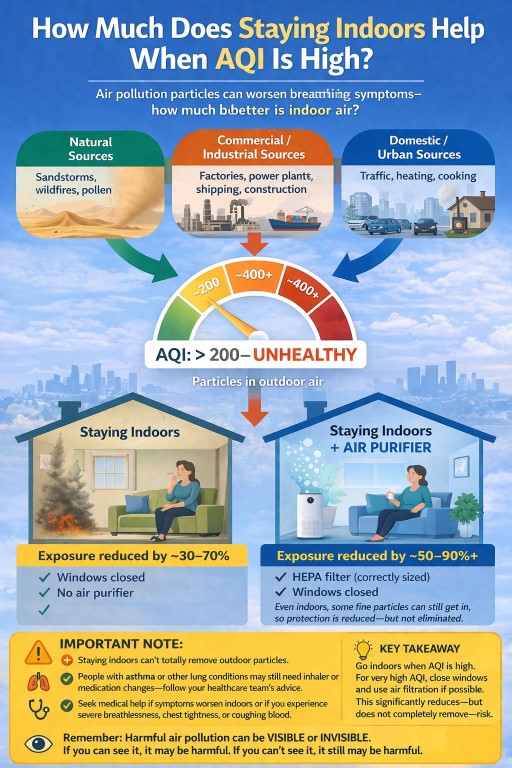
Staying indoors usually does help, but the amount of protection varies.
Typical home with windows closed
In general terms, staying indoors with windows closed may reduce exposure by around 30% to 70%, depending on:
- How well sealed the building is
- Whether windows or doors are being opened
- The age and condition of the property
- How long the pollution event lasts
Indoors with HEPA filtration
Using a correctly sized High Efficiency Particulate Air (HEPA) purifier can improve indoor air further. In some situations, this may reduce indoor particle exposure by around 50% to 90% or more.
Important limits
- Fine particles can still get indoors
- Older or drafty buildings may offer less protection
- Opening windows can quickly increase indoor particle levels again
The realistic goal is usually to reduce exposure as much as possible, not to expect complete protection.
Practical ways to reduce exposure
When outdoor AQI is high, the following steps may help:
- Stay indoors as much as possible
- Keep windows and doors closed
- Avoid strenuous outdoor activity
- Use air filtration if you have it
- Delay non-essential trips outdoors if practical
- Check AQI more than once per day during unstable conditions
For some people, symptoms may still occur even indoors. If so, it may help to reduce physical activity, keep rescue medication available if prescribed, and monitor symptoms closely.
Masks and air filtration
Masks
Well-fitted particle-filtering masks such as FFP2 or FFP3 may reduce exposure to fine particles when you need to go outdoors. Their usefulness depends heavily on fit, comfort, and wearing them correctly.
Not everyone can tolerate masks easily, especially if they are already short of breath, so they are not always a complete solution.
Air purifiers
A HEPA purifier may be especially useful in the room where you spend the most time, such as a bedroom or living room. Performance depends on:
- Correct room size
- Good maintenance of filters
- Keeping windows closed during high pollution periods
Buying an air purifier: what matters and what does not
Air purifiers can help reduce indoor particle levels, but it is important to be realistic about what they can and cannot do.
Important: An air purifier does not treat aspergillosis, does not cure asthma or bronchiectasis, and does not remove all particles. It is best thought of as one way to reduce exposure.
What matters most
- True HEPA filtration (or a clearly specified high-efficiency particle filter)
- Room-size coverage that matches the room where it will be used
- Clean Air Delivery Rate (CADR), where provided
- Noise level, especially if used in a bedroom
- Replacement filter cost and availability
What these terms mean
True HEPA: This usually means the purifier is designed to remove very small airborne particles efficiently. For patients concerned about dust and polluted air, this is generally more important than extra “smart” features.
Room size: A purifier that is too small for the room may not make much difference. It is usually better to buy the correct size for the room where you spend the most time than to buy a very cheap device that cannot handle the space.
CADR: This is a measure of how quickly a purifier can clean the air. Higher CADR usually means faster particle removal, though room size and real-life use still matter.
What to be cautious about
- Very cheap devices with vague claims but no clear filter specification
- Small USB-powered “desk purifiers” claiming to clean large rooms
- Ioniser-only devices with no proper particulate filter
- Products that make sweeping medical claims
Practical buying advice
- Start with the room you use most, often the bedroom or living room
- Choose a purifier that is rated for that room size
- Check how often filters need replacing and how much replacements cost
- Read the real specifications, not just the marketing headline
- If you are noise-sensitive, look at the sleep-mode or low-speed sound level
Reasonable expectations
Used properly, a good air purifier may make a meaningful difference during high pollution periods, especially when combined with keeping windows closed. However, it is only one part of managing exposure.
Travel and changing environments
Air quality can change dramatically between regions and countries. Some places have persistent urban pollution, while others may experience sudden dust events, wildfire smoke, or seasonal changes.
If you are travelling, it may help to:
- Check local AQI before travel and during your stay
- Be aware of seasonal dust or wildfire risks
- Know where you can spend time indoors if air quality worsens
- Keep regular medications with you
This can be particularly important if you already know that poor air quality tends to worsen your symptoms.
Common misconceptions
Myth: “If I cannot see pollution, it is safe.”
Fact: Invisible pollution such as PM2.5 and gases can still be harmful.
Myth: “If the air looks foggy, it must just be water vapour.”
Fact: Hazy air can sometimes be caused by dust or pollution rather than fog.
Myth: “Staying indoors completely solves the problem.”
Fact: Staying indoors usually reduces exposure, but does not remove it completely.
Myth: “If my symptoms worsen, it must be an infection.”
Fact: Pollution and airway irritation can also worsen symptoms.
Myth: “Air pollution is always caused by traffic.”
Fact: Pollution may come from natural, industrial, and domestic sources, often in combination.
Managing your condition during high air pollution
For people with aspergillosis, asthma, bronchiectasis or other lung conditions, air pollution can trigger symptoms even when there is no infection. Having a simple plan can help you feel more in control.
Continue your regular medication
- Take your prescribed medications as usual, including inhalers or antifungal treatments
- Do not stop or reduce medication without medical advice
Have your reliever medication available
- Carry your reliever inhaler (if prescribed) when leaving the house
- Make sure it is within easy reach, not packed away
- Check that it is in date and not empty
Plan ahead before going outdoors
- Check the AQI before leaving home
- Avoid going out during peak pollution times if possible
- Consider shorter trips or lower-exertion activities
Adjust activity levels
- Reduce strenuous activity when AQI is high
- Walk more slowly and allow extra time
- Take breaks if you feel breathless
Know your early warning signs
Be aware of symptoms that may indicate your lungs are being affected:
- Increased breathlessness
- More coughing or wheezing
- Chest tightness
- Unusual fatigue
Have a simple action plan
- Know what you usually do if symptoms worsen
- Follow any personalised plan provided by your clinical team
- Seek advice if symptoms are different from your usual pattern
Practical tip: On high pollution days, think ahead before leaving home—take medication with you, plan shorter trips, and allow extra time so you do not have to rush.
When to seek medical help
Seek medical advice promptly if you notice:
- Worsening breathlessness
- New or worsening wheeze
- Chest tightness that is not settling
- A major increase in cough
- Coughing blood (haemoptysis)
- Symptoms that are more severe than your usual pattern
If you have a severe flare, marked breathing difficulty, or significant haemoptysis, seek urgent medical help.
Final takeaway
Outdoor air pollution is an important and often under-recognised trigger for people with lung disease. For patients with aspergillosis and related lung conditions, it can worsen symptoms even when there is no new infection.
The most helpful practical points are:
- Use AQI rather than appearance alone
- Remember that pollution may be visible or invisible
- Stay indoors when AQI is high
- Use air filtration where possible
- Keep an eye on changing symptoms and seek help if needed
References
- World Health Organization. WHO Global Air Quality Guidelines. 2021.
- UK Department for Environment, Food & Rural Affairs (DEFRA). UK-AIR: Air Information Resource.
- IQAir AirVisual air quality app.
- European Respiratory Society statements and guidance on air pollution and respiratory health.
- British Thoracic Society resources on respiratory health and environmental exposure.
Author: Prepared for aspergillosis.org
Review note: This article is intended for general education and should not replace advice from your own clinical team.