

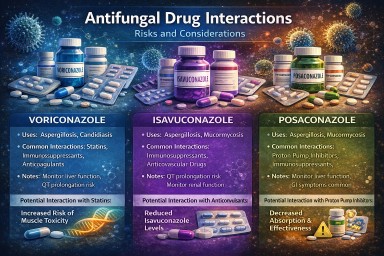
Voriconazole interactions: what patients need to know
Key points
- Voriconazole interacts with many medicines.
- It affects several liver enzyme pathways, including CYP3A4, CYP2C19, and CYP2C9.
- Its behaviour can vary more from one person to another than some other azoles.
- Some medicines can make voriconazole stronger, while others can make it less effective.
- Visual side effects and sensitivity to sunlight are well recognised with voriconazole.
What is voriconazole?
Voriconazole is an azole antifungal often used in serious fungal infections, including aspergillosis. It can be very effective, but it also has a relatively complex interaction profile.
Why voriconazole interacts with so many medicines
Voriconazole affects several liver enzyme systems, including CYP3A4, CYP2C19, and CYP2C9. It can increase the levels of some medicines, while some other medicines can lower voriconazole levels and reduce its effectiveness.
Because voriconazole metabolism varies between patients, the same combination can affect people differently.
The interaction groups most likely to matter
Steroids
Voriconazole can increase exposure to some steroids, including inhaled steroids, which may increase the risk of steroid side effects.
Medicines that reduce voriconazole levels
Some medicines, including certain anti-seizure medicines and rifampicin-type antibiotics, can reduce voriconazole levels so much that the antifungal may not work properly.
Blood thinners
Some blood thinners may become stronger when taken with voriconazole, increasing bleeding risk.
Heart rhythm medicines
Voriconazole can contribute to QT prolongation, so combinations with other medicines that affect heart rhythm may be particularly important.
Statins
Some statins can become stronger when taken with voriconazole, increasing the risk of muscle side effects.
Immunosuppressants
Medicines such as tacrolimus and ciclosporin can rise significantly with voriconazole and often require specialist monitoring and dose adjustment.
Sedatives and some mental health medicines
Some sedatives and psychiatric medicines can become stronger when combined with voriconazole, increasing the risk of drowsiness, confusion, or other side effects.
Voriconazole-specific issues patients should know
Visual changes
Temporary visual disturbances are well recognised with voriconazole. Patients may notice blurred vision, brighter vision, or changes in colour perception.
Photosensitivity
Voriconazole can increase sensitivity to sunlight. Patients should use sensible sun protection and report new skin changes, especially during long-term treatment.
Variable drug levels
Voriconazole levels can vary between patients, which is one reason some teams use therapeutic drug monitoring in selected situations.
What patients should do in practice
- Tell your clinical team and pharmacist that you are taking voriconazole.
- Check before starting new medicines, including over-the-counter or herbal products.
- Report visual changes, significant sensitivity to sunlight, or a change in symptoms after a medicine change.
- Do not change treatment without advice.
When to seek medical advice
Seek medical advice urgently for severe bleeding, fainting, severe palpitations, marked confusion, or rapid worsening after a medicine change.
Important
This page is educational and does not list every interaction. For a full check, use the BNF interaction checker or speak to a pharmacist or clinician.
References

Itraconazole interactions: what patients need to know
Key points
- Itraconazole can interact with many other medicines.
- It usually does this by affecting liver enzymes, especially CYP3A4.
- Some combinations need careful monitoring, while others are best avoided.
- Capsules and liquid formulations are not handled by the body in exactly the same way.
- This page highlights the interactions most likely to matter to people with aspergillosis.
What is itraconazole?
Itraconazole is an azole antifungal used in aspergillosis and other fungal infections. It has a relatively high interaction burden, so medicine checks are especially important before starting it and whenever another medicine is added, stopped, or changed.
Why itraconazole interacts with so many medicines
Itraconazole can increase the levels of some other medicines by affecting liver enzymes, especially CYP3A4. This means that some medicines may become stronger than intended, which can increase the risk of side effects or toxicity.
The interaction groups most likely to matter
Steroids and inhalers
This is one of the most important groups for many aspergillosis patients, especially those with asthma or allergic bronchopulmonary aspergillosis. Itraconazole can increase exposure to some steroids, including inhaled steroids, which may increase the risk of steroid side effects.
Possible symptoms to report: unusual weight gain, easy bruising, increased facial rounding, mood changes, worsening blood sugar control, weakness, or marked fatigue.
Statins
Some statins can become much stronger when taken with itraconazole. This can increase the risk of muscle toxicity.
Possible symptoms to report: new muscle pain, muscle weakness, or dark urine.
Blood thinners
Itraconazole can increase the effect of some blood thinners, which may raise bleeding risk.
Possible symptoms to report: unusual bruising, bleeding that is hard to stop, black stools, vomiting blood, or coughing up much more blood than usual.
Heart and rhythm medicines
Some combinations can increase the risk of serious heart rhythm problems. Itraconazole is also used cautiously in people with a history of ventricular dysfunction or heart failure unless the infection is serious.
Possible symptoms to report: fainting, palpitations, marked dizziness, increasing ankle swelling, or worsening breathlessness.
Sleeping tablets, sedatives, and some mental health medicines
Some sedatives and psychotropic medicines can become stronger when combined with itraconazole, increasing the risk of drowsiness, confusion, falls, or breathing problems.
Immunosuppressants
Medicines such as tacrolimus and ciclosporin can rise significantly when taken with itraconazole and usually need specialist monitoring.
Medicines that can make itraconazole less effective
Some medicines lower itraconazole levels, which means the antifungal may not work as well. This can happen with some anti-seizure medicines, rifampicin-type antibiotics, and some antiviral medicines.
Acid-reducing medicines and itraconazole capsules
Reduced stomach acid can lower the absorption of itraconazole capsules. This means reflux medicines, antacids, and some acid-suppressing treatments can affect how well the capsules work. The liquid formulation behaves differently and should not be treated as interchangeable with capsules.
What patients should do in practice
- Keep a current medicines list and bring it to appointments.
- Tell clinicians and pharmacists if you are taking itraconazole.
- Ask specifically about inhalers, steroid tablets, statins, blood thinners, and reflux treatment.
- Do not change doses or stop medicines without advice.
- If your itraconazole formulation changes, ask whether it should be taken with food or on an empty stomach.
When to seek medical advice
Seek urgent medical advice for severe bleeding, black stools, vomiting blood, severe muscle pain, fainting, marked palpitations, or rapidly worsening breathlessness.
Important
This page is not a full interaction database. For a complete medicine-by-medicine check, use the BNF interaction checker or speak to a pharmacist or clinician.
References
Amphotericin B interactions: what patients need to know
Key points
- Amphotericin B comes in different formulations, and they are not interchangeable.
- Its main interaction risks are different from the azoles.
- The most important problems are usually kidney stress, low potassium, low magnesium, and additive toxicity with other medicines.
- These risks matter most with intravenous treatment.
- If you hear “amphotericin B”, it is important to know which formulation is being used.
What is amphotericin B?
Amphotericin B is an antifungal used mainly for serious fungal infections. In modern UK practice this often means liposomal amphotericin B, but conventional amphotericin B deoxycholate is also a recognised formulation.
Why amphotericin B interactions are different from azoles
Unlike azole antifungals, amphotericin B does not mainly cause medicine interactions through liver enzymes. Its most important interaction risks usually relate to kidney injury, low potassium, low magnesium, and infusion-related effects.
The interaction groups most likely to matter
Other medicines that can damage the kidneys
This is one of the most important groups. Combining amphotericin B with other nephrotoxic medicines can increase the risk of kidney injury.
Diuretics, steroids, and other medicines that lower potassium
Amphotericin B can lower potassium, and some other medicines can make this worse. This may increase the risk of weakness, cramps, or heart rhythm problems.
Digoxin and heart-rhythm-sensitive situations
Low potassium caused by amphotericin B can make digoxin-related toxicity more likely and may increase the importance of electrolyte monitoring.
Flucytosine
When combined with flucytosine, specialist monitoring may be needed because toxicity can increase.
Some cancer medicines and intensive hospital treatments
In hospital, additive toxicity with other intensive treatments may be particularly important, especially where kidneys and electrolytes are already under strain.
White blood cell transfusions
Acute lung reactions are a recognised specialist concern if amphotericin B is given during or soon after leukocyte transfusions.
Why the formulations matter
Amphotericin B formulations are not interchangeable. Conventional amphotericin B deoxycholate and liposomal amphotericin B have different dosing, different handling by the body, and different safety profiles. Using the wrong formulation in the wrong dose has caused serious and even fatal errors.
In general, liposomal amphotericin B is less nephrotoxic than conventional amphotericin B deoxycholate, but it still requires careful monitoring.
What patients should do in practice
- Ask which amphotericin B formulation is being used.
- Tell the clinical team about all medicines, especially kidney-risk medicines, diuretics, steroids, and digoxin.
- Expect blood tests to monitor kidney function, potassium, and magnesium during intravenous treatment.
- Report weakness, reduced urine output, worsening swelling, palpitations, or marked dizziness.
When to seek medical advice
Seek urgent medical help for severe breathlessness, fainting, major palpitations, or a rapid deterioration during treatment.
Important
This page is educational and does not list every possible interaction. Amphotericin B treatment is usually managed by specialist teams, especially when given intravenously.
References
Isavuconazole interactions: what patients need to know
Key points
- Isavuconazole can interact with other medicines, but its interaction profile is often less complex than older azoles.
- It mainly interacts through CYP3A4.
- Some medicines can increase isavuconazole levels, while others can reduce its effectiveness.
- It has an important difference from some other azoles: it can shorten the QT interval.
- It is still essential to check new medicines carefully.
What is isavuconazole?
Isavuconazole is a newer azole antifungal used in invasive aspergillosis and some other serious fungal infections. It is often seen as having a more predictable interaction profile than some older azoles, but it still has important interactions.
Why isavuconazole interacts with other medicines
Isavuconazole is mainly linked to CYP3A4. This means some medicines can become stronger when combined with it, while other medicines can lower isavuconazole levels and reduce its effectiveness.
The interaction groups most likely to matter
Medicines that reduce isavuconazole effectiveness
Some medicines, including rifampicin-type antibiotics and certain anti-seizure drugs, can lower isavuconazole levels and may make treatment ineffective.
Steroids
Some steroid levels may rise with isavuconazole, although the interaction pattern is often less intense than with some older azoles.
Immunosuppressants
Medicines such as tacrolimus and ciclosporin may increase and usually need specialist review and monitoring.
Blood thinners
Some blood thinners may become stronger, increasing bleeding risk.
Statins
Some statin levels may increase, which can raise the risk of muscle side effects.
Important isavuconazole-specific points
QT shortening
Unlike several other azole antifungals, isavuconazole can shorten the QT interval. This is an important difference and should be considered when other heart medicines are being reviewed.
Generally simpler interaction profile
Compared with itraconazole and voriconazole, isavuconazole is often considered a little easier to manage in patients taking several medicines, although checks are still essential.
What patients should do in practice
- Tell your pharmacist or clinician if you are taking isavuconazole.
- Check before starting prescription, over-the-counter, or herbal medicines.
- Ask specifically about anti-seizure drugs, antibiotics, blood thinners, and heart medicines.
- Do not stop or change medicines without advice.
When to seek medical advice
Seek medical advice urgently for severe bleeding, fainting, severe palpitations, severe muscle pain, or rapid worsening after a medicine change.
Important
This page is educational and not a complete interaction database. For a full check, use the BNF interaction checker or speak to a pharmacist or clinician.
References
- BNF: isavuconazole monograph and interactions
- UK isavuconazole SmPCs - not available
Posaconazole interactions: what patients need to know
Key points
- Posaconazole can interact with other medicines, although its interaction pattern is often a little simpler than itraconazole or voriconazole.
- It mainly interacts through CYP3A4 inhibition.
- Important interaction groups include immunosuppressants, steroids, blood thinners, and some heart medicines.
- Some medicines can reduce posaconazole levels and make treatment less effective.
- Tablets and oral suspension are not interchangeable in the same way.
What is posaconazole?
Posaconazole is an azole antifungal used in aspergillosis and in some high-risk patients for prevention of fungal infection. It is often seen as somewhat easier to manage than some older azoles, but important interactions still exist.
Why posaconazole interacts with other medicines
Posaconazole mainly affects CYP3A4, a key liver enzyme involved in handling many medicines. This means some drugs can become stronger, while some combinations can lower posaconazole levels and make it less effective.
The interaction groups most likely to matter
Steroids
Posaconazole can increase exposure to some steroids, including inhaled or oral steroids, which may increase the risk of steroid side effects.
Immunosuppressants
Medicines such as tacrolimus and ciclosporin can rise significantly with posaconazole and usually need close specialist monitoring.
Blood thinners
Some blood thinners may become stronger, increasing bleeding risk.
Statins
Some statins can rise in level, increasing the risk of muscle problems.
Heart rhythm medicines
Some combinations can increase the risk of heart rhythm problems and need careful review.
Medicines that reduce posaconazole effectiveness
Some medicines, including rifampicin-type antibiotics and certain anti-seizure drugs, can lower posaconazole levels and may make treatment less effective.
Posaconazole formulations and absorption
Posaconazole comes in different forms, including tablets, oral suspension, and infusion. The oral suspension and tablets are not handled identically by the body and should not be assumed to be interchangeable dose-for-dose without clinical advice.
In practice, the tablets tend to be more predictable than the suspension.
What patients should do in practice
- Tell your pharmacist or clinician if you are taking posaconazole.
- Ask about new medicines, especially blood thinners, steroids, statins, and heart medicines.
- If your formulation changes, ask whether there are any special instructions.
- Do not stop or swap medicines without advice.
When to seek medical advice
Seek medical advice urgently for severe bleeding, fainting, major palpitations, severe muscle pain, or rapid worsening after a medicine change.
Important
This page does not list every interaction. For a full check, use the BNF interaction checker or speak to a pharmacist or clinician.
References
Antifungal drug interactions: what patients with aspergillosis need to know
Key points
- Antifungal medicines can interact with other medicines, including inhalers, steroid tablets, blood thinners, heart medicines, cholesterol tablets, and some over-the-counter or herbal products.
- The azole antifungals usually interact by affecting how the liver handles medicines.
- Amphotericin B is different: its main interaction risks are more often linked to kidneys, potassium, magnesium, and infusion-related effects.
- This page gives an overview. It does not list every interaction.
- For a full medicine-by-medicine check, use the BNF interaction checker or ask a pharmacist or clinician.
Why interactions matter in aspergillosis
People with aspergillosis often take more than one medicine. This may include inhalers, steroid tablets, medicines for reflux, antibiotics, pain relief, blood pressure treatment, blood thinners, cholesterol tablets, and drugs for other long-term conditions. That means medicine checks are especially important whenever an antifungal is started, stopped, or changed.
How the main antifungals differ
Most long-term interaction questions in aspergillosis involve the azole antifungals: itraconazole, voriconazole, posaconazole, and isavuconazole. These mainly interact because they affect liver enzymes, especially CYP3A4, although some also affect CYP2C9 and CYP2C19.
Amphotericin B behaves differently. Its most important risks are usually kidney stress, low potassium, low magnesium, and additive toxicity with other medicines rather than classic liver-enzyme interactions.
Quick comparison table
| Antifungal | Main interaction pattern | Typical complexity | Important extra point |
|---|---|---|---|
| Itraconazole | Strong enzyme-based interactions, especially CYP3A4 | High | Capsules and liquid are not handled by the body in the same way |
| Voriconazole | Complex enzyme-based interactions involving several CYP pathways | High | More variable between patients; visual side effects and photosensitivity are well recognised |
| Posaconazole | Mainly CYP3A4-related interactions | Moderate | Tablets and oral suspension are not interchangeable in the same way |
| Isavuconazole | Mainly CYP3A4-related interactions, usually less complex than older azoles | Lower to moderate | Can shorten the QT interval |
| Amphotericin B | Kidney, potassium, magnesium, and infusion-related interaction risks | Different rather than simpler | Formulations are not interchangeable |
Individual antifungal guides
- Itraconazole interactions: what patients need to know
- Voriconazole interactions: what patients need to know
- Posaconazole interactions: what patients need to know
- Isavuconazole interactions: what patients need to know
- Amphotericin B interactions: what patients need to know
What patients should do in practice
- Keep an up-to-date list of all medicines, including inhalers, creams, over-the-counter medicines, supplements, and herbal products.
- Tell your doctor, nurse, pharmacist, or hospital team that you are taking an antifungal.
- Do not start, stop, or swap medicines on your own because of something you have read online.
- Ask specifically about new medicines, steroid changes, reflux treatment, blood thinners, cholesterol medicines, and heart medicines.
When to seek medical advice
Seek medical advice promptly if symptoms change after a medicine is started, stopped, or changed. Seek urgent help for severe bleeding, fainting, severe muscle pain, marked palpitations, rapidly worsening breathlessness, severe drowsiness, or a sudden significant decline in your health.
Important
This resource is educational. It does not replace personalised advice from your clinical team, GP, or pharmacist, and it is not a complete interaction database.
References
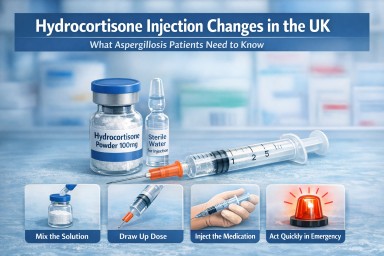
Hydrocortisone Injection Changes in the UK: What It Means for Aspergillosis Patients
Last reviewed: March 2026
Audience: Patients, carers, and non-specialist healthcare professionals
Key points
- A ready-to-use hydrocortisone injection (liquid solution) is no longer available in the UK.
- Patients are now usually given a hydrocortisone injection that must be mixed before use.
- The medication itself is unchanged, but preparation is more complex.
- This may feel more difficult during an emergency, especially if someone is unwell or distressed.
- Training and preparation can help reduce delays.
- Always seek urgent medical help in a suspected emergency.
Table of contents
- Overview
- Why hydrocortisone matters in aspergillosis
- What has changed in the UK
- What this means in practice
- Potential concerns and risks
- Practical steps for patients and carers
- Common questions
- When to seek medical help
- References
Overview
Hydrocortisone is a steroid hormone used as cortisol replacement in people whose bodies cannot produce enough cortisol, a condition known as adrenal insufficiency.
Some patients with aspergillosis may be affected by this change because:
- long-term steroid use can suppress the body’s natural cortisol production
- adrenal function may be reduced during or after treatment
- some patients may already have adrenal insufficiency or need emergency steroid cover
In emergencies, hydrocortisone injections can be life-saving.
Why hydrocortisone matters in aspergillosis
Patients with aspergillosis may encounter adrenal-related issues for several reasons. For example, some people with allergic bronchopulmonary aspergillosis (ABPA) have needed prolonged courses of steroid treatment. Over time, this can reduce the body’s own cortisol production.
There can also be concerns about drug interactions, especially where antifungal medicines and steroid medicines affect the way the body handles hormones. Not every aspergillosis patient will be affected, but for some people this is an important part of their wider treatment plan.
If cortisol levels are too low during illness, injury, vomiting, or other physical stress, this can lead to an adrenal crisis, which is a medical emergency.
What has changed in the UK
Previously, some patients were supplied with a ready-made liquid hydrocortisone injection. This was already in solution and could be given more quickly.
This ready-to-use product is no longer available in the UK.
Most patients who need emergency hydrocortisone injection are now supplied with a preparation that includes:
- a vial containing hydrocortisone powder
- a liquid for mixing
- a syringe and needle for drawing up and giving the injection
The medicine itself is still hydrocortisone and remains standard treatment. What has changed is the practical process: it now needs to be prepared before it can be injected.
Diagram: preparing hydrocortisone injection
Preparing a hydrocortisone injection (Video) : https://www.youtube.com/watch?v=NXXB3w1ADcI
What this means in practice
For many patients, this change is manageable with training and practice. However, it does change the experience of using emergency medication.
Compared with a ready-made solution, there are now more steps involved. In a calm situation, that may not seem significant. In an emergency, it can feel much harder.
This is especially relevant if the person is:
- very unwell
- vomiting
- dizzy or confused
- trying to guide a family member or carer through the process
For some patients, this could potentially cause a delay in giving the injection. That does not mean the current treatment is ineffective or unsafe, but it does mean that confidence, familiarity, and training matter even more.
Potential concerns and risks
1. More steps may mean more delay
The current injection usually has to be mixed before use. That means opening the kit, preparing the medicine, drawing it up, and then giving the injection. In an emergency, even a short delay may feel important.
2. Stress makes practical tasks harder
Patients and carers are often being asked to act quickly during a frightening situation. Even people who have previously been shown what to do may lose confidence if they rarely need to use the injection.
3. Training may vary
Not everyone receives the same level of teaching or refresher support. Some people may feel very confident. Others may feel unsure, especially if their kit has changed.
4. Aspergillosis patients may already be managing a lot
Some patients are already coping with breathlessness, fatigue, infections, multiple medicines, and complex follow-up. Adding a more complicated emergency injection process can feel like an extra burden.
It is important to keep this concern in proportion. Many patients and carers do use mixed hydrocortisone kits successfully. The key issue is not that the medicine no longer works, but that the loss of a ready-made formulation may make emergency use less straightforward.
Practical steps for patients and carers
If you have been prescribed emergency hydrocortisone, it may help to:
- check that you know exactly which product you have been given
- ask for a demonstration of how to prepare and inject it
- ask for a refresher if you are not confident
- make sure family members, carers, or trusted friends also know what to do
- keep the emergency kit somewhere accessible and check expiry dates regularly
- carry any steroid emergency information you have been given, such as a steroid card
These steps cannot remove all risk, but they may reduce hesitation and confusion if the injection is ever needed urgently.
Common questions
Has hydrocortisone been withdrawn completely?
No. Hydrocortisone is still widely used. The main issue is that a ready-to-use liquid injectable form is no longer available in the UK.
Is the current injection less effective?
No. The medicine remains hydrocortisone. The change is in the formulation and the preparation steps, not in the intended effect of treatment.
Why does this matter so much?
In an emergency, simple treatments are often easier to use correctly and quickly. A preparation that needs mixing may be more difficult for some patients or carers under pressure.
Does this affect every aspergillosis patient?
No. This is mainly relevant to people who have adrenal insufficiency, adrenal suppression, or a clear plan from their clinical team to keep emergency hydrocortisone available.
Should patients be worried?
Patients should not panic, but it is reasonable to recognise this as a practical concern. If you rely on emergency hydrocortisone, it is sensible to make sure you understand your current kit and feel as confident as possible using it.
When to seek medical help
Seek urgent medical help if there are symptoms suggesting a possible adrenal emergency, especially if there is:
- severe weakness
- collapse or near-collapse
- confusion or marked drowsiness
- vomiting or inability to keep medicines down
- sudden severe illness or infection
If an emergency hydrocortisone injection has been prescribed, follow the instructions given by your clinical team and seek urgent medical care immediately.
References
- British National Formulary (BNF): hydrocortisone medicinal forms
- Society for Endocrinology guidance on adrenal crisis and emergency steroid treatment
- NHS information on steroids, steroid emergency cards, and urgent care
- UK endocrine and Addison’s patient group communications on hydrocortisone supply changes
Author and review information
Prepared for: aspergillosis.org
Purpose: General information for patients, carers, and non-specialist healthcare professionals
Important note: This article is intended for general education and should not replace individual medical advice from your own clinical team.
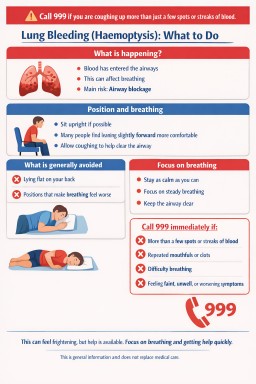
Lung Bleeding (Haemoptysis) in Aspergillosis: What It Means and What to Expect
 Last reviewed: March 2026
Audience: Patients, carers, and non-specialist healthcare professionals
Applies to: Chronic Pulmonary Aspergillosis (CPA), bronchiectasis, and related lung conditions
Key Points
- Coughing up more than a few spots or streaks of blood is a medical emergency
- If bleeding is heavier or affects breathing, call 999 immediately
- The main immediate risk is airway blockage, not just blood loss
- Emergency care focuses on keeping airways clear and protecting breathing
- Some general positioning approaches are commonly used in healthcare settings
- This page provides general information only and is not a substitute for medical care
Table of Contents
- What is haemoptysis?
- Why can it happen in aspergillosis?
- Why does it feel so frightening?
- When is it an emergency?
- What happens during emergency care?
- While waiting for help (general guidance)
- Why positioning matters
- Understanding airway safety
- What is generally avoided
- What happens after hospital care?
- Medications such as tranexamic acid
- Common questions
- When to seek medical help
What is haemoptysis?
Haemoptysis means coughing up blood from the lungs or airways. This can range from small streaks in sputum to larger bleeds.
In people with Chronic Pulmonary Aspergillosis (CPA) and related lung conditions, haemoptysis can occur due to changes in lung structure and blood vessels.
Why can it happen in aspergillosis?
- Areas of lung damage (such as cavities) may develop
- Blood vessels in these areas can become fragile
- Inflammation may increase susceptibility to bleeding
Not all patients will experience haemoptysis, but awareness is important.
Why does it feel so frightening?
Many patients describe a strong sensation of being unable to breathe during a lung bleed.
This can occur because blood enters the airways, which may interfere with airflow. Even small amounts in the wrong place can feel overwhelming.
This reaction is common and understandable.
When is it an emergency?
NHS guidance advises calling 999 if you are coughing up more than just a few spots or streaks of blood.
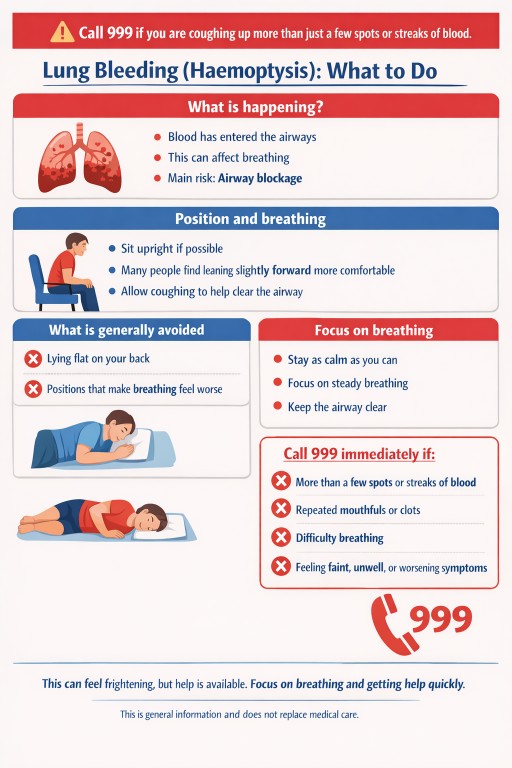
Call 999 immediately if:
- You are coughing up more than just a few spots or streaks of blood
- You are coughing up repeated mouthfuls or clots
- You have difficulty breathing
- You feel faint, unwell, or symptoms are worsening
Small streaks or flecks of blood should still be checked by a healthcare professional, but larger or increasing amounts should be treated as an emergency.
What happens during emergency care?
Emergency responders and hospital teams focus on:
- Supporting breathing (for example, with oxygen)
- Monitoring vital signs
- Identifying the source of bleeding
- Protecting unaffected areas of the lung where possible
In some cases, procedures such as bronchial artery embolisation may be used to control bleeding.
While waiting for help (general guidance)
If you are waiting for emergency services to arrive, general first-aid principles often focus on maintaining comfort and supporting breathing.
- If possible, try to remain in a position that feels easiest for breathing
- Many patients find that being upright or slightly forward is more comfortable
- Try to keep the airway clear by allowing coughing if needed
The priority is to seek urgent medical help rather than attempting to manage the situation alone.
In an emergency, it may not be possible to adopt an “ideal” position—focus on calling for help.
Why positioning matters
In healthcare settings, positioning is sometimes used to help:
- Keep airways as clear as possible
- Reduce the spread of blood within the lungs
- Maintain breathing while further treatment is arranged
This is based on general principles of lung anatomy and airflow. The aim is not to stop bleeding, but to support breathing.
Many people find it easier to breathe when upright or leaning slightly forward. This may help fluid move out through the mouth rather than further back into the main airways.
Understanding airway safety
In situations where there is bleeding (or sometimes vomiting), the main concern is keeping the airway clear so that air can move in and out of the lungs.
Fluid in the airway can interfere with breathing, which is why emergency care focuses on maintaining airway clearance as well as treating the underlying cause.
Positions that allow fluid to move out of the mouth rather than back into the airway are generally preferred. Many people find being upright or slightly forward helps with this.
If someone becomes unable to remain upright, is very drowsy, or is vomiting, placing them on their side (recovery position) may help keep the airway clear while waiting for emergency services.
This information is general and does not replace emergency care. Always call 999 if symptoms are severe.
What is generally avoided
In clinical practice, certain positions are usually avoided because they may make breathing more difficult.
- Lying flat on the back
- Positions that feel like they worsen breathing
If you feel unsure, prioritise comfort and breathing while waiting for help.
What happens after hospital care?
After an episode of haemoptysis, your clinical team may:
- Investigate the cause of bleeding
- Review your current treatment
- Discuss whether any preventative measures are appropriate
If you have experienced haemoptysis, it may be helpful to ask your team whether you need an individualised plan.
Medications such as tranexamic acid
Some patients may be prescribed tranexamic acid to help reduce bleeding.
If you have been given this medication with clear instructions, it may be intended for use during bleeding episodes. It should only be taken exactly as directed by your clinical team.
Tranexamic acid does not replace the need to seek urgent medical help. If you are coughing up more than a few spots or streaks of blood, or feel unwell or breathless, call 999.
If you are unsure whether to take it during an episode, seek urgent medical advice.
Common Questions
Is coughing up blood always serious?
Any new or unexplained bleeding should be assessed. Larger amounts require urgent attention.
Can I manage this at home?
Significant haemoptysis should not be managed at home. Always seek urgent medical help.
Will it happen again?
This varies between individuals. Your specialist team can advise based on your condition.
When to seek medical help
Call 999 immediately if:
- You are coughing up more than just a few spots or streaks of blood
- You have difficulty breathing
- You feel faint, unwell, or symptoms are worsening
Seek medical advice urgently (NHS 111 or GP) if:
- You notice new or increasing blood in sputum
- You have recurrent or ongoing minor bleeding
Important safety note
This information is for general education only and does not replace medical advice. In an emergency, always seek immediate professional care.
References
- NHS. Coughing up blood (haemoptysis): https://www.nhs.uk/symptoms/coughing-up-blood/
- European Respiratory Society and interventional radiology guidance on haemoptysis
Author and review
Author: National Aspergillosis Centre (Patient Education Team)
Review: Specialist clinicians, Manchester University NHS Foundation Trust
Next review due: March 2027
Muscle Cramps in Aspergillosis (Including ABPA and CPA): Causes, Triggers, and What May Help
Audience: Patients, carers, and non-specialist healthcare professionals
Key Points
- Muscle cramps—especially at night—are commonly reported by people with long-term lung conditions such as allergic bronchopulmonary aspergillosis (ABPA) and chronic pulmonary aspergillosis (CPA).
- There is usually no single cause; cramps often result from a combination of factors including medications, fatigue, hydration, and electrolyte balance.
- In CPA, additional factors such as antifungal therapy and kidney function may play an important role.
- Persistent or worsening cramps should be discussed with a healthcare professional, as some causes are treatable.
Contents
- Overview
- Why do muscle cramps happen?
- How is this linked to aspergillosis and its treatment?
- Additional considerations in chronic pulmonary aspergillosis (CPA)
- Common contributing factors
- What may help reduce cramps
- When to seek medical advice
- Common questions
- References
Overview
Muscle cramps are sudden, involuntary contractions of a muscle that can last from seconds to several minutes. Many people describe them as painful tightening or “locking” of the muscle, often affecting the calves, thighs, feet, or hands.
For people living with aspergillosis, including allergic bronchopulmonary aspergillosis (ABPA) and chronic pulmonary aspergillosis (CPA), cramps are frequently discussed in patient communities. They are particularly common at night and may affect sleep and quality of life.
Importantly, while cramps can be uncomfortable and sometimes severe, they are often manageable once contributing factors are identified.
Why do muscle cramps happen?
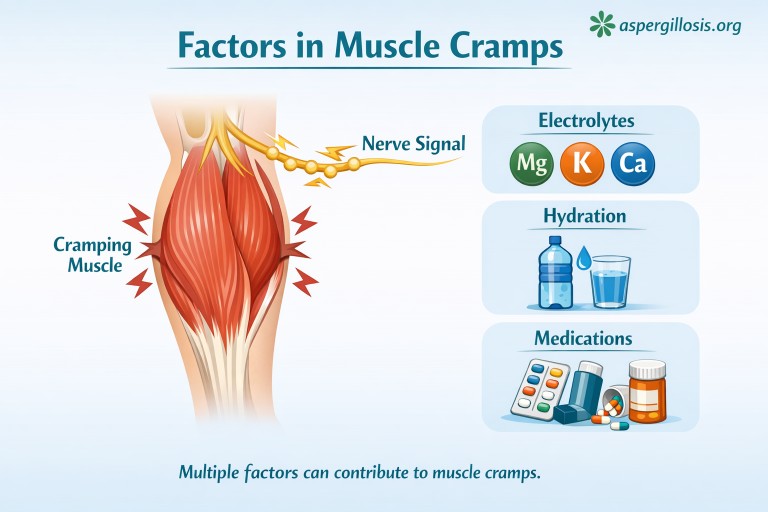
Muscle cramps occur when the normal signals between nerves and muscles become disrupted. This can be influenced by:
- Changes in fluid balance (hydration)
- Electrolyte levels (such as magnesium, potassium, calcium)
- Muscle fatigue or overuse
- Nerve sensitivity or irritation
In many cases, more than one of these factors is involved.
How is this linked to aspergillosis and its treatment?
People with aspergillosis may experience additional factors that increase the likelihood of cramps:
- Medications – some treatments used in lung disease (including antifungals, corticosteroids, and inhalers) may affect muscle function or electrolyte balance
- Chronic inflammation – ongoing inflammation in the body can affect muscles and nerves
- Reduced activity or sudden changes in activity – both inactivity and overexertion can trigger cramps
- Co-existing conditions – such as kidney or hormonal conditions, which can influence electrolyte balance
Because many patients take multiple medications, it can sometimes be difficult to identify a single cause.
Additional considerations in chronic pulmonary aspergillosis (CPA)
People living with chronic pulmonary aspergillosis (CPA) may experience additional factors that increase the likelihood of muscle cramps.
- Long-term antifungal therapy – medications such as azoles (e.g. itraconazole or voriconazole) can affect electrolyte balance or interact with other medicines
- Kidney function – the kidneys play a key role in regulating electrolytes, and even mild changes may contribute to cramping
- Electrolyte imbalance – including magnesium, potassium, and calcium levels, which may fluctuate despite supplementation
- Medication combinations – multiple treatments may have additive effects on muscles or nerves
- Fatigue and reduced conditioning – common in chronic lung disease and may increase susceptibility to cramps
These factors mean that cramps in CPA are often multifactorial and may change over time.
Common Contributing Factors
Based on patient reports and clinical understanding, the following are commonly associated with muscle cramps:
- Physical exertion – especially in physically demanding jobs
- Age-related muscle changes
- Dehydration
- Electrolyte imbalance
- Medication effects
- Poor sleep or positioning
Some people also report cramps affecting multiple muscle groups at the same time, which can feel particularly intense.
What May Help Reduce Cramps
While individual responses vary, some general approaches that people find helpful include:
- Maintaining hydration
- Gentle stretching before bed
- Regular, moderate activity
- Medication review with a clinician or pharmacist
- Balanced nutrition
Important: Supplements such as magnesium are commonly used, but may not be effective for everyone and should be discussed with a healthcare professional—particularly if you have kidney conditions or are taking multiple medications.
When to Seek Medical Advice
You should consider speaking to your GP or specialist team if:
- Cramps are becoming more frequent or severe
- They involve multiple muscle groups regularly
- They are disrupting sleep or daily life
- You have recently started or changed medications
Seek more urgent medical advice if:
- Muscle weakness develops
- There is swelling or redness
- Dark urine or reduced urine output occurs
Common Questions
Are muscle cramps a symptom of aspergillosis?
They are not a defining symptom but are commonly reported, likely due to a combination of treatment effects and general health factors.
Why do cramps happen at night?
Night-time cramps are common and may relate to fatigue, hydration, and circulation changes during rest.
If I take magnesium, shouldn’t cramps stop?
Not necessarily. Muscle cramps often have multiple causes.
Are cramps more important to report in CPA?
Yes—particularly if you are on long-term antifungal treatment or have kidney-related issues, as these may be relevant.
References & Further Reading
- National Institute for Health and Care Excellence (NICE) – Muscle cramps guidance
- UK National Health Service (NHS) – Leg cramps overview
- General clinical literature on electrolyte balance and muscle function
Author & Review Information
Author: Aspergillosis Patient Education Team
Review status: General educational content aligned with UK clinical practice
Disclaimer: This article is for information only and does not replace medical advice. Always consult your healthcare team regarding symptoms or treatment.
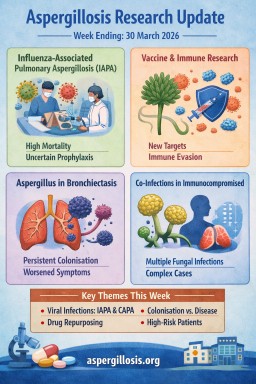
Aspergillosis Research Update: Week Ending: 30 March 2026
Contents
- Key highlights
- 1. Influenza-associated pulmonary aspergillosis (IAPA)
- 2. Aspergillus colonisation in bronchiectasis
- 3. Immune recognition and vaccine development
- 4. Drug repurposing: antiretrovirals and antifungals
- 5. Co-infection in immunocompromised patients
- 6. COVID-19 and CAPA risk
- 7. Paediatric invasive fungal disease trends
- 8. Plastic bronchitis and Aspergillus (contextual)
- 9. Veterinary aspergillosis
- Overall themes this week
- What this means for patients
Key highlights
- Increasing clarity on influenza-associated pulmonary aspergillosis (IAPA) and ongoing uncertainty around prophylaxis
- New insights into immune recognition of Aspergillus relevant to vaccine development
- Evidence that persistent Aspergillus colonisation may worsen bronchiectasis outcomes
- Early-stage research into drug repurposing strategies
- Continued reports of complex co-infections in immunocompromised patients
Paper summaries
Incidence and outcomes of influenza-associated pulmonary aspergillosis and the role of antifungal prophylaxis: a structured literature review
Sedik S, Felber D, Schellongowski P, Salzer HJF, Bellmann R, Muhr T, Auer J, Krippl P, Lux M, Zajic P, Werner M, Bauer N, Watzinger N, Mesaric G, Tinawi Y, Dichtl K, Wolfgruber S, Biswas S, Prattes J, [...] Hoenigl M
Critical Care, 26 March 2026
PMID: 41888868
Summary
This structured review examines how often influenza-associated pulmonary aspergillosis occurs, the outcomes associated with it, and whether antifungal prophylaxis has a role in prevention.
Key points
- IAPA remains a serious complication of influenza in critically ill patients.
- Mortality appears high, particularly in patients requiring intensive respiratory support.
- The evidence for antifungal prophylaxis remains inconclusive.
- Diagnostic uncertainty continues, especially when trying to distinguish colonisation from invasive disease.
Relevance
This is important because it mirrors concerns seen with COVID-19-associated pulmonary aspergillosis and underlines the need for clearer ICU diagnostic and prevention pathways.
Effect of transient versus persistent Aspergillus colonisation on clinical outcomes in bronchiectasis
Michaud A, Jarand J, Thornton CS
ERJ Open Research, 23 March 2026
PMID: 41878279
Summary
This study looks at whether transient and persistent Aspergillus colonisation have different effects on people with bronchiectasis.
Key points
- Persistent colonisation was associated with worse respiratory outcomes.
- Patients with persistent colonisation appeared to have more symptoms and exacerbations.
- Transient colonisation seemed less clinically important.
- The findings sit outside Allergic Bronchopulmonary Aspergillosis (ABPA), which makes them especially interesting.
Relevance
This is one of the most clinically relevant papers this week for chronic lung disease. It suggests Aspergillus in sputum may not always be an incidental finding, especially if it is repeatedly present.
α-1,3-Glucan-Driven Remodeling of the Conidial Cell Wall in an Aspergillus fumigatus Vaccine Strain Alters Innate Immune Recognition
Singh K, Ankur A, Yarava JR, Fernandes CM, Vascelli G, Sulla A, Zelante T, Del Poeta M, Wang T
Journal of the American Chemical Society, 26 March 2026
PMID: 41883285
Summary
This experimental paper explores how changes in the Aspergillus fumigatus conidial cell wall alter how the innate immune system detects the fungus.
Key points
- Changes in α-1,3-glucan altered the structure of the fungal cell wall.
- That remodelling changed how the fungus was recognised by innate immune pathways.
- The work may help inform future vaccine design or immune-targeted therapies.
Relevance
This is early-stage science rather than immediately practice-changing work, but it improves understanding of how Aspergillus may evade immune recognition and how future preventive strategies could be designed.
Synergistic antifungal activity of antiretrovirals with amphotericin B against Aspergillus species
Khan AA, Salama EA, Seleem MN
PLOS One, 25 March 2026
PMID: 41880294
Summary
This laboratory study investigates whether antiretroviral drugs can enhance the antifungal activity of amphotericin B against Aspergillus species.
Key points
- Some antiretrovirals showed synergistic activity with amphotericin B.
- The combination improved inhibition of hyphal growth.
- This raises the possibility of drug repurposing in invasive aspergillosis.
Relevance
This is interesting as a proof-of-concept study. It is not ready for clinical use, but it points toward possible future combination strategies, especially where resistance or toxicity limits current treatment options.
Coexistence of pulmonary aspergillosis and cryptococcosis following treatment for SARS-CoV-2 infection in a kidney transplant recipient: a rare case report and literature review
Hu C, Ying L, Zhan Y, Wang J, Ye J, Lu J, Jin H, Tan X, Gu L, Yao Y, Jiang N
BMC Nephrology, 23 March 2026
PMID: 41872830
Summary
This case report describes a kidney transplant recipient who developed both pulmonary aspergillosis and cryptococcosis after SARS-CoV-2 infection.
Key points
- Demonstrates the potential for multiple opportunistic fungal infections in highly immunosuppressed patients.
- Shows how diagnosis can become particularly complex when symptoms and imaging overlap.
- Reinforces the need for a broad differential diagnosis in transplant recipients and similar high-risk groups.
Relevance
Although a single case, it is a useful reminder that fungal infection in immunocompromised patients may not always be limited to one pathogen, particularly after severe viral infection or intense immunosuppression.
Severe COVID-19 in the Republic of Korea: Epidemiology, Risk Factors, Therapeutics, and Prognostic Models From Nationwide Data
Choi JY
Journal of Korean Medical Science, 23 March 2026
PMID: 41873446
Summary
This review of nationwide Korean data includes discussion of severe COVID-19 complications, including COVID-19-associated pulmonary aspergillosis.
Key points
- There was a trend toward increased COVID-19-associated pulmonary aspergillosis (CAPA).
- Risk appeared higher in patients needing the most advanced respiratory support, including ECMO.
Relevance
This reinforces the continuing importance of CAPA internationally and supports ongoing vigilance in critical care settings, especially where viral lung injury and immunomodulatory treatment intersect.
Temporal Trends and Clinical Outcomes of Pediatric Invasive Fungal Diseases: A Ten-Year Retrospective Study from a Tertiary-Care Center in Thailand
Niyomthammarat C, Meesilpavikkai K, Chintanapakdee W, Sophonphan J, Anugualruengkitt S, Puthanakit T, Jantarabenjakul W
Research Square, 23 March 2026
Status: Preprint v1
Summary
This ten-year retrospective study of paediatric invasive fungal disease includes a substantial number of invasive aspergillosis episodes.
Key points
- Invasive aspergillosis was one of the major fungal disease categories identified.
- Outcomes varied according to underlying condition and likely also the speed of diagnosis and treatment.
Relevance
This paper does not currently have a PubMed listing because it is a preprint rather than a final indexed journal paper, but it still offers useful background on paediatric invasive fungal disease burden.
Initial presentation, etiology and risk factors for adverse outcomes in infection-associated plastic bronchitis in children
Cao H, Liang D, Huang H, He Q, Wu L
Frontiers in Pediatrics, 28 March 2026
PMCID: PMC13021623
Summary
This retrospective paediatric study is not primarily an aspergillosis paper, but it mentions allergic bronchopulmonary aspergillosis among conditions relevant to plastic bronchitis.
Key points
- ABPA appears as part of the broader differential diagnosis in children with this presentation.
- The study mainly concerns airway obstruction and risk factors for poor outcome rather than aspergillosis itself.
Relevance
This has limited direct relevance to most aspergillosis readers, but it is a useful contextual reminder that Aspergillus-related disease can form part of wider airway pathology discussions.
Note: I have not added a PubMed link here because no PMID was supplied. If you want, I can convert this heading to a Europe PMC or PMC link instead.
Aspergillus deflectus-associated disseminated invasive aspergillosis in a German Shepherd dog with discospondylitis: first isolation in Europe
Gernone F, Uva A, Aresu L, Bonfanti U, Ricciardi M, Miglianti M, Barrs VR
Veterinary Research Communications, 25 March 2026
PMID: 41880044
Summary
This veterinary case report documents disseminated invasive aspergillosis caused by Aspergillus deflectus in a German Shepherd dog, reported as the first isolation in Europe.
Key points
- Expands awareness of the range of Aspergillus species capable of causing invasive disease.
- Shows how invasive aspergillosis can present as a disseminated multisystem infection.
Relevance
This is not directly about human disease, but it contributes to the wider ecological and pathogenic picture of Aspergillus species.
Overall themes this week
- Colonisation versus disease remains a major question.
Persistent Aspergillus colonisation may be clinically important in bronchiectasis and should not automatically be dismissed. - Severe viral infection remains a major trigger for invasive aspergillosis.
Both influenza and COVID-19 continue to feature strongly in the literature. - Innovation is active but mostly early-stage.
Vaccine science, immune recognition work, and drug repurposing studies are all progressing, but none are ready to change routine care yet. - Complex patients are at risk of complex fungal disease.
Transplant recipients and critically ill patients remain especially vulnerable to difficult-to-diagnose opportunistic infections.
What this means for patients
- Finding Aspergillus repeatedly in samples may sometimes matter more than a single isolated result.
- Severe viral illness can increase the risk of serious fungal complications in some people.
- Researchers are exploring better ways to prevent and treat aspergillosis, but most of these approaches are still under investigation.
- People with weakened immune systems remain at greatest risk of invasive disease.