

Allergy, Intolerance and Wheat Reactions: What Is Actually Going On?
Key points
- You can have real and sometimes severe symptoms without having a classic allergy.
- Allergy, intolerance, and non-IgE reactions involve different biological pathways.
- Similar symptoms (such as wheeze or mucus) do not always mean the same cause.
- The term “intolerance” is often used as a catch-all, which can be confusing.
- For people with lung conditions, triggers may still worsen symptoms even when allergy tests are negative.
This article is general educational information for patients and carers. If you are new to this topic, you may wish to start with our overview of what is aspergillosis or explore common symptoms affecting the lungs and airways.
Contents
- Why this is so confusing
- What is a true allergy?
- What is an intolerance?
- The grey area: non-IgE reactions
- Wheat as an example
- Why “downgraded” feels upsetting
- Why this matters in asthma and aspergillosis
- Why testing is often limited
- What usually happens next?
- Take-home message
- When to seek medical advice
Why this is so confusing
Many people use the word “allergy” to describe any reaction to food or environmental triggers. This is understandable, because the symptoms can feel very similar.
For example:
- wheeze or chest tightness
- increased mucus and respiratory symptoms
- bloating or abdominal discomfort
- fatigue or “brain fog”
However, similar symptoms do not always mean the same biological cause. This is where confusion begins.
What is a true allergy?
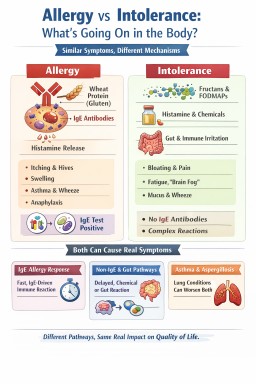
A true allergy usually refers to an IgE-mediated immune reaction.
This means the immune system reacts quickly to a substance, often within minutes to a couple of hours. Symptoms may include:
- itching or hives
- swelling
- wheeze (see asthma and airway symptoms)
- vomiting
- in severe cases, anaphylaxis
This type of reaction is what most allergy clinics are designed to detect, because it can be serious and is usually testable.
What is an intolerance?
An intolerance is a broader term used when symptoms do not follow the classic IgE allergy pathway.
It may involve:
- digestive processes
- food chemicals such as histamine or salicylates
- gut–immune interactions
- non-specific inflammation
Importantly: intolerance does not mean “mild” or “unimportant”. It simply means the mechanism is different and often harder to measure.
For guidance on managing food-related symptoms, see our diet and nutrition hub.
The grey area: non-IgE reactions
Not all immune reactions involve IgE.
Some reactions involve other parts of the immune system and may be:
- delayed
- longer lasting
- harder to detect with standard tests
This creates a grey area between “allergy” and “intolerance”.
This is why the statement:
“Same symptoms but no IgE = intolerance”
is often an oversimplification.
Wheat as an example
Wheat reactions are often used to illustrate this complexity:
- Wheat allergy → IgE reaction to wheat proteins
- Coeliac disease → autoimmune condition (see NICE guidance)
- Non-coeliac wheat sensitivity → unclear mechanism
- Carbohydrate intolerance → reaction to fructans (FODMAPs)
All of these may cause symptoms, but they require different ways of understanding and managing.
Why “downgraded” feels upsetting
Patients are sometimes told they have been “downgraded” from allergy to intolerance.
In reality, what has usually happened is:
- a classic IgE allergy has been considered unlikely
- testing is unlikely to add further information
- the reaction falls into a less clearly defined category
This is a change in classification, not a judgement about importance or severity.
Why this matters in asthma and aspergillosis
For people with asthma, Allergic Bronchopulmonary Aspergillosis (ABPA), or chronic pulmonary aspergillosis (CPA):
- airways are often more sensitive
- inflammation may already be present
This means that triggers do not always need to be classic allergens to cause problems.
Symptoms such as wheeze, mucus and chest tightness may worsen even when allergy tests are negative.
You may also find it helpful to read why antibiotics do not always work, which explains how non-bacterial causes can drive ongoing symptoms.
Why testing is often limited
Allergy testing works best for IgE-mediated conditions.
For many other reactions:
- there are no simple validated tests
- diagnosis relies more on clinical history and patterns
Further detail for clinicians and advanced readers is available in our information section for patients.
What usually happens next?
After a classic allergy has been ruled out, the process does not stop—it changes direction.
Understanding patterns
The focus often shifts to identifying:
- what triggers symptoms
- how quickly symptoms occur
- whether effects are delayed or cumulative
Identifying the main system involved
- Gut-related → bloating, pain, bowel symptoms
- Airway-related → wheeze, mucus, chest tightness
- Mixed/systemic → fatigue and general symptoms
Different types of support
Depending on the pattern, support may involve:
- dietary approaches (nutrition guidance)
- respiratory care (asthma management)
- specialist review (e.g. CPA services)
This stage is often less clear-cut but can still lead to meaningful improvements over time.
Take-home message
- Allergy and intolerance are not the same.
- “Intolerance” is often used as a broad label.
- Symptoms may be similar, but the underlying pathways differ.
- This affects how conditions are understood and managed.
- Even without a clear label, symptoms remain real and important.
When to seek medical advice
Seek urgent help if you develop:
- sudden breathing difficulty
- swelling of the lips, tongue or throat
- collapse or severe dizziness
Arrange medical review if you have:
- persistent or worsening symptoms
- repeated reactions to foods or triggers
- worsening respiratory symptoms
Related topics
- Asthma and airway inflammation
- Allergic Bronchopulmonary Aspergillosis (ABPA)
- Chronic Pulmonary Aspergillosis (CPA)
- Understanding symptoms
- Diet and food triggers
- Why antibiotics do not always work
References
- NHS – Food allergy and intolerance
- BSACI – Food allergy guidance
- NICE NG20 – Coeliac disease
Last reviewed: April 2026
Author: Aspergillosis Website Team
Review status: Educational content for patients and carers

Help us understand how damp homes affect health

We are supporting a UK research project looking at how damp homes may affect health, including respiratory health and conditions such as aspergillosis.
This study is being led by the National Aspergillosis Centre at Manchester University NHS Foundation Trust, and is being shared through aspergillosis.org to support research into damp homes and health.
We are currently inviting people across the UK to register their interest in taking part.
Registering your interest should take less than one minute and does not commit you to taking part.
Why this matters
Damp and mould are often linked to health problems, but there is still limited real-world evidence from people’s homes across the UK.
This project aims to help improve understanding of how home environments may affect health by gathering information from people living in a wide range of housing conditions.
Who can register interest?
We would like to hear from people living in the UK, including:
- people with lung or respiratory conditions
- people without any known lung or breathing condition
- people who have experienced damp or mould at home
- people who have not experienced damp or mould at home
- members of the general public who would like to contribute to the research
We are keen to hear from people with different health backgrounds and a wide range of home environments.
What is the study about?
This research is exploring how damp homes may affect health. The aim is to improve understanding of the relationship between home environments and health symptoms in real-world settings.
This project is for research purposes only and does not provide medical advice or diagnosis.
What might taking part involve later?
If the study opens, some people who register interest may later be invited to:
- complete a short questionnaire about their home and health symptoms
- receive a simple home sampling kit by post
- collect and return a small household sample, for example dust from the home, for research purposes
The home sampling part is intended to be simple and practical. Full instructions would be provided.
Registering your interest now does not commit you to taking part later.
Important information
- Registering interest is voluntary.
- You do not have to take part in the full study later.
- Your details will only be used to contact you about this project.
- Your data will be handled in line with UK data protection regulations.
- You can decide later whether or not to take part.
Frequently asked questions
Am I signing up to take part in the study now?
No. At this stage, you are only registering your interest in hearing more about the study.
Do I need to have a lung condition to register interest?
No. We would like to hear from people with and without lung conditions.
Do I need to have damp or mould in my home?
No. We are interested in hearing from people with a wide range of home environments and experiences.
Will I definitely receive a kit?
Not necessarily. Registering interest helps the research team understand the level of interest and contact people if the study opens.
Will I get personal results about my home or health?
At this stage, no individual results are being promised. More information would be provided if the study proceeds.
What happens after I register interest?
You do not need to do anything further straight away. If the study opens, you may be contacted with more information so you can decide whether you would like to take part.
Register your interest
Ready to help? Complete the form below.
This secure form should take less than one minute to complete.
If the form does not load, you can open it here:
Open the form in a new window
Tremor (Shaking) in Aspergillosis, Asthma, COPD and TB: Causes, Meaning and When to Seek Help
Last reviewed: 16 April 2026
For: Patients, carers, general practitioners, nurses and non-specialists
Topic: Tremor (shaking) in aspergillosis, asthma, Chronic Obstructive Pulmonary Disease (COPD) and tuberculosis (TB)
Shaking or tremor can feel alarming, but in most people with lung conditions it has a clear and manageable cause.
Key points
- A tremor is a shaking movement, usually affecting the hands.
- In people with aspergillosis, asthma, Chronic Obstructive Pulmonary Disease (COPD) or tuberculosis (TB), tremor is usually not caused by the lung condition itself.
- The most common causes are medications, breathlessness, stress, fatigue, weakness, or an unrelated tremor condition such as essential tremor.
- Reliever inhalers such as salbutamol commonly cause a fine shaking of the hands.
- Antifungal medicines can sometimes contribute to tremor directly or through drug interactions.
- Biologic treatments used for severe asthma are not usually a cause of tremor and may sometimes reduce tremor indirectly by lowering steroid or reliever inhaler use.
- Most tremors in this setting do not mean the underlying disease is worsening.
- A new tremor should still be mentioned to a healthcare professional, especially if it is worsening, happens at rest, or comes with stiffness, slowness or balance problems.
Contents
- What is a tremor?
- Why can it happen in lung conditions?
- What sort of tremor might it be?
- What is essential tremor?
- Is it Parkinson’s disease?
- Do biologics play a part?
- Will it get worse?
- What can help?
- When to seek medical advice
- Common questions
- References
If you are newly diagnosed, you may find it helpful to start with our overview of what aspergillosis is and how it affects the lungs, as well as our broader guide to information for patients and carers.
What is a tremor?
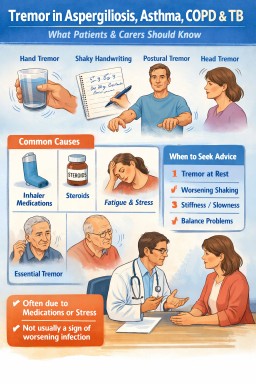
A tremor is an involuntary shaking movement. It most often affects the hands, but it can also affect the head, jaw or voice. People may notice it when holding a cup, using cutlery, writing, typing, or holding their arms out in front of them.
Tremor can be worrying, especially if it is new. Some people fear it means their infection is spreading, their lungs are failing, or they are developing Parkinson’s disease. In most people with respiratory conditions, that is not the case.
Why can it happen in lung conditions?
For most people with aspergillosis, asthma, Chronic Obstructive Pulmonary Disease (COPD) or tuberculosis (TB), tremor is usually explained by one or more of the following:
1. Medications
This is the most common explanation. Reliever inhalers such as salbutamol are well known to cause a fine tremor, especially in the hands. Steroids can also make people feel shaky, wired, weak or restless. In people with aspergillosis, antifungal medicines such as itraconazole or voriconazole may sometimes contribute to tremor or make it more noticeable, particularly if they interact with other medicines.
If you are taking antifungal medication, you may also find it helpful to read our guide to antifungal treatments and side effects, including how different drugs can interact with each other.
2. Breathlessness, stress and adrenaline
When the body is under strain, trembling can become more noticeable. Breathlessness, anxiety, poor sleep, infection, inflammation and exhaustion can all amplify the body’s normal background tremor.
3. Fatigue and muscle weakness
Muscles that are tired or weakened tend to shake more easily. This can happen in chronic respiratory disease, after infections, during recovery, or after long periods of reduced activity.
People living with long-term conditions such as Chronic Pulmonary Aspergillosis (CPA) may experience fatigue and reduced muscle strength, both of which can make tremor more noticeable.
4. An unrelated tremor condition
Some people have a separate condition such as essential tremor. This may have been mild for years and only become noticeable during a period of illness, stress, treatment changes or increased reliever inhaler use.
5. Less common neurological causes
Less commonly, tremor may be due to a neurological condition such as Parkinson’s disease or to another medical problem such as thyroid disease, low blood sugar, or medication side effects from medicines unrelated to the lungs. This is why a new tremor should not be ignored, even though the cause is often straightforward.
What sort of tremor might it be?
The type of tremor can give useful clues.
Action or postural tremor
This is the most common type in people with lung disease. It appears when using the hands or holding them in a position, such as lifting a drink, eating, writing, or stretching the arms out. This pattern often fits tremor linked to salbutamol, stress, fatigue, steroids, or essential tremor.
Enhanced physiological tremor
Everyone has a tiny natural tremor. Illness, adrenaline, fatigue, caffeine, poor sleep, fever, pain and some medicines can make it much more obvious. This often causes a fine, fast, variable shakiness.
Essential tremor
This is a common neurological condition that usually causes shaking during movement or when holding a posture. It often affects both hands and may slowly become more noticeable over time.
Rest tremor
This happens when the hand is fully relaxed and not being used. A true rest tremor is less typical of inhaler- or stress-related shaking, so it deserves more careful assessment.
What is essential tremor?
Essential tremor is one of the most common movement disorders. It usually affects both hands, although one side can be worse than the other. It tends to happen during action rather than complete rest. Some people also notice tremor of the head or voice.
Essential tremor is not caused by aspergillosis, asthma, Chronic Obstructive Pulmonary Disease (COPD) or tuberculosis (TB). However, illness, tiredness, anxiety, reliever inhalers and medication changes can all make an underlying essential tremor more obvious.
For many people, essential tremor remains mild for years. It can slowly worsen over time, but it does not usually turn into Parkinson’s disease.
Is it Parkinson’s disease?
Most tremor in respiratory patients is not Parkinson’s disease. Parkinson’s disease usually causes a different pattern, often with tremor at rest, stiffness, slowness, reduced arm swing, or changes in walking. A tremor that only happens after inhaler use or when someone is tired, anxious or unwell is less suggestive of Parkinson’s disease.
That said, not every tremor in a person with lung disease should be blamed on medications. If the tremor is clearly happening at rest, is becoming more obvious over time, or is linked with stiffness or slowed movement, it should be assessed properly.
Do biologics play a part?
Biologic treatments used for severe asthma and some cases of Allergic Bronchopulmonary Aspergillosis (ABPA), such as omalizumab, mepolizumab, benralizumab and dupilumab, are not usually associated with tremor. They are much less likely to cause shaking than reliever inhalers or steroids.
If you are receiving advanced asthma treatments, you can read more in our guide to biologic therapies for asthma and ABPA, which explains how these treatments work and what side effects to expect.
In practice, biologics may sometimes help indirectly. If they improve asthma control, reduce flare-ups, lower oral steroid use, or reduce the need for frequent salbutamol, tremor may improve rather than worsen.
If someone develops shaking while on a biologic, it is usually sensible to look first at the broader picture: reliever inhaler use, steroid dose, antifungal treatment, other medicines, fatigue, anxiety, and whether the tremor started after a different medication change.
Will it get worse?
Often, the answer is reassuring: not necessarily.
If the tremor is linked to salbutamol or another medicine
It may improve once the dose is reduced, the timing is adjusted, the medicine is changed, or the underlying breathing problem is better controlled. Some medication-related tremors fluctuate rather than steadily worsening.
If the tremor is linked to illness, fatigue or stress
It often comes and goes. It may be worse during flare-ups, infections, poor sleep, low mood, pain or periods of worry, and better on good days.
If it is essential tremor
Essential tremor can slowly progress over time, but this usually happens over years rather than days or weeks. Many people remain stable for long periods.
If it is Parkinson’s disease or another neurological cause
That requires separate assessment. It is much less common than action tremor related to medicines or illness in respiratory patients, but it should be considered when the pattern fits.
Overall, a tremor does not usually mean aspergillosis, asthma, Chronic Obstructive Pulmonary Disease (COPD) or tuberculosis (TB) is worsening in the lungs.
If your symptoms have been difficult to control, it may also help to read why chest infections do not always improve with antibiotics, particularly in conditions such as aspergillosis.
What can help?
- Notice when the tremor happens: after inhalers, when tired, during stress, or all the time.
- Keep a note of recent treatment changes, including inhalers, steroids, antifungals and any new tablets.
- Check whether the tremor happens during action, at rest, or both.
- Try to reduce obvious triggers where possible, such as exhaustion, missed meals, dehydration and excess caffeine.
- Ask for a medication review if the tremor is new or troublesome.
- If you have asthma or Chronic Obstructive Pulmonary Disease (COPD), discuss whether frequent reliever inhaler use means your maintenance treatment needs reviewing.
When to seek medical advice
Speak to your healthcare team if:
- the tremor is new, persistent, or getting worse
- it started after a change in medication
- it is affecting eating, drinking, writing or daily activities
- it happens when your hands are fully at rest
- you also notice stiffness, slowed movement, poor balance, falls, or changes in walking
- you feel generally unwell, confused, very weak, or have other new neurological symptoms
Reassurance for patients and carers
Tremor can be unsettling, but it is common and often explainable. In people living with aspergillosis, asthma, Chronic Obstructive Pulmonary Disease (COPD) or tuberculosis (TB), the cause is usually medication effects, body stress, fatigue, or an unrelated essential tremor rather than the lung condition itself damaging the nervous system.
That means there is often room to improve things: inhalers can be reviewed, other medicines checked, triggers reduced, and the tremor pattern assessed properly. Most importantly, a tremor does not automatically mean the worst.
Related topics:
Common questions
Does aspergillosis itself cause tremor?
Usually no. Tremor in people with aspergillosis is much more likely to be related to medication, fatigue, illness, anxiety, or a separate tremor condition.
Can salbutamol make you shake?
Yes. This is a very well recognised side effect. It usually causes a fine tremor in the hands.
Can antifungal treatment cause tremor?
It can in some people, either directly or through interactions with other medicines. If tremor appears after starting or changing antifungal treatment, it is worth raising.
Do biologics usually cause tremor?
No. Biologics are not a common cause of tremor and may sometimes reduce tremor indirectly by improving control and reducing the need for steroids or frequent reliever inhalers.
Will this definitely get worse?
No. Many tremors stay mild, fluctuate, or improve when the cause is identified and managed.
References
- British National Formulary (BNF) – Salbutamol
Describes common side effects of beta-2 agonists, including tremor and shakiness.
https://bnf.nice.org.uk/drugs/salbutamol/ - NHS – Tremor
Overview of tremor types, causes, and when to seek medical advice.
https://www.nhs.uk/conditions/tremor/ - NHS / Neurology Guidance – Essential Tremor
Clinical overview of essential tremor, including action/postural tremor characteristics and distinction from Parkinson’s disease.
https://rightdecisions.scot.nhs.uk/neurology-pathways-including-headache/gp-factsheets/essential-tremor/ - Electronic Medicines Compendium (eMC) – Voriconazole (Vfend) Summary of Product Characteristics
Details neurological side effects and drug interaction potential of voriconazole.
https://www.medicines.org.uk/emc/product/7981/smpc - Electronic Medicines Compendium (eMC) – Itraconazole Summary of Product Characteristics
Provides prescribing information, including neurological effects and interactions.
https://www.medicines.org.uk/emc/search?q=itraconazole - NICE Guidance – Asthma (NG80)
Covers pharmacological management of asthma, including use of bronchodilators and biologics.
https://www.nice.org.uk/guidance/ng80 - NICE Technology Appraisals – Biologic therapies for severe asthma
Includes guidance on omalizumab, mepolizumab, benralizumab and dupilumab.
https://www.nice.org.uk/guidance/ta278 - NHS – Parkinson’s Disease
Overview of symptoms including resting tremor, stiffness and slowed movement.
https://www.nhs.uk/conditions/parkinsons-disease/
Author note: This article is for general education and is not a substitute for individual medical advice. People with new, worsening or unexplained tremor should discuss it with their usual healthcare professional.
You can explore more topics like this in our latest patient questions and answers, where we regularly explain common symptoms and concerns raised by people living with aspergillosis and other lung conditions.
When ‘chest infections’ don’t respond: when to suspect ABPA or CPA (Clinical perspective)
Patients presenting with recurrent “chest infections” that do not respond to antibiotics are common in primary and secondary care. In a subset of these cases, the underlying cause may not be bacterial, but related to fungal disease or immune-mediated responses to Aspergillus.
This article summarises when to suspect allergic bronchopulmonary aspergillosis (ABPA) or chronic pulmonary aspergillosis (CPA), and how to move from repeated empirical treatment to a more structured diagnostic approach.
Key clinical message
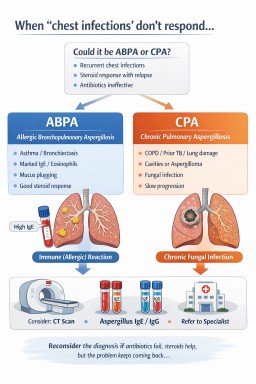
Repeated antibiotic-treated exacerbations with limited response, particularly when symptoms improve with steroids and then relapse, should prompt reconsideration of the diagnosis.
When to suspect ABPA or CPA
Consider aspergillosis-related disease in patients with:
- Recurrent “chest infections” with poor or inconsistent antibiotic response
- Steroid-responsive symptoms with relapse on reduction or cessation
- Persistent or unexplained radiological abnormalities
- Underlying lung disease:
- Asthma
- Bronchiectasis
- Chronic obstructive pulmonary disease (COPD)
- Previous tuberculosis or lung damage
- Raised or previously documented abnormalities in:
- Total IgE
- Eosinophils
- Aspergillus-specific markers (if previously tested)
These features are not diagnostic in isolation but should raise suspicion when seen together.
ABPA vs CPA: clinical distinction
| Feature | ABPA | CPA |
|---|---|---|
| Primary mechanism | Immune-mediated (allergic) | Chronic fungal infection |
| Typical background | Asthma, bronchiectasis | Structural lung disease, prior TB, COPD |
| Steroid response | Often marked | Variable (may improve symptoms but not disease) |
| Antibiotic response | Limited | Limited |
| Radiology | Mucus plugging, bronchiectasis | Cavities, fungal balls, fibrosis |
Common pitfalls in practice
- Repeated empirical antibiotics despite poor response
- Short courses of steroids without a long-term management plan
- Reliance on chest X-ray alone in persistent or atypical cases
- Failure to recognise patterns across multiple consultations or admissions
These patterns can lead to prolonged diagnostic delay, which is well described in CPA and ABPA.
Suggested diagnostic approach
1. Reassess the working diagnosis
When standard treatment fails, explicitly reconsider whether the presentation remains consistent with bacterial infection.
2. Imaging
- Escalate from chest X-ray to CT thorax where appropriate
- Look for:
- Cavitation
- Fungal ball (aspergilloma)
- Mucus plugging
- Bronchiectasis
3. Blood tests
- Total IgE
- Eosinophil count
- Aspergillus-specific IgE and IgG (where available)
4. Microbiology / further testing
Depending on context, consider sputum culture, fungal markers, or specialist input.
The steroid–relapse pattern
A common clinical scenario:
Exacerbation → steroids → improvement → relapse
This should raise suspicion of an underlying inflammatory or fungal-driven process rather than recurrent bacterial infection alone.
When to consider referral
Referral to a specialist centre (e.g. National Aspergillosis Centre, Manchester) may be appropriate where:
- Diagnosis remains uncertain
- Symptoms are persistent or progressive despite treatment
- Antifungal therapy is being considered or not tolerated
- Radiology suggests CPA or complex disease
Referral decisions should be made in the context of overall patient condition, comorbidities, and goals of care.
Why diagnosis is often delayed
- Overlap with common respiratory conditions
- Partial response to standard therapies
- Fragmentation across care settings
- Limited exposure to aspergillosis in routine practice
Recognising the pattern is often the key step in reducing delay.
Practical takeaways
- If antibiotics are not working, reconsider the diagnosis
- If steroids repeatedly improve symptoms, ask why
- Use CT imaging to clarify persistent abnormalities
- Aim for a clear, shared management plan
Guidelines and further reading
- British Thoracic Society. Clinical Statement on Aspergillus-related chronic lung disease
- ISHAM Working Group. Guidelines for ABPA diagnosis and management
- Denning DW et al. Chronic pulmonary aspergillosis guidelines
Further professional resources
Aspergillosis.org – Information for healthcare professionals
This article is intended for educational purposes and should be interpreted in the context of individual clinical judgement.
When ‘chest infections’ don’t respond: when to suspect ABPA or CPA (Patient guide)
Patients presenting with recurrent “chest infections” that do not respond to antibiotics are common in primary and secondary care. In a subset of these cases, the underlying cause may not be bacterial, but related to fungal disease or immune-mediated responses to Aspergillus.
This article summarises when to suspect allergic bronchopulmonary aspergillosis (ABPA) or chronic pulmonary aspergillosis (CPA), and how to move from repeated empirical treatment to a more structured diagnostic approach.
Key clinical message
Repeated antibiotic-treated exacerbations with limited response, particularly when symptoms improve with steroids and then relapse, should prompt reconsideration of the diagnosis.
When to suspect ABPA or CPA
Consider aspergillosis-related disease in patients with:
- Recurrent “chest infections” with poor or inconsistent antibiotic response
- Steroid-responsive symptoms with relapse on reduction or cessation
- Persistent or unexplained radiological abnormalities
- Underlying lung disease:
- Asthma
- Bronchiectasis
- Chronic obstructive pulmonary disease (COPD)
- Previous tuberculosis or lung damage
- Raised or previously documented abnormalities in:
- Total IgE
- Eosinophils
- Aspergillus-specific markers (if previously tested)
These features are not diagnostic in isolation but should raise suspicion when seen together.
ABPA vs CPA: clinical distinction
| Feature | ABPA | CPA |
|---|---|---|
| Primary mechanism | Immune-mediated (allergic) | Chronic fungal infection |
| Typical background | Asthma, bronchiectasis | Structural lung disease, prior TB, COPD |
| Steroid response | Often marked | Variable (may improve symptoms but not disease) |
| Antibiotic response | Limited | Limited |
| Radiology | Mucus plugging, bronchiectasis | Cavities, fungal balls, fibrosis |
Common pitfalls in practice
- Repeated empirical antibiotics despite poor response
- Short courses of steroids without a long-term management plan
- Reliance on chest X-ray alone in persistent or atypical cases
- Failure to recognise patterns across multiple consultations or admissions
These patterns can lead to prolonged diagnostic delay, which is well described in CPA and ABPA.
Suggested diagnostic approach
1. Reassess the working diagnosis
When standard treatment fails, explicitly reconsider whether the presentation remains consistent with bacterial infection.
2. Imaging
- Escalate from chest X-ray to CT thorax where appropriate
- Look for:
- Cavitation
- Fungal ball (aspergilloma)
- Mucus plugging
- Bronchiectasis
3. Blood tests
- Total IgE
- Eosinophil count
- Aspergillus-specific IgE and IgG (where available)
4. Microbiology / further testing
Depending on context, consider sputum culture, fungal markers, or specialist input.
The steroid–relapse pattern
A common clinical scenario:
Exacerbation → steroids → improvement → relapse
This should raise suspicion of an underlying inflammatory or fungal-driven process rather than recurrent bacterial infection alone.
When to consider referral
Referral to a specialist centre (e.g. National Aspergillosis Centre, Manchester) may be appropriate where:
- Diagnosis remains uncertain
- Symptoms are persistent or progressive despite treatment
- Antifungal therapy is being considered or not tolerated
- Radiology suggests CPA or complex disease
Referral decisions should be made in the context of overall patient condition, comorbidities, and goals of care.
Why diagnosis is often delayed
- Overlap with common respiratory conditions
- Partial response to standard therapies
- Fragmentation across care settings
- Limited exposure to aspergillosis in routine practice
Recognising the pattern is often the key step in reducing delay.
Practical takeaways
- If antibiotics are not working, reconsider the diagnosis
- If steroids repeatedly improve symptoms, ask why
- Use CT imaging to clarify persistent abnormalities
- Aim for a clear, shared management plan
Guidelines and further reading
Which guideline should I use?
In UK practice, the British Thoracic Society (BTS) statement provides the most directly applicable clinical guidance. The ISHAM guidelines offer detailed international consensus, particularly for ABPA. Both are complementary and widely used.
- British Thoracic Society (BTS)
Clinical Statement on Aspergillus-related chronic pulmonary disease
UK guidance covering diagnosis and management of ABPA, CPA, and related conditions.
View BTS clinical statement
- International Society for Human and Animal Mycology (ISHAM)
Revised clinical practice guidelines for allergic bronchopulmonary aspergillosis/mycoses
International consensus guidance on diagnosis, classification, and management of ABPA.
View ISHAM guideline (European Respiratory Journal)
- Chronic Pulmonary Aspergillosis (CPA) guidelines
Denning DW et al. Chronic pulmonary aspergillosis: rationale and clinical guidelines for diagnosis and management
View PubMed record
Further professional resources
For clinician-focused guidance, referral pathways, and educational material:
https://aspergillosis.org/information-for-professionals/
This article is intended for educational purposes and should be interpreted in the context of individual clinical judgement.
Weekly Aspergillosis Research Update (7–11 April 2026)
Last reviewed: April 2026
Audience: Patients, carers, GPs, specialist nurses, and healthcare professionals
Key Points (Summary)
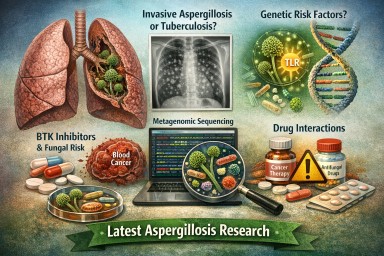
- Invasive pulmonary aspergillosis (IPA) can closely mimic other serious infections, including miliary tuberculosis, particularly in highly immunocompromised patients.
- Metagenomic next-generation sequencing (mNGS) is emerging as a valuable diagnostic tool in complex or unclear cases, though it is not yet widely available.
- Bruton tyrosine kinase (BTK) inhibitors are associated with a measurable risk of invasive fungal infections, with aspergillosis the most frequently reported.
- Host genetics (e.g. toll-like receptor variants) may influence susceptibility to invasive fungal disease, but this is not yet used clinically.
- Azole antifungal drugs remain high-risk for drug–drug interactions, particularly in patients receiving cancer therapies.
- Basic science research continues to identify new fungal targets and pathways, which may inform future treatments.
Contents
- Diagnosis and difficult cases
- Treatment-related risk and immunosuppression
- Genetics and susceptibility
- Asthma and Aspergillus sensitisation
- Drug interactions
- Emerging research and future treatments
- What this means for patients
- When to seek medical advice
Diagnosis and difficult cases
When aspergillosis looks like something else
A case report
(Ji H et al., 2026 – full text)
describes a patient with acute leukaemia who developed widespread “miliary” lung nodules—an imaging pattern classically associated with tuberculosis.
Despite this, the final diagnosis was invasive pulmonary aspergillosis (IPA).
Clinical interpretation
- Radiological appearances in immunocompromised patients can be non-specific.
- Aspergillosis may present without classic features such as halo signs or cavitation.
- Coinfection (e.g. TB + fungal disease) can further complicate interpretation.
This reinforces an important principle in clinical practice: lack of response to treatment should prompt reconsideration of the diagnosis.
The emerging role of mNGS
In this case, metagenomic next-generation sequencing (mNGS) helped establish the diagnosis by detecting fungal DNA directly from clinical samples.
Strengths of mNGS
- Broad pathogen detection (fungi, bacteria, viruses)
- Useful in culture-negative infections
- Can identify unexpected pathogens
Current limitations
- Limited availability outside specialist centres
- Cost and turnaround time
- Interpretation challenges (distinguishing infection from colonisation)
Bottom line: mNGS is promising, but currently complements rather than replaces standard diagnostics (culture, PCR, antigen testing).
Treatment-related risk and immunosuppression
BTK inhibitors and invasive fungal infection
A systematic review and meta-analysis
(PMID: 41954633)
including over 23,000 patients found that:
- Aspergillosis was the most commonly reported invasive fungal infection
- Central nervous system involvement was reported in a subset
Why BTK inhibitors increase risk
- They impair B-cell signalling
- They affect macrophage and neutrophil function
- This reduces the body’s ability to control fungal spores
Clinical implications
- Risk stratification is important
- Some patients may require antifungal prophylaxis
- Early recognition of symptoms is critical
This aligns with increasing recognition that modern targeted therapies can have unintended immunological effects.
Genetics and susceptibility
The role of innate immunity
A systematic review
(PMID: 41962654)
examined toll-like receptor (TLR) polymorphisms and fungal infection risk.
TLRs are part of the innate immune system and are responsible for recognising fungal components such as:
- β-glucans
- Cell wall proteins
Key insight
- Certain genetic variants were more frequently reported in patients with invasive aspergillosis
Important context:
- This does not yet translate into routine testing
- It may become relevant in the future for personalised risk prediction
Asthma and Aspergillus sensitisation
A 12-week prospective study
(PMID: 41949214)
found that:
- ~29% of asthma patients were sensitised to Aspergillus fumigatus
- No significant short-term differences in outcomes were seen compared to non-sensitised patients
Interpretation
- Sensitisation alone does not necessarily indicate active disease
- Clinical context remains critical
Important distinction:
- Sensitisation = immune response to Aspergillus
- ABPA (Allergic Bronchopulmonary Aspergillosis) = a specific inflammatory disease requiring treatment
Drug interactions
Itraconazole and erlotinib interaction
A case report
(PMID: 41953502)
demonstrated increased exposure to erlotinib when co-administered with itraconazole.
Mechanism
- Itraconazole inhibits CYP3A4
- This reduces drug metabolism
- Drug levels rise, increasing risk of toxicity
Clinical message
- Always review medications when starting antifungals
- Particular caution is needed in cancer, transplant, and multi-morbid patients
Useful tool:
Antifungal Interactions Checker
Emerging research and future treatments
Epigenetic regulation in Aspergillus fumigatus
A study
(PMID: 41928566)
identified the role of HosA in regulating fungal growth and virulence.
This type of work helps identify:
- Potential drug targets
- Mechanisms of antifungal resistance
New experimental antifungal compounds
A review
(Full text (PMC))
discusses sodium new houttuyfonate (SNH), which has shown activity in animal models of invasive aspergillosis.
Important caution:
- This is early-stage research
- It is not available as a treatment
What this means for patients
- Aspergillosis can sometimes be difficult to diagnose, especially if symptoms overlap with other conditions.
- If treatment is not working, your medical team may need to review or repeat tests.
- Some medications (especially for cancer or immune conditions) can increase risk of fungal infection.
- Antifungal medications are effective but require careful monitoring for interactions.
- New research is promising, but most advances take time to reach routine care.
When to seek medical advice
Seek medical attention urgently if you have:
- Worsening breathlessness
- Persistent fever
- Coughing up blood
- New chest pain
- Symptoms not improving with treatment
If you are immunocompromised, symptoms may progress quickly and should be assessed promptly.
References
- Ji H et al. Front Fungal Biol, 2026
- Srisurapanont K et al. Blood Adv, 2026
- Pereira Staiger MF et al. Clin Microbiol Infect, 2026
- Yokota H et al. Case Rep Oncol Med, 2026
- Chauhan NK et al. Monaldi Arch Chest Dis, 2026
- Zhou Z et al. Virulence, 2026
- Fang L et al. Front Pharmacol, 2026
Author & Review
This article is part of the Aspergillosis.org weekly research update series. It is intended for general educational purposes and reflects a structured summary of recent research.
Disclaimer: This content is not a substitute for medical advice. Always consult your healthcare team for individual care decisions.
Inflammation and Aspergillosis: Understanding “Stable”, “Flare”, and “Improving” Disease
Last reviewed: April 2026
Key points
- Inflammation is part of the body’s response to Aspergillus, but it does not always mean damage is actively worsening.
- “Stable” disease means no clear progression over time, not that the condition has disappeared.
- Symptoms in aspergillosis often vary because of other infections, especially in the lungs.
- Test results (such as IgE or CRP) can change without symptoms changing.
- Doctors make decisions based on the overall pattern over time, not a single test result.
Table of contents
- What is inflammation and why does it matter?
- Inflammation in different types of aspergillosis
- Clear definitions: active, flare, stable, improving, remission
- What does “stable disease” mean in practice?
- Why other infections cause flare-ups
- Understanding test results (CRP, IgE, scans)
- When test results worsen but symptoms do not
- How doctors decide what is happening
- Common patient questions
- When to seek medical advice
What is inflammation and why does it matter?
Inflammation is the body’s way of responding to something it sees as harmful. In aspergillosis, this is usually the fungus Aspergillus.
This response involves immune cells, chemicals, and changes in the lungs that aim to control the fungus. However, if inflammation continues over a long period (chronic inflammation), it can also contribute to:
- Ongoing symptoms (cough, breathlessness, fatigue)
- Mucus production
- Damage to lung tissue over time
Important: inflammation can be present at a low level without causing active damage. This is common in chronic conditions.
Inflammation in different types of aspergillosis
The type of inflammation depends on the form of aspergillosis:
- Allergic Bronchopulmonary Aspergillosis (ABPA): driven by an overactive allergic response. Blood markers such as IgE and eosinophils are often used to monitor this.
- Chronic Pulmonary Aspergillosis (CPA): caused by long-term infection in damaged lung tissue, leading to ongoing inflammation and structural changes.
- Aspergillus bronchitis: persistent infection with inflammation, often causing chronic cough and sputum.
In all cases, inflammation may improve with treatment but often does not disappear completely.
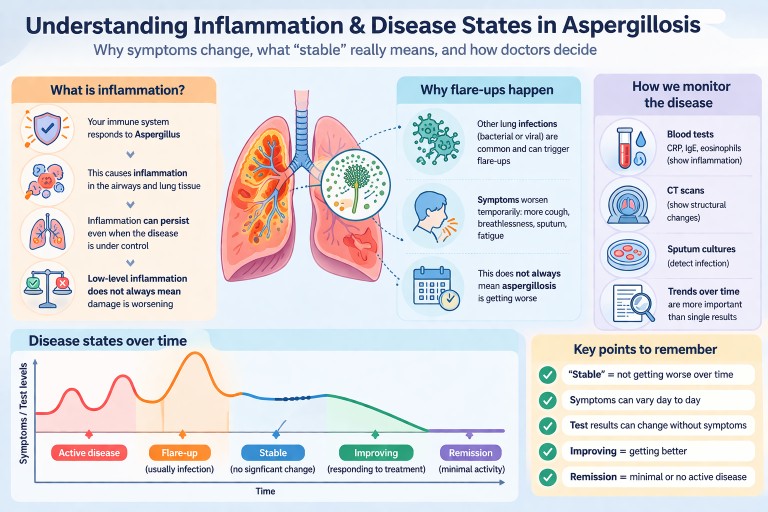
Clear definitions: disease states
Doctors use the following terms to describe how the disease is behaving:
- Active disease: symptoms, tests, or scans are getting worse over time
- Flare-up: a short-term worsening, often triggered by infection or another stress on the body
- Stable: no clear overall change over time
- Improving / responding to treatment: symptoms and/or tests are getting better
- Remission: minimal or no signs of active disease (used more often in ABPA)
Key point: these states are not fixed — patients may move between them.
What does “stable disease” mean in practice?
“Stable” means that, over a period of time (weeks to months), there is no clear evidence that the disease is progressing.
This usually includes:
- No worsening of key symptoms
- No new complications (e.g. haemoptysis, significant weight loss)
- Imaging (CT scans) showing no progression
- No need to increase treatment
What stable does NOT mean:
- It does not mean symptoms are absent
- It does not mean inflammation is zero
- It does not mean you will feel the same every day
Many patients with stable disease still experience day-to-day variation in symptoms.
Why other infections cause flare-ups
People with aspergillosis are more vulnerable to other lung infections (bacterial or viral).
This is because:
- Lung structure may already be damaged
- Mucus clearance is less effective
- The immune system is already active
When another infection occurs, it can trigger a flare-up, causing:
- Increased cough and breathlessness
- More or thicker sputum
- Fatigue and feeling unwell
- Raised inflammatory markers (e.g. CRP)
Crucial point: this does not necessarily mean the aspergillosis itself is worsening. It is often a temporary additional problem.
Understanding test results
Doctors use several types of tests to monitor inflammation and disease activity:
- CRP / ESR: general markers of inflammation
- IgE: particularly important in ABPA
- Eosinophils: linked to allergic inflammation
- CT scans: show structural changes in the lungs
- Sputum cultures: detect infection
Important limitations:
- No single test gives a complete picture
- Results can fluctuate for many reasons
- Changes must be interpreted over time
When test results worsen but symptoms do not
This situation is common, especially in ABPA.
For example, IgE levels may rise without any noticeable change in symptoms.
This may happen because of:
- Natural biological variation
- Exposure to allergens
- A mild or early flare that has not yet caused symptoms
Key point: a change in a single test result does not automatically mean the disease is worsening.
Doctors will usually:
- Repeat tests
- Look for consistent trends
- Assess symptoms and scans
If symptoms remain stable and no other changes are seen, the condition may still be considered stable — but monitored more closely.
How doctors decide what is happening
Clinicians do not rely on a single result. Instead, they assess the pattern over time:
- Are symptoms changing?
- Are test results consistently rising or falling?
- Are scans stable or changing?
- Is the patient responding to treatment?
This combined assessment is called the clinical picture.
Common questions
If I feel better, what is that called?
This is usually described as improving or responding to treatment. In some cases (especially ABPA), it may be called remission.
Does inflammation always mean damage?
No. Low-level inflammation can persist without causing further harm.
Why do my symptoms change from day to day?
This is common and often relates to infections, environment, or general health rather than disease progression.
Can aspergillosis affect the whole body?
It can have wider effects, but it mainly affects the lungs in most patients.
When to seek medical advice
Seek medical advice if you notice:
- Persistent worsening of symptoms
- New haemoptysis (coughing up blood)
- Significant weight loss
- Symptoms not improving after a suspected infection
- Concerns about test results
Author and review
Author: Aspergillosis Patient Education Team
Reviewed by: National Aspergillosis Centre (UK)
References
- Denning DW et al. Chronic pulmonary aspergillosis guidelines
- ISHAM ABPA guidelines
This article is for general information only and is not a substitute for medical advice.
Can overseas patients access specialist centres like NAC? A clear guide for patients and families
Last reviewed: April 2026
Key points
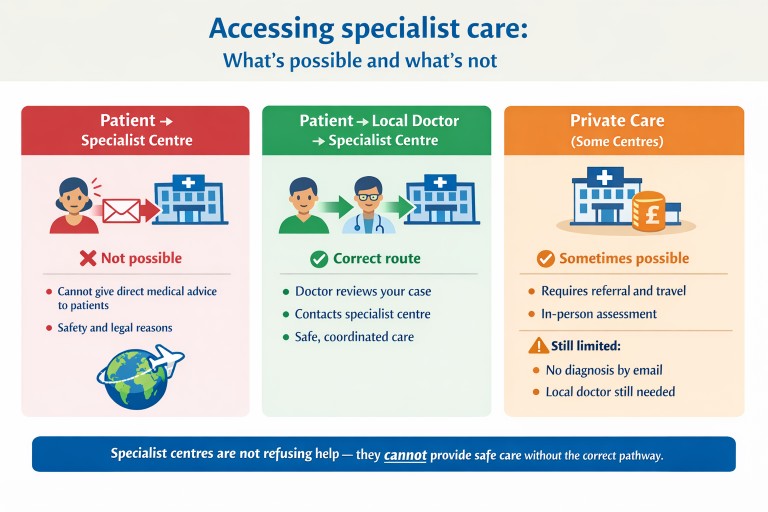
- Specialist centres such as the National Aspergillosis Centre (NAC) cannot provide individual medical advice directly to patients, especially from overseas.
- This is due to safety, legal, and clinical responsibility requirements.
- The correct route is through a local doctor, using a formal referral process.
- A referral does not guarantee that a patient will be seen.
- Even when doctors contact specialist centres, there are limits to what can be offered.
- NAC does not offer private care, although some other centres do.
Table of contents
- Why can’t specialist centres respond directly?
- The correct way to get help
- What does a referral mean?
- Will a referral always be accepted?
- Do personal requests help?
- Limits even when doctors are involved
- What about private care?
- Common myths
- When to seek urgent help
Why can’t specialist centres respond directly to patients?
It is natural to want to contact a specialist centre directly, especially when dealing with a complex condition such as aspergillosis. However, centres like NAC cannot provide individual medical advice directly to patients.
This is not a matter of choice—it is because they cannot safely or legally do so.
Patient safety
- Safe medical advice requires full access to medical records, test results, and examination findings
- Doctors must be able to monitor progress and adjust treatment
- This cannot be done through messages or emails alone
Legal and regulatory requirements
- Doctors must follow strict rules set by regulators such as the General Medical Council (GMC) in the UK
- They cannot take responsibility for a patient without a formal clinical relationship
Responsibility for care
- Any doctor giving advice must be able to take responsibility for outcomes
- This requires recognised clinical pathways and follow-up arrangements
In summary: Specialist centres are not refusing help—they cannot provide care outside safe and regulated systems.
The correct way to get help
The safest and most effective way to access specialist expertise is through your local doctor.
Step 1 – See a local specialist
- Respiratory doctor
- Infectious disease specialist
- Internal medicine specialist
Step 2 – Assessment and initial care
- Your doctor reviews your symptoms and history
- Tests are arranged where needed
- Treatment may be started
Step 3 – Referral or specialist advice
- Your doctor may refer you to a specialist centre
- Or they may contact a centre such as NAC for advice
This approach ensures your care is coordinated, safe, and based on full clinical information.
What does a referral mean?
A referral is when your doctor formally asks another specialist or centre to review your case or consider seeing you.
This is not just a message—it is a structured clinical process.
What does a referral usually include?
- Your medical history
- Details of your symptoms
- Results of tests (such as scans or laboratory results)
- Treatments you have already received
- A clear reason for referral
This allows the specialist centre to understand your situation safely and properly.
What happens next?
After reviewing the referral, the specialist centre may:
- ✔️ Accept the referral and arrange an appointment
- ✔️ Provide advice to your doctor without seeing you
- ✔️ Suggest a more appropriate service
- ❌ Decline the referral
A referral is like a formal handover between doctors—it does not guarantee an appointment.
Will a referral always be accepted?
Even when your doctor makes a referral, it is important to understand that the referral may not always be accepted.
Why might a referral not be accepted?
Eligibility criteria
- Specialist centres often have strict criteria for the patients they can see
- Some services are commissioned only for specific conditions
Geographic and funding rules
- Access may depend on healthcare system or funding arrangements
Clinical suitability
- The centre may decide your care can be managed locally
- They may offer advice instead of accepting the referral
Capacity
- Specialist centres often manage large numbers of complex patients
What happens if it is not accepted?
- Your doctor may still receive expert advice
- You may be directed to another service
- Your care continues locally
This does not mean you are being refused help.
Why specialist centres may not be able to confirm anything to you
Patients and families sometimes ask a specialist centre whether a referral has been received, reviewed, or accepted.
It is important to understand that the centre may not be able to confirm or discuss this with you directly.
Why is this?
Confidentiality and data protection
- Medical information is protected by strict confidentiality rules
- In the UK, this includes laws such as data protection legislation and professional duties of confidentiality
- Centres must be certain they are communicating with the correct person and through approved channels
Communication is usually between doctors
- Referrals are handled as clinician-to-clinician communication
- Responses are normally sent back to the referring doctor, not directly to the patient
No confirmation does not mean no action
- If you do not receive a reply from the centre, it does not necessarily mean your referral has been ignored
- Advice or decisions may already have been communicated to your doctor
What should you do?
- Contact your own doctor for updates
- Ask whether a referral has been sent and if a response has been received
- Discuss next steps with your clinical team
Summary
Specialist centres usually communicate with your doctor, not directly with patients. This is to protect your privacy and ensure safe, appropriate communication.
Do personal requests from patients or families help?
Personal requests are completely understandable, but specialist centres cannot provide individual medical advice directly to patients, even in urgent situations.
This is because they cannot safely or legally do so without a doctor involved.
These requests may still help with general information and guidance, but they do not usually lead to diagnosis or treatment advice.
Limits even when doctors are involved
When your doctor contacts a specialist centre, this is the correct route—but there are still limits.
What specialist centres can offer
- Expert opinion
- Suggestions for diagnosis
- Guidance on tests
- Interpretation of results
What they cannot usually provide
- Direct patient care
- Full responsibility for treatment
- Definitive diagnosis without full assessment
Your local doctor remains responsible for your care.
What about private care?
The National Aspergillosis Centre (NAC) does not offer private care.
- You cannot arrange to be seen there privately
- Access is through NHS referral pathways only
Some other specialist centres may offer private consultations. However:
- A referral and medical records are usually required
- An in-person assessment is typically needed
- Private care does not bypass safety or legal requirements
Common myths
- “I can contact a specialist centre directly for help”
→ Centres cannot provide individual advice directly to patients - “If it’s urgent, they will make an exception”
→ The same safety rules apply to all patients - “A referral guarantees I will be seen”
→ Referrals are reviewed and may not always be accepted - “Private care means I can be seen anywhere”
→ Not all centres offer private care (NAC does not) - “A detailed email is enough for diagnosis”
→ Diagnosis requires full clinical assessment
When to seek urgent medical help
If you or someone you care for has any of the following, seek urgent local medical care:
- Severe breathlessness
- Chest pain
- Coughing up blood
- Confusion or extreme drowsiness
- High fever that is not improving
Do not delay seeking help while trying to contact overseas specialists.
Summary
Specialist centres such as NAC play an important role in supporting complex conditions like aspergillosis. However, they must work within systems designed to keep patients safe.
The most effective way to access their expertise is through your own doctor, using formal referral pathways and specialist advice where needed.
Author & review information
Prepared for patient education purposes.
Aligned with UK specialist centre practice and patient safety guidance.
References & further reading
- General Medical Council (UK) – Good medical practice
- NHS England – Specialist services referral guidance
- European Lung Foundation – Aspergillosis information
- National Aspergillosis Centre – aspergillosis.org
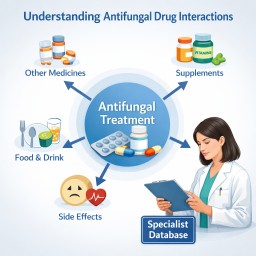
AntifungalInteractions.org – A Specialist Resource for Safer Antifungal Treatment
Last reviewed: April 2026
Managing antifungal medications can be complex. Many antifungal drugs interact with other medicines, foods, and even supplements.
To support both patients and healthcare professionals, a dedicated resource is available:
AntifungalInteractions.org.
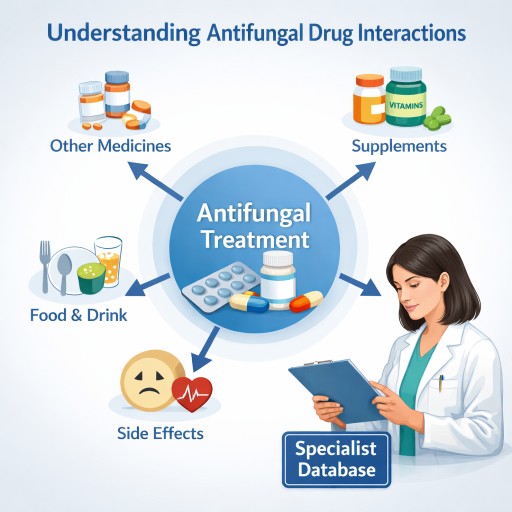
Key Points
- A specialist database focused specifically on antifungal drug interactions
- More detailed and targeted than general resources such as the British National Formulary (BNF)
- Includes guidance designed for both healthcare professionals and patients
- Regularly updated (typically several times per month)
- Maintained by an experienced clinical pharmacist and prescriber
- Owned and supported by the Fungal Infection Trust
What is AntifungalInteractions.org?
AntifungalInteractions.org is a dedicated online database designed to help users understand how antifungal medications interact with:
- Other prescribed drugs
- Over-the-counter medications
- Herbal supplements
- Certain foods and drinks
Unlike general drug reference tools, this resource focuses specifically on antifungal medicines, making it particularly useful for conditions such as aspergillosis, where treatment often involves long-term or complex therapy.
Why This Resource Matters
1. Antifungal drugs are complex
Common antifungal medications such as azoles (e.g. itraconazole, voriconazole, posaconazole) are known to interact with many other drugs.
These interactions can:
- Increase side effects
- Reduce treatment effectiveness
- Require dose adjustments or monitoring
2. General resources may not go far enough
Widely used tools like the British National Formulary (BNF) are essential, but they are designed for broad use across all medicines.
AntifungalInteractions.org provides:
- More detailed interaction explanations
- Practical interpretation of risk
- Condition-specific relevance
3. It supports informed discussions
The database is not a replacement for clinical advice, but it can help patients and clinicians:
- Prepare for consultations
- Understand potential risks
- Ask more informed questions
Who Maintains the Database?
AntifungalInteractions.org is maintained by:
Saarah Niazi-Ali
MPharm, PG Cert (General Pharmacy Practice), PG Dip (Advanced Clinical Pharmacy Practice),
Independent Pharmacist Prescriber, Non-Medical Prescribing (Level 7), Final Medical Signatory
The database is updated frequently—typically 3–4 times per month, often on a weekly basis—ensuring that information remains current and clinically relevant.
Governance and Ownership
The resource is owned and supported by the Fungal Infection Trust, a UK-based organisation dedicated to improving the understanding, diagnosis, and treatment of fungal diseases.
This ensures that the database:
- Remains focused on patient benefit
- Is aligned with specialist fungal disease care
- Supports both clinical practice and patient education
Who Is It For?
Patients and carers
- To better understand their medications
- To check for potential interactions
- To support conversations with their clinical team
Healthcare professionals
- Infectious disease specialists
- Respiratory clinicians
- Pharmacists
- GPs managing complex patients
It is particularly valuable for clinicians managing conditions such as:
- Chronic pulmonary aspergillosis (CPA)
- Allergic bronchopulmonary aspergillosis (ABPA)
- Other fungal infections requiring long-term antifungal therapy
How Does It Compare to Other Resources?
| Feature | AntifungalInteractions.org | General Drug References (e.g. BNF) |
|---|---|---|
| Focus | Antifungal-specific | All medicines |
| Level of detail | High (specialist) | Moderate (broad coverage) |
| Patient-friendly explanations | Yes | Limited |
| Update frequency | Frequent (monthly/weekly) | Regular but broader scope |
Important Notes for Patients
While this database is a valuable resource, it should be used appropriately:
- Do not stop or change medication based on what you read
- Always discuss concerns with your doctor, pharmacist, or specialist team
- Use the information to support—not replace—medical advice
When to Seek Medical Advice
Contact your healthcare provider if you:
- Start a new medication while on antifungal treatment
- Experience new or worsening side effects
- Are unsure whether a supplement or food is safe
- Have been advised of a potential interaction
Summary
AntifungalInteractions.org is a highly valuable, specialist resource that fills an important gap in antifungal care.
Its combination of:
- Expert clinical oversight
- Frequent updates
- Patient-accessible explanations
- Specialist focus
makes it an important tool for both patients and healthcare professionals managing fungal disease.
Further Reading
- British National Formulary (BNF)
- Aspergillosis treatment guidance (aspergillosis.org)
Author & Review
Prepared for Aspergillosis patient and healthcare education.
Content aligned with UK specialist practice and reviewed for clarity and safety.
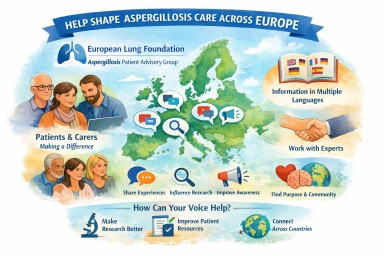
Help shape the future of aspergillosis care across Uk & Europe
“Can patients do more than just cope with this condition?”
The answer is yes.
The European Lung Foundation (ELF)
and its
Aspergillosis Patient Advisory Group (PAG)
give patients and carers a chance to contribute to something bigger: better awareness, better information, better research, and better care.
What is ELF?
ELF is a Europe-wide organisation that brings patients, carers, healthcare professionals and researchers together to improve lung health information, treatment and care.
One of ELF’s strongest advantages is that it works across Europe, not just in one country. It also makes key information available in several languages, helping more people access reliable information about lung conditions, including aspergillosis.
You can read ELF’s patient information on aspergillosis here:
Aspergillosis – European Lung Foundation.
What is the Aspergillosis Patient Advisory Group?
The Aspergillosis PAG is part of ELF’s wider network of
Patient Advisory Groups.
These groups bring together people with experience of specific lung conditions, or experience as carers, so that patient views can help improve treatment and healthcare.
The Aspergillosis PAG works to raise awareness of aspergillosis and improve diagnosis, treatment and care. It also works alongside healthcare professionals and researchers involved in the Chronic Pulmonary Aspergillosis Network (CPAnet), helping identify research priorities and information gaps for both patients and professionals.
Why does this matter?
Aspergillosis is still not well understood in many places. Diagnosis can be delayed, information can be hard to find, and patients often feel that few people truly understand what living with the condition is like.
By involving patients and carers directly, ELF helps ensure that real-life experience is not left out of the conversation. This can influence education, awareness work, research priorities and wider discussions about care across Europe.
What is in it for the patient or carer?
This is an important question, because volunteering your time and energy is a big ask, especially when you are already managing illness, fatigue, appointments, uncertainty or caring responsibilities.
So it is only fair to be clear and honest about what people may gain from taking part.
1. A chance to make your experience count
Many people with aspergillosis have learned difficult lessons the hard way. Getting involved gives you a chance to turn that experience into something useful — helping improve information, shape priorities and make life a little easier for future patients.
2. Better understanding and confidence
Being involved can help you better understand how research, awareness work and patient representation operate. Some people find that this gives them more confidence when speaking about their condition and navigating their own care.
3. Connection beyond your local area
Because ELF is Europe-wide, patients are not limited to the perspective of one hospital, one region or one country. For people living with a relatively uncommon condition, that wider connection can feel valuable and reassuring.
4. The opportunity to be heard
Many patients are used to feeling overlooked. PAGs are designed so that patient and carer perspectives are actively included in projects and discussions, rather than being an afterthought.
5. A sense of purpose
Some people find that involvement helps them move from simply living with a difficult condition to doing something constructive with that experience. It will not suit everyone, but for some it can be meaningful.
6. Support and training
ELF says it provides support, guidance and training to help people share their perspective and get involved in projects. It also encourages interested patients and carers to use its free online European Patient Ambassador Programme (EPAP), which introduces the skills and knowledge needed to represent yourself and others effectively.
What it is not
It is also important to be realistic.
- It is not medical care.
- It does not replace your doctor, nurse or specialist team.
- It is not a route to faster treatment.
- It is not a paid role.
ELF states that PAG involvement is voluntary and that it is unable to pay for people’s time.
Who can join?
ELF says most PAGs are open to new members from European countries. In general, people are invited to get involved if they are over 18, have experience as a patient or carer, live in a European country, can communicate in English, are interested in improving healthcare and treatment across Europe, and are willing to share their perspective.
That said, this should not feel like an all-or-nothing commitment. Not everyone can give a lot of time, and health can change. Even modest involvement can still be worthwhile.
Why mention this to our groups?
Many people in aspergillosis support communities have exactly the kind of insight that is valuable here: the reality of diagnosis, treatment, daily management, side effects, uncertainty, isolation, and learning how to cope.
Those experiences matter. They can help improve what is researched, what is explained, and how future patients are supported.
Interested?
You can explore more here:
- ELF information on aspergillosis
- ELF Patient Advisory Groups
- ELF Aspergillosis Patient Advisory Group
You do not need to be an expert. You do not need to be highly confident. You do not need to commit to everything.
But if you have lived with aspergillosis, or cared for someone who has, your experience may be more valuable than you think.
In short: this is a voluntary opportunity to help improve understanding, research and care for aspergillosis across Europe, while connecting with a wider patient community and making sure lived experience is heard.