Updated August 2026
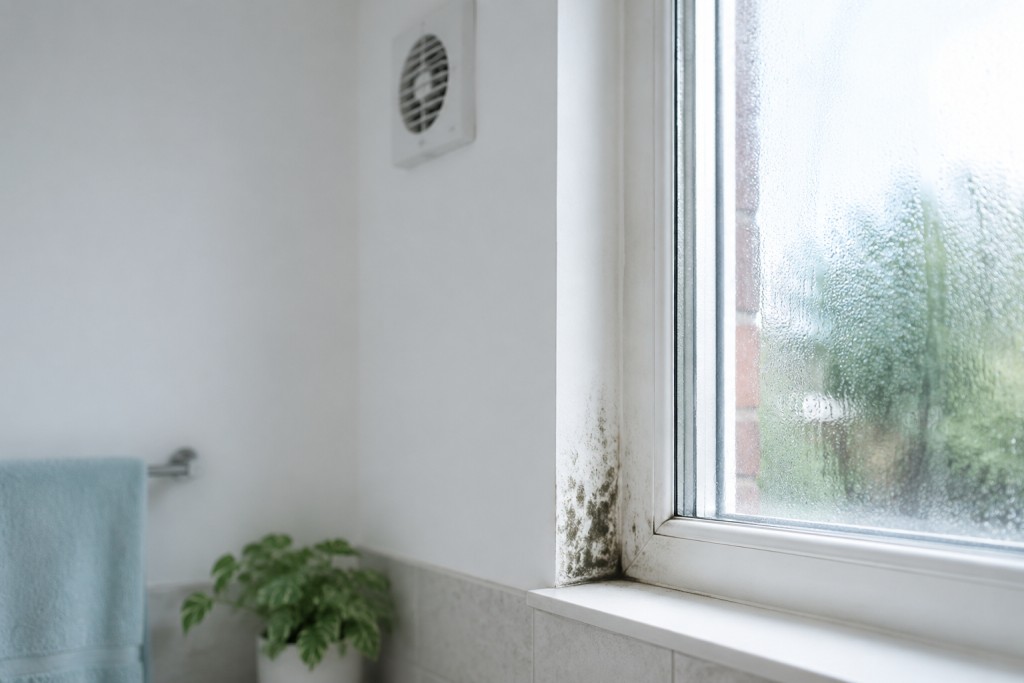
Visible mould should be dealt with promptly, but cleaning it can release spores and fragments into the air. Cleaning products can also irritate the eyes, skin and airways.
If you have aspergillosis, significant lung disease or a weakened immune system, ask someone else to remove the mould whenever possible. Large, persistent or widespread mould should be assessed and removed professionally.
Cleaning is only part of the solution
Mould grows where there is excess moisture. Removing the visible growth may reduce immediate exposure, but it will return unless the source of the damp is identified and corrected.
Possible causes include:
- condensation on cold walls, ceilings or windows;
- inadequate or broken ventilation;
- leaking pipes, roofs or gutters;
- water entering around windows or through external walls;
- inadequate heating or insulation;
- furniture preventing air from circulating around cold walls; and
- previous flooding or water damage.
Before cleaning, photograph the affected area. If you rent your home, report the damp and mould to your landlord or housing provider in writing. Cleaning mould yourself does not remove the landlord’s responsibility to investigate relevant building defects or health hazards.
For more detailed advice, see Preventing Damp in Your Home.
When not to clean mould yourself
Arrange professional assessment or removal if:
- the mould covers a large area or affects more than one room;
- it keeps returning after cleaning;
- there is a persistent musty smell but no obvious source;
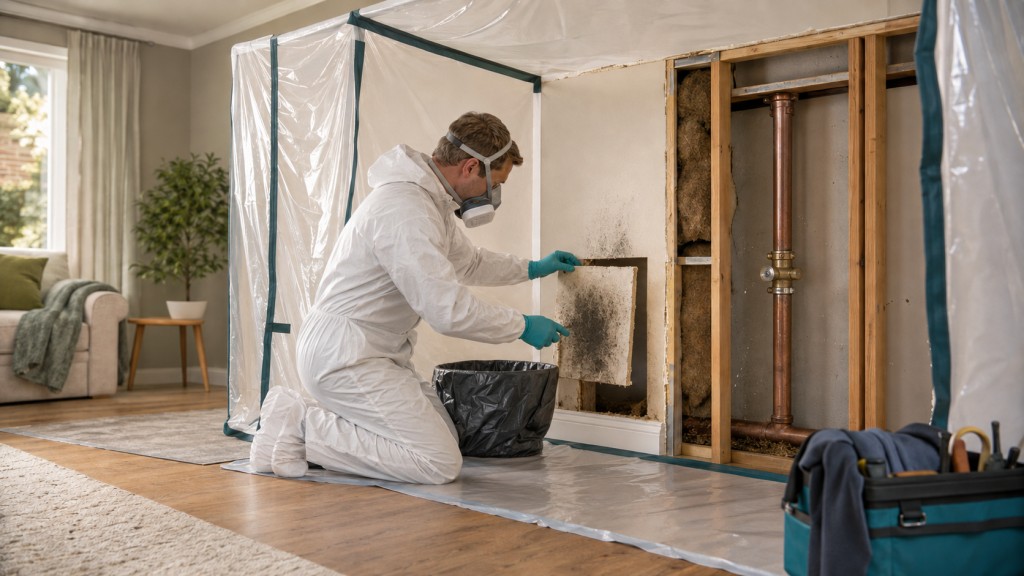
- wallpaper, plasterboard, carpets or insulation are extensively affected;
- the mould followed flooding, sewage contamination or dirty water;
- there is structural damp or a significant leak;
- removal would involve disturbing wallpaper, carpets, ceilings or building materials; or
- the person who would do the cleaning has aspergillosis, asthma, significant lung disease or a weakened immune system.
Disturbing contaminated wallpaper, carpets, plasterboard or insulation can release large quantities of spores and should not be treated as ordinary household cleaning.
How to clean a very small patch
A small, localised patch may be cleaned by someone who is well enough to do so, provided the moisture problem is also being addressed.
- Keep other people away. Close the internal door to reduce the spread of spores and cleaning aerosols into the rest of the home.
- Ventilate to the outside. Open a window during and after cleaning, where it is safe to do so. Do not use a fan that could blow spores around the room.
- Wear protective equipment. Use waterproof gloves and eye protection. A well-fitting FFP2 or FFP3 mask can reduce inhalation of mould spores and some liquid droplets. However, these masks do not protect against chemical gases or vapours, so ventilation remains essential. See our face-mask guidance.
- Choose a product intended for household mould. Check that it is suitable for the surface and follow its instructions exactly. Do not assume that using extra product or leaving it on for longer will work better.
- Avoid creating spray mist. Do not breathe directly over the area. If the label permits, applying the product to a cloth rather than spraying it into the air may reduce inhalation exposure.
- Wipe rather than disturb. Use a damp disposable cloth or sponge. Do not dry-brush, sand, scrape or use an ordinary vacuum cleaner, as this can spread spores and fragments.
- Dry the surface completely. Mould is likely to return if the material remains damp.
- Dispose of waste safely. Place used cloths, sponges and removed material in a bag, seal it and dispose of it. Wash reusable protective clothing separately and wash your hands after removing gloves.
Bleach-based mould removers
Many purpose-made mould removers contain sodium hypochlorite—the active ingredient in bleach. These products can kill and remove superficial mould from suitable hard, non-porous surfaces and may also remove staining.
However, sodium hypochlorite products remain hazardous. They can irritate or damage the eyes and skin, and their spray or fumes may aggravate sensitive airways. They may discolour or damage some materials and cannot reliably remove mould that has penetrated porous materials.
Ordinary household or thick toilet bleach is generally formulated and labelled for toilets, laundry or disinfection—not necessarily for removing mould from walls or other household surfaces. It may also contain fragrances, detergents or other ingredients. Do not improvise with toilet bleach unless its label specifically states that it is suitable for the intended surface and purpose.
Use no more product than the label recommends. Sodium hypochlorite is a broad biocide and can harm aquatic organisms, so avoid unnecessary use and follow the disposal instructions.
Never mix bleach or a bleach-based mould remover with another cleaning product. Contact with acids, descalers, ammonia and some other chemicals can release dangerous gases.
Bleach-free and “quat” mould products
Some bleach-free disinfectants and mould products contain quaternary ammonium compounds, often called quats. Names on the ingredients list may include benzalkonium chloride or didecyldimethylammonium chloride (DDAC).
Quat products can be effective on suitable surfaces and may be less likely to cause bleaching or discolouration. However, “bleach-free” does not mean harmless or environmentally friendly.
Quats can irritate the skin, eyes and airways. Evidence from people with repeated occupational exposure shows that some quats can cause sensitiser-induced asthma. Their effects from occasional domestic use are less certain, but people with sensitive lungs should still minimise exposure.
If using a quat-based product:
- follow the label exactly;
- wear gloves and protect your eyes;
- ventilate the room well;
- avoid breathing spray mist;
- use only the amount required; and
- follow the disposal instructions, as some quats are hazardous to aquatic life.
Never combine a quat product with bleach, a chlorine-based mould remover or another cleaner. Use one product only and keep different disinfectants stored separately.
What about soft or porous materials?
Mould can grow inside carpets, ceiling tiles, insulation, mattresses, soft furnishings, unsealed wood and damaged plasterboard. Surface cleaning may not remove growth from within these materials.
Badly affected porous materials may need to be safely removed and discarded. Washable clothing should be cleaned according to its care instructions and dried completely. Valuable or delicate items may require advice from a specialist cleaner.
After cleaning
Check the area regularly. If the mould returns, the underlying moisture problem has not been resolved. Do not repeatedly clean or paint over it without further investigation.
The safest approach is to use the least hazardous method that will remove the mould effectively, while minimising exposure to both mould spores and cleaning chemicals.
How can I find a trustworthy professional?
There is no single UK licence that guarantees competence in mould remediation. Membership logos and qualifications are useful, but they should always be checked with the organisation that issued them.
- Start with an independent diagnosis. For extensive, recurring or unexplained damp and mould, consider an independent RICS-chartered building surveyor. Alternatively, look for a damp surveyor holding the CSDB or CSTDB qualification. Ideally, the person diagnosing the problem should not also be selling the treatment.
- Obtain two or three written quotations. Each quotation should explain the moisture source, what materials will be cleaned or removed, how spores and dust will be contained, and how recurrence will be prevented.
- Check credentials independently. Possible directories include the Property Care Association, TrustMark and, particularly for substantial water-damage or mould-remediation work, the IICRC Global Locator. Check the person or business in the relevant directory rather than relying on a logo displayed on its website.
Before appointing anyone, ask for:
- evidence of suitable insurance;
- relevant qualifications and recent experience of similar work;
- a written survey, scope of work, price and timescale;
- a method for protecting occupants and preventing mouldy dust and spores spreading through the home;
- details of containment, ventilation, HEPA-filtered equipment and waste disposal where appropriate;
- confirmation that the leak, condensation or other moisture source will be corrected—not merely covered with paint or chemicals;
- references, guarantees and a written complaints procedure.
Be cautious about a “free damp survey” provided by a company selling one particular treatment. Warning signs include pressure selling, an immediate diagnosis based only on a photograph or damp-meter reading, recommending fogging or biocide treatment without correcting the moisture source, and promising a permanent cure without explaining why the mould developed.
Tell the surveyor or contractor that somebody in the home has aspergillosis or another serious respiratory condition. Ask how the person will be protected during the work and when it will be safe for them to return.
If the mould followed an insured leak or flood, contact the insurer before commissioning work. Tenants should normally report the problem to their landlord and obtain written agreement before arranging or paying for professional work. See our Housing Hub for further guidance.
Further information
- Preventing Damp in Your Home
- Housing and Environment Hub
- Choosing the Right Face Mask for Aspergillosis
- UK government guidance on damp, mould and health
- UK HSE guidance on using biocidal products safely

Did this page help you?
Tell us in one minute