Living with aspergillosis can be physically and emotionally demanding. Many people describe feeling anxious about breathlessness, frustrated by fatigue, worried while waiting for test results, or overwhelmed by the uncertainty of living with a long-term condition.
These feelings are entirely understandable. Mindfulness is not a treatment for aspergillosis, but many people find that it helps them manage stress, cope more effectively with symptoms, and improve their overall quality of life alongside their medical care.
Several people living with aspergillosis have told us that mindfulness, meditation or related approaches have helped them cope with the emotional challenges of living with a long-term respiratory condition. Some describe it as being similar to cognitive behavioural therapy (CBT), because it can help them notice anxious thoughts, recognise unhelpful cycles, and respond more calmly.
Mindfulness and CBT are not the same thing, but there is overlap. Both can help people become more aware of how thoughts, feelings, physical sensations and behaviours influence each other. This may be especially relevant when breathlessness, anxiety and stress start to reinforce one another.
Mind and body are connected. Our thoughts and feelings can affect how we breathe, and our breathing can affect how we feel. Mindfulness may help some people break the cycle of stress, anxiety and breathlessness.
What is mindfulness?
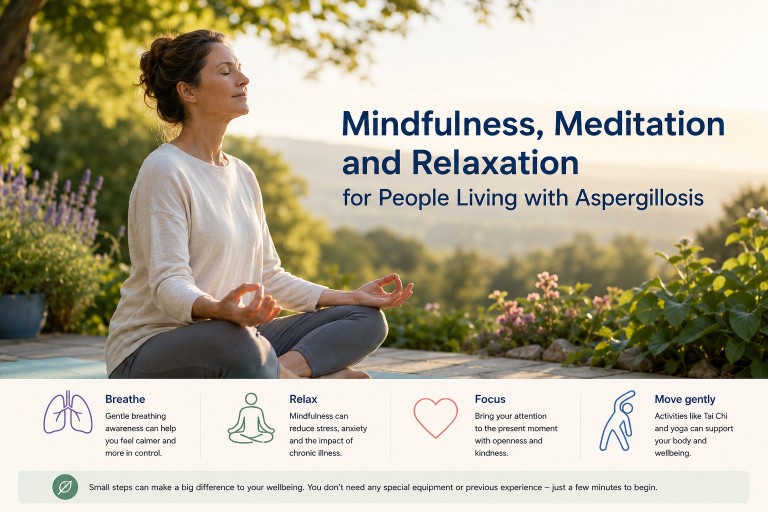
Mindfulness means paying attention to the present moment with openness and without judgement. It involves noticing your thoughts, emotions and body sensations as they are happening, rather than becoming caught up in worries about the future or memories of the past.
The NHS describes mindfulness as becoming more aware of what is happening both inside ourselves and in the world around us. This greater awareness can help us recognise stress earlier and respond to it in healthier ways.
Can mindfulness help?
Research suggests that mindfulness-based approaches may help some people living with long-term health conditions by:
- reducing stress and anxiety
- improving emotional wellbeing
- helping people cope with uncertainty
- improving sleep in some individuals
- increasing confidence in managing long-term illness
- supporting overall quality of life
Mindfulness is not a replacement for medical treatment, but it may be a useful addition to an overall self-management plan.
Mindfulness and breathing
Breathing is central to many mindfulness exercises.
People living with aspergillosis may become understandably focused on their breathing, particularly during episodes of breathlessness. Gentle breathing awareness can help some people slow their breathing, reduce feelings of panic and regain a greater sense of control.
The aim is not to force deeper breaths, but to develop a calm awareness of your natural breathing pattern.
If you become uncomfortable or increasingly breathless during any exercise, stop and return to your normal breathing. Always follow the advice of your respiratory team if you have concerns about breathlessness.
Meditation
Meditation is one way of practising mindfulness. Even five to ten minutes each day may help you develop greater awareness of your breathing, thoughts and emotions.
There are many different styles of meditation. Some focus on breathing, while others use guided relaxation, body awareness or gentle visualisation. There is no single correct approach, so it is worth trying different techniques to discover what works best for you.
Tai Chi and Yoga
Gentle activities such as Tai Chi and yoga combine movement, breathing and relaxation. Many people with chronic respiratory conditions find these activities helpful for improving confidence, flexibility, balance and emotional wellbeing.
Choose exercises that match your current level of fitness and avoid pushing yourself beyond your comfort level. If you are unsure whether an activity is suitable, discuss it with your healthcare team.
Getting started
You do not need any special equipment or previous experience.
You could begin by:
- spending five minutes focusing on your breathing each day
- taking a slow, mindful walk while noticing your surroundings
- trying a guided mindfulness session
- practising gentle stretching, yoga or Tai Chi
- using relaxation exercises before bed or during stressful periods
Many people find that practising little and often is easier than trying long sessions.
Useful resources
- NHS: Mindfulness
- NHS: Stress, anxiety and wellbeing support
- Aspergillosis.org: Living well with aspergillosis
You may also find it helpful to explore aspergillosis.org resources on breathing exercises, fatigue, emotional wellbeing, exercise and gentle movement.
When should I seek additional support?
Living with a long-term illness can affect emotional wellbeing. If anxiety, low mood or stress are becoming overwhelming, speak with your GP or specialist team. Support is available, and looking after your mental wellbeing is an important part of living well with aspergillosis.
Originally published: July 2018
Last substantially updated: July 2026
Next review due: July 2028

Did this page help you?
Tell us in one minute