First published:
Last reviewed: July 2026
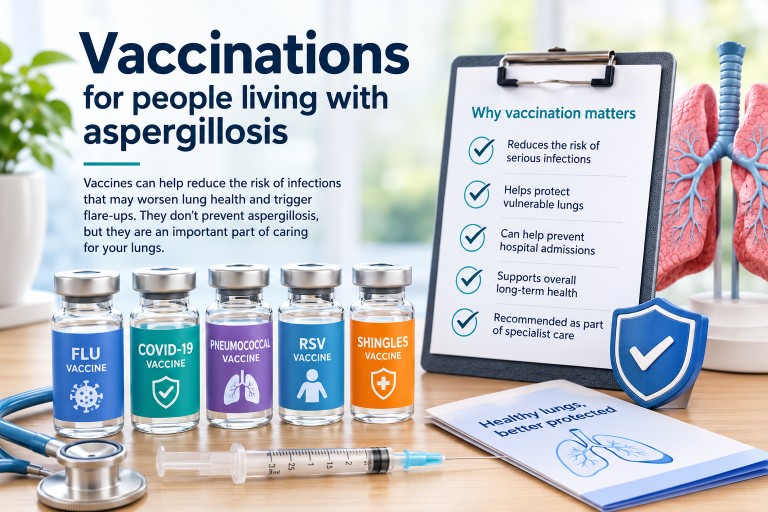
Vaccinations are an important part of staying well when you live with aspergillosis or another long-term lung condition. They cannot prevent aspergillosis itself, but they can reduce the risk of infections that may make breathing symptoms worse, trigger flare-ups, or lead to hospital admission.
International readers: This article explains why vaccination matters for people living with aspergillosis. Vaccine recommendations, availability and eligibility vary between countries. Where healthcare-system information is included, it refers to the UK unless otherwise stated. Always follow advice from your own healthcare team.
Key points
- Vaccines do not prevent aspergillosis, but they can reduce the risk of serious infections that may worsen lung disease.
- People with aspergillosis often also have asthma, bronchiectasis, COPD or immune system problems, which can make infections more serious.
- Flu, COVID-19, pneumococcal, RSV and shingles vaccines may be relevant, depending on your age, health conditions and local guidance.
- Some people need additional vaccines or vaccine-response testing as part of specialist immunology care.
- If you take long-term steroids, biologics or other immune-suppressing medicines, ask which vaccines are suitable for you.
Why vaccination matters if you have aspergillosis
Many people living with aspergillosis already have lungs that are more vulnerable than usual. This may be because of asthma, bronchiectasis, COPD, previous infection, scarring, mucus plugging, cavities in the lung, or reduced lung function.
For this reason, an infection that is mild for one person can sometimes cause a much bigger setback for someone with aspergillosis. A respiratory infection may lead to increased breathlessness, more coughing, thicker sputum, a flare-up of asthma or COPD, or a chest infection that takes weeks to recover from.
Vaccination is one way to reduce this risk. It does not replace usual aspergillosis treatment, airway clearance, antifungal medication, inhalers or other care, but it can be an important part of protecting your lungs.
Which vaccines are most important?
The vaccines that matter most will depend on your age, diagnosis, immune system, medications, previous vaccine history and the country where you live. The vaccines below are commonly discussed for people with long-term lung disease or increased infection risk.
Influenza (flu) vaccine
For many people living with aspergillosis, the annual flu vaccine is one of the most important ways to reduce the risk of a serious winter chest infection.
Flu is not just a heavy cold. It can cause fever, severe tiredness, muscle aches and worsening breathing symptoms. In people with asthma, bronchiectasis, COPD or other lung disease, flu may trigger a flare-up or lead to pneumonia.
Because flu viruses change over time, the vaccine is updated regularly and is usually offered each year before the main flu season.
COVID-19 vaccine
COVID-19 can still cause serious illness in people who are older, immunosuppressed or living with chronic lung disease. Some people with aspergillosis may therefore be offered seasonal COVID-19 vaccination or booster doses.
Eligibility changes over time and differs between countries. If you are unsure whether you should receive a COVID-19 booster, ask your GP, pharmacist, respiratory specialist or local healthcare team.
Pneumococcal vaccine
Pneumococcal disease is caused by bacteria that can lead to pneumonia and, less commonly, serious infections such as bloodstream infection or meningitis.
This vaccine is particularly relevant for many people with chronic respiratory disease. People with aspergillosis may also have bronchiectasis, COPD, asthma, scarring or cavities in the lung, all of which can make bacterial chest infections more difficult to recover from.
If you are not sure whether you have had a pneumococcal vaccine, or whether your record is up to date, ask your GP surgery or specialist team.
RSV vaccine
Respiratory syncytial virus, usually called RSV, is a common respiratory virus. In many people it causes cold-like symptoms, but in older adults and people with lung disease it can cause more serious lower respiratory tract infection.
RSV vaccination is a newer area of adult vaccination. Some countries now recommend RSV vaccination for older adults or people at increased risk of severe respiratory illness.
If you are older or have chronic lung disease, it is worth asking whether RSV vaccination is recommended for you.
Shingles vaccine
Shingles is caused by reactivation of the chickenpox virus. It can cause a painful rash and may lead to long-lasting nerve pain.
The shingles vaccine reduces the risk of shingles and its complications. It may be particularly relevant for older adults and some people with weakened immune systems.
Additional vaccines for some people
Some people with aspergillosis also have other medical conditions that affect the immune system or increase their risk of certain infections. In these situations, your specialist may recommend additional vaccines as part of your care.
For example, some people with immune deficiencies, those without a functioning spleen, or people who have received a stem cell transplant may be advised to receive vaccines such as Haemophilus influenzae type b (Hib) or meningococcal vaccines. These vaccines are not routinely recommended for everyone with aspergillosis, but they may be appropriate for certain individuals.
If you have recurrent infections, your respiratory specialist or immunologist may also investigate how well your immune system responds to vaccines. In some cases, measuring antibody responses to vaccines such as the pneumococcal vaccine forms part of an assessment for possible antibody deficiency.
Travel vaccines may also be needed if you are visiting countries where certain infections are more common. If you are planning travel, ask for advice well in advance, especially if you are immunosuppressed.
Vaccines and steroids, biologics or immune-suppressing treatment
Some people with aspergillosis take medicines that affect the immune system, including:
- oral steroids such as prednisolone or methylprednisolone
- long-term or repeated courses of steroids
- biologic medicines for severe asthma or ABPA
- immune-suppressing medicines for other conditions
- chemotherapy or transplant-related medicines
Most routine adult vaccines are not live vaccines and are generally safe for people with chronic lung disease. However, live vaccines may not be suitable for people who are significantly immunosuppressed.
Important: Do not stop steroids, antifungal treatment or biologic medicines just to have a vaccine unless your own doctor tells you to. If you are immunosuppressed, ask your GP, pharmacist or specialist team which vaccines are suitable and when they should be given.
UK NHS information
In the UK, vaccination eligibility is based on age, medical conditions, pregnancy, occupation and immune status. It can also change between seasonal campaigns.
People with chronic respiratory disease are commonly eligible for seasonal flu vaccination and may be eligible for other vaccines depending on their age, diagnosis and treatment. This may include COVID-19 boosters, pneumococcal vaccination, RSV vaccination or shingles vaccination.
Ask your GP surgery, pharmacist or specialist respiratory team whether your vaccination record is up to date. This is especially important if you have:
- bronchiectasis, COPD, severe asthma or another long-term lung condition
- chronic pulmonary aspergillosis (CPA)
- allergic bronchopulmonary aspergillosis (ABPA)
- recurrent chest infections
- long-term steroid treatment
- other immune-suppressing treatment
- a known or suspected immune deficiency
Can vaccines make aspergillosis worse?
Vaccines do not cause aspergillosis. They do not contain Aspergillus and cannot give you a fungal infection.
Some people feel tired, achy or feverish for a short time after vaccination. This is usually a normal immune response and settles within a few days.
If you develop worsening breathlessness, chest pain, coughing blood, oxygen levels lower than usual, or symptoms that feel very different from your usual pattern, seek medical advice.
Should family members be vaccinated?
Vaccination is not only about protecting the individual. If you live with someone who is clinically vulnerable, keeping household vaccinations up to date can reduce the chance of bringing infections into the home.
This may be especially important for people who are immunosuppressed, older, or living with severe lung disease.
Questions to ask your healthcare team
At your next GP, pharmacist or specialist appointment, consider asking:
- Am I eligible for the annual flu vaccine?
- Am I eligible for a COVID-19 booster this season?
- Have I had the correct pneumococcal vaccine?
- Am I eligible for the RSV vaccine?
- Am I eligible for the shingles vaccine?
- Do any of my medicines affect which vaccines I can have?
- Do I need any additional vaccines because of immune problems or recurrent infections?
- Should my antibody response to any vaccine be checked?
- Are any vaccines recommended before starting a new immune-suppressing treatment?
Frequently asked questions
Can I have vaccines while taking antifungal medication?
In most cases, antifungal medicines such as itraconazole, voriconazole, posaconazole or isavuconazole do not prevent vaccination. If you are unsure, ask your pharmacist, GP or specialist team.
Can I have more than one vaccine at the same appointment?
Some vaccines can be given at the same appointment, but this depends on the vaccine, your health and local guidance. Your GP surgery or pharmacist can advise.
Should I delay vaccination if I am unwell?
If you have a high temperature or are acutely unwell, you may be advised to wait until you have recovered. Mild cold symptoms do not always mean vaccination must be delayed, but check with the vaccinator if you are unsure.
What if I had a reaction to a vaccine before?
Tell the vaccinator before receiving any vaccine. Serious allergic reactions are rare, but your history should be checked carefully.
Can vaccines give me aspergillosis?
No. Vaccines do not contain Aspergillus and cannot give you aspergillosis.
When to seek medical advice urgently
Seek urgent medical help if you have:
- severe or rapidly worsening breathlessness
- chest pain
- blue lips or confusion
- coughing up blood
- oxygen levels lower than usual, if you monitor them
- signs of a severe allergic reaction after vaccination, such as swelling of the face or throat, wheezing, collapse or a widespread rash
Useful links
- NHS: Flu vaccine
- NHS: COVID-19 vaccine
- NHS: RSV vaccine
- NHS: Shingles vaccine
- UKHSA: Immunisation against infectious disease — The Green Book
- UKHSA: Pneumococcal vaccination programme
- CDC: Haemophilus influenzae type b vaccine safety
Related information
You may also find these guides helpful:
- What is Aspergillosis?
- Bronchiectasis and Aspergillosis
- Preventing Chest Infections
- Corticosteroids and Aspergillosis
- Biologic Treatments and Aspergillosis
- Travel with Aspergillosis
“`
Summary
Vaccination is one of the simplest ways to reduce the risk of serious respiratory infection. For people living with aspergillosis, bronchiectasis, COPD, severe asthma or immune suppression, it is worth checking regularly that your vaccination record is up to date.
The medical reasons for vaccination are relevant internationally, but vaccine eligibility and availability vary between countries. Ask your GP, pharmacist, respiratory specialist or local healthcare team which vaccines are recommended for you.

Did this page help you?
Tell us in one minute