Living with aspergillosis can mean taking several medicines every day, sometimes for months or years. These may include antifungal medicines, inhalers, corticosteroids, antibiotics and treatments for other health conditions.
Keeping track of everything can become difficult, particularly when you are tired, unwell or experiencing side effects. Fortunately, a few simple routines can make treatment easier to manage and reduce the risk of mistakes.
This guide explains how to organise your medicines, avoid common problems and work effectively with your healthcare team.
Why medication management matters
Some medicines used to treat aspergillosis require particularly careful handling. Antifungal medicines can interact with other prescribed treatments, and certain medicines need regular blood tests or specific instructions about when and how to take them.
People with ABPA may also take corticosteroids, while those with CPA may require long courses of antifungal treatment. Some patients have other conditions, such as asthma, bronchiectasis or diabetes, which add further medicines to their daily routine.
Good medication management helps you:
- Take the correct medicine at the correct dose and time.
- Avoid accidentally missing or doubling doses.
- Recognise possible side effects.
- Keep track of blood tests and follow-up appointments.
- Make sure different healthcare professionals know what you are taking.
- Feel more confident about managing treatment at home.
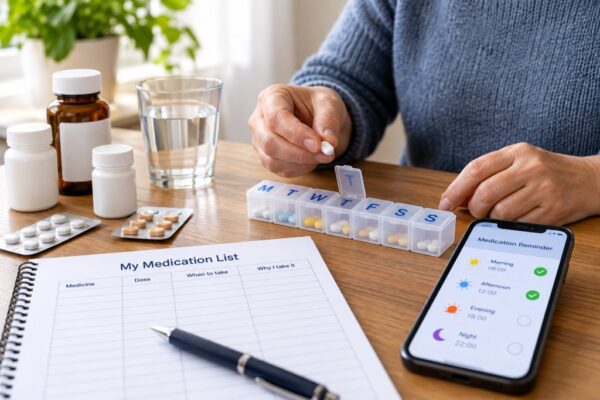
1. Keep an up-to-date medication list
One of the most useful things you can do is keep a current list of all your medicines.
Include:
- The name of each medicine.
- The strength and prescribed dose.
- When and how you take it.
- Why you are taking it.
- Any allergies or previous serious reactions.
- Over-the-counter medicines, herbal products and supplements.
Keep a copy on your phone or in your wallet. A printed copy can be particularly helpful during an unexpected hospital admission or when attending a new clinic.
Update your list whenever a medicine is started, stopped or changed.
Practical tip: Ask your pharmacist or GP practice for a current repeat prescription list, then check that it matches what you actually take. Hospital-prescribed medicines may not always appear immediately on your GP record.
2. Make taking medicines part of your daily routine
Taking medicines consistently can be challenging when different treatments have different schedules.
Some people find it helpful to use:
- Phone alarms or medication reminder apps.
- A written daily medication chart.
- A calendar for weekly or less frequent medicines.
- A medicine diary to record doses and any problems.
- A pharmacy-prepared medication organiser, where suitable.
Linking medicines to regular daily activities can help, but always follow the instructions for the individual medicine. Some antifungal formulations have specific requirements concerning food, stomach acidity or other medicines.
Important: Do not transfer medicines into a pill organiser without checking with your pharmacist. Some need to remain in their original packaging because of stability, moisture protection or other handling requirements.
3. Check instructions carefully when starting an antifungal
Antifungal medicines are not all taken in the same way.
For example, different formulations of itraconazole have different food and absorption requirements. Other antifungals may have important interactions with medicines that affect stomach acidity.
When starting or changing treatment, ask your pharmacist:
- Should I take this medicine with food or on an empty stomach?
- Are there foods, supplements or other medicines I should avoid?
- What should I do if I forget a dose?
- What side effects should I report promptly?
- Will I need blood tests or antifungal drug-level monitoring?
Do not assume that instructions for one antifungal apply to another, or even to a different formulation of the same drug.
4. Be especially careful about drug interactions
Azole antifungals, including itraconazole, voriconazole, posaconazole and isavuconazole, can interact with a wide range of other medicines.
Interactions may increase the risk of side effects, reduce the effectiveness of treatment or alter the amount of a medicine in your bloodstream.
Particularly important examples include some inhaled corticosteroids, certain cholesterol-lowering medicines, heart medicines and treatments that affect blood clotting.
Before starting any new medicine, including something bought from a pharmacy, tell the prescriber or pharmacist which antifungal you are taking.
This also applies when a medicine is stopped or its dose is changed.
Read more in our guide to antifungal drug interactions.
5. Never change corticosteroid treatment without advice
Some people with ABPA require oral corticosteroids, such as prednisolone or an alternative, to control inflammation. Others use inhaled corticosteroids for asthma or related conditions.
Long-term or repeated corticosteroid treatment can suppress the body’s normal production of cortisol. This is known as adrenal suppression and can sometimes lead to adrenal insufficiency.
Stopping or reducing corticosteroids too quickly can be dangerous, particularly when adrenal function has been suppressed.
If you are taking long-term steroids:
- Follow your prescribed dose and reduction schedule.
- Do not stop treatment suddenly unless your clinical team specifically instructs you to do so.
- Ask whether you need a steroid emergency card.
- Understand what to do if you become acutely unwell, vomit or cannot keep medicines down.
- Check whether you need an individualised sick-day or emergency steroid plan.
Important: People with known adrenal insufficiency may require additional steroid treatment during illness or other significant physical stress. Follow your own endocrine team’s emergency instructions. Suspected adrenal crisis is a medical emergency.
6. Keep track of blood tests and monitoring
Some antifungal treatments require regular monitoring to check safety and ensure that the medicine is reaching an appropriate concentration in the body.
Depending on the treatment, monitoring may include:
- Liver function tests.
- Kidney function and electrolyte tests.
- Antifungal drug levels (therapeutic drug monitoring).
- Other tests related to the particular medicine or your health conditions.
Ask your specialist team which tests you need, how often they should be performed and who will review the results.
It can be helpful to record the dates of blood tests and follow-up appointments in your calendar.
If an expected result or appointment has not been communicated, contact the responsible clinical team rather than assuming everything is normal.
For more information, see antifungal medicines: dosing, monitoring and specialist care.
7. Recognise and report side effects
Many medicines have side effects, but not every new symptom is necessarily caused by treatment.
Commonly reported problems during antifungal treatment can include nausea, abdominal discomfort, changes in taste, headaches or skin reactions. The pattern varies between medicines.
Some adverse effects can be serious, including liver injury, significant drug interactions, heart rhythm problems or severe allergic reactions.
Contact your clinical team if you develop new or worsening symptoms that might be related to your medicines. Seek urgent medical advice for concerning symptoms such as jaundice, severe or persistent vomiting, fainting or a significant new rash. Severe breathing difficulty, collapse or swelling of the tongue or throat requires emergency assistance.
Do not simply tolerate troublesome side effects for weeks without discussing them. Your team may be able to adjust treatment, investigate another cause or consider an alternative medicine.
Equally, do not stop essential treatment on your own unless you have been instructed to do so or are following emergency advice for a suspected serious reaction.
8. What if you miss a dose?
Missing an occasional dose can happen, especially when you are unwell or your routine changes.
The correct response depends on the medicine, formulation and how long ago the dose was due.
Do not automatically take a double dose to make up for a missed one.
Check the patient information leaflet or ask your pharmacist or prescribing team for medicine-specific instructions.
If you repeatedly miss doses, explain this to your healthcare team. A simpler schedule, reminders or additional support may help.
9. Prepare for hospital admissions and changes in treatment
Medication errors can occur when care moves between hospital, GP services and specialist clinics.
Take your current medication list to appointments and hospital admissions, together with information about allergies, steroid dependency and any specialist treatment plans.
When leaving hospital, check:
- Which medicines have changed?
- Which medicines should be stopped?
- Have any doses been altered?
- Who will prescribe ongoing supplies?
- Who is responsible for blood tests and follow-up?
Ask for clarification if the discharge medication list differs from your usual prescription.
It is particularly important that changes involving antifungals, corticosteroids and medicines with significant interactions are communicated clearly between teams.
10. Ask for help if managing medicines becomes difficult
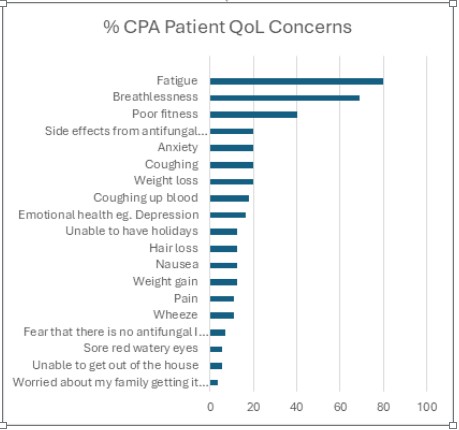
Fatigue, breathlessness, poor concentration, visual difficulties or problems with hand movement can make medication management more demanding.
You do not have to manage everything without support.
Community pharmacists can advise on reminder systems, accessible packaging, medicine reviews and suitable aids. Family members or carers may also help, with your agreement.
If you take several medicines, ask whether a structured medication review would be appropriate.
Read our guide to aspergillosis medicines for carers.
Questions to ask at your next appointment
- Do I still need every medicine on my list?
- Are there any important interactions between my treatments?
- Am I taking each medicine at the correct time and in the correct way?
- What monitoring do I need, and who checks the results?
- Which side effects should prompt me to contact the team?
- What should I do if I miss a dose or cannot take my medicines?
- Who should I contact if I have a medication problem between appointments?
Key points
- Keep an accurate, up-to-date list of everything you take.
- Follow medicine-specific instructions, especially for antifungals.
- Check for interactions whenever medicines are started, stopped or changed.
- Never change long-term corticosteroids independently without an appropriate clinical plan.
- Keep track of monitoring and follow up missing results.
- Report side effects rather than struggling with them in silence.
- Ask for practical support when managing medicines becomes difficult.
Managing aspergillosis treatment safely is a shared responsibility between patients, pharmacists, GPs and specialist teams. Good communication and a few reliable routines can make long-term treatment easier and safer.
This article provides general patient information and does not replace individual advice from your prescribing clinician or pharmacist.

Did this page help you?
Tell us in one minute