Antifungal resistance is increasingly appearing in the news. But how common is it, why does it happen, and what can doctors do if a treatment stops working?
You may have read news reports about fungi becoming resistant to antifungal medicines, or research suggesting that agricultural fungicides are contributing to the problem.
Perhaps your own doctor has changed your antifungal treatment, or you know someone who has developed resistance after taking antifungals for several years.
It is understandable to wonder whether the medicines used to treat aspergillosis are becoming less effective.
The reassuring news is that most Aspergillus isolates tested in surveillance studies are still susceptible to azole antifungals, and resistance to one medicine does not necessarily mean that other treatments will not work.
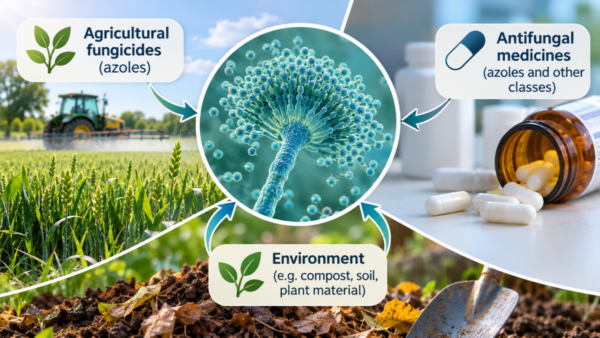
However, resistance is a genuine and increasingly important problem. Scientists have discovered that it can develop both during medical treatment and in the wider environment, sometimes through exposure to fungicides used in agriculture.
Understanding how this happens can help patients make sense of the research without becoming unnecessarily worried.
What is antifungal resistance?
Antifungal medicines interfere with processes that fungi need to grow and survive.
For many people with chronic pulmonary aspergillosis (CPA), the main treatments are medicines called azoles.
These include itraconazole, voriconazole, posaconazole and isavuconazole.
Occasionally, Aspergillus fumigatus develops genetic changes that make one or more of these medicines less effective.
This is called antifungal resistance.
It is the fungus that becomes resistant, not the patient.
Resistance can affect one medicine, several medicines or, more rarely, an entire class of antifungals.
It does not automatically mean that all antifungal medicines will be ineffective.
My doctor has changed my antifungal. Does that mean I have resistance?
No, not necessarily.
Many patients need to change antifungal treatment for reasons unrelated to resistance.
For example:
- Side effects may make a medicine difficult to tolerate.
- The medicine may interact with other prescribed drugs.
- Blood tests may show that insufficient medicine is being absorbed.
- Symptoms or scans may suggest that treatment is not working as expected.
- A different antifungal may be more suitable for the patient’s circumstances.
Sometimes resistance is the reason, but it is only one possibility.
If your doctor recommends a change, a useful question is:
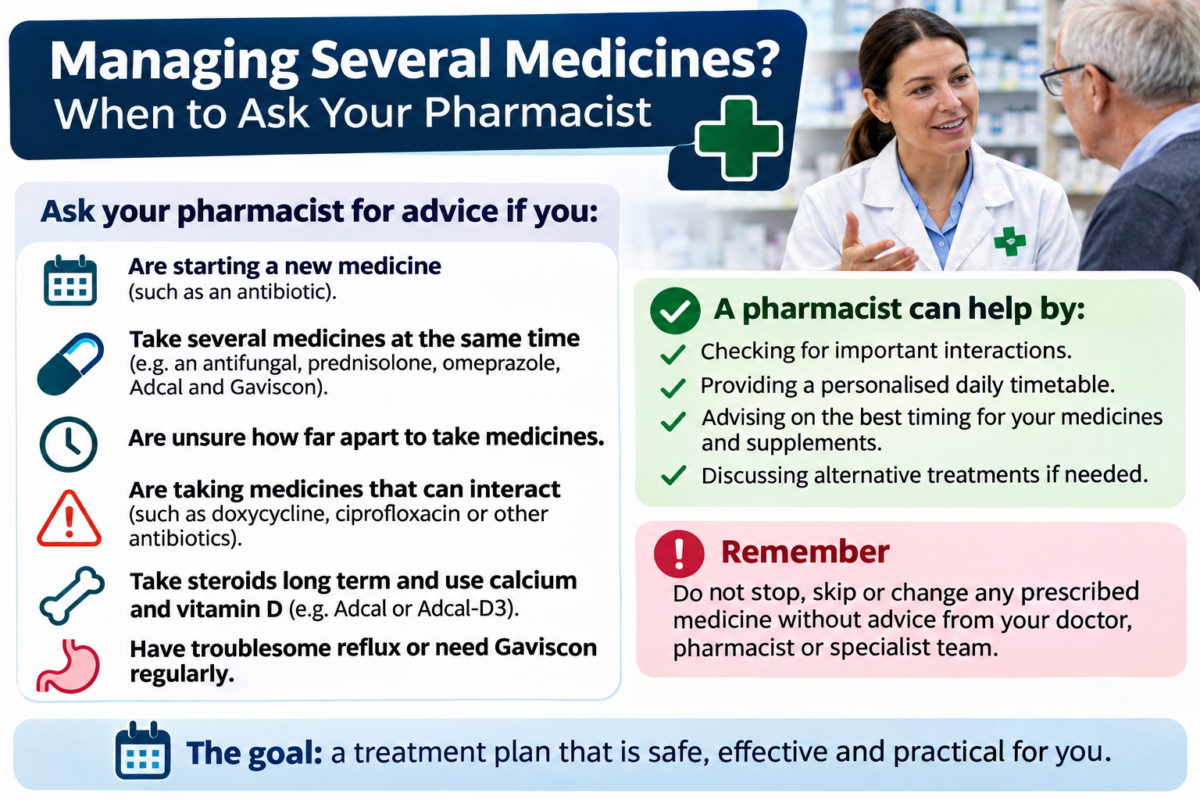
“Has my Aspergillus become resistant, or are we changing treatment for another reason?”
You can read more in our guide to treatment and monitoring.
How does resistance develop?
There are two important routes.
1. Resistance developing during treatment
Some people with CPA need antifungal treatment for months or years.
During prolonged treatment, susceptible fungi may be suppressed while fungi carrying resistance-associated changes survive and multiply.
This process is called selection.
It is one reason doctors monitor antifungal blood levels and, where possible, test the fungus for susceptibility to different medicines.
However, resistance is not inevitable, even during prolonged treatment. Many patients continue to benefit from azole antifungals over extended periods.
2. Resistance developing in the environment
This second route has attracted considerable scientific attention.
Aspergillus fumigatus is a common environmental fungus that helps break down dead leaves, compost and other organic material.
It is also exposed to chemicals used to control fungal diseases in agriculture and horticulture.
Some agricultural fungicides are chemically related to the azoles used in medicine.
Exposure to these chemicals can favour Aspergillus strains carrying resistance mechanisms that also reduce susceptibility to medical antifungals.
These resistant fungi can produce spores that spread through the environment.
A person may therefore inhale a resistant strain of Aspergillus even if they have never taken an antifungal medicine.
This means resistance is not always caused by medical treatment.
Both pathways are important. Their relative contributions vary between countries, patient populations and resistance mechanisms.
How common is antifungal resistance?
This is an important question, but the figures need careful interpretation.
In the UK Chief Medical Officer’s 2025 annual report, data from the national mycology reference laboratory showed that, in 2024:
- Just over 15% of tested A. fumigatus isolates were resistant to at least one of four azole medicines.
- Just over 10% were resistant to all four azoles tested.
These are concerning findings, but they do not mean that 15% of everyone with aspergillosis has a resistant infection.
Specialist reference laboratories receive samples from selected patients, including those with difficult infections or suspected resistance. Their results may therefore differ from rates in the wider patient population.
Resistance rates also vary geographically. Some European surveillance studies report lower figures.
For an individual patient, the likelihood of resistance depends on several factors, including previous antifungal exposure, the infecting strain and local environmental resistance.
We do not currently have reliable figures showing how often patients with CPA become resistant to every available antifungal treatment.
The important distinction is that resistance to all four commonly used azoles does not mean resistance to every antifungal drug class.
Source: UK Chief Medical Officer’s Annual Report 2025 — Infections
Can a medicine work again after resistance has developed?
Sometimes a patient who previously stopped an antifungal because of resistance or poor response may be able to use it successfully again years later.
How is this possible?
Different strains of Aspergillus can coexist in the lungs. Some may be susceptible to a medicine while others are resistant.
Over time, the balance between these populations can change.
In certain circumstances, resistant strains may become less dominant after treatment stops. A susceptible strain may then become more prominent, or a different strain may establish itself.
However, this is not predictable. Some resistance mechanisms persist for years, and an antifungal that previously failed may remain ineffective.
It is also possible that the original treatment failure was caused by inadequate drug levels or other factors rather than confirmed resistance.
A treatment break is not an established way to reverse resistance.
Patients should never stop antifungal treatment in the hope that resistance will disappear.
Nevertheless, a specialist may occasionally reconsider a previously unsuccessful medicine if new laboratory results and the patient’s circumstances support doing so.
This is one reason repeat testing can be valuable.
What happens if Aspergillus becomes resistant?
Resistance can make treatment more complicated, but there may still be alternatives.
If resistance is detected, specialists can investigate which medicines remain active against the particular strain.
Possible approaches include:
Another azole
Resistance to itraconazole does not always mean resistance to voriconazole, posaconazole or isavuconazole.
However, some resistance mechanisms affect several azoles simultaneously.
Laboratory susceptibility testing can help guide treatment decisions.
Intravenous antifungals
Medicines such as liposomal amphotericin B act differently from azoles and may remain active against azole-resistant Aspergillus.
Echinocandins, including micafungin and caspofungin, are another class that specialists may consider in selected circumstances.
These medicines have important limitations. They generally require intravenous administration, and their suitability depends on the type of aspergillosis and the patient’s overall health.
For someone requiring long-term CPA treatment, intravenous therapy can be difficult to sustain.
Combination treatment
In selected difficult infections, specialists may consider combining antifungals with different mechanisms of action.
However, combination treatment is not automatically more effective, and the evidence varies considerably according to the medicines and the form of aspergillosis.
New antifungal medicines
Several newer medicines are being developed with mechanisms of action different from conventional azoles.
These include:
Olorofim: a new class of antifungal that targets a process involved in fungal nucleotide production. It has shown promising activity against many azole-resistant Aspergillus strains.
Fosmanogepix: an investigational antifungal that interferes with fungal cell processes through a different target.
Rezafungin: a longer-acting echinocandin already licensed for certain Candida infections and being investigated for other fungal diseases, including aspergillosis.
These medicines are encouraging developments, but they are not all licensed or routinely available for aspergillosis in the UK. Their usefulness for long-term CPA treatment also requires further evidence.
For patients with particularly difficult infections, specialist centres may be able to explore clinical trials or exceptional access to investigational treatments, although access cannot be guaranteed.
Read our guide to clinical trials and emerging treatments for chronic aspergillosis.
Resistance can reduce treatment choices, but it does not automatically mean that no treatment remains.
What does farming have to do with antifungal resistance?
Agriculture uses fungicides to protect crops against diseases that can reduce yields, damage plants and affect food quality.
Azole fungicides have been particularly valuable because they are effective against several important crop diseases.
However, some agricultural azoles act on fungi in ways similar to medical azoles.
When Aspergillus fumigatus is exposed to these chemicals in the environment, resistant strains may gain an advantage.
Interestingly, A. fumigatus is usually not the fungus farmers are trying to control.
Instead, it may be present in soil, crop waste or decaying vegetation, where it is unintentionally exposed to the fungicide.
Research has demonstrated that environmental resistance mechanisms can also be found in clinical isolates from patients.
This provides strong evidence linking environmental selection with medically important antifungal resistance.
The relationship has been examined in detail by European scientific agencies.
Read the European Food Safety Authority’s 2025 plain-language assessment.
Why can’t agriculture simply stop using azole fungicides?
This is a reasonable question, but there is no simple answer.
Fungal diseases are a serious threat to food production. They can reduce harvests, damage crops and, in some circumstances, contribute to contamination by fungal toxins.
Farmers need effective ways to protect their crops, and the range of available fungicides is limited.
Alternatives include disease-resistant crop varieties, crop rotation, improved growing practices, biological controls and more precise forecasting of when fungicide treatment is needed.
These approaches can reduce dependence on chemical fungicides, but they cannot always replace them completely.
There is also a risk that overusing alternative fungicides could encourage resistance to those products.
The aim is therefore not simply to ban one group of chemicals, but to reduce unnecessary exposure, develop safer alternatives and prevent environmental conditions that favour resistant fungi.
Protecting food production and protecting human antifungal medicines are both important goals.
What have researchers discovered about compost and gardening?
Some of the strongest evidence comes from studies of environments where Aspergillus can grow and multiply.
These include compost, agricultural waste, decaying vegetation and waste from flower bulb production.
Such materials can contain large numbers of fungal spores.
If fungicide residues are also present, conditions may favour resistant strains.
The UK citizen science study
A particularly interesting study published in 2022 involved members of the public collecting samples from their own gardens.
The researchers received 509 soil samples collected by 246 citizen scientists across the UK.
They found that:
- 64% of samples contained culturable A. fumigatus.
- 20% contained isolates resistant to the agricultural azole tebuconazole.
- Compost-containing samples were more likely to contain A. fumigatus, including resistant isolates, than ordinary garden border soil.
The researchers also identified genetic resistance mechanisms associated with resistance to medical azoles.
This was important evidence that resistant Aspergillus can be found in ordinary residential environments.
However, these figures describe fungi recovered from soil samples. They do not tell us the likelihood of a gardener developing a resistant infection.
Most people who encounter environmental Aspergillus spores do not develop aspergillosis.
Read the original UK citizen science study — Shelton and colleagues, 2022.
What about Dutch flower bulbs?
Flower bulbs have also attracted attention.
A Japanese study published in 2020 examined tulip bulbs imported from the Netherlands.
Depending on the sampled group, researchers found azole-resistant A. fumigatus on approximately 6–16% of bulbs.
More recent research has also identified resistance-associated strains on imported and domestically produced bulbs.
This is evidence that some bulbs can carry resistant fungi. It does not establish how frequently handling bulbs causes infection in patients.
The concern is greatest when bulbs are mouldy, dusty or associated with decomposing plant material.
For people particularly vulnerable to aspergillosis, avoiding direct handling of mouldy bulbs or asking someone else to deal with dusty bulb waste may be sensible.
There is no evidence that every Dutch bulb presents a danger.
Read the original 2020 flower bulb study.
What about fruit and vegetables?
Agricultural fungicides are also used on many food crops.
However, detecting fungicide residues or environmental fungi in agriculture is not the same as demonstrating that eating fresh produce causes resistant aspergillosis.
Aspergillosis is generally acquired through inhalation of airborne spores.
Research into soil associated with vegetables has not shown the same consistent resistance signal seen in some compost and bulb-associated environments.
There is no reason to stop eating ordinary fruit and vegetables because of antifungal resistance research.
Should people with aspergillosis stop gardening?
Not automatically.
Gardening can provide exercise, enjoyment and considerable benefits for wellbeing.
The main concern is avoiding activities that produce heavy exposure to fungal spores, particularly from mouldy or decomposing organic material.
Practical precautions include:
- Avoid turning heavily mouldy compost heaps.
- Avoid breathing dust from dry compost or decaying vegetation.
- Ask someone else to handle visibly mouldy bulbs or large amounts of garden waste if you are particularly vulnerable.
- Consider a suitable, well-fitting FFP2 or FFP3 respirator for higher-exposure activities if you can wear one safely.
- Follow any individual advice from your respiratory or infectious diseases team.
A respirator can reduce exposure to airborne particles, but it cannot eliminate risk completely.
People who are severely immunocompromised may require stricter precautions than someone with stable chronic lung disease.
Ordinary walking, sitting in the garden and enjoying outdoor activities do not generally require special precautions solely because resistant Aspergillus exists in the environment.
For more practical information, see our guide to face masks, gardening and fungal spore exposure.
How do doctors test for resistance?
If Aspergillus can be grown from sputum or another respiratory sample, a laboratory may test how susceptible it is to different antifungal medicines.
This is called antifungal susceptibility testing.
Some laboratories can also identify genetic changes associated with resistance.
These results can help specialists choose appropriate treatment.
However, obtaining a sample is not always straightforward.
Some patients cannot produce sputum, and fungal cultures may be negative even when aspergillosis is present.
In addition, different strains can coexist, so a single sample may not reveal every resistant population.
Doctors therefore interpret laboratory findings alongside symptoms, scans, treatment history, antifungal blood levels and other investigations.
For difficult infections, specialist mycology laboratory advice can be particularly valuable.
What is being done internationally?
The growing recognition of environmental antifungal resistance has encouraged cooperation between medical researchers, agricultural scientists, environmental specialists and international organisations.
This is known as the One Health approach.
It recognises that human health, agriculture and the environment are closely connected.
Better monitoring
Researchers are monitoring resistant Aspergillus in patients, agricultural environments, soil and air.
These studies help identify resistance patterns and possible environmental hotspots.
Reducing resistance in agriculture
European scientific agencies have recommended improved fungicide stewardship, better agricultural practices and more careful management of organic waste.
Particular attention is being paid to places where fungi can multiply while exposed to fungicide residues.
The aim is to reduce conditions that favour resistance without unnecessarily compromising food production.
Protecting existing antifungal medicines
In healthcare, antifungal stewardship encourages appropriate prescribing, suitable dosing and careful monitoring.
For patients requiring long-term treatment, this means ensuring that antifungals remain effective and safe rather than withholding necessary medicines.
Developing new treatments
Researchers are developing antifungals with new mechanisms of action and investigating whether combinations or alternative delivery methods can improve treatment.
These developments are particularly important for people with difficult-to-treat CPA and resistant invasive aspergillosis.
Action by the World Health Organization
In June 2026, the World Health Organization published a blueprint for strengthening responses to fungal diseases and antifungal resistance.
It includes recommendations covering diagnostics, surveillance, access to treatment, research, antifungal stewardship and environmental risks.
The WHO also works with international partners concerned with agriculture, animal health and the environment.
These initiatives do not mean the resistance problem has been solved. However, they demonstrate that antifungal resistance is now recognised as an international challenge requiring coordinated action.
Read the WHO’s 2026 blueprint.
Frequently asked questions
Will taking itraconazole for years inevitably make my Aspergillus resistant?
No. Resistance is possible during prolonged treatment, but it is not inevitable. Regular monitoring helps your specialist assess whether the medicine remains suitable.
If I become resistant to itraconazole, will posaconazole still work?
Possibly. Some resistant strains remain susceptible to other azoles, while others show resistance to several. Susceptibility testing can help determine which medicines may still be effective.
Could itraconazole work again after several years?
Sometimes, but it is not predictable. Fungal populations can change over time, and a specialist may occasionally reconsider a previously unsuccessful medicine. Patients should never take a treatment break specifically to try to reverse resistance.
What happens if all the usual azoles stop working?
Specialists may consider intravenous antifungals, selected combinations, other treatment approaches or clinical trials. Options can be limited, particularly for long-term CPA, but azole resistance does not necessarily mean that every antifungal will be ineffective.
Should I avoid Dutch flower bulbs?
Not necessarily. Some studies have found resistant Aspergillus on bulbs, but the risk of infection from handling them has not been quantified. Avoiding mouldy bulbs and dusty bulb waste is a reasonable precaution for vulnerable patients.
Should I stop gardening?
Not automatically. Avoiding heavy exposure to mouldy compost and dusty organic material is sensible. Your clinical team can advise on precautions appropriate to your health.
Can I catch resistant Aspergillus from another patient?
Ordinary person-to-person transmission is not considered a usual route of aspergillosis. Most infections arise through exposure to environmental spores.
Does antifungal resistance mean we are running out of treatments?
Resistance can make treatment more difficult, particularly when several azoles are affected. However, other antifungal classes remain available in selected circumstances, and new medicines are being developed.
The important message
Antifungal resistance is a genuine medical and environmental challenge, but it needs to be understood in perspective.
Resistance can develop during prolonged treatment or arise in the environment before a person becomes infected.
Agricultural fungicides can contribute to this process, and research involving compost, garden soils and flower bulbs has helped scientists understand how resistant strains spread.
However, most tested Aspergillus isolates remain susceptible to azoles, and resistance to one medicine does not necessarily mean that all treatments will fail.
A change in antifungal medication is not automatically evidence of resistance.
For patients, the most useful steps are to understand their treatment, attend recommended monitoring appointments and discuss concerns with their specialist.
There is no reason to stop effective treatment, avoid ordinary fresh produce or become frightened of everyday outdoor activities because of news about antifungal resistance.
Meanwhile, scientists, doctors, farmers and international organisations are working to protect existing medicines and develop new options.
The aim is to understand the risks, reduce avoidable exposure and ensure that effective treatment remains available for people who need it.
Further reading and scientific references
Patient information
- Treatment and management of aspergillosis — Aspergillosis.org
- Face masks, dust, gardening and fungal exposure — Aspergillosis.org
- Clinical trials and emerging treatments for chronic aspergillosis — Aspergillosis.org
- National Aspergillosis Centre — specialist services and support
Research and official reports
- Shelton and colleagues (2022). Citizen Science Surveillance of Triazole-Resistant Aspergillus fumigatus in United Kingdom Residential Garden Soils. Applied and Environmental Microbiology. Read the research.
- Hagiwara (2020). Isolation of azole-resistant Aspergillus fumigatus from imported plant bulbs in Japan and the effect of fungicide treatment. Journal of Pesticide Science. Read the research.
- European scientific agencies (2025). Impact of the use of azole fungicides, other than as human medicines, on the development of azole-resistant Aspergillus species. Plain-language summary.
- UK Chief Medical Officer (2025). Annual Report: Infections. Includes national reference laboratory surveillance of azole-resistant A. fumigatus. Read the report.
- World Health Organization (2026). Blueprint for strengthening responses to fungal disease and antifungal resistance. Read the WHO guidance.
This article provides general information and does not replace advice from your own clinical team. Treatment decisions should always be made with an appropriately qualified healthcare professional.

Did this page help you?
Tell us in one minute