Lung cancer and aspergillosis can sometimes occur in the same person, but having lung cancer does not mean that someone will develop a fungal infection. Aspergillosis is still uncommon.
It becomes important to consider when lung cancer, previous lung disease or cancer treatment has changed the structure of the lungs or weakened the body’s ability to control infection. Symptoms and scan changes can then be difficult to interpret: they may be due to cancer, treatment effects, bacterial infection or an Aspergillus-related lung condition.
Why lung cancer can change the risk
Most people breathe in Aspergillus spores without becoming ill. Healthy lungs and immune defences normally clear them.
For some people with lung cancer, several factors can combine to make aspergillosis more likely:
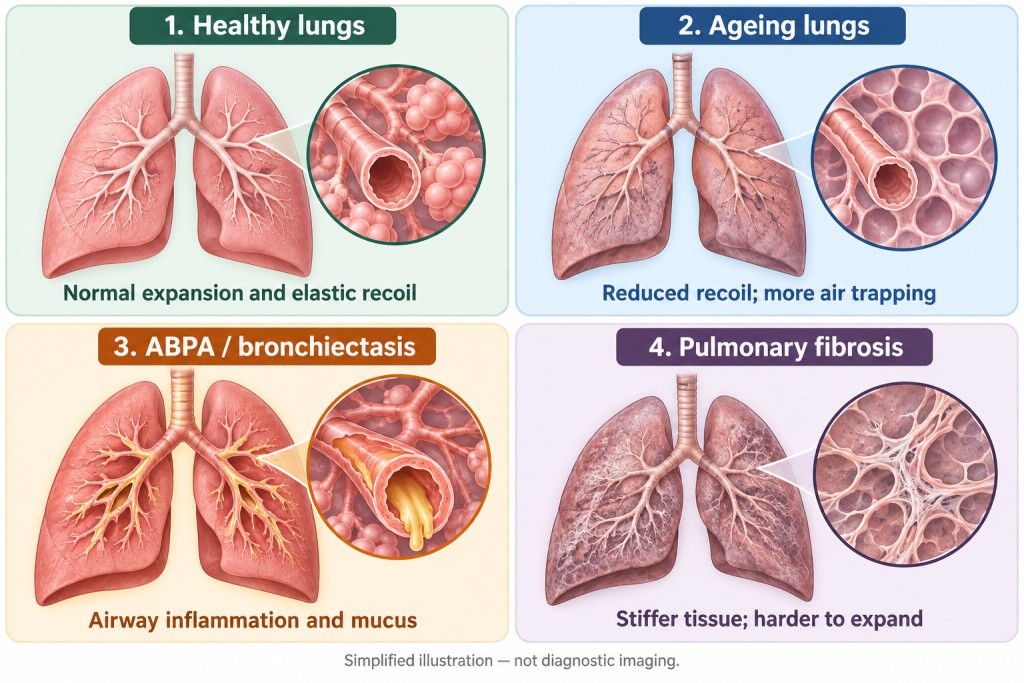
- Underlying COPD, emphysema, bronchiectasis, previous tuberculosis or other lung damage
- Surgery that removes part of the lung or leaves an altered area of lung structure
- Radiotherapy, which can sometimes cause scarring or damage to lung tissue over time
- Chemotherapy, prolonged steroid treatment or other medicines that suppress immune defences
- Reduced lung function, weight loss or general frailty during cancer treatment
These factors do not cause aspergillosis on their own. They change the balance between the fungus, the lungs and the immune system.
Which forms of aspergillosis can occur?
The type of aspergillosis depends largely on lung structure and immune status.
Chronic pulmonary aspergillosis (CPA)
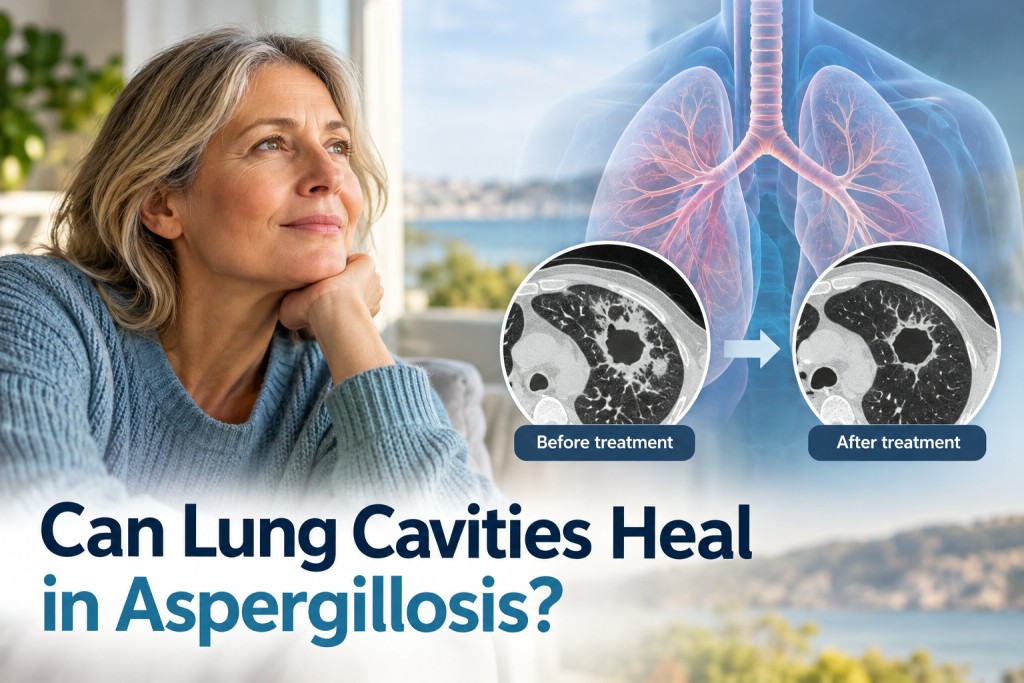
CPA is a long-term infection that usually develops over months in lungs that are already damaged. It can cause cavities, scarring or nodules, sometimes with an aspergilloma (fungal ball) in a cavity. CPA may occur months or years after surgery or radiotherapy for lung cancer.
Invasive aspergillosis
Invasive aspergillosis is a more serious infection in which the fungus damages lung tissue and may spread beyond the lungs. It is more likely when the immune system is very weakened, for example during some intensive chemotherapy treatments, prolonged high-dose steroid treatment or treatment for blood cancers.
Aspergillus colonisation
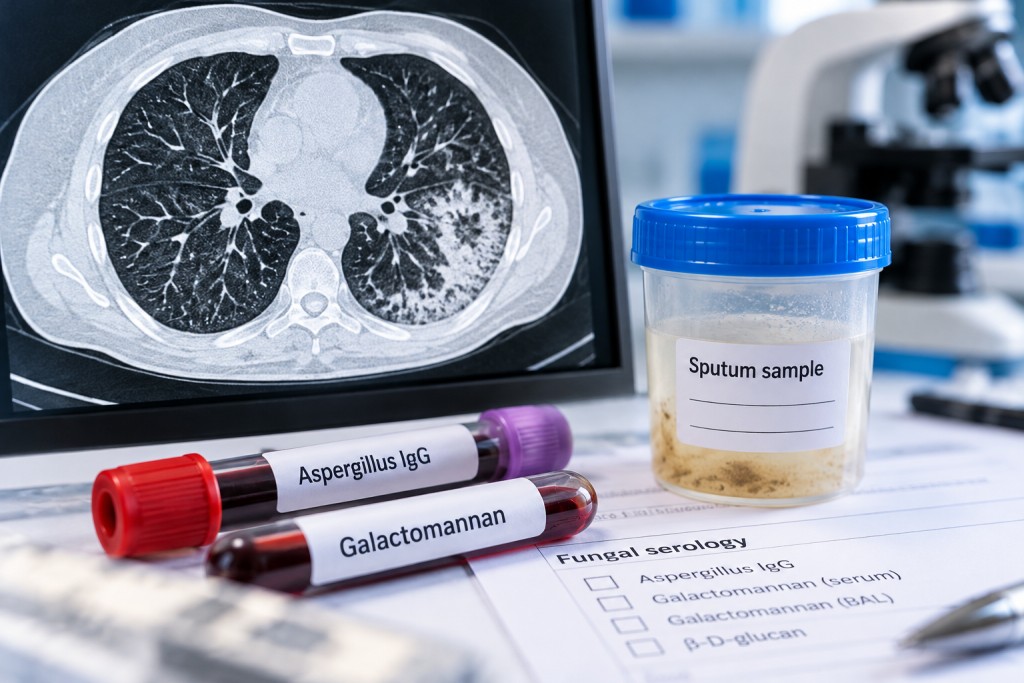
Sometimes Aspergillus is found in sputum without clear evidence that it is causing disease. This is called colonisation. A positive culture needs to be interpreted alongside symptoms, scans and blood tests; it does not automatically mean that antifungal treatment is needed.
Why diagnosis can be difficult
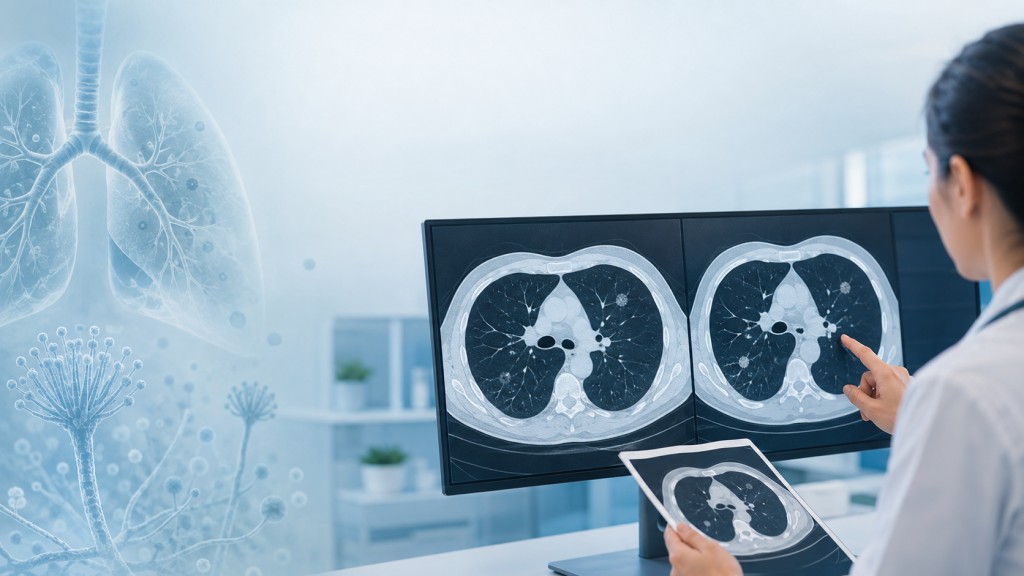
Lung cancer, surgery, radiotherapy, bacterial infection and aspergillosis can all cause cough, breathlessness, tiredness, weight loss and changes on a CT scan. A new nodule, cavity or area of shadowing may need careful investigation to distinguish between cancer recurrence, treatment-related change and infection.
An aspergilloma can also be mistaken for lung cancer on imaging. A fungal ball inside a cavity, or an Aspergillus nodule, may appear as a mass or nodule on a chest X-ray, CT scan or PET scan. Equally, a new cancer can sometimes be mistaken for infection. This is why doctors may need to compare scans over time and use blood tests, respiratory samples or a biopsy before reaching a diagnosis.
Aspergillosis can mimic lung cancer on a scan. An Aspergillus nodule or an aspergilloma may look like a lung mass, while cancer or cancer recurrence can sometimes resemble infection. Careful specialist assessment helps avoid premature conclusions in either direction.
Diagnosis usually combines several sources of information:
- Symptoms and the timeline of cancer treatment
- Comparison of current and previous chest CT scans
- Blood tests, including Aspergillus IgG antibodies when CPA is suspected
- Sputum or bronchoscopy samples, where appropriate
- Additional imaging or biopsy when the diagnosis remains uncertain
No single test gives every answer. A specialist respiratory, oncology and fungal infection team may need to review the findings together.
Symptoms that should be discussed promptly
Let your cancer or respiratory team know about symptoms that are new, worsening or not improving as expected. These include:
- Persistent or worsening cough
- Increasing breathlessness
- Fever or repeated chest infections
- Ongoing fatigue or unexplained weight loss
- Chest pain or discomfort
- Coughing up blood (haemoptysis)
Coughing up blood should always be reported. Seek urgent medical help for significant, repeated or rapidly increasing bleeding.
Treatment needs to be coordinated
If aspergillosis is diagnosed, treatment depends on the type of infection, the extent of lung disease, immune status and the cancer treatment plan.
CPA is often treated with long-term antifungal medication and regular monitoring. Invasive aspergillosis needs urgent specialist treatment. An aspergilloma causing significant bleeding may sometimes be treated with surgery or a procedure to block the bleeding blood vessels.
Antifungal medicines can interact with some cancer treatments and other medicines. It is therefore important that the oncology, respiratory and pharmacy teams know about every medicine being taken before treatment starts or changes.
What you can do
Keep attending planned cancer and respiratory follow-up appointments, and report symptoms rather than assuming they are simply part of recovery or treatment.
Aspergillosis is not the most likely explanation for a new symptom or scan change in someone with lung cancer. But a history of lung cancer and its treatment is important information when clinicians are considering persistent symptoms, cavities, nodules or unexplained changes on a scan.
Related information
- Lung surgery and aspergillosis
- Chronic pulmonary aspergillosis (CPA)
- Invasive aspergillosis
- Aspergilloma (fungal ball)
- How aspergillosis is diagnosed
- Treatment for aspergillosis
- Coughing up blood (haemoptysis)
- Common associated conditions
Sources: ERS/ESCMID clinical guidelines for chronic pulmonary aspergillosis; European Respiratory Society review of pulmonary aspergillosis.

Did this page help you?
Tell us in one minute