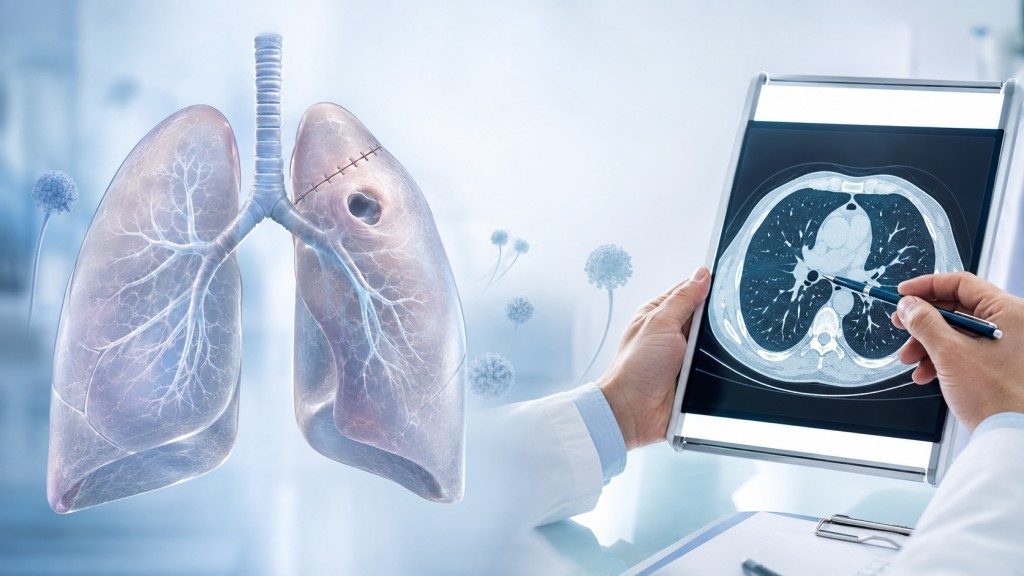
Recovering from lung surgery can take time. It is normal to have some breathlessness, discomfort, tiredness or changes on a chest scan while the lung and chest heal.
For a small number of people, however, previous surgery or other damage to the lungs can create conditions in which Aspergillus causes a longer-term lung problem. This does not mean that everyone who has had lung surgery is at risk. It means that persistent or unexplained symptoms deserve careful assessment, particularly when scans show a cavity or other structural change in the lung.
Why previous lung surgery can matter
Most people breathe in Aspergillus spores every day without becoming ill. The lungs usually clear them before they cause a problem.
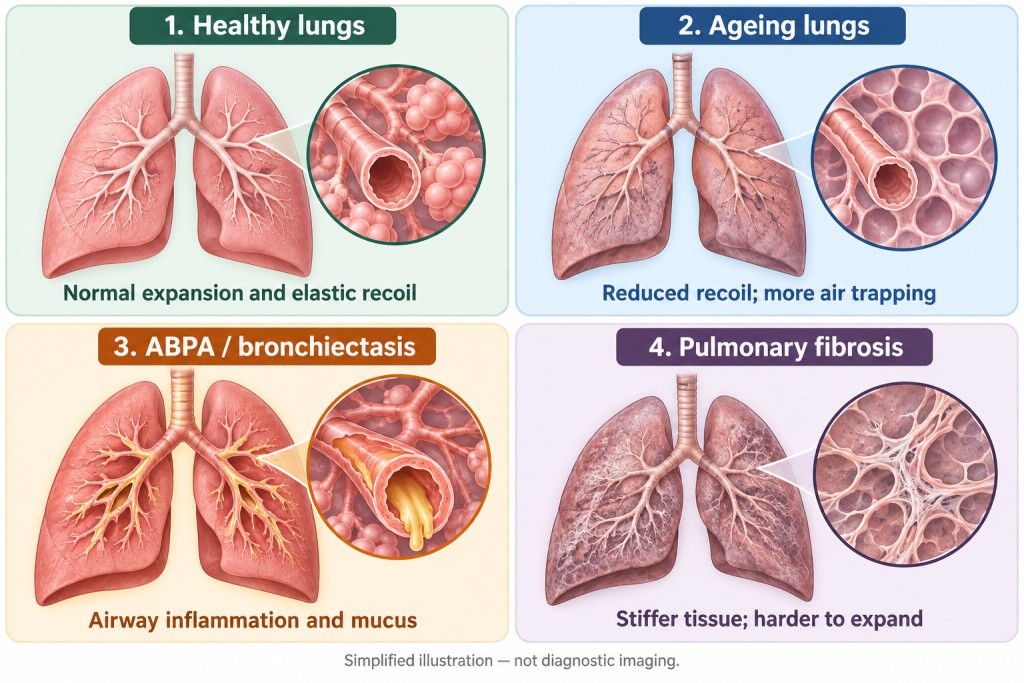
After surgery, part of the lung may have been removed or the lung may heal with scarring, altered airways or, occasionally, an air-filled space. These changes can reduce normal mucus clearance. If there is already lung damage from another condition, the effect can be greater.
Aspergillus can sometimes grow in these altered areas of lung. This may lead to chronic pulmonary aspergillosis (CPA), or to an aspergilloma (a fungal ball) within an existing cavity.
Which operations or conditions are relevant?
Aspergillosis is still uncommon after lung surgery, but the possibility may be considered after:
- Surgery to remove part or all of a lung
- Previous treatment for lung cancer, including surgery or radiotherapy
- Surgery for collapsed lung (pneumothorax), bullae or severe emphysema
- Operations following serious infection, tuberculosis or other destructive lung disease
The risk depends on the condition that led to surgery, the amount of underlying lung damage, other treatments and overall lung health. It is not caused by poor hygiene, and CPA is not contagious.
What symptoms should be checked?
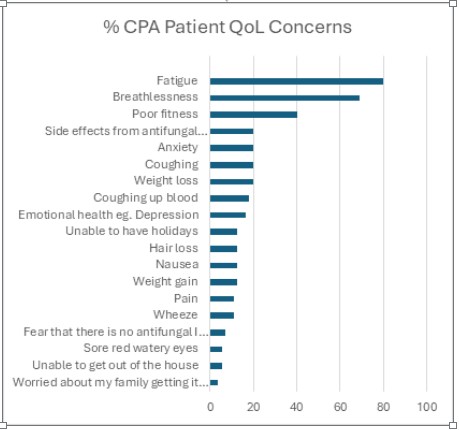
Symptoms of CPA can develop gradually over months and may overlap with the effects of the original lung condition or surgery. They can include:
- Persistent or worsening cough
- Increasing breathlessness
- Ongoing tiredness, low energy or weight loss
- Repeated chest infections or symptoms that do not settle as expected
- Chest discomfort
- Coughing up blood (haemoptysis)
A small streak of blood in sputum can have several causes, but should be reported to a healthcare professional. Seek urgent medical help for significant, repeated or rapidly increasing bleeding.
What might be seen on a scan?
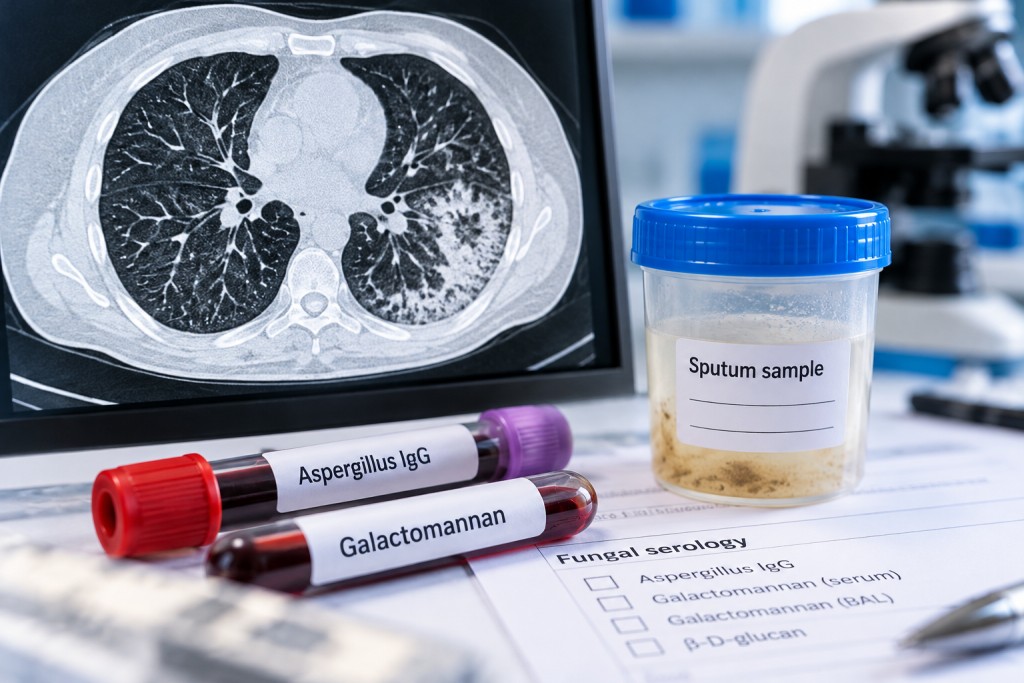
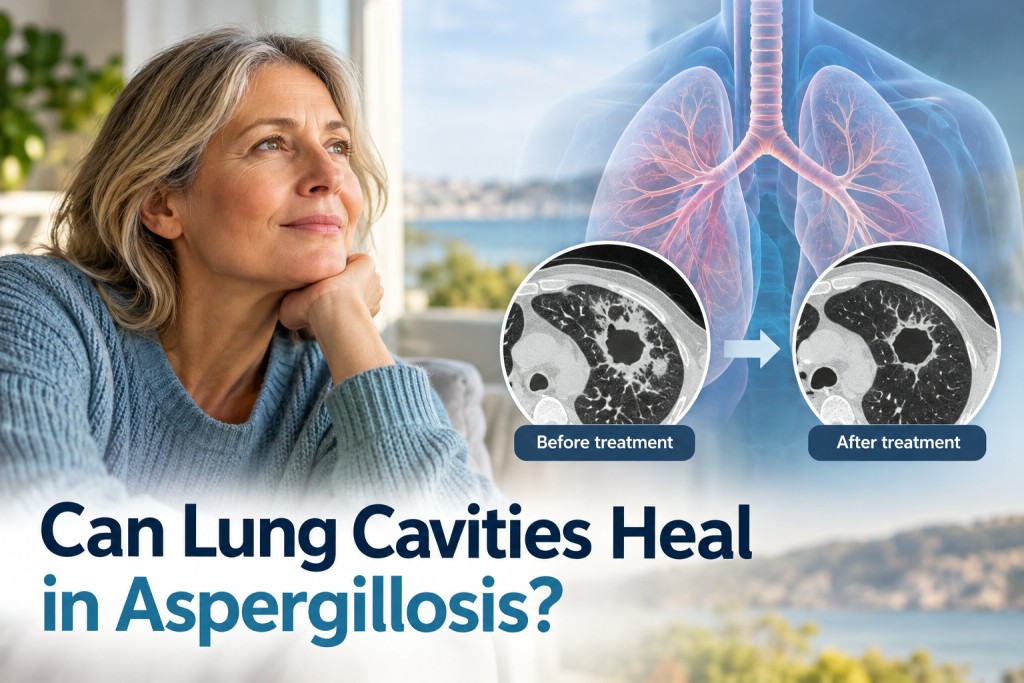
Chest X-rays and CT scans are important because they show the structure of the lungs. After surgery, scans may show expected scarring and post-operative change. In CPA, doctors may look for a cavity, thickening around a cavity, a fungal ball, nodules or changes that progress over time.
These findings are not specific to aspergillosis. Cancer recurrence, bacterial infection, inflammation and post-operative change can sometimes look similar. This is why scan findings need to be considered alongside symptoms and laboratory tests.
How is aspergillosis diagnosed after surgery?
There is no single test that can diagnose CPA on its own. Assessment may include:
- A review of symptoms and previous lung history
- Chest X-ray and, usually, a CT scan
- Blood tests, including Aspergillus IgG antibodies
- Sputum testing, where a sample can be produced
- Other tests or specialist review when the diagnosis remains unclear
For CPA, doctors look for a consistent picture of symptoms or progressive scan changes lasting at least three months, evidence that Aspergillus is involved, and exclusion of other likely causes.
What treatment is available?
Treatment depends on the type and extent of aspergillosis, symptoms, lung function and the reason for the original surgery.
Some people with stable findings need regular monitoring rather than immediate treatment. Others need antifungal medication, often for many months or longer. These medicines need careful monitoring because they can interact with other treatments and may cause side effects.
If there is a single aspergilloma causing significant bleeding or other problems, surgery or a procedure to block the bleeding blood vessels may be considered. These decisions are individual and are usually made with a respiratory, thoracic surgical and specialist fungal infection team.
What you can do
Keep attending your planned follow-up appointments after lung surgery and report symptoms that persist, worsen or do not fit with the recovery you expected.
If you have previously had lung surgery and are experiencing ongoing cough, fatigue, weight loss, worsening breathlessness or coughing up blood, ask your respiratory team whether your scans and symptoms need further investigation. A history of surgery does not prove aspergillosis, but it is an important part of the wider lung history.
Related information
- Understanding chronic pulmonary aspergillosis (CPA)
- Aspergilloma (fungal ball)
- How aspergillosis is diagnosed
- Treatment for aspergillosis
- Coughing up blood (haemoptysis)
- Common associated conditions
Sources: ERS/ESCMID clinical guidelines for chronic pulmonary aspergillosis; National Aspergillosis Centre information on CPA.

Did this page help you?
Tell us in one minute