

Health Hazards from Damp – What People with Aspergillosis Should Know
Updated 2025
Living with an aspergillosis condition (such as allergic or chronic pulmonary aspergillosis) means your lungs are more vulnerable to environmental conditions — including what’s going on in your home. One of the most important hazards is damp (and associated mould and poor ventilation). This article explains why damp matters, what the health risks are, what you can do, and how your housing and health care teams should respond.
Why damp is a hazard
Damp in homes typically arises from three main causes: condensation, penetrating damp (water entry from outside), and rising damp (ground moisture moving up through walls). Whatever the cause, excess moisture provides the conditions for mould growth, dust-mite proliferation, bacteria and fungal spores — all of which can affect indoor air quality and thus your lungs.
Homes affected by damp and mould are recognised in guidance from National Institute for Health and Care Excellence (NICE) as being associated with poorer health outcomes. nice.org.uk The World Health Organization and other reviews also highlight that occupants of damp or mouldy buildings may have up to a 75 % higher risk of respiratory symptoms. World Health Organization exposure to spores (including Aspergillus) and irritants triggers symptoms or worsens infection risk.
What are the health risks?
Respiratory & lung risks
-
Damp and mould are strongly associated with increased incidences of coughing, wheezing, breathlessness, and respiratory infections. iaqscience.lbl.gov
-
They are linked with the development or worsening of asthma, allergic rhinitis, and other inflammatory lung conditions. GOV.UK
-
For people living with aspergillosis, damp homes can mean higher fungal spore loads, greater irritation, and possibly increased risk of complications or flare-ups.
Other physical health impacts
-
Eye irritation, itchy skin, nasal and throat discomfort may occur in some people exposed to damp/mould‐dominated environments. GOV.UK
-
For people with weakened immune systems, there is evidence (though less strong) that some fungal infections may be more likely in damp or mouldy homes. NCBI
Mental health & wellbeing
-
Living in a damp or mould-affected home can lead to anxiety, stress and feelings of loss of control — especially if repairs are slow or you feel blamed for the conditions. GOV.UK
-
The combination of physical symptoms + poor housing environment + financial/housing stress can impact overall quality of life.
Who is more at risk?
People with the following are at increased risk from damp/mould:
-
Existing respiratory illnesses (such as aspergillosis, asthma, COPD)
-
Immune compromise
-
Young children, pregnant women, older people — all more vulnerable to poor indoor air quality. nice.org.uk
-
People on low income, in poorly insulated homes, or renting socially — these homes are more likely to have damp/mould. GOV.UK
What you (or your clinician) should do
For you (the patient)
-
Monitor your home environment: Look for repeated condensation, musty smells, damp patches, and black mould growth.
-
Tell your healthcare team: If you notice worsening respiratory symptoms (cough, wheeze, shortness of breath) alongside signs of damp/mould, inform your specialist nurse or physician. Based on NICE guidance, you should:
“Ask about their housing conditions. If housing factors are a health concern … help them request a housing assessment.” nice.org.uk
-
Document the issues: Take photos, notes of communication with landlord/housing provider (if applicable).
-
Take protective steps at home: Ensure good ventilation, control moisture, keep heating consistent (see the separate “Damp Prevention” article on the website for detailed steps).
-
If living with aspergillosis, in consultation with your specialist, consider whether a housing referral or indoor air assessment is appropriate.
For your healthcare/support team
-
Recognise that housing conditions are part of the care package for people with lung disease.
-
Ask routinely about the housing environment in history-taking for patients with recurrent respiratory symptoms.
-
Make referrals (housing assessment, environmental health) when conditions suggest damp/mould may be contributing to health problems. nice.org.uk
-
Work across sectors: link with housing providers, social care, and environmental health to ensure a coordinated response.
For housing providers/landlords (context)
-
Damp and mould must not be seen as “cosmetic” issues—they are health hazards. Guidance emphasises that simply removing visible mould without fixing the underlying issue is inadequate. GOV.UK
-
Landlords and housing providers should have policies to inspect, document and address damp/mould, especially where tenants have known health vulnerabilities. GOV.UK
Key message
If you live with aspergillosis, living in a dry, well-ventilated, well-maintained home is not optional — it’s essential. Damp and mould are proven risk factors for respiratory illness and can undermine your management of aspergillosis.
Combined with what you can do at home (ventilate, control moisture, maintain warmth) and initiating action via your healthcare and housing teams, you can reduce the preventable risks related to your home environment.
Useful Links & Further Reading
-
NICE Guideline NG149 – Indoor Air Quality at Home: https://www.nice.org.uk/guidance/ng149
-
GOV.UK – Understanding and Addressing the Health Risks of Damp and Mould in Rented Housing: https://www.gov.uk/government/publications/damp-and-mould-understanding-and-addressing-the-health-risks-for-rented-housing-providers/understanding-and-addressing-the-health-risks-of-damp-and-mould-in-the-home--2
-
Research overview: “Health Risks of Dampness and Mold in Houses” (Lawrence Berkeley Lab): https://iaqscience.lbl.gov/health-risks-dampness-and-mold-houses

🌿 Aspergillosis in the Sinuses (Allergic Fungal Rhinosinusitis – AFRS)
It’s quite possible for Aspergillus to affect both the lungs and the sinuses.
The sinuses are small air-filled spaces behind the nose, eyes, and cheeks that normally drain mucus freely. When Aspergillus spores become trapped there, they can trigger an allergic or inflammatory reaction — rather like ABPA in the lungs.
This allergic form is called Allergic Fungal Rhinosinusitis (AFRS).
It isn’t a contagious infection — it’s an overreaction of the immune system to fungal spores. Over time, it can lead to thick mucus, nasal blockage, and sometimes nasal polyps.
🩵 Common symptoms
-
Persistent nasal congestion or blockage
-
Thick or sticky mucus (sometimes with brown or dark flecks)
-
Reduced or lost sense of smell
-
Facial pressure, pain, or fullness (especially around the eyes or cheeks)
-
Post-nasal drip (mucus running down the throat)
-
Fatigue or worsening asthma symptoms
🔬 Diagnosis
-
CT scan of the sinuses – shows thickened or blocked areas
-
Nasal endoscopy – a tiny camera used to look inside
-
Fungal culture or microscopy from mucus samples
-
Blood tests – sometimes show raised total IgE or Aspergillus-specific IgE
💊 Treatment
-
Topical nasal steroids (sprays or rinses) or short courses of oral steroids to reduce inflammation
-
Saline rinses to help keep the sinuses clear
-
ENT surgery if sinuses are blocked or filled with thick fungal debris
-
Antifungal medication in some cases, especially if fungal growth is confirmed
🌸 The Main Types of Aspergillus Sinus Disease
There are several recognised types of sinus aspergillosis. Most people with ABPA or asthma experience only the allergic form (AFRS).
1️⃣ Allergic Fungal Rhinosinusitis (AFRS)
-
Caused by an allergic reaction to Aspergillus
-
Leads to inflammation, thick mucus, and polyps
-
Non-invasive – the fungus stays on the surface
-
Managed with steroids, nasal rinses, and sometimes surgery
✅ This is the type most relevant for ABPA patients.
2️⃣ Fungal Ball (Mycetoma)
-
A clump of fungus (usually A. fumigatus) in a single sinus, often the cheek (maxillary) sinus
-
Common in otherwise healthy people
-
Causes chronic congestion or facial pain
-
Treated surgically – antifungals rarely needed
-
Not allergic and not invasive
3️⃣ Invasive Aspergillus Sinusitis
-
Rare, seen mostly in people with severely weakened immunity (e.g., chemotherapy, bone marrow transplant, uncontrolled diabetes)
-
The fungus invades surrounding tissue and blood vessels
-
Causes severe facial pain, swelling, fever, sometimes affecting the eyes
-
Needs urgent treatment with antifungal drugs and surgery
⚠️ Very rare in people with ABPA or CPA.
🤝 Specialist care
If you have lung aspergillosis (such as ABPA or CPA) and start noticing more nasal congestion, sinus pressure, or post-nasal drip, it’s sensible to mention it to your respiratory or mycology team.
At the National Aspergillosis Centre (NAC), sinus disease is often co-managed by ENT surgeons, respiratory physicians, and mycology specialists, ensuring coordinated care.
With the right combination of treatments — and early recognition of symptoms — most people find their sinus symptoms improve, and controlling sinus inflammation can even help with overall breathing and energy.

🩵 Coughing and Aspergillosis: Why You Might Still Cough Even When You Feel Well
Many people living with Allergic Bronchopulmonary Aspergillosis (ABPA) or bronchiectasis notice that they still cough regularly — even when their blood tests and scans show their condition is stable. It can be confusing to feel well and yet still have daily coughing or occasional coughing fits.
This article explains why that happens and when you should be concerned.
🌿 Why coughing can continue between flare-ups
ABPA and other forms of aspergillosis can cause long-term changes in the airways. Even when the allergic inflammation has settled and your Immunoglobulin E (IgE) levels are back to baseline, the airways may remain a little widened or scarred. This means:
-
Mucus can collect in the airways more easily.
-
The lining of the bronchi can stay slightly “twitchy” or reactive.
-
Your lungs may continue to produce small amounts of sticky, clear mucus that needs to be cleared out.
Coughing is your body’s way of keeping those airways clear — so a light, regular cough can actually be a sign that your lungs are doing their job.
💨 Why you might not cough during exercise
Many patients notice something surprising:
“I can walk or exercise in the gym for a couple of hours without coughing at all — but later, I get a coughing fit and bring up mucus.”
This is quite normal. When you exercise, you breathe more deeply and more rapidly. This helps:
-
Keep the airways open
-
Move mucus towards the larger airways
-
Reduce the irritation that triggers coughing
When you stop exercising, mucus that’s been loosened can settle again — and that’s often when a coughing fit happens to clear it out. It’s part of your lungs’ natural “housekeeping” system.
🌬️ What you can do to help
-
Stay active: Gentle exercise is good for your lungs. It keeps the airways open and improves mucus clearance.
-
Hydration helps: Drinking enough water or warm fluids keeps mucus less sticky.
-
Airway-clearance techniques: Ask your physiotherapist about huff coughing or devices like the Aerobika or Acapella, which help loosen and move mucus.
-
Watch for changes:
-
Mucus turning yellow, green, or brown
-
Increased shortness of breath or fatigue
-
A rise in IgE or worsening symptoms
-
If any of these occur, contact your respiratory or mycology team — it might mean an infection or early flare-up.
💙 The key message
A mild, regular cough between flare-ups is normal for many ABPA or bronchiectasis patients.
It doesn’t mean your condition is worsening — it’s often your lungs simply clearing secretions.
If your IgE levels are stable and you feel well, that’s a strong sign your disease is under good control.

💚 Living With Aspergillus fumigatus and Starting Antifungal Treatment
Question: “I have Aspergillus fumigatus and I’d like to ask a few questions.
After starting antifungal treatment, how long did it take before you noticed improvement or a stop in the bleeding cough?
Has anyone reached a stable condition or full recovery?
Please share your experiences — it would really help to hear from you.” 💚
🌿 A Supportive Note
Many people ask this question when they first begin treatment — and it’s a very normal concern. Aspergillus fumigatus can cause a range of lung problems such as chronic pulmonary aspergillosis (CPA), aspergilloma, or Allergic Bronchopulmonary Aspergillosis (ABPA), and each responds differently to antifungal therapy.
Improvement can take time and patience.
Some notice changes within weeks, while for others, it can take several months before symptoms start to ease or stabilise.
💊 Understanding How Antifungal Treatment Works
Antifungal medicines — such as itraconazole, voriconazole, or posaconazole — don’t destroy Aspergillus overnight.
They work by slowing or stopping fungal growth, allowing the body’s immune system and lung healing processes to gradually take over.
Because these infections are often chronic, the goal is usually to:
-
Control symptoms
-
Prevent further damage
-
Reduce inflammation and flare-ups
-
Stabilise lung function
For most patients, this means aiming for long-term stability rather than complete eradication of the fungus.
⏳ How Long Before You Feel Better?
Every patient is different, but this is a general pattern doctors often see:
| Time after starting treatment | What you might notice |
|---|---|
| First few weeks | Some reduction in coughing or mucus; fewer night sweats; side effects settling as your body adjusts. |
| 1–3 months | Energy may start to improve; less coughing or blood in sputum; breathing slightly easier. |
| 3–6 months | Signs of stability — symptoms no longer worsening, CT scans showing improvement, or blood markers (e.g. Aspergillus IgG) falling. |
| 6–12 months | Some people achieve remission or long-term stability. For others, antifungal therapy continues as maintenance. |
If you have a fungal ball (aspergilloma), improvements are often slower, and sometimes bleeding episodes take longer to settle.
🩸 About Bleeding (Haemoptysis)
Coughing up blood can be one of the most distressing symptoms.
It usually improves once antifungals reduce inflammation, but if bleeding continues:
-
Doctors may prescribe tranexamic acid to help the blood clot more easily.
-
In some cases, embolisation (a targeted procedure to seal a bleeding blood vessel) may be needed.
-
Ongoing bleeding should always be reported — even small amounts — so your team can reassess treatment or check for infection changes.
🫁 Why “Stable” Can Be a Positive Outcome
Although “cure” is possible in some early or mild cases, most people live with aspergillosis as a chronic condition.
With consistent antifungal therapy, airway clearance, and monitoring, many reach a stable stage — where symptoms are minimal, life feels more predictable, and flare-ups are rare.
This stability is a real success.
It means your body and treatment are keeping the infection under control, preventing further lung damage.
💚 Real Experiences
Patients often describe:
-
Energy and breathlessness improving slowly
-
Bleeding stopping after several months
-
A new sense of normality once medication side effects settle
Some take antifungals for a set course (e.g. 6–12 months), while others remain on long-term maintenance to stay stable.
It’s common for treatment to be adjusted based on blood levels, side effects, or new sputum results.
💬 Patient Voices
Many people in our community say they wish they’d known:
-
“Improvement isn’t quick — it’s gradual, but it does come.”
-
“Side effects can be managed — don’t stop without advice.”
-
“It’s okay to ask your team what ‘stable’ looks like for you.”
-
“You’re not alone — others have been through this too.”
🧭 Looking After Yourself Along the Way
-
Keep up airway clearance (physiotherapy, saline nebulisers, or airway devices).
-
Attend regular clinic appointments for blood levels and liver tests.
-
Report side effects early — dose adjustments or switching antifungals often helps.
-
Maintain good nutrition and hydration.
-
Reach out for emotional support. Living with a chronic infection can be mentally exhausting; anxiety and fatigue are common.
💬 We’d Love to Hear From You
If you’ve been through antifungal treatment, please share your story:
-
How long it took before you felt a difference
-
What helped you most
-
How you manage side effects or flare-ups
Your experience could make a real difference to someone who’s just starting this journey. 💚
💨 Why Chest Infections Keep Coming Back — and What Can Help
Lisa asks:
“Hi, how do you get rid of chest infections? I had one, and the doctors gave me Clarithromycin. It didn’t clear, so they did a sputum test — it showed Haemophilus influenzae. Then I was given Co-trimoxazole, but that didn’t clear it either. The next test still showed it, so now I’m on Amoxicillin. Is this normal? I’m losing hope of it ever going away.”
💬 You’re Not Alone, Lisa
It’s very common for people with aspergillosis, bronchiectasis, or chronic lung disease to find that chest infections take a long time to clear.
Even with the right antibiotics, infections like Haemophilus influenzae can hang on for weeks or even months — but that doesn’t mean treatment isn’t working.
🦠 Why These Infections Keep Coming Back
-
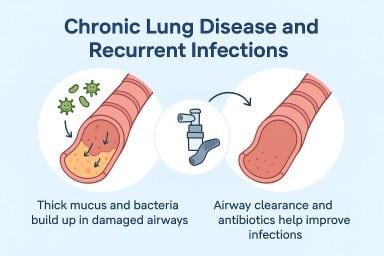
Thick mucus and biofilms:
In damaged airways, bacteria can hide deep in sticky mucus or biofilms (protective layers). This makes them hard to reach, even with antibiotics. -
Narrow or scarred airways:
In bronchiectasis and aspergillosis, parts of the lung don’t drain properly, so infection pockets linger. -
Reinfection rather than relapse:
Sometimes, you clear one infection but pick up another of the same type from your own airways later. -
Inflammation:
Even when bacteria are gone, airway inflammation can cause ongoing cough and sputum, making it feel as if the infection hasn’t cleared.
💊 Why Doctors Change Antibiotics
Each antibiotic works in a different way.
Your team chooses them based on sputum culture results, which show which antibiotics your bacteria are sensitive to.
It’s quite normal to:
-
Start with a broad antibiotic (e.g. clarithromycin)
-
Switch after sputum results come back
-
Need longer or combination treatment if infection persists
For people with chronic lung conditions, antibiotic courses may last 2–3 weeks, not the usual 5–7 days.
💨 What Can Help You Recover
-
Regular airway clearance:
Using devices like an Acapella, Aerobika, or chest physiotherapy helps move mucus out of the lungs. This allows antibiotics to reach infection sites better. -
Stay hydrated to keep mucus thin.
-
Nebulised saline (if prescribed) can help loosen secretions.
-
Avoid skipping doses — consistent antibiotic levels help stop bacteria from regrowing.
-
Regular sputum tests guide your doctors in choosing the next best treatment.
-
See your specialist team if infections return frequently — they might check for fungal infection, resistant bacteria, or airway blockages.
❤️ The Take-Home Message
Yes — it’s quite normal for lung infections like Haemophilus influenzae to need several antibiotics and take time to clear when you have chronic lung disease.
It doesn’t mean your body isn’t fighting — it just means your lungs need a bit more help.
Keep in touch with your specialist nurse or clinic, and don’t lose hope — with good airway care, the right antibiotics, and patience, things usually improve.
🧬 The Story of Brensocatib: A New Way to Calm Lung Inflammation
What Is Brensocatib?
Brensocatib is a new type of anti-inflammatory medicine being developed to protect the lungs from long-term damage caused by overactive immune cells, especially neutrophils.
It is being tested by the company Insmed in people with bronchiectasis, but it may also help those with aspergillosis and other chronic lung diseases where inflammation is a major problem.
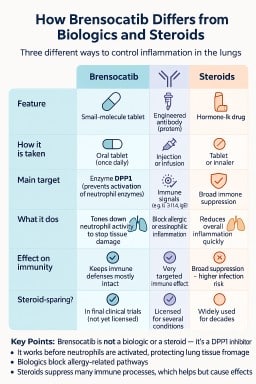
Brensocatib is taken as a once-daily tablet—not an injection.
Why Was It Developed?
In conditions like ABPA (Allergic Bronchopulmonary Aspergillosis) and CPA (Chronic Pulmonary Aspergillosis), inflammation is often persistent.
The lungs attract neutrophils, which are immune cells that normally destroy germs.
However, when too many neutrophils gather, they release enzymes that damage healthy lung tissue, thicken mucus, and make infection easier for fungi and bacteria.
Researchers realised that if they could turn down the destructive part of neutrophil activity—without turning off the immune system completely—they might be able to break the cycle of inflammation and infection.
How Brensocatib Works
Brensocatib blocks a switch inside the bone marrow called DPP1 (dipeptidyl peptidase-1).
DPP1’s job is to “activate” enzymes inside newly formed neutrophils before they enter the bloodstream.
By blocking DPP1, brensocatib stops neutrophils from producing harmful enzymes such as neutrophil elastase.
These neutrophils can still travel to the lungs and fight infection, but they cause less collateral damage.
👉 In short: brensocatib reduces lung injury caused by over-active immune cells, not by suppressing immunity itself.
Not a Biologic – A Different Type of Treatment
It’s important to understand that brensocatib is not a biologic.
| Feature | Biologic drugs (e.g. mepolizumab, dupilumab) | Brensocatib |
|---|---|---|
| Made from | Complex proteins or antibodies | Small chemical molecule |
| How it’s given | Injection or infusion | Oral tablet |
| What it targets | Specific immune pathways (e.g. IL-5, IL-4) | Enzyme activation in neutrophils |
| Purpose | Block inflammatory signals | Reduce tissue-damaging enzymes |
| Typical use | Severe asthma, ABPA, autoimmune diseases | Bronchiectasis, chronic airway inflammation |
So, while biologics act by targeting immune messengers in the bloodstream, brensocatib works deeper—at the level of neutrophil development.
The two approaches are different but potentially complementary.
Some people in future may benefit from a combination, depending on their pattern of inflammation.
The Development Story
-
Early research (2010s): Scientists found that blocking DPP1 prevented lung injury in animal studies.
-
Insmed’s discovery: Brensocatib was developed as an oral, selective DPP1 inhibitor.
-
Phase 2 WILLOW trial (2020): In people with bronchiectasis, brensocatib significantly reduced flare-ups and lowered airway inflammation.
-
Phase 3 ASPEN trial (2022–2025): A large international study now nearing completion; results are expected soon.
If successful, brensocatib could become the first approved DPP1 inhibitor for long-term inflammatory lung disease.
Why This Matters for Aspergillosis Patients
People living with aspergillosis often also have bronchiectasis, where inflammation causes persistent mucus, infection, and breathlessness.
Current treatments such as steroids, antifungals, and biologics can help, but each has limits.
Brensocatib could:
-
Reduce airway inflammation without steroid side-effects
-
Protect lung tissue from further damage
-
Possibly lower the number of flare-ups or infections
-
Work safely alongside antifungals or biologics
It represents a new way of calming inflammation—by modifying neutrophil behaviour rather than blocking the immune system.
What Happens Next
The ASPEN Phase 3 results are expected soon. If positive, Insmed plans to apply for approval in the UK, EU, and USA.
Researchers are also studying brensocatib in:
-
COPD (Chronic Obstructive Pulmonary Disease)
-
Cystic fibrosis
-
Nontuberculous mycobacterial (NTM) infections
If licensed, it could mark the first new oral anti-inflammatory class for chronic lung disease in decades.
Key Take-Home Messages
-
Brensocatib reduces harmful lung inflammation by blocking the enzyme DPP1.
-
It is a small-molecule tablet, not a biologic injection.
-
It aims to protect the lungs by preventing damage from overactive neutrophils.
-
It may offer a steroid-sparing option for chronic airway diseases like bronchiectasis and aspergillosis.
-
It’s currently in final clinical trials, with results expected soon.
💬 Find Out More

🧩 NAC Aspergillosis Research Digest Aspergillosis (October 2025: week 43)
Highlights
- Post‑transplant GVHD & IFI risk: In paediatric liver transplant recipients with GVHD, invasive fungal infection (aspergillosis/candidiasis) was the dominant cause of death; paper advocates PK‑guided monitoring of JAK inhibitors and tacrolimus for safer immunosuppression. (Pediatr Transplant; free full text) PMID: 41039701 | PMCID: PMC12491760
- Inhaled opelconazole: In‑vitro + clinical data suggest negligible drug–drug interaction (DDI) risk for the investigational inhaled triazole opelconazole, supporting development for pulmonary aspergillosis. (JAC) PMID: 41105437
- Isavuconazole DDI mapping: PBPK modelling compares isavuconazole with other azoles and proposes model‑informed dosing for anticancer drugs—useful in haem‑onc co‑prescribing. (CPT:PSP) PMID: 41104611
- CAR‑T fungal infections: Registry analysis after CD19 CAR‑T for B‑cell lymphoma reports invasive aspergillosis as the commonest mould IFI (11/32). (CMI) PMID: 41109429
- Air pollution & IPA: Two multicentre cohorts link higher fine particulate (PM2.5) exposure before admission with invasive pulmonary aspergillosis in severe pneumonia. (EBioMedicine) PMID: 41106023
- Mechanisms of resistance/virulence: A bioRxiv preprint identifies a long non‑coding RNA (afu‑182) that modulates triazole susceptibility and virulence in A. fumigatus. (Preprint) PPR: PPR1101933
- Burden estimates (Poland): National modelling updates burden for IA, CPA, ABPA, SAFS—useful for service planning and advocacy. (Sci Rep; open) PMID: 41087447 | Full text
Diagnostics
- Dental/ENT interface: In a retrospective implant‑centred series, chronic sinusitis and aspergillosis were histopathologically confirmed in a subset of sinus augmentation candidates; authors discuss when 3D imaging is warranted pre‑procedure. (Int J Oral Maxillofac Implants) PMID: 41105467
- Environmental surveillance: Post‑hurricane housing study identified Aspergillus spp. in water‑impacted homes, contextualising environmental exposure risk for ABPA/CPA. (Sci Rep; open) PMID: 41087584
Therapeutics & stewardship
- Opelconazole (inhaled triazole) DDI profile appears favourable (see above). Consider future role for adjunct/targeted lung delivery once efficacy data mature. PMID: 41105437
- Isavuconazole PBPK‑based recommendations may aid co‑administration with anticancer agents; still requires centre‑specific DDI checks and, where available, TDM. PMID: 41104611
- Novel antifungal target: A selective acetyl‑CoA synthetase inhibitor shows antifungal activity in Nat Commun—early‑stage discovery but potentially relevant to future azole‑resistant IA/CPA. (Nat Commun; open) PMID: 41087359
Epidemiology & special populations
- CAR‑T recipients: IA predominance among mould IFIs underscores the need for surveillance, rapid diagnostics (GM/PCR), and early therapy in post‑CAR‑T care pathways. PMID: 41109429
- Air quality: Association between PM2.5 and IPA suggests including environmental history in risk assessments for severe pneumonia patients. PMID: 41106023
- Veterinary reservoir: Review from Turkey highlights aspergillosis as a major poultry disease—relevance for occupational exposures and broader One‑Health messaging. (Vet Med Sci; open) PMID: 40988581
Surgery & case‑based learning
- CPA with infected bulla: Case report supports surgical resection as an option in selected CPA phenotypes with localised disease. (Clin Case Rep; open) PMID: 41103592
Guidance / practice notes
- For post‑transplant GVHD, ensure PK monitoring (tacrolimus, JAK inhibitors) and early IFI screening (GM/LFA ± PCR) to balance GVHD control against infection risk. PMID: 41039701
- In CAR‑T and severe pneumonia pathways, include combined diagnostics (BAL GM, Aspergillus PCR ± culture) and rapid initiation of active triazoles where IA is probable.
- Consider air quality and environmental exposures (post‑disaster housing, poultry) in patient education and prevention.
References & links
- Sawada K et al. PK Monitoring of JAK Inhibitor and Tacrolimus in post‑LT GVHD. Pediatr Transplant. 2025. PMID: 41039701 | PMCID: PMC12491760
- Cass LMR et al. Opelconazole DDIs. J Antimicrob Chemother. 2025. PMID: 41105437
- Goosen TC et al. Isavuconazole DDI PBPK. CPT: Pharmacometrics Syst Pharmacol. 2025. PMID: 41104611
- Bouvier A et al. IFIs after CD19 CAR‑T. Clin Microbiol Infect. 2025. PMID: 41109429
- Zhou H et al. PM2.5 & IPA. EBioMedicine. 2025. PMID: 41106023
- Poudyal NR et al. lncRNA afu‑182 & azole susceptibility. bioRxiv. 2025. Preprint
- Tamagawa K et al. Lung resection in CPA with infected bulla. Clin Case Rep. 2025. PMID: 41103592
- Vélez‑Torres LN et al. Aspergillus in water‑impacted homes. Sci Rep. 2025. PMID: 41087584
- Krzyściak PM et al. Burden of serious mycoses in Poland. Sci Rep. 2025. PMID: 41087447
- Alhassani ANA et al. Aspergillosis in poultry (Turkey). Vet Med Sci. 2025. PMID: 40988581
🫁 “Lung Flush” (Bronchoalveolar Lavage) in ABPA – What It Is and Why It Brings Only Short-Term Relief
A lung flush (also called a bronchoalveolar lavage, or BAL) isn’t a regular treatment for Allergic Bronchopulmonary Aspergillosis (ABPA), but it’s sometimes used selectively in NHS hospitals.
💧 What Happens During a Lung Flush
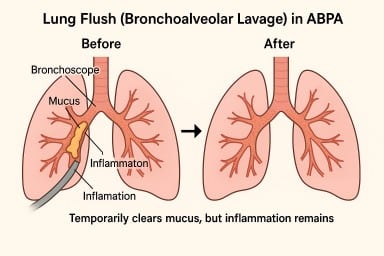
It’s done during a bronchoscopy, where a thin, flexible tube is passed through the nose or mouth into the lungs.
A small amount of sterile saline is washed into part of the lung and then gently suctioned back out.
The fluid is tested for:
-
Aspergillus growth or DNA
-
Other infections (bacteria, fungi, viruses)
-
Signs of inflammation or allergic activity
You’re given local anaesthetic and light sedation, so you stay comfortable but sleepy. Most people go home the same day.
🧪 Main Purpose – Diagnosis
In most ABPA cases, a lavage is done to find out what’s causing symptoms – whether they’re due to Aspergillus, another infection, or ongoing inflammation.
The results help doctors fine-tune treatment, such as adjusting antifungal doses or deciding if a biologic drug might help.
🫁 Sometimes Used to Clear Mucus
In certain situations – especially when thick mucus plugs are blocking airways or causing part of a lung to collapse – doctors may use lavage as a therapeutic “flush.”
This can wash out sticky secretions and temporarily improve airflow, helping physiotherapy and medication work more effectively.
It’s usually a short, day-case procedure, and most people feel back to normal after a day or two.
⚠️ Why It’s Only Short-Term Relief
Although lavage can clear mucus, ABPA is caused by an allergic immune reaction, not by the mucus itself.
Unless that reaction is controlled with:
-
Corticosteroids (to reduce inflammation),
-
Antifungal drugs (to lower the fungal load), or
-
Biologic injections (to block allergy pathways),
…the lungs will continue to produce thick, sticky mucus, which can re-accumulate within days or weeks.
So while a “lung flush” can make breathing easier in the short term, the effect is temporary – like clearing a blocked drain while the tap is still running.
⚠️ Risks and After-Effects
A bronchoscopy with lavage is generally safe, but it is still an invasive procedure. Possible effects include:
-
Temporary sore throat, cough, or hoarseness (common)
-
Mild bleeding or streaks of blood in sputum for a short time
-
Low oxygen levels during or after the procedure (monitored carefully)
-
Chest tightness, infection, or fever – uncommon but possible
-
Bronchospasm (airway narrowing) in people with very sensitive lungs, which is why it’s done in a hospital with respiratory support available
Because of these small but real risks, the NHS uses lavage only when the benefits outweigh the downsides – for example, when mucus is causing serious blockage or when test results will change management.
💬 In Summary
A “lung flush” can temporarily clear mucus and ease breathing, but it doesn’t stop ABPA’s underlying allergic inflammation.
The mucus often returns unless that inflammation is brought under control with long-term medical treatment.
It’s a useful tool when needed, but not something done regularly or lightly.

🌟 Vitamin B12 (Cobalamin) and Iron – What Patients Should Know
People living with chronic lung or fungal conditions sometimes develop low vitamin B12 or iron, especially if appetite, diet, or absorption are affected.
Here’s how to understand your results and treatment options.
🌟 Vitamin B12 (Cobalamin)
✅ What’s a Normal B12 Level?
| Level (pmol/L) | What It Means |
|---|---|
| > 300 | Normal |
| 200–300 | Borderline – may need extra tests (e.g. MMA or homocysteine) |
| < 200 | Deficiency likely |
Some labs report B12 in ng/L — the ranges are similar. Your doctor will interpret them based on the lab reference range.
⚠️ What Happens If B12 Is Low?
Low B12 can cause:
-
Fatigue and weakness
-
Brain fog or memory issues
-
Numbness or tingling in hands or feet
-
Low mood or irritability
-
In severe cases, nerve damage
💉 B12 Treatment
| Cause | Typical Treatment |
|---|---|
| Dietary deficiency (e.g. vegan diet) | High-dose oral B12 tablets or injections |
| Pernicious anaemia (autoimmune) | Lifelong B12 injections every 8–12 weeks |
| Malabsorption (gut issues) | Long-term injections often required |
In the UK, injections are usually hydroxocobalamin 1 mg every 2–3 months for maintenance, after an initial “loading phase” (several doses over 2 weeks).
🌟 Iron (Ferritin and Haemoglobin)
✅ Key Iron Markers
| Test | Normal Range (Women) | What Low Levels Mean |
|---|---|---|
| Ferritin | 30–200 µg/L (some doctors prefer >50) | Reflects iron stores — low = iron deficiency |
| Haemoglobin | 120–160 g/L | Measures oxygen-carrying capacity — low = anaemia |
You can have low iron without anaemia (low ferritin, normal Hb) or both together.
💉 Iron Infusions (e.g. Ferinject)
Used when:
-
Iron tablets don’t work or cause side effects
-
Iron levels are very low or symptoms severe
-
Ongoing blood or iron loss (e.g. heavy periods, inflammatory bowel disease)
Iron infusions raise levels more quickly than tablets. Some people need repeat infusions every 6–12 months depending on the cause.
🔄 Ongoing Monitoring and Follow-Up
| Condition | Typical Follow-Up |
|---|---|
| Low B12 (pernicious anaemia) | Injections for life; blood tests yearly |
| Low B12 (diet-related) | May stop if diet improves and levels remain stable |
| Iron deficiency (no bleeding cause) | Tablets for 3–6 months, then reassess |
| Chronic iron loss (e.g. periods, IBD) | Maintenance iron or repeat infusions |
✅ Reliable Information Sources
📣 Final Advice
If you’re unsure about your test results or treatment:
-
Ask your GP for a copy of your blood test results
-
Request a referral to a dietitian or haematologist
-
Agree a treatment plan and review dates
Always let your healthcare team know if you’re feeling more tired, dizzy, or unwell — sometimes simple tests and supplements make a big difference.

Share your feedback about your care at the National Aspergillosis Centre
There’s now a new way to read and share patient feedback about local NHS hospitals online. All comments come directly from patients and carers.
That’s because NAC sits within the Infectious Diseases service, which is managed through North Manchester as part of the new Manchester University NHS Foundation Trust (MFT) structure.
